2027 Best Imperial College London AI Courses for AI Governance

Co-Founder and Chief Data Scientist
As AI systems increasingly influence societal decisions, the challenge of effectively governing their development and deployment grows urgent. Professionals from diverse fields encounter difficulty navigating ethical, legal, and technical complexities without specialized training. This creates a pressing need for accessible education that bridges existing knowledge gaps while aligning with evolving industry standards. Imperial College London offers courses designed to equip learners with frameworks and skills essential for responsible AI governance. This article explores the best offerings at Imperial College, focusing on flexible, accredited pathways suited for U. S. graduates and career changers aiming to lead in AI governance.
Key Things You Should Know
- Imperial College London's 2026 AI governance courses integrate ethics, policy, and technical AI oversight, reflecting growing regulatory demands in the UK and EU frameworks.
- These programs emphasize real-world AI impact, preparing students for roles in compliance, risk management, and AI auditing amid a projected 38% increase in AI governance jobs by 2027.
- Students benefit from Imperial's interdisciplinary approach, combining computer science, law, and social sciences, with access to cutting-edge research on AI transparency and accountability.
Advance Your Career with AI Online Courses
Artificial Intelligence: Implications for Business Strategy
This program provides an introduction to Artificial Intelligence and their implications for business strategy. Earn an official digital certificate.

Oxford Artificial Intelligence Programme
Explore this Oxford Artificial Intelligence programme offered in a flexible learning environment and explore topics like machine learning, automation, and robotics.

Implementing Agentic AI: Building Your Organizational Playbook
This online MIT Agentic AI course offers a practical approach to deploying AI agents in your organization, including a custom playbook. 3 weeks, exclusive launch price.

AI Adoption: Driving Business Value and Impact
This online MIT AI Adoption: Driving Business Value and Impact offers practical frameworks to close the gap between AI potential and business reality.

Artificial Intelligence in Pharma and Biotech
Discover the applications and limitations of artificial intelligence in pharma and biotech with this MIT online short course.

What are the best Imperial College London AI courses focused on AI governance today?
Imperial College London offers specialized ai courses on governance and ethics designed for students and professionals seeking to understand the ethical, legal, and social dimensions of AI deployment. The MSc in AI and its Governance is a flagship program combining technical AI knowledge with core governance principles. It covers regulatory frameworks, policy analysis, and responsible AI design, preparing learners to navigate challenges like bias mitigation, transparency, and accountability in AI systems.
For working professionals, Imperial provides a focused short course on AI Ethics and Governance. This program examines global regulatory environments and ethical standards with practical case studies on algorithmic fairness and compliance. Such training is especially valuable for roles in compliance, policy-making, and governance implementation within various industries.
Imperial's robust AI research, with 92% rated "world-leading" or "internationally excellent" in the UK REF 2021, underpins these courses, ensuring students benefit from cutting-edge scholarship and innovation in AI governance. These top AI governance programs at Imperial College London help students balance innovation with ethical considerations and regulatory demands effectively.
Courses address vital questions on aligning AI development with societal impacts and legal compliance while fostering actionable governance frameworks. Prospective U.S. students can leverage these strengths when pursuing careers in AI policy and ethics. For those exploring career paths, exploring applied AI degree jobs can further clarify opportunities in this evolving field.
Advance Your Career with AI Online Courses
Artificial Intelligence: Implications for Business Strategy
This program provides an introduction to Artificial Intelligence and their implications for business strategy. Earn an official digital certificate.
Oxford Artificial Intelligence Programme
Explore this Oxford Artificial Intelligence programme offered in a flexible learning environment and explore topics like machine learning, automation, and robotics.
Implementing Agentic AI: Building Your Organizational Playbook
This online MIT Agentic AI course offers a practical approach to deploying AI agents in your organization, including a custom playbook. 3 weeks, exclusive launch price.
How does Imperial College London integrate AI governance into its AI degree programs?
Imperial College London integrates AI governance rigorously into its AI degree programs by addressing ethical, regulatory, and societal issues throughout the curriculum. The focus extends beyond technical skills to include governance frameworks essential for responsible AI deployment. Core modules highlight topics like data privacy, algorithmic bias, transparency, and accountability, preparing students to manage risks linked to AI systems.
The college's AI governance integration in Imperial College London programs includes interdisciplinary studies combining computer science, law, and policy. Students examine international AI regulations and compliance standards, equipping them to operate effectively in complex global governance environments. Practical assignments often require designing AI solutions consistent with legal and ethical norms, promoting responsible stewardship of technology.
This curriculum reflects growing demand for expertise in AI governance, demonstrated by a 40% increase in applications to the Department of Computing's AI-focused undergraduate programs between 2020/21 and 2023/24. Imperial College London AI governance curriculum prepares graduates for careers in AI development, policy, and risk management across sectors.
Prospective students can expect to gain:
- Comprehensive understanding of AI ethics and governance principles
- Ability to assess and mitigate AI risks operationally and strategically
- Experience with compliance in evolving global AI regulatory environments
Imperial also partners with industry and regulators to keep course content aligned with emerging standards and challenges like algorithmic fairness and automation's societal impact. This approach ensures graduates are well-prepared for real-world governance roles in diverse settings.
Those interested in further AI education might explore the best online masters in artificial intelligence for flexible advanced study options.
Which Imperial AI governance courses are available online versus on campus?
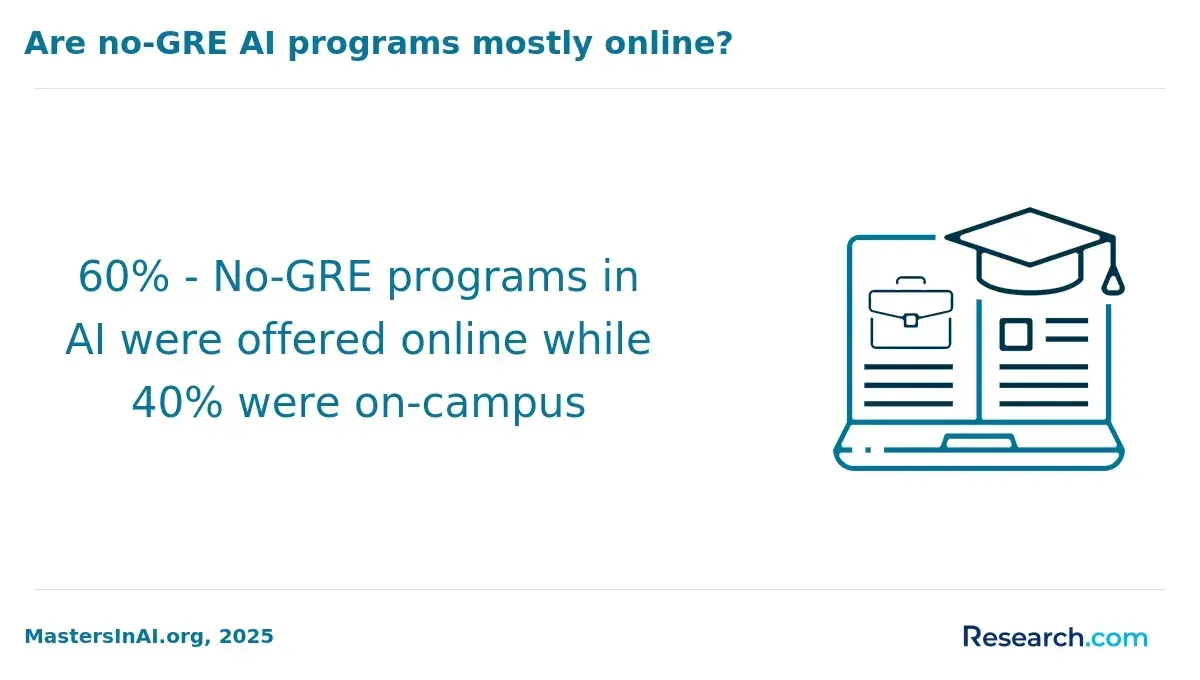
Imperial College London offers flexible options for studying AI governance, catering to both online learners and on-campus students. The online MSc in Artificial Intelligence is designed for working professionals or international students, featuring modules on AI ethics, policy, and governance frameworks. This program supports part-time enrollment and enables students to study without relocating.
On campus, students can engage in specialized courses such as the AI Ethics and Society module, integrated within broader computing and data science degrees. These courses emphasize practical engagement with governance challenges and provide direct access to expert faculty and collaborative projects. The on-campus environment benefits those seeking immersive experiences and direct interaction crucial for mastering complex policy and compliance issues.
Prospective students interested in Imperial College London ai governance courses online availability should consider that full MSc programs with comprehensive governance content are mainly campus-based. Online options focus more on core artificial intelligence topics, including key governance units, providing a foundational starting point for an AI career path. This distinction helps balance professional needs with academic depth.
Imperial's AI-related course enrolments have surged by 453% from 2017/18 to 2022/23, reflecting a strong labour-market demand for AI-literate graduates skilled in governance. Those exploring AI degree programs from top institutions will find Imperial a significant contender for developing expertise applicable to emerging industry roles.
What are the typical admission requirements for Imperial AI programs emphasizing AI governance?
Admission to Imperial College London's AI governance programs typically requires a first-class or strong upper second-class honors degree (UK equivalent to a bachelor's degree with a 3.5 GPA or above in the US) in computer science, mathematics, engineering, or a closely related field. Some flexibility exists for applicants with other quantitative backgrounds, as long as they show solid programming skills and foundational knowledge in AI, data science, or algorithms. Applicants must generally submit academic transcripts, a personal statement emphasizing their interest and experience in AI governance, and two or more academic or professional references.
Those with non-traditional academic paths but relevant professional experience in AI or technology governance can enhance their applications. Many courses may also prefer prior exposure to the ethical, legal, or policy aspects of AI, illustrating the interdisciplinary focus within Imperial College London eligibility criteria for AI governance courses in the UK.
Standardized test scores, such as the GRE, are seldom required but can support applications from candidates outside typical STEM backgrounds. International students must prove English proficiency through tests like IELTS with minimum scores around 7.0 overall. Graduates from Imperial's MSc in Artificial Intelligence program report a median salary of £60,000 six months post-graduation, reflecting strong career prospects.
For those aiming to understand career pathways beyond academia, resources on AI trainers provide valuable insights into potential roles emerging in the field.
What core topics and skills do Imperial AI governance courses and modules cover?
Imperial College London's AI governance courses combine technology, ethics, law, and policy to prepare learners with comprehensive skills essential for the field. Core topics cover machine learning fundamentals, data privacy, and regulatory compliance tailored to AI systems.
Students develop practical abilities in algorithmic transparency, bias detection, and risk assessment-critical for responsible AI deployment. The curriculum explores governance mechanisms like audit trails, accountability standards, and impact evaluations aligned with evolving global regulations. Case studies include GDPR enforcement and AI ethics boards, providing insight into real-world challenges.
Emphasis on societal effects encourages critical thinking about human rights, fairness, and sustainability within AI governance. Courses focus on organizational and policy-level governance, helping professionals shape AI strategies that meet legal and ethical requirements. Collaborative decision-making between technologists, regulators, and stakeholders forms a key part of adaptive governance frameworks.
- Practical skills in compliance and social impact evaluation
- Preparation for roles such as policy advisors, compliance officers, or AI ethics consultants
- Multidisciplinary training reflecting AI's complex regulatory landscape
Participants in Imperial's Executive & Professional Education programs report notable career advancements, including a 26% salary increase within a year of completing the Professional Certificate in Machine Learning and Artificial Intelligence, demonstrating the strong employability value of such governance expertise.
How do Imperial's AI governance offerings compare with leading U.S. AI and policy programs?
Imperial College London's AI governance programs stand out from leading U.S. options through their interdisciplinary focus, global reach, and deep engagement with regulated sectors like finance, healthcare, and government. While many U.S.-based programs emphasize technical AI development or policy theory, Imperial integrates practical governance frameworks tailored to these industries, providing graduates with a clear understanding of regulatory challenges and ethical AI deployment.
Imperial's extensive online and MOOC courses have attracted over 500,000 learners worldwide, with more than 40% employed in government, finance, or other regulated fields. This targeted approach contrasts with U.S. programs, which tend to serve technology developers or academic researchers without dedicated sector-specific governance training.
Institutions such as Stanford and MIT offer broad AI policy education but often lack the scale and industry alignment seen in Imperial's offerings. Imperial's combination of on-campus degrees and accessible online courses provides flexible pathways for professionals navigating AI's complex regulatory environment.
For U.S. students pursuing careers in AI governance, Imperial delivers cross-sector frameworks and practical policy case studies, unlike U.S. programs that may focus more on foundational ethics or legislation in abstract terms. This makes it a strong option for policy makers, compliance officers, and industry leaders seeking applicable skills and broad contextual insight.
What are the tuition costs, funding options, and time commitments for these AI governance pathways?
Tuition for Imperial College London's AI governance courses varies by program and student status. International students can expect fees between £30,000 and £35,000 for master's programs, while UK and EU students pay around £15,000 to £20,000. Scholarship options are available from Imperial College and external organizations focused on technology and policy, with many students also relying on government loans or employer sponsorships, especially working professionals studying part-time.
Program durations differ: full-time master's courses typically last 12 months with a weekly study commitment of 40-50 hours. Part-time and executive education programs extend to 18-24 months, catering to professionals balancing work and study through evening or weekend classes. Short certificate courses offer flexible schedules lasting 3 to 6 months. Prospective students should check if modular enrollment is possible to spread out coursework and fees.
The interdisciplinary nature of AI governance combines law, ethics, and policy with technical foundations, enhancing career prospects. A 2024 Currys survey of 1,000 UK students and graduates found 30% influenced by AI's rise in degree choices and 63% believing AI skills boost employability. This demand for cross-disciplinary training often means higher tuition and longer study periods but opens pathways into policy-making and regulatory roles.
What AI governance career paths can graduates pursue in the U.S. and internationally?
Graduates skilled in AI governance can pursue a variety of vital roles across the U.S. and globally. Key career options include AI policy advisors who shape ethical regulatory frameworks, compliance officers ensuring alignment with legal and ethical standards, and risk analysts evaluating AI-related harms in sectors like healthcare, finance, and autonomous vehicles. AI ethics consultants also play a critical role by helping organizations tackle bias, transparency, and accountability challenges.
International opportunities exist within regulatory bodies, intergovernmental organizations, and NGOs, such as the European Commission's AI Act enforcement teams and UN initiatives on AI governance. In the U.S., federal agencies like the National Institute of Standards and Technology (NIST) and Federal Trade Commission (FTC) focus on AI standards and consumer protection.
The World Economic Forum's Future of Jobs Report 2025 forecasts a 36% growth in demand for AI ethics and governance specialists by 2029, highlighting strong job prospects. These roles combine expertise in technology, ethics, law, and policy analysis, with common positions including:
- AI governance analyst
- Ethical AI program manager
- AI regulatory affairs specialist
- Data privacy officer
- AI audit and compliance specialist
Graduates with credentials from renowned institutions are positioned to lead in this evolving terrain, addressing challenges like avoiding discriminatory AI outcomes, promoting transparent AI decision-making, and managing global data governance complexities.
What salary ranges and job outlook can students expect in AI governance roles?
AI governance roles offer a competitive salary range, generally between $80,000 and $150,000 annually for early- to mid-career professionals. Senior positions can exceed $200,000 depending on the industry and location. Entry-level compliance analysts typically start near $80,000, while experienced AI ethics officers or policy advisors at leading tech companies or regulatory bodies may earn above $150,000. Public sector jobs often provide lower starting salaries but include stable career growth and benefits.
The job outlook in AI governance is robust due to increasing regulatory scrutiny and ethical challenges related to AI deployment. Demand spans finance, healthcare, technology, and government sectors. Regulations like the EU AI Act and developing US federal guidelines fuel ongoing growth in compliance and oversight careers.
Graduates from Imperial College London report a 96% employment or further study rate within 15 months, outperforming the 88% UK average. This data highlights strong career prospects and return on investment for students pursuing AI governance roles with respected credentials.
Prospective professionals should build skills in data privacy law, algorithmic auditing, and interdisciplinary AI policy. Common roles include AI risk assessors, regulatory compliance managers, and ethics consultants, which align with growing industry demands.
How should prospective students evaluate whether Imperial's AI governance courses fit their goals?
Students considering Imperial College London's AI governance courses should align their choices with specific career or research goals. Focus on course content covering ethics, policy frameworks, compliance, data privacy, and risk management in AI systems. For instance, those pursuing public policy roles may prioritize courses on regulatory landscapes and legislative analysis, while individuals targeting corporate governance roles might select modules emphasizing AI accountability and organizational strategies.
Evaluate how each course balances theory with practice. Programs featuring case studies, real-world projects, and industry collaborations offer vital hands-on experience for addressing complex AI governance issues. Prospective students should verify faculty expertise, research contributions, and connections with policy institutions to benefit from cutting-edge developments in AI governance.
Imperial's curriculum incorporates recent AI literacy and governance trends, reflecting findings from a survey by the Higher Education Policy Institute showing widespread student engagement with AI tools and generative AI in assessments. Consider course delivery options and flexibility that accommodate working professionals and international learners. Assessment methods typically blend written analysis, presentations, and practical governance exercises rather than focusing solely on technical skills.
Review alumni outcomes and networking opportunities, as these strengthen career advancement in AI governance fields. Aligning your career objectives with Imperial's course offerings can maximize your return on investment in this dynamic sector.
Other Things You Should Know About Artificial Intelligence
Explainability refers to the ability to understand and clarify how an AI system arrives at a particular decision or recommendation. In AI governance, explainability enhances trust by making AI processes transparent and interpretable, especially in high-stakes fields like healthcare or finance. Without explainability, users and regulators may hesitate to adopt AI-driven solutions due to perceived risks.
Regulations provide frameworks to ensure AI technologies are developed and deployed responsibly, protecting privacy, security, and human rights. Various governments and international bodies are creating AI-specific rules to address risks like data misuse and autonomous decision-making. Compliance with these regulations is essential for organizations to build trustworthy AI systems and avoid legal repercussions.
AI governance sits at the intersection of technology, policy, ethics, and law, making interdisciplinary knowledge crucial. Understanding both technical aspects and societal impacts allows professionals to create policies that guide responsible AI use. This combined expertise helps anticipate unintended consequences and ensures AI benefits align with public values.
References
- Imperial partners with QS to launch Responsible AI Consortium | Imperial News | Imperial College London https://www.imperial.ac.uk/news/259099/imperial-partners-with-qs-launch-responsible/
- Embracing AI in higher education: university policies on generative AI | Plagiarism Checker https://www.plagiarismchecker.net/articles/embracing-ai-in-higher-education-university-policies-on-generative-ai/
- AI Governance Jobs: Your Ultimate Career Guide https://www.peopleinai.com/blog/ai-governance-jobs-guide
- Navigating the Future: Higher Education policies and guidance on generative AI - Artificial intelligence https://nationalcentreforai.jiscinvolve.org/wp/2024/07/31/navigating-the-future-higher-education-policies-and-guidance-on-generative-ai/
- AI Governance in Higher Education: A course design exploring regulatory, ethical and practical considerations https://arxiv.org/html/2509.06176v1
- How the Imperial College AI Course Helps Design Cutting-Edge Business Strategies - Emeritus Online Courses https://emeritus.org/blog/b-impactful-business-strategies-imperial-college-ai-course/
- Pathway to AI governance in 5 simple steps https://www.datagalaxy.com/en/blog/a-pathway-to-ai-governance-5-steps/
- AI Governance Mastery Series https://cgi.org.uk/qualifications-training/training-courses/ai-governance-mastery-series/
- Salary and Jobs Report 2025-26: Privacy, AI Governance and Digital Responsibility | IAPP https://iapp.org/resources/article/salary-survey-summary
- How to make an application to Imperial College London - Safe & Trusted AI https://safeandtrustedai.org/apply-now/how-to-make-an-application-to-imperial-college-london/