2027 Best AI Agent Courses for Document Processing

Co-Founder and Chief Data Scientist
Many professionals encounter difficulty automating document processing tasks due to a lack of specialized training in AI agent technology. Manual handling of documents leads to errors, delays, and inefficiencies, limiting productivity in various industries. Individuals seeking a career shift often struggle to find accessible courses that blend practical skills with theoretical knowledge in this niche. This article addresses those challenges by highlighting leading AI agent courses designed to equip learners with competencies in automating document workflows. It aims to guide readers toward flexible, accredited programs that prepare them for roles in the evolving field of artificial intelligence-driven document processing.
Key Things You Should Know
- AI agent courses for document processing in 2026 emphasize hands-on training with NLP and OCR technologies, responding to a 35% industry demand growth forecasted by 2025.
- Top programs integrate automation, data privacy, and compliance modules, reflecting the 2024 legal standards and rising enterprise focus on secure document workflows.
- Flexible online and hybrid learning formats dominate, enabling working professionals to upskill efficiently, with 62% of students preferring part-time AI agent certification courses.
Advance Your Career with AI Online Courses
Artificial Intelligence: Implications for Business Strategy
This program provides an introduction to Artificial Intelligence and their implications for business strategy. Earn an official digital certificate.

Oxford Artificial Intelligence Programme
Explore this Oxford Artificial Intelligence programme offered in a flexible learning environment and explore topics like machine learning, automation, and robotics.

Implementing Agentic AI: Building Your Organizational Playbook
This online MIT Agentic AI course offers a practical approach to deploying AI agents in your organization, including a custom playbook. 3 weeks, exclusive launch price.

AI Adoption: Driving Business Value and Impact
This online MIT AI Adoption: Driving Business Value and Impact offers practical frameworks to close the gap between AI potential and business reality.

Artificial Intelligence in Pharma and Biotech
Discover the applications and limitations of artificial intelligence in pharma and biotech with this MIT online short course.

What is an AI agent for document processing, and why do these courses matter?
An AI agent for document processing is a software system that automatically analyzes, extracts, and organizes information from unstructured or semi-structured documents. These agents use machine learning, natural language processing, and computer vision to streamline tasks such as invoice processing, contract analysis, and data entry. For instance, an AI agent might scan legal contracts to identify critical clauses or extract parties and dates, accelerating workflows significantly. This AI agent technology for automated document processing is transforming industries like finance, healthcare, and legal by improving accuracy and reducing processing time.
The rapid expansion of enterprise data-expected to reach 291 zettabytes by 2027 according to IDC-drives demand for professionals skilled in deploying scalable AI solutions. Over 80% of this data consists of unstructured content requiring AI-driven processing methods rather than manual handling. AI agent training courses provide crucial skills such as data annotation, model training, NLP techniques, and deploying AI workflows to meet these challenges.
- Improving document accuracy and reducing processing time in key industries
- Implementing automation that adapts to changing data types and regulations
- Integrating AI agents with enterprise systems for better compliance and decisions
Professionals equipped with these skills can pursue careers in data science, AI engineering, and automation roles where document workflows are central. For those considering this path, understanding the artificial intelligence degree salary can help align education with career goals. More details on these opportunities are available at artificial intelligence degree salary.
Advance Your Career with AI Online Courses
Artificial Intelligence: Implications for Business Strategy
This program provides an introduction to Artificial Intelligence and their implications for business strategy. Earn an official digital certificate.
Oxford Artificial Intelligence Programme
Explore this Oxford Artificial Intelligence programme offered in a flexible learning environment and explore topics like machine learning, automation, and robotics.
Implementing Agentic AI: Building Your Organizational Playbook
This online MIT Agentic AI course offers a practical approach to deploying AI agents in your organization, including a custom playbook. 3 weeks, exclusive launch price.
What are the best AI agent courses for document processing available online in the U.S.?
The best ai agent courses for document processing in the U.S. emphasize skills in natural language processing, machine learning, and automation frameworks built for document understanding. Premier programs from Stanford Online, MIT Professional Education, and Coursera's AI for Everyone with a data processing focus cover critical areas such as entity recognition, document classification, OCR enhancement, and workflow automation using AI agents.
Stanford's Natural Language Processing with Deep Learning delivers advanced training on algorithms essential for comprehending complex legal, financial, and technical documents. MIT's AI for Business Certificate includes robotic process automation (RPA) modules aimed at optimizing document workflows, enabling learners to build AI agents that significantly reduce manual processing times.
Coursera collaborates with Google and IBM to provide certifications focusing on practical AI agent implementation using TensorFlow, PyTorch, and cloud AI APIs. These courses offer a balanced approach, integrating technical depth with applied skills for automation challenges such as invoice processing, contract analysis, and automated summarization.
Top online ai document processing training programs in the United States teach students to:
- Extract structured data from scanned and digital documents
- Train models to classify and recognize diverse document types
- Integrate AI agents into comprehensive document management systems
- Handle issues like ambiguous text and inconsistent layouts
With McKinsey estimating generative AI could automate up to 70% of time spent on these tasks, demand for AI agent engineers specialized in document processing is surging. Prospective students exploring options beyond specialized AI courses may also consider affordable alternatives, such as the cheapest online mechanical engineering degree, to build strong technical foundations supporting AI careers.
How do online AI agent courses for document processing compare to campus-based programs?
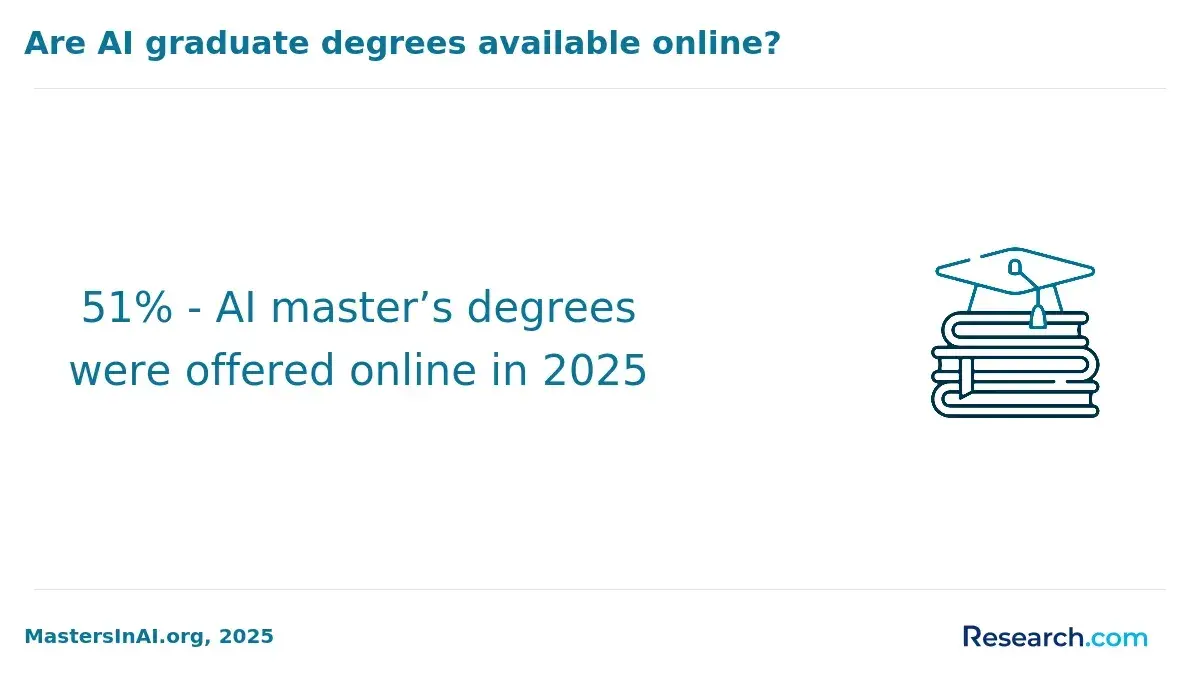
Online AI agent courses versus campus-based programs for document processing highlight distinct advantages depending on student needs. Online courses offer flexibility and quick integration of generative ai tools, keeping pace with Gartner's forecast that by 2026 over 80% of enterprises will deploy GenAI-enabled applications. This makes online learning ideal for professionals balancing work and study who want immediate, practical skills applicable in evolving industries.
Campus-based programs provide deeper theoretical foundations, structured learning environments, and networking through faculty and peers. However, they may be slower to adopt the latest document processing ai technologies, which can impact those seeking cutting-edge skillsets promptly.
Comparison of document processing AI courses: online learning and traditional campus options, shows online courses often emphasize project-based learning with tasks such as automating document classification, extraction, and summarization using real-world datasets. This approach supports the 30-50% cost reductions early adopters achieve in AI-driven workflows, while campus programs tend to offer a broader educational scope over a longer time.
Consider your career goals carefully. For rapid entry into AI-driven document processing roles, online courses with optimized curriculum delivery may be preferable. For research or advanced expertise, campus programs better facilitate complex training. Those interested in further education may explore a data science master online for comprehensive AI and data skills development.
What prerequisites and technical skills are required to enroll in AI agent document processing courses?
Enrolling in AI agent document processing courses in 2026 requires a solid foundation in several technical skills. Proficiency in programming languages like Python is essential due to its widespread use in AI development frameworks. Familiarity with machine learning concepts, including supervised and unsupervised learning, is key to understanding the underlying models used in document processing tasks.
Core technical prerequisites for AI document processing training also include knowledge of natural language processing (NLP) techniques, which are critical for agents to parse, understand, and generate human language effectively. Candidates should be skilled in data manipulation and pre-processing, handling various document formats such as PDFs, Word files, and scanned images to prepare datasets for AI integration.
Understanding retrieval-augmented generation (RAG) and tool-calling frameworks is increasingly important. Stack Overflow's 2024 Developer Survey shows over 70% of developers consider these skills vital for production AI systems, highlighting their role in building effective document-processing agents.
Additional requirements often encompass basic API integration, cloud computing, containerization tools like Docker, and experience with AI platforms such as TensorFlow, PyTorch, or Hugging Face transformers. Mathematical knowledge in linear algebra, probability, and statistics supports grasping model functionality and evaluation. Strong problem-solving abilities and familiarity with software version control (e.g., Git) enhance collaborative development.
With 44% of professional developers already using or planning to use AI agents, prospective students must be ready to continuously update their skills. For those interested in advanced study, exploring a masters data analytics program can further strengthen expertise in this rapidly evolving field.
What core topics and tools are typically covered in AI agent document processing curricula?
Courses in ai agent document processing train students to build automated systems that interpret, classify, and extract data from digital documents. Core topics include natural language processing (NLP), optical character recognition (OCR), and machine learning algorithms designed for text and image data. The curriculum covers the entire workflow, from data acquisition and preprocessing to feature extraction and model training.
Students learn to apply techniques such as named entity recognition, sentiment analysis, and document classification to automate understanding of unstructured text. Hands-on tools include open-source libraries like TensorFlow, PyTorch, and spaCy, along with OCR technologies such as Tesseract and commercial APIs. Practical training emphasizes APIs for document ingestion, annotation tools for dataset creation, and frameworks for deploying AI agents in real-world use cases.
Data privacy and compliance are integral, teaching secure handling and anonymization or redaction of sensitive information commonly found in invoice processing, contract review, and compliance auditing scenarios. Advanced courses may introduce reinforcement learning and neural information retrieval methods to tackle complex document workflows.
Enrollment in ai agent and automation courses grew over 640% from 2023 to 2025, reflecting strong industry demand. Prospective students should seek programs balancing theory and practical application with widely adopted tools and methodologies. For more insights, visit research.com.
How long do AI agent document processing courses take, and what do they cost?
AI agent document processing courses vary widely in duration and depth, catering to different professional needs. Entry-level training, often no-code or low-code, typically requires 20 to 40 hours of study. These courses are ideal for non-developers seeking fast and practical skills for rapid deployment. More advanced programs that include coding, integration, and AI model customization can extend from 8 to 12 weeks, offering comprehensive technical instruction for developers and technical professionals.
Costs reflect this range of depth and duration. Short no-code courses generally cost between $200 and $800, focusing on quick skill acquisition consistent with current industry shifts. In contrast, longer, hands-on courses that cover workflow automation and AI programming usually fall between $1,500 to $5,000 or more.
Adopting low-code or no-code AI tools for workflow and document automation can significantly speed up deployment while cutting development expenses. According to Forrester's 2024 study, these approaches enable organizations to deliver solutions 6-8 times faster, with a 70% reduction in costs compared to traditional methods.
Choosing the right course depends on your background and time availability. Non-developers benefit from shorter, low-code paths to quickly build practical skills, while those with technical experience often require extended courses to deepen their expertise and work with AI models more effectively.
- Short, no-code courses: 20-40 hours, $200-$800
- Extended coding-based courses: 8-12 weeks, $1,500-$5,000+
How can students verify accreditation and program quality for AI agent document processing training?
Verifying accreditation and program quality is essential for those pursuing AI agent document processing training. Start by confirming that the institution is accredited by recognized U.S. agencies such as the Accrediting Commission of Career Schools and Colleges (ACCSC) or regional bodies like the Higher Learning Commission (HLC). Accreditation ensures the program meets strict educational standards and qualifies for federal financial aid.
Evaluate curriculum content carefully. Top programs offer hands-on experience with frameworks like LangGraph, MCP, or smolagents. AI AgentRank's 2026 analysis shows developers can achieve a working AI engineer level in about 50-60 hours of focused study, often costing between $0 and $200. Ideal courses combine theory with practical labs tailored to real-world document processing tasks.
Instructor expertise matters. Look for educators actively involved in AI agent research or those collaborating with AI research labs and industry partners. These elements usually mean a current and industry-relevant curriculum.
Graduate outcomes are a key indicator of quality. Consider job placement rates and alumni testimonials specific to agent-based document processing roles. Compare programs across these factors to confidently select accredited, high-quality training designed for a career in AI-based document processing.
What careers use AI agents for document processing, and what job titles can graduates pursue?
Careers involving AI agents for document processing are especially relevant in industries handling large volumes of complex or regulated information. Job titles such as AI specialist, data analyst, compliance analyst, legal technologist, document automation engineer, and financial risk analyst are in demand. These roles are common in legal firms, financial institutions, healthcare providers, and government agencies where efficient and precise document management is essential.
Positions like compliance analyst or KYC (Know Your Customer) officer use AI to automate and improve accuracy in review processes. For instance, Deloitte's 2024 survey reveals that deploying AI for KYC, compliance, and document review reduced manual work by 60%, cut compliance costs by up to 30%, and enhanced detection of high-risk cases. This highlights the growing need for professionals skilled in applying AI within regulatory environments.
Legal technologists and document automation engineers specialize in using AI to extract and validate data from contracts, patents, and cases. Financial risk analysts leverage AI to analyze financial disclosures and transaction records for signs of fraud or compliance issues. Many roles also focus on designing AI systems tailored to specific document types and legal requirements.
Key skills include natural language processing, machine learning algorithms, and understanding compliance standards such as GDPR and HIPAA. This combination of technical and regulatory knowledge is highly sought after to reduce operational costs and enhance accuracy in document-driven industries.
What salary ranges and job outlook can learners expect in AI-powered document processing roles?
AI-powered document processing roles are growing rapidly, with strong salary potential and job prospects, especially for those completing specialized training. In Germany, graduates from intensive AI automation and agent courses can expect junior positions paying between €48,000 and €60,000 annually, a 20-40% increase from related fields according to WBS Coding School's report. In the U.S., entry-level salaries are likely to start similarly, adjusted for local market conditions.
Job titles in demand include AI automation analyst, document AI specialist, and machine learning data processor. Employers seek candidates skilled in AI agents and intelligent automation frameworks that enhance document handling, extraction, and classification. Practical experience with relevant AI tools improves hiring chances, while lack of certifications or coursework may limit opportunities.
To enhance salary and career advancement, consider these steps:
- Pursue hands-on AI automation projects, ideally within targeted courses.
- Obtain certifications related to AI platforms and document AI APIs.
- Develop knowledge of compliance and data privacy regulations in document processing.
- Engage in internships or contract roles involving AI agents in workflows.
Investing in focused AI agent training offers access to growing mid-range salaries and increased demand across industries adopting automation technologies.
Are there industry certifications or portfolio projects that strengthen AI agent document processing careers?
Industry certifications like the Certified AI Practitioner and credentials in Natural Language Processing (NLP) and Robotic Process Automation (RPA) are crucial for advancing careers in AI agent document processing. These certifications validate technical expertise and practical skills that employers seek, especially for tasks involving document understanding, entity extraction, and automated content generation.
Portfolio projects provide tangible proof of a candidate's ability to design and deploy AI-powered document workflows. Examples include autonomous document pipelines that integrate OCR, text classification, and approval automation. Such projects align with Gartner's prediction that by 2028, autonomous and semi-autonomous agents will handle 20% of knowledge worker tasks, up from under 5%.
Candidates facing difficulty in this field should build end-to-end solutions focused on document summarization, contract analysis, or similar tasks. Mastery of AI frameworks such as TensorFlow, spaCy, or custom automation scripts enhances a resume. Participation in open-source projects and competitions related to document AI sharpens problem-solving skills under real-world constraints.
Combining certifications with strong portfolios offers measurable proof of readiness to recruiters and hiring managers. Both formal credentials and applied project experience are essential for those looking to excel in evolving autonomous document workflows and multi-agent systems.
Other Things You Should Know About Artificial Intelligence
Ethical concerns in artificial intelligence for document processing include data privacy, bias, and transparency. AI systems must handle sensitive information securely to avoid breaches. Additionally, biased training data can lead to unfair or inaccurate outcomes, so developers need to ensure the models are trained on diverse and representative datasets.
Artificial intelligence improves document accuracy by automating error detection and reducing manual data entry mistakes. It enhances efficiency through faster processing times and the ability to analyze large volumes of documents simultaneously, which reduces operational costs and increases productivity for organizations.
Current limitations include difficulties in understanding complex document layouts, context interpretation, and handling ambiguous or poor-quality data. AI models sometimes struggle with languages or formats they were not specifically trained on, which can impact overall accuracy and reliability.
The top AI agent courses for document processing in 2027 include "AI Document Mastery" by Coursera, "Document AI with Python" on edX, "AI for Document Automation" at Udacity, and "Advanced AI Document Solutions" offered by Pluralsight. These courses provide comprehensive training on the newest AI tools and techniques.
References
- AI Agents Can Help HR Transform the Employee Experience https://www.oracle.com/africa/artificial-intelligence/ai-agents/ai-agents-hr/
- 10 Best Document Processing Tools for AI Agents (2026) https://fast.io/resources/best-document-processing-tools-ai-agents/
- Can agentic AI build your entire online course? https://www.futureofbeinghuman.com/p/ai-agent-creates-online-course-in-minutes
- Emerging AI Job Titles and the Rise of AI Agents: Future-Proofing Your Career in 2025 https://aipgf.pro/emerging-ai-job-titles-2025/
- What Are AI Agents? A Complete Beginner's Guide https://www.mindstudio.ai/blog/what-are-ai-agents/
- How AI Agents Take the Pain Out of Document Processing https://graip.ai/blog/how-ai-agents-take-the-pain-out-of-document-processing
- Build AI Portfolio Projects That Get You Hired https://zenvanriel.com/ai-engineer-blog/build-ai-portfolio-projects/
- AI Certs https://skillx.edu.au/pages/ai-certs
- Agent Skills https://platform.claude.com/docs/en/agents-and-tools/agent-skills/overview
- AI Impact on the Job Market https://document-logistix.com/ai-impact-on-the-job-market/