2027 Educational Policy Degree vs. Certificate: Which Should You Choose?
Audited and Verified:
Our Editorial and Data Verification Process
Research.com uses government datasets, official education statistics and primary institutional information to support its career and degree guides. Our review process checks factual accuracy, occupational definitions, source dates and the requirements associated with the credentials discussed.
How This Article Was Fact-Checked
Our editorial team verifies salary estimates, employment projections, education requirements and program information against original data providers and official organizations. Salary figures are checked against the relevant occupational definitions and reporting periods. Information about licensure, accreditation and required in-person training is reviewed separately.
Fact-checked and verified on:

Co-Founder and Chief Data Scientist
Today, students and professionals confront important decisions when weighing educational policy studies. Earning a degree or a certificate can each improve career prospects, yet they vary in time commitment, depth of study, and professional recognition. For instance, a degree usually delivers broad training and research opportunities, whereas certificates supply focused skills for faster entry or advancement.
Both routes are worthwhile depending on your goals, since degrees generally take one to two years of full-time study and certificates can be finished in months. This article contrasts these choices to help you determine which fits best with your career ambitions and lifestyle.
Key Points About Educational Policy Degree vs. Certificate Programs
- Degree programs offer comprehensive knowledge and research skills, enhancing long-term professional growth and higher salary potential, with median earnings often 20% above certificate holders.
- Certificate programs focus on practical, specialized skills ideal for immediate job advancement or role changes, requiring less time and financial investment than degrees.
- Degrees typically require 1-2 years full-time study, offering broader networking opportunities; certificates take months, allowing faster entry or skill updating within education policy careers.
What Are the Differences Between Educational Policy Degree and Certificate Programs?
Educational policy degrees and certificate programs both provide valuable career opportunities, yet they vary in several important ways. Grasping these differences can help students choose the right educational path according to their professional goals and available time. The following is a comparison of the main distinctions between the two options.
The points below highlight key factors to weigh when selecting between an educational policy degree and a certificate program.
- Career Advancement: Degrees usually unlock higher-level positions and wider roles because of their comprehensive curriculum. Certificates frequently act as rapid skill boosts suited for professionals wanting specific expertise without committing to a full degree.
- Depth of Learning: Degree programs offer a deep exploration of theory, research, and policy analysis, perfect for those seeking a thorough foundation. Certificates concentrate on targeted knowledge and practical skills, useful for individuals needing immediate application.
- Time Commitment: Degrees demand a longer investment in semesters or years, suited to those prepared for extended study. Certificates can frequently be finished in a shorter time frame, accommodating working professionals or those with limited availability.
- Flexibility and Format: Certificate programs often provide more flexible scheduling or online options, making them appropriate for busy learners. Degree programs may feature more structured formats and require residency or consistent attendance.
How Long Does It Take to Complete a Educational Policy Degree vs. a Certificate Program?
Time to completion is a key factor for students choosing between an educational policy degree and a certificate program. Knowing how long each option takes helps set expectations about commitment and career planning.
- Typical Duration: A bachelor's degree in educational policy normally takes about four years of full-time study, whereas a master's degree may require one to two years beyond the bachelor's, depending on full-time or part-time enrollment. By contrast, an educational policy certificate can last as little as a few weeks to several months, with some advanced or part-time certificates stretching to a year or more.
- Flexibility: Both degrees and certificates provide pacing options such as full-time and part-time attendance. Part-time study lengthens degree completion, especially for master's degrees, which can extend to three years part-time. Likewise, certificate timelines range widely, potentially permitting completion from a few months to over a year depending on part-time scheduling and delivery format.
- Factors Affecting Timeline: Degrees include general education along with major-specific courses, adding to their length, while certificates focus more narrowly on practical skills, enabling faster completion. Prior experience and transfer credits can shorten degree timelines more substantially than certificates because of the shorter curriculum. Online, hybrid, and accelerated programs may also affect how quickly students finish their program.
For anyone seeking a quicker route, a certificate requires less time commitment, though an educational policy degree program length delivers deeper study. Students drawn to accelerated options might look into one year masters as a way to earn a degree faster.
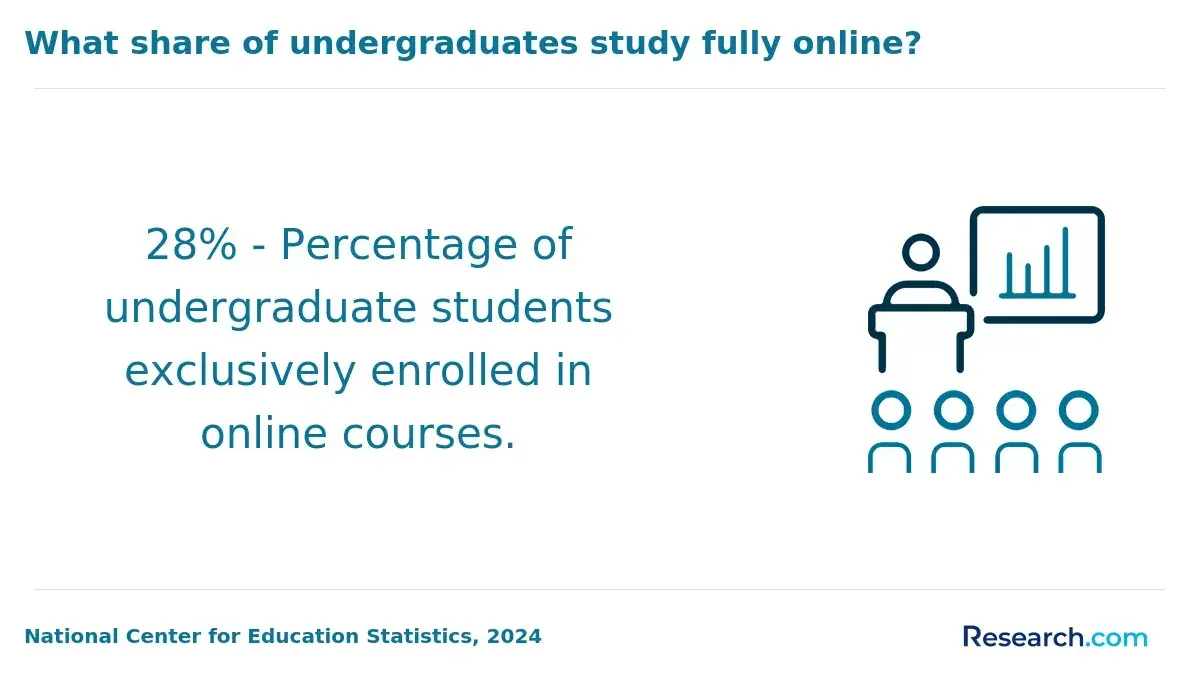
Can You Complete a Educational Policy Degree or Certificate Entirely Online?
The growth of online education has substantially widened access to advanced study in educational policy, making degrees and certificates more flexible for busy professionals. Many U.S. universities now provide online master's in education policy programs, including Howard University's M.Ed. in Educational Leadership & Policy Studies, which is 100% online with both synchronous and asynchronous components, and Florida State University's online master's in education policy and evaluation, which accommodates a part-time schedule.
Doctoral programs at institutions such as the University of Illinois can also be found online. Certificates in educational policy are often available as fully online educational policy certificate options, frequently integrated with or supplementing degree programs.
Still, it is important to weigh hands-on training, internships, or licensure requirements that may require in-person participation, particularly for leadership tracks leading to administrative certification. Students aiming for policy advocacy or research roles might find fully online paths adequate, but those pursuing state licensure should confirm any hybrid or onsite obligations.
Prospective students should closely review each program's structure and speak with admissions advisors to align the online format with their career goals and licensure regulations. For further guidance on credential value, consider resources on online certs that pay well.
Admission requirements are a key consideration when choosing between an educational policy degree and a certificate program. These requirements influence your eligibility, time commitment, and overall career path. Comparing them side by side can help you decide which option best suits your academic background and professional objectives.
The following is a comparison of admission requirements commonly found in educational policy degree programs versus certificate programs.
Admission Requirements for Educational Policy Degree Programs
- Educational Background: Most master's degree programs require a bachelor's degree from a regionally accredited institution, typically with a minimum GPA of 3.0 in the last 60 credit hours, while doctoral programs require a master's degree with a minimum GPA of 3.5.
- Transcripts: Official transcripts from all prior undergraduate and graduate studies are required to verify academic records.
- Resume or Curriculum Vitae: Applicants must submit a current resume or CV that highlights educational history and relevant professional or research experience.
- Statement of Purpose: A thorough statement explaining your interest in educational policy, career goals, and reasons for selecting the specific program is commonly required.
- Letters of Recommendation: Master's programs generally require one to three letters, often including at least one academic reference; doctoral programs usually request three letters with most from academic sources.
- Writing Sample: Some programs, particularly at the doctoral level, request a writing sample to evaluate critical and analytical skills.
- Interview: Certain programs may hold phone or video interviews to assess candidate fit and readiness for graduate work.
- English Proficiency: Non-native English speakers must provide standardized test scores demonstrating language proficiency.
- Application Fee: Fees differ by institution and applicant status.
Admission Requirements for Educational Policy Certificate Programs
- Educational Background: Generally requires a bachelor's degree, though GPA criteria tend to be more flexible than those for degree programs.
- Transcripts: Submission of transcripts from completed degrees is usually mandatory but receives a less rigorous review.
- Resume or Work Experience: Some certificates prefer professional experience in education or related fields, though this is often optional.
- Statement of Purpose: A short statement describing your interest in the certificate and how it relates to your career may be requested, usually less detailed than degree requirements.
- Letters of Recommendation: Fewer certificate programs require them; when they are required, usually just one letter is needed.
- English Proficiency: International applicants may be asked for evidence of English language skills.
- Application Fee: Usually lower than fees for degree programs.
Degree programs, including those with an admission process for an education policy master's degree, tend to stress academic excellence and scholarly potential, whereas certificate programs offer a more accessible route for professionals seeking targeted expertise.
For those interested in advanced doctoral studies, options such as a PhD degree without dissertation may also affect program selection.
Understanding how many credits educational policy programs require helps prospective students plan their study schedules and manage their commitments effectively. Credit requirements differ considerably between degree programs and certificate tracks, affecting duration and depth of study.
The following is a comparison highlighting typical credit expectations for each kind of program.
- Degree programs: Usually demand around 120 undergraduate credits or 30 to 33 graduate credits, offering a comprehensive and in-depth curriculum over multiple years.
- Certificate programs: Typically require between 12 and 18 credits, designed for shorter, more focused study often completed within one year or less.
Tuition costs are a key factor when choosing between pursuing a degree or a certificate in educational policy, since they affect both the initial financial commitment and long-term educational value. Comparing average tuition ranges for these options helps clarify financial expectations and potential debt management.
The following is a detailed comparison highlighting key factors that influence average tuition for an Educational Policy degree versus a certificate program.
Average Tuition for Educational Policy Degree Programs
- Tuition Range: Bachelor's degrees typically range from $20,000 to $80,000 or more in total tuition, while master's programs can begin around $30,000 to $40,000, with prestigious institutions charging upwards of $100,000.
- Public vs. Private Schools: Average annual tuition was about $10,662 for in-state public schools, $23,630 for out-of-state public schools, and $42,162 for private colleges, resulting in significantly higher totals over four years.
- Online vs. On-Campus: Online degree programs may cost less than traditional settings, but well-known online programs can still exceed $30,000 per year.
- Program Length: Most bachelor's degrees take four years, and master's degrees one to two years full-time, raising total tuition compared with shorter certificate options.
- Financial Aid Availability: Degree programs are generally eligible for federal financial aid, scholarships, and institutional grants, helping lower the average tuition for an Educational Policy degree for qualifying students.
Average Tuition for Educational Policy Certificate Programs
- Tuition Range: Certificate programs generally cost between $200 and $10,000, with most community college certificates finished for under $10,000, making the educational policy certificate program cost considerably lower than degrees.
- Program Duration: Certificates typically take a few months up to 18 months to complete, resulting in lower tuition outlay compared with multi-year degrees.
- Institution Type: Community colleges provide some of the most affordable certificates, whereas university-based graduate-level programs may cost more but still remain below degree costs.
- Online vs. On-Campus: Many certificate programs are available online, lowering fees and allowing flexible pacing.
- Financial Aid Availability: Federal financial aid is not always available for certificate programs; prospective students should ask each school about funding options.
For those exploring options, it is also useful to review online colleges in Florida that accept FAFSA to find programs that may offer financial support tailored to your needs.
Transferring certificate credits toward an educational policy degree is often possible, but it varies widely based on institutional policies and program requirements. Credits generally must come from an accredited institution, and coursework should align closely with degree content and rigor. Transfer policies differ by school, so some institutions permit stacking certificate credits into related degrees, while others may not. Making sure the courses are graduate-level and meet the receiving program's standards is essential for credit acceptance.
Many universities cap transferable credits, usually between 6 and 9 for master's level programs, and grades often need to be a B or higher. Pass/fail courses generally are not accepted unless exceptional conditions exist, such as pandemic-related grading changes. Students should verify transfer eligibility, required forms, and approval processes with their graduate school before enrolling in a certificate program. Early verification helps prevent surprises and ensures credits count toward future degree goals.
Certificate programs in educational policy are not accredited in the same manner as degree programs. Degree programs, including bachelor's and master's degrees, usually undergo institutional or specialized accreditation by recognized agencies such as the Council for Accreditation of Educator Preparation (CAEP).
These accreditors evaluate curriculum quality, faculty credentials, student outcomes, and compliance with professional standards. Certificate programs may also be accredited, particularly if aligned with state or national standards such as Pennsylvania Inspired Leadership or CAEP. However, many certificate offerings, especially shorter or non-credit ones, might only provide completion documentation without formal accreditation.
Accreditation plays a vital role in confirming academic quality, supporting credit transferability, and improving employment opportunities, since many employers prefer accredited credentials. It also determines eligibility for federal financial aid, though only accredited programs qualify.
When selecting a program, students should verify that the accrediting agency is recognized by the U.S. Department of Education and check the program's alignment with relevant professional standards. Transparency about curriculum, faculty qualifications, and outcomes matters as well. Prospective students should always confirm accreditation status through authorized bodies before enrolling in any educational policy program.
Educational policy degrees and certificates both provide pathways to meaningful careers, though they often prepare graduates for different types and levels of positions. Grasping these distinctions can help you choose the credential that best fits your professional goals.
The following is a comparison of common roles linked with each qualification.
Jobs You Can Get with a Educational Policy Degree
- Education policy analyst: Conducts research and assesses policies to improve educational systems, often working for government agencies or think tanks.
- School administrator: Oversees daily operations and manages staff at schools or districts, concentrating on policy implementation and organizational leadership.
- Educational consultant: Counsels schools or organizations on curriculum development, policy compliance, and strategic planning.
- Director of research: Leads research initiatives to inform education policy decisions, typically within academic or policy institutions.
- Senior policy analyst: Develops thorough analyses of education laws and regulations, offering guidance to lawmakers or advocacy groups.
Jobs You Can Get with a Educational Policy Certificate
- Policy assistant: Supports policy development teams by collecting data and assisting with research in government or nonprofit settings.
- Education program coordinator: Manages particular education programs or projects, ensuring they align with policy goals and funding requirements.
- Education consultant: Provides targeted advice on educational initiatives and program improvements, often in advisory or support roles.
- Academic researcher: Carries out focused studies under supervision, contributing data and analysis to larger educational policy projects.
- Support roles in government or nonprofit organizations: Offers administrative and operational assistance to agencies focused on education policy implementation.
Pay prospects frequently differ considerably between people who hold a certificate in educational policy and those who graduate with a complete educational policy degree. Grasping such distinctions matters greatly for future students and working professionals as they select their educational route.
A direct comparison brings out the main differences in typical entry-level pay and career prospects for both groups.
- Common Pay Range for Certificate Holders: People who earn a certificate in educational policy usually begin in entry-level administrative or support positions, making between $40,000 and $55,000 each year. Such roles commonly involve program coordinators, research assistants, or policy support staff.
- Typical Pay with an Educational Policy Degree: Those holding a bachelor's or master's degree tend to earn higher entry-level wages, spanning from $46,800 to $78,000 yearly. Positions like policy analysts and educational consultants frequently show median starting pay around $74,000 to $78,000.
- Factors That Influence Pay: Entry-level pay is shaped by applicable work experience, the kind of employer (government, nonprofit, or private sector), geographic area, and the particular education policy focus. Metropolitan areas usually provide higher wages than rural ones.
- Job Prospects: Graduates with a degree can pursue a broader range of positions offering higher earning potential and chances for advancement, whereas certificate holders might discover a more affordable entry point with restricted upward mobility.
- Other Points to Consider: For individuals looking for a good job for introvert work environments, education policy jobs at various qualification levels can present varied career paths.
Here's What Graduates of Educational Policy Programs Say About Their Degree or Certificate
- Vance: "Choosing the educational policy certificate program was an excellent decision for me because I wanted a focused and fast-paced learning experience. The shorter duration let me balance work and study without a huge financial burden, since the costs were significantly lower than a full degree. For anyone unsure about diving into a full degree, the certificate provides concentrated insights that can still boost your career, especially if you're testing the waters."
- Marvin: "The educational policy degree program offered a comprehensive and deep dive into the field that you simply cannot get from a certificate. Although it demanded a larger time and financial commitment, often double or triple the cost of a certificate, the career impact was substantial, opening doors to leadership roles. Consider the degree if you want to shape policy at a systemic level and have the time to commit to rigorous study."
- Parker: "Having finished both the educational policy certificate and degree programs, I can confidently say that the certificate gave me a quick, practical foundation, while the degree built on that with theory and extensive research opportunities. The combined experience made me appreciate how cost and pace affect your learning journey and career trajectory. For those weighing options, starting with a certificate can be a smart, cost-effective step before investing in the degree."
Other Things You Should Know About Educational Policy Degrees
Yes, a certificate in educational policy can frequently serve as a stepping stone to a graduate degree. Many universities permit credits earned from certificate programs to be transferred into a related master's program, provided the institution's specific requirements are met.
Employers generally regard educational policy degrees more highly than certificates because of the comprehensive coursework and depth of knowledge provided. Degrees often lead to higher-level positions and stronger long-term career opportunities compared with certificates, which may suit specific skills or entry-level roles.
Only certificate programs that are Title IV-eligible at an accredited institution can obtain federal aid in 2027. Most standalone professional certificates are not eligible for aid unless they satisfy Department of Education rules and are offered by a school with approved federal student aid participation.
- Certificate vs. Diploma vs. Degree: What They Are & How They Differ https://potomac.edu/certificate-vs-diploma-vs-degree/
- Education Policy https://cehd.missouri.edu/degrees-programs/certificates-minors/education-policy/
- Average Cost of a Master's Degree: 2025 Analysis https://educationdata.org/average-cost-of-a-masters-degree
- Choose Between an Online Graduate Certificate, Degree Program https://www.yahoo.com/news/choose-between-online-graduate-certificate-degree-program-143000285.html
- Diploma, Degree, or Certification: Which One is Right For You? https://lakewood.edu/diploma-degree-or-certification-which-one-is-right-for-you/
- Education Policy Studies - Not Sure? | Penn State College of Education https://ed.psu.edu/academics/departments/department-education-policy-studies/education-policy-studies-not-sure
- Educational Policy Online Graduate Certificate https://www.umassd.edu/programs/educational-policy-graduate-cert-online/
- The Differences Between Certificates, Credentials & Degrees https://diplomasafe.com/credential-vs-certificate/
- Certificate in Education Policy & Leadership - School of Education https://drexel.edu/soe/academics/certificates/Educational-Policy/
- Certificate in Education Policy https://discover.trinitydc.edu/catalog-21-22/certificate-in-education-policy/