2027 Remote Work Report for Environmental Science Graduates: Flexible Roles, Pay, and Hiring Trends

Co-Founder and Chief Data Scientist
Environmental Science graduates often confront a fragmented remote job market with limited clarity on which positions truly align with their skills. Many roles labeled as "remote" demand occasional fieldwork or data collection that cannot be done entirely online. This disconnect creates challenges when evaluating flexible jobs against compensation expectations.
Remote hiring in Environmental Science remains selective, with 38% of US employers prioritizing hybrid models according to recent workforce analytics, signaling a shift toward balancing virtual and in-person tasks. This article breaks down the latest remote role types, salary benchmarks, and hiring patterns to help graduates make informed decisions about their career paths.
Key Points About Working Remotely for Environmental Science Graduates
- Remote Environmental Science roles typically offer annual salaries between $60,000 and $75,000, influenced by specialization and employer size, guiding graduates to weigh role focus against compensation potential when targeting remote positions.
- Remote jobs emphasize data analysis, environmental consulting, GIS mapping, policy research, and technical writing, necessitating digital proficiency over fieldwork experience for effective performance and hiring alignment.
- Graduates should develop data management and communication skills, curate remote-centric project portfolios, and prioritize employers with established remote frameworks to navigate extended hiring timelines and enhance remote job prospects.
- Key Points About Working Remotely for Environmental Science Graduates Key Points About Working Remotely for Environmental Science Graduates
- Are there remote work opportunities in the Environmental Science industry? Remote Opportunities
- Which Environmental Science niches offer remote roles? Which Environmental Science niches offer remote roles?
- What entry-level Environmental Science roles allow remote work? Entry-Level Roles
- What is the average salary of Environmental Science graduates who are working remotely? Average Salary
- Do remote Environmental Science jobs pay the same as on-site roles? Pay Comparison
- What benefits do remote Environmental Science employees receive? What benefits do remote Environmental Science employees receive?
- Where can Environmental Science graduates look for remote jobs? Where to Find Jobs
- What do Environmental Science employers look for in candidates? What do Environmental Science employers look for in candidates?
- How can Environmental Science graduates prepare for remote roles? Preparing for Remote Roles
- How can Environmental Science graduates if remote roles are a good fit for them? How can Environmental Science graduates if remote roles are a good fit for them?
Are there remote work opportunities in the Environmental Science industry?
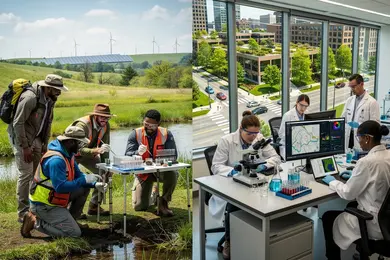
Remote and hybrid work are cautiously growing in the Environmental Science industry, though fully remote roles remain scarce for entry-level graduates. About 20% of entry-level job postings offer fully remote options, while 50% are hybrid and 30% require on-site work. This distribution reflects the field's strong need for lab access and fieldwork.
Regional compliance laws and organizational workflows strongly influence flexibility. For instance, certain states mandate on-site inspections or environmental sampling, limiting remote feasibility. In contrast, data analysis or GIS roles may allow more asynchronous work, especially within organizations adopting cloud-based platforms or remote sensing software.
A recent survey revealed that 62% of Environmental Science employers have hybrid policies, yet only 15% require full office attendance. This signals a market slowly embracing flexibility but still anchored in location-dependent tasks. Graduates pursuing remote roles should anticipate technical specialization and weigh this tradeoff against hands-on experience.
For example, a recent Environmental Data Analyst role with a government agency allowed remote hours due to cloud computing tools, unlike a field technician position demanding daily site visits. Understanding such distinctions is key for graduates targeting remote career paths.
Which Environmental Science niches offer remote roles?
Remote roles in Environmental Science specialize where digital workflows surpass the need for on-site presence. This shift favors fields relying on data analysis, virtual collaboration, and modeling rather than physical fieldwork. For example, an Environmental Data Analyst can assess climate trends using remote cloud platforms without visiting monitoring sites, increasing flexible job opportunities. However, niches demanding tactile field skills, like wildlife biology, inherently limit remote options. A practical overview of remote-friendly niches follows here to guide choices for graduates navigating Environmental Science remote job opportunities.
- Environmental Data Analysis: Focuses on interpreting large datasets related to pollution levels and climate parameters. This niche suits remote work as professionals use advanced software and cloud-based data systems for analysis and reporting without field visits.
- Environmental Consulting: Centers on regulatory compliance and impact assessments. Work involves producing detailed reports and attending client meetings virtually, making this role adaptable to remote setups.
- GIS Specialists: Utilize Geographic Information Systems software to visualize and analyze spatial environmental data. The role's computer-based nature supports off-site work while contributing critical insights for environmental planning.
- Sustainability and CSR Roles: Engage with virtual stakeholder communication and sustainability reporting. Rising demand for online engagement platforms drives the expansion of these remote opportunities.
- Ecological Modeling: Involves building simulations and predictive models using high-performance computing resources remotely. This task is well suited for asynchronous work environments.
- Environmental Policy Analysis: Requires researching and drafting policy documents, tasks that are largely independent of physical location and fit a remote workflow.
A recent study shows a 16.7% increase in remote job postings for GIS and Environmental Data Analysis, indicating growing employer preference for these digital remote roles. Graduates considering flexible careers should evaluate whether their chosen specialization balances technical skills suitable for remote work or demands direct field engagement. For those seeking advanced credentials that may enhance remote career prospects in education-based environmental roles, a doctorate in education online can provide targeted expertise and added flexibility.
What entry-level Environmental Science roles allow remote work?
Entry-level roles in Environmental Science with remote work options reflect shifting employer priorities toward flexible and hybrid models. These positions often balance analytical duties with occasional site visits, making them practical for remote execution while maintaining essential field engagement. The following list highlights typical remote entry-level Environmental Science jobs, outlining their hiring requirements, core functions, and reasons they accommodate remote work effectively.
- Environmental Data Analyst: Requires strong skills in data management and statistical analysis, often using tools like R or Python. Analysts interpret large environmental datasets to support conservation and policy decisions. Remote access to data and modeling platforms enables these professionals to deliver insights without being on-site.
- Remote Field Technician: Entry-level applicants must be comfortable with field sampling protocols and basic technical equipment. While primarily remote, periodic visits to collect field data are necessary. This hybrid role allows data processing tasks to be completed remotely between visits.
- Sustainability Consultant Assistant: Candidates should have knowledge of sustainability auditing and vendor communication. They assist in remote compliance checks and reporting, relying on digital collaboration tools that support distributed teamwork.
- Environmental Policy Researcher: Requires proficiency in research databases and policy analysis frameworks. These roles involve drafting policy briefs and regulatory impact reports, functions well-suited for remote work given their paper-based, digital nature.
- GIS Technician: Hiring favors certifications in GIS software such as ArcGIS. Responsibilities include creating and analyzing spatial data maps, which can be efficiently executed remotely using cloud-based geospatial tools.
- Environmental Compliance Coordinator: Entry-level roles demand familiarity with environmental regulations and reporting standards. Coordinators manage documentation and track compliance remotely by coordinating with multiple stakeholders through online platforms.
Employers increasingly seek candidates proficient in cloud-based environmental modeling and remote sensing software, reflecting the digital evolution in workflows. Job boards have recorded a 24.7% rise in hybrid Environmental Science listings, with 38% explicitly including remote work options, underscoring sustained growth in flexibility for recent graduates. However, entirely remote positions remain rare as field data collection often necessitates some on-site presence. Graduates must weigh this balance when considering remote entry-level Environmental Science jobs that blend flexibility with hands-on responsibilities.
For Environmental Science graduates exploring career paths, gaining technical skills aligned with remote workflows is critical. Entry-level roles vary widely, and understanding each position's practical demands helps inform choices about where to focus efforts. Some may also consider combining expertise in Environmental Science with knowledge from fields like accounting, accessible through programs such as an accounting degree online, to diversify career options in remote-compatible roles.
What is the average salary of Environmental Science graduates who are working remotely?
Environmental Science graduates working remotely start with median salaries between $48,000 and $58,000 annually. This range sets realistic compensation expectations for entry-level positions viable in flexible work environments, such as environmental data analysis or regulatory compliance. These salaries reflect the practical earning baseline for remote roles in this sector.
Earnings vary significantly based on technical demands and certifications. Specialists with skills in GIS or environmental modeling tend to secure higher pay due to the increasing value employers place on these competencies for remote collaboration. A 37% cluster of remote Environmental Science professionals earns between $45,000 and $55,000, illustrating a mid-level wage concentration rather than peak starting salaries.
Compared to related fields like biology or geology, remote pay is modestly lower because fully remote fieldwork options are fewer and often better compensated on-site. Recent graduates should weigh this when evaluating remote job pay trends for Environmental Science professionals and consider developing technical expertise to improve their prospects.
Those exploring flexible work options might find insights by researching the best online schools for construction management, which exemplify accelerated pathways with practical application emphasis, similar to fields adjacent to Environmental Science.
Do remote Environmental Science jobs pay the same as on-site roles?
Remote Environmental Science roles typically pay within 5% to 10% of equivalent on-site positions, but this margin conceals important variability. While some employers provide national flat-rate salaries ensuring pay parity, others adjust wages based on the employee's geographic location, leading to notable compensation differences.
Employers using geographic localization often lower pay bands for remote workers situated in regions with lower living costs. This means a graduate living in a rural area might earn less than a counterpart of equal skill in a major city despite performing the same work. Conversely, flat-rate policies support fairness but create trade-offs for companies managing budgets across diverse locales.
A recent workforce study found that 62% of Environmental Science employers recognize the necessity of balancing remote salary adjustments with local market conditions. This reflects ongoing tension between pay equity aims and cost controls, influencing how remote roles are structured and compensated.
For example, a remote scientist working from a lower-cost state might forfeit travel subsidies but receive a $500 annual home-office stipend. Understanding these subtle compensation components helps graduates evaluate remote opportunities beyond headline salary figures while anticipating practical financial trade-offs.
What benefits do remote Environmental Science employees receive?
Remote Environmental Science employees often face unique challenges in balancing technical fieldwork demands with off-site collaboration, making targeted benefits critical for sustained effectiveness. For example, an entry-level specialist working from home while managing environmental data analyses must rely on robust support structures to maintain productivity and professional growth.
Employers respond by blending traditional benefits with remote-specific perks that directly address workspace setup, skill development, and work-life boundaries. This focused package fosters engagement and counters isolation, which can diminish output and job satisfaction in decentralized roles. The following benefits are central to this support system:
- Home Office and Connectivity Stipends: Companies typically provide monthly stipends, averaging around $125, to cover home internet and essential equipment. This allowance ensures remote workers maintain secure, reliable access to critical databases and communication tools without incurring hidden costs.
- Healthcare and Paid Time Off: Core benefits mirror those of on-site employees, offering health insurance and PTO to protect wellbeing and accommodate environmental field assignments or unexpected site visits.
- Certification and Training Reimbursements: Environmental Science employers often fund credential renewals and software training, recognizing the fast-evolving technical landscape. Ongoing education increases remote workers' value, particularly when direct supervision is limited.
- Retirement Plan Contributions: Options like 401(k) matching remain standard, though generosity varies by organization size. Such benefits contribute to long-term financial security, helping remote employees weigh job stability against flexible arrangements.
- Wellness and Team-Building Programs: Virtual wellness initiatives and social activities address the blurred boundaries between personal and professional life that remote workers experience. These perks support mental health and reduce turnover risk, an increasing priority among decentralized employers.
A remote Environmental Science specialist recounted hesitating before accepting a hybrid role due to concerns about staying professionally connected. However, after signing on, the company's monthly equipment stipend alleviated worries about home workspace costs. The ongoing certification reimbursements motivated timely skill updates, and participation in weekly virtual wellness sessions helped combat the sense of isolation. This combination of benefits proved essential in maintaining both productivity and morale through variable remote work challenges.
Where can Environmental Science graduates look for remote jobs?
Environmental Science graduates must adopt a combined strategy of generalist and specialized platforms to effectively locate remote work. For instance, a recent graduate focusing on policy research might find broader boards overloaded with irrelevant listings, whereas niche sites sharpen the search toward viable roles within the field. This dual-channel approach is essential since recruitment data indicates 62.7% of remote entry-level hires emerge from a blend of online boards and network referrals, underscoring the importance of engagement beyond mere applications.
Below are key platforms and resources that reflect this pragmatic balance of accessibility and specialization for finding remote positions.
- Indeed and Glassdoor: These widely used digital job boards aggregate a broad spectrum of postings including remote entry-level positions in environmental consulting and data analysis. Their extensive reach drives high application volumes but requires discerning filters and ongoing searches to uncover truly relevant roles among mixed listings.
- EcoJobs and GreenJobs: Specialized boards dedicated to ecological and environmental careers, these platforms focus exclusively on sector-specific postings. Their curated listings deliver higher relevance for graduates seeking remote-friendly opportunities aligned with sustainable research and conservation work.
- LinkedIn Groups for Environmental Careers: Online communities centered on sustainability provide informal but valuable channels for insider job leads and contract opportunities. Their networking-driven approach helps uncover less advertised roles often missed by general job boards.
- Ecological Society of America (ESA) and Society for Conservation Biology (SCB): These professional associations offer members early access to remote job boards and newsletters. Their sector-specific outreach facilitates connection to remote openings before they appear on mainstream platforms.
What do Environmental Science employers look for in candidates?
Employers hiring remote Environmental Science graduates prioritize candidates who combine technical expertise with practical skills to deliver results independently. A typical scenario involves managing complex spatial and environmental data projects without direct oversight, requiring both domain knowledge and advanced digital fluency. Top skills sought by Environmental Science employers in remote positions highlight essential qualifications that support distributed collaboration, independent problem-solving, and regulatory compliance.
The key competencies recruiters assess in candidates include the following:
- Technical GIS Proficiency: Mastery of Geographic Information Systems (GIS) software is critical for spatial analysis and environmental modeling. Employers evaluate this skill through technical tests or portfolio work demonstrating accurate data layering and map interpretation, underpinning long-term project success in remote roles.
- Quantitative Data Analysis: Familiarity with statistical tools such as R or Python reflects a shift toward more rigorous environmental data assessment. Candidates who can analyze and interpret datasets quantitatively stand out as capable of producing actionable insights needed for remote environmental monitoring and reporting.
- Certifications in Compliance Frameworks: Credentials like ISO 14001 certify knowledge of environmental regulations and standards. These certifications mark candidates as uniquely prepared to navigate legal requirements critical to project approvals and audits in decentralized teams.
- Digital Collaboration Literacy: Effective use of platforms like Microsoft Teams or Slack, combined with cloud-based data management, ensures seamless communication and project tracking. Assessment focuses on candidates' experience in maintaining workflow continuity across time zones and virtual settings.
- Remote Work Portfolio Experience: Demonstrable experience managing remote projects, including applied environmental case studies and data-driven reports, signals readiness for distributed work environments. Employers prioritize evidence that candidates can operate autonomously while delivering consistent, high-quality outcomes.
A landmark study showed that 68.3% of Environmental Science employers now require advanced digital skills for remote roles, revealing that domain expertise alone is insufficient. Graduates must integrate environmental science knowledge with digital competencies to meet these evolving workforce demands. Understanding the average cost of MLIS degree us programs can help contextualize investment decisions for those advancing their skills in related fields like data science or information management.
How can Environmental Science graduates prepare for remote roles?
Environmental Science graduates targeting remote roles must develop a hybrid skill set distinct from traditional field positions. Practical remote work demands proficiency in digital tools, independent project management, and a reliable technical environment. For instance, a recent graduate working remotely on environmental impact reports must analyze large datasets and coordinate with dispersed teams without direct oversight.
The following strategies outline essential preparations for establishing success in remote Environmental Science careers.
- Master Data Analysis Software: Acquire strong skills in R, Python, or GIS platforms. These tools empower graduates to independently process complex datasets, a critical ability for remote roles where immediate support is unavailable. Formal online courses or platform-specific training sharpen experience and efficiency.
- Gain Digital Collaboration Experience: Familiarize yourself with remote communication tools like Slack, Trello, or Microsoft Teams. Participating in virtual teamwork projects or bootcamps helps bridge fieldwork knowledge with digital interaction, preparing graduates to maintain productivity across distributed teams.
- Obtain Relevant Certifications: Pursue credentials in environmental data management, remote sensing, or cloud computing to enhance credibility. Certifications confirm mastery of cloud-based GIS and modeling software, increasingly demanded by employers prioritizing remote workflows.
- Establish a Dedicated Remote Workspace: Create a reliable setup with high-speed internet, ergonomic equipment, and access to licensed software. This infrastructure supports sustained productivity and aligns with employer expectations for seamless remote integration.
- Build a Portfolio of Independent Projects: Develop evidence-based work such as virtual impact assessments or programming automated data collection. A recent study shows that graduates with portfolios demonstrating digital skills improve their remote hire chances by 37%, underscoring the value of tangible, applicable experience.
Environmental Science graduates preparing for remote roles should focus on mastering essential remote work skills specific to Environmental Science careers. Additionally, understanding the best remote job search strategies for Environmental Science graduates can significantly improve employment outcomes in a competitive market. For those evaluating foundational academic pathways, an online associate degree in criminal justice provides insight into remote education models and credentialing rigor relevant to environmental fields adapting to digital formats.
How can Environmental Science graduates if remote roles are a good fit for them?
Determining whether a remote role suits an Environmental Science graduate requires assessing work style, job function preferences, and external conditions. For example, a graduate who values autonomy in data modeling but struggles with blurred work-life boundaries must weigh flexibility against potential stress. Graduates can use key criteria to evaluate if remote roles align with their skills and lifestyle demands.
Consider the following factors when deciding on remote Environmental Science positions:
- Self-Motivation and Discipline: Remote work limits direct supervision. Graduates should honestly assess their ability to manage projects independently and maintain productivity without immediate oversight, a critical factor for job success and career stability in distributed teams.
- Preference for Fieldwork vs. Remote Tasks: Many remote roles focus on data analysis, GIS, and report writing rather than site visits. Graduates who thrive outdoors may find remote positions unsatisfying unless they accept hybrid arrangements combining field and remote work.
- Technology and Connectivity Access: Reliable internet and up-to-date hardware are essential. Graduates in areas with unstable infrastructure should consider whether connectivity barriers could impede performance and limit long-term employability in remote roles.
- Interdisciplinary Skillset Development: Coding, statistical analysis, and digital communication skills increasingly matter. Graduates must evaluate their proficiency and willingness to adapt, as growing technical demands shape remote Environmental Science work.
- Work-Life Balance Management: Remote roles reduce commuting but may blur boundaries. A workforce study showed 37.8% of remote Environmental Science workers struggled with this balance, leading to higher turnover. Evaluating personal resilience to such challenges is crucial.
- Flexibility with Scheduling and Time Zones: Working across global teams requires adaptability to varied hours. Graduates should consider their tolerance for irregular schedules and asynchronous collaboration demands when choosing remote jobs.
For instance, a graduate working remotely on climate modeling for an international NGO shared that initial hesitation about remote isolation gave way after confirming stable internet access and committing to daily structured check-ins. The gradual adoption of coding skills and setting clear work hours were pivotal decisions that helped confirm remote employment as a sustainable path. This experience highlights how realistic self-assessment and proactive adaptation shape successful remote careers in Environmental Science.
References
- Rising Popularity of Environmental Programs https://www.keg.com/news/rising-popularity-of-environmental-programs
- Is Environmental Science Hard? Uncovering the Difficult Aspects of Environmental Science https://sustainablebusinessmagazine.net/eco-review/is-environmental-science-hard-uncovering-the-difficult-aspects-of-environmental-science/
- Bachelor of Science in Environmental Science | Royal Roads University https://www.royalroads.ca/programs/bachelor-science-environmental-science
- 2025 Most Affordable Online Environmental Science Degrees https://www.onlineu.com/most-affordable-colleges/environmental-science-degrees
- Is a degree in environmental science worth it? | edX https://www.edx.org/resources/is-a-degree-in-environmental-science-worth-it
- How to Apply to Environmental Graduate Programs https://www.cjbnetwork.com/articles/how-to-apply-to-environmental-graduate-programs
- Resources | GreenLearning https://greenlearning.ca/resources
- Is an Environmental Science Degree Right for You? · PrepScholar https://blog.prepscholar.com/environmental-science-degree-jobs
- Top 10 Benefits of Environmental Education - Project Learning Tree https://www.plt.org/educator-tips/top-ten-benefits-environmental-education/
- Admissions | Department of Environmental Sciences and Policy https://envsci.ceu.edu/ms-admissions
Other Things You Should Know About Environmental Science
Remote roles in Environmental Science often limit direct fieldwork and in-person data collection, which are critical for developing practical skills. Graduates should expect to supplement their remote work with intentional field experiences or internships to maintain hands-on competence. Without this, they risk falling behind in essential technical abilities that employers still highly value, especially for roles requiring detailed environmental assessments.
Remote Environmental Science jobs frequently demand strong self-management due to asynchronous workflows and dispersed teams. Graduates should prepare for less immediate feedback and more responsibility in managing deadlines independently. Additionally, effective communication skills tailored to virtual collaboration tools become vital, as miscommunications can delay projects or reduce the clarity of scientific reporting, impacting overall job performance.
Prioritizing remote experience can be strategic if the graduate aims to work in data analysis, GIS mapping, or environmental consulting sectors that increasingly support telework. However, early career exposure to traditional fieldwork often provides an irreplaceable foundation in environmental sampling and regulatory compliance. Graduates should weigh their long-term career goals carefully; gaining a balanced combination of both may offer broader employability and a clearer path to advancement.
Employers frequently expect remote candidates to demonstrate greater initiative, technical versatility, and proficiency with remote collaboration platforms. This means graduates must show not only their scientific expertise but also competency in independently managing projects and troubleshooting technical issues without immediate support. Understanding this expectation allows graduates to tailor applications and interview responses to highlight these skills, increasing their competitiveness for remote roles.