2027 Environmental Science Degree Growth by State: Where Interest Is Rising the Fastest

Co-Founder and Chief Data Scientist
Several states show striking surges in environmental science degree enrollment, driven by unique economic shifts, evolving regulatory landscapes, or institutional initiatives expanding program access. For instance, regions with growing renewable energy sectors or stringent climate policies are catalyzing demand for graduates skilled in environmental assessment and compliance.
According to the National Center for Education Statistics, flexible online graduate programs have contributed to a 15% rise in part-time adult enrollment nationwide in 2024, reflecting a workforce balancing upskilling with employment obligations. This trend reshapes how and where prospective students pursue advanced training, influencing their career mobility and timing in rapidly changing environmental job markets.
Key Things to Know About the State Where Environmental Science Degree Interest Is Rising the Fastest
- States like Oregon see enrollment growth driven by stringent environmental regulations, increasing employer demand for graduates with expertise in compliance and policy analysis, influencing program focus toward regulatory frameworks and practical applications.
- Texas's demographic shift with rising adult learners pursuing online environmental science degrees reflects tradeoffs in hands-on field experience versus flexible, career-compatible study schedules, affecting skill development balance.
- Florida's expanding coastal research institutions increase graduate workforce integration but raise timing challenges as program durations lengthen to accommodate specialized certifications valued by employers in regional ecosystems.
- Which States Are Seeing the Fastest Growth in Environmental Science Degree Enrollment? States Seeing the Fastest Growth in Enrollment
- What Does Enrollment Growth in Environmental Science Programs Actually Tell Prospective Students? Interpreting Enrollment Growth
- How Do Regional Job Market Conditions Drive Environmental Science Degree Demand by State? Role of Regional Job Market Conditions
- Which States Have Added the Most New Environmental Science Degree Programs in the Last Five Years? States That Have Added the Most Programs
- How Has the Rise of Online Education Changed Which States Lead in Environmental Science Program Interest? Role of Online Education in Increased Program Interest
- What Demographic Trends Are Fueling Environmental Science Degree Growth in Specific States? Demographic Trends Fueling Growth
- How Do State Funding Levels for Environmental Science Services Influence Degree Program Growth? Role of State Funding Levels
- Which States Are Emerging as Unexpected Leaders in Environmental Science Degree Interest? States Emerging as Unexpected Leaders in Growth
- How Does State Population Size Affect the Interpretation of Environmental Science Degree Growth Data? Role of State Population Size
- What Role Do State Licensing Requirements Play in Driving or Suppressing Environmental Science Enrollment? Role of State Licensing Requirements
Which States Are Seeing the Fastest Growth in Environmental Science Degree Enrollment?
Enrollment surges in environmental science degree programs reflect evolving market signals where academic offerings meet regional economic and regulatory demands. This trend is not uniform nationwide but concentrated in states where environmental challenges intersect with expanding institutional capacity and workforce needs. Such enrollment growth signals practical career advantages but also invites tradeoffs regarding program availability, local job market saturation, and regional specialization.
- Colorado: Colorado's rapid enrollment growth is anchored in its outdoor recreation economy and renewable energy sector expansion, favoring graduates with expertise in applied environmental management and policy implementation tailored to mountainous and rural ecosystems.
- North Carolina: With an ecology spanning coastal to mountainous zones, growth in environmental science programs supports careers addressing climate resilience and coastal resource management, crucial for employers in public agencies and private consultancies focused on adaptation strategies.
- Washington: The Pacific Northwest's robust demand stems from statewide commitments to sustainability and green technologies, where rising enrollments feed a pipeline into urban sustainability, conservation, and environmental policy fields grappling with stringent regulations.
- Arizona: Growth here corresponds with increasing focus on arid-land challenges, specifically water resource management and desert ecology, positioning graduates for roles in governmental water agencies and nonprofit environmental advocacy groups.
- Massachusetts: The Northeast hub benefits from intense research activity and proximity to environmental think tanks, attracting students inclined toward innovation-driven roles in environmental technology and regulatory sciences.
These states exhibit geographically diverse enrollment momentum, underscoring that regional regulatory environments, economic sectors, and institutional research capacities drive program expansion more than geographic clustering alone. For recent graduates, career changers, and geographically flexible students evaluating programs, understanding these regional dynamics is critical to aligning degree choices with long-term employability and workforce demands. Subsequent analysis will unpack economic drivers, workforce expectations, and institutional expansions shaping this enrollment growth, clarifying where investment in environmental science education offers meaningful career returns and where it may face structural limitations.
Students weighing options might also explore flexible study formats, including online associate degree pathways that reflect the evolving educational landscape and workforce integration models in environmental science fields.
What Does Enrollment Growth in Environmental Science Programs Actually Tell Prospective Students?
Enrollment growth in environmental science programs often reflects shifting labor demands or institutional strategies but rarely offers a definitive gauge of program strength or graduate success. For instance, a program expanding quickly due to relaxed admissions may inflate opportunity perceptions without ensuring robust career outcomes, thereby influencing decisions with potentially misleading signals.
Raw enrollment numbers capture interest and scalability but fail to illuminate critical dimensions like academic rigor, completion likelihood, and workforce alignment. To interpret growth responsibly, prospective students must consider additional indicators that reveal whether the program fosters meaningful achievement and employability.
- Retention Rates: Programs with high retention demonstrate effective student support and engagement, which correlate strongly with real educational value beyond mere enrollment.
- Graduation Rates: These figures highlight how many students complete their degrees within expected timelines, a proxy for program accessibility and instructional quality.
- Job Placement Outcomes: Employment success, internships, and employer networks reveal the tangible payoff of a program in the environmental science labor market.
- Licensure Pass Rates: In contexts where certification matters, exam success is a direct measure of readiness and academic standards.
- Growth Drivers: Distinguishing between growth driven by authentic labor market needs and that arising from aggressive recruitment or weakened admissions is essential for evaluating long-term program value.
- Critical Evaluation: Enrollment growth should be one component of a broader decision-making framework that includes conversations with current students and alumni to access nuanced insights on program reality.
How Do Regional Job Market Conditions Drive Environmental Science Degree Demand by State?
The demand for environmental science degrees varies significantly by state due to distinct regional economic drivers and labor market dynamics. States with expanding public sectors, growing healthcare services, and proactive environmental policies are fostering increased opportunities for professionals with environmental credentials. This, in turn, influences enrollment growth in graduate programs as students align their educational decisions with practical workforce demands and employer incentives.
Navigating these nuances is essential, as the strength of local job markets directly impacts access to internships, the scope of real-world experience, and negotiating power for new graduates. Choosing a program without evaluating these factors can limit career mobility and wage potential after degree completion.
- California: California leads with robust job openings due to its large public sector and stringent environmental mandates. The intersection of healthcare growth and sustainability initiatives creates a high demand for graduates capable of implementing resilience and pollution control projects.
- Texas: Texas reflects labor market shifts driven by an energy industry transitioning toward renewables, coupled with a substantial increase in school districts promoting environmental education, spurring employer preference for credentialed environmental science professionals.
- Florida: Florida's focus on coastal resilience and ecosystem management has expanded roles within public agencies, providing graduates with hands-on practicum placements tied to climate adaptation and water resource stewardship.
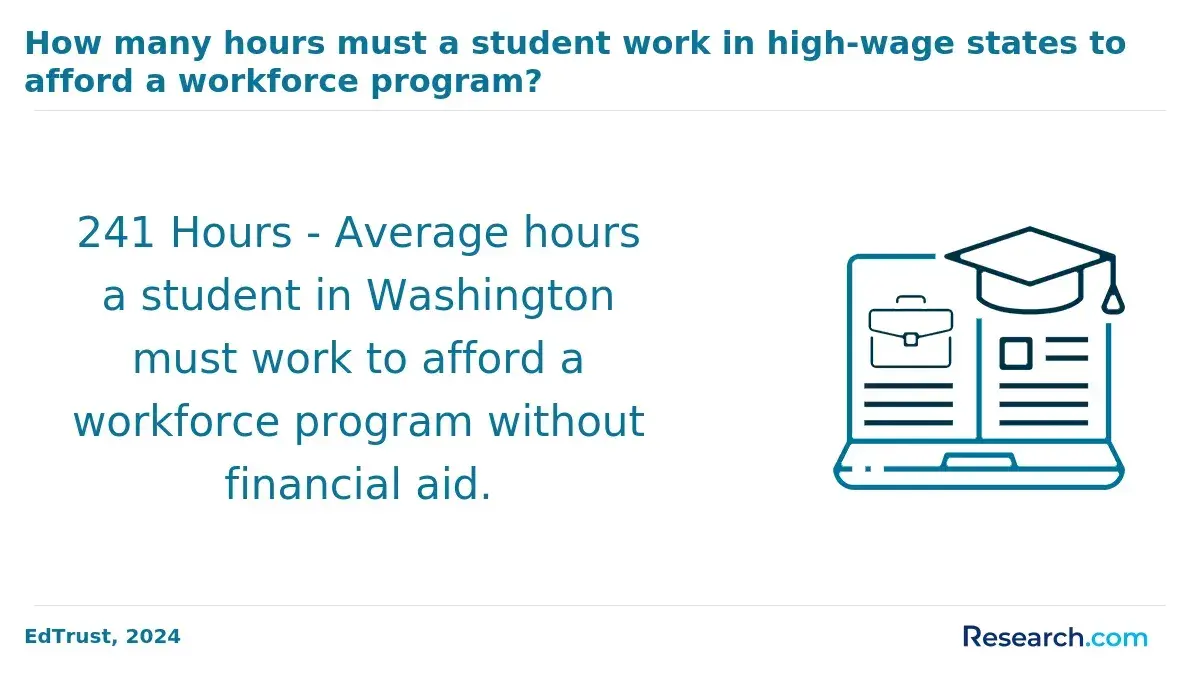
- Washington: Washington state combines healthcare expansion and progressive environmental regulation, generating a competitive market for environmental science degree holders and elevating early-career salary prospects.
- New York: New York's commitment to urban sustainability programs and complex regulatory environments creates sustained demand for advanced environmental expertise within state and municipal agencies.
For those assessing regional workforce demand for environmental science graduates, reviewing state labor market reports and Bureau of Labor Statistics projections reveals vital insights into employment trajectories. A strong local workforce outlook not only enhances practicum availability but also shapes salary negotiations and long-term career outcomes.
Additionally, individuals balancing continued education with professional development or career shifts will find that aligning program selection to these labor conditions markedly improves return on investment. Students with varied backgrounds may also consider accredited options such as a criminal justice degree online accredited as part of interdisciplinary strategies tied to environmental policy and compliance roles, reflecting evolving employer preferences across sectors.
Which States Have Added the Most New Environmental Science Degree Programs in the Last Five Years?
Growth in accredited environmental science degree programs varies regionally, shaped by state-level economic priorities, regulatory frameworks, and institutional strategies. Rather than uniformly increasing access, these expansions reflect targeted responses to workforce demands and funding incentives that influence where and how programs develop. Recognizing these distinctions helps prospective students assess not only availability but also the practical implications of program features tied to local job markets and educational delivery.
- California: Program growth here is driven by stringent environmental policies and robust state grants focused on climate resilience, resulting in numerous new graduate-level offerings and extensive online tracks. This hybrid expansion caters to working professionals but can intensify competition for financial aid amid broader enrollment.
- Texas: Expansion mainly occurs through increased capacity within established programs rather than new launches, aligned with workforce shortages in environmental roles linked to the energy sector. Specialized concentrations in policy and resource management reflect employer needs, although options remain more limited than in states with new program establishments.
- Florida: Rapid population growth and climate vulnerability prompt the proliferation of entirely new programs, supported by STEM incentives that drive innovation and competitive tuition pricing. However, the speed of development may create variability in program maturity and outcomes.
- Washington: Institutional rivalry and partnerships with environmental NGOs motivate online offerings and interdisciplinarity targeted at mid-career students seeking practical skills. This model balances flexibility with industry relevance but requires self-directed learners comfortable with virtual environments.
- New York: Extensive research infrastructure and urban sustainability challenges spur diversified programs and capacity growth. While scholarship availability linked to workforce shortages exists, wide tuition cost variation demands careful program-by-program evaluation to ensure value.
Institutional expansion decisions are often responses to accreditation incentives rewarding curricular innovation, direct workforce development funding, and competitive pressures. For students, states with multiple growing programs offer broader specialization choices but face more intense financial aid competition, underscoring the importance of detailed comparison within state boundaries before selecting a program.
A graduate recalled applying during a period when program expansions were still solidifying. Initial enthusiasm shifted to uncertainty as rolling admissions unfolded unevenly across institutions. Delays in acceptance notifications prompted reconsideration of priorities and backup options, highlighting how dynamic growth phases in certain states can require applicants to remain flexible and proactive. This experience underscored the value of early engagement with admissions offices and vigilance in monitoring evolving program structures amid rapid sector shifts.
How Has the Rise of Online Education Changed Which States Lead in Environmental Science Program Interest?
The expansion of fully online environmental science programs has fundamentally shifted which states dominate graduate enrollment, breaking the historic link between proximity and program selection. Previously, students generally chose graduate education based on location convenience, constrained by commuting feasibility or willingness to relocate. Now, states with established and accredited online environmental science curricula attract a geographically diverse student body, effectively serving as national education centers regardless of their physical location.
- Accessibility: Students residing in states with limited or no local environmental science graduate programs increasingly turn to remote options, broadening their educational horizons beyond traditional regional boundaries.
- Reputation and Accreditation: Universities offering rigorously accredited online courses with solid reputations draw disproportionate out-of-state enrollments, as credential recognition remains crucial for workforce acceptance and employer trust.
- Cost Considerations: Competitive online tuition models, especially those that extend in-state or discounted rates to remote enrollees, enhance certain states' competitive positioning as preferred hubs for online environmental science education.
- Decoupling of Geography: This trend reshapes some states into virtual national providers, shifting graduate enrollment patterns and intensifying competition among programs vying for a dispersed, digitally enrolled audience.
- Licensure Constraints: However, students must still navigate varying state-specific licensure and certification requirements post-graduation, which can influence both program choice and career mobility despite expanded online access.
As a result, students gain unprecedented program options but must weigh these against regional regulatory constraints and local market demands. Simultaneously, programs face pressure to maintain quality and differentiate their offerings to capture and serve a nation-wide student population, reflecting broader shifts in how environmental science education intersects with geographic and professional realities.
What Demographic Trends Are Fueling Environmental Science Degree Growth in Specific States?
Enrollment growth in environmental science degree programs reflects a direct response to state-specific demographic shifts that shape workforce demand and educational planning. State-level data reveals that localized demographic drivers-often masked by aggregate national statistics-create distinct regions where program expansion aligns with practical labor market needs and public health priorities. Choosing programs in states with favorable demographic trends offers graduates a better chance at stable employment due to sustained demand for environmental expertise.
- Population Aging: Regions like the Northeast and Midwest experience heightened environmental health challenges linked to aging populations. Increased focus on air and water quality projects necessitates skilled environmental science professionals, driving enrollment where older demographics prioritize sustainability and health-centric policies.
- Immigration Patterns: Southern and Western states with substantial immigration growth see urban clusters facing intensified resource management issues. Environmental science programs in these areas expand in response to employer demand for managing environmental impacts amid rapid socioeconomic development.
- Urbanization: States experiencing fast urban growth, including Texas, Florida, and California, encounter increased pollution and land-use pressures. This urban expansion requires environmental specialists to navigate complex regulatory and sustainability issues, attracting students to nearby degree programs committed to metropolitan environmental challenges.
- K-12 Enrollment Growth: The Sun Belt's rising K-12 population signifies a larger future workforce pipeline interested in sustainability careers. Institutions in these states benefit from expanding demand as younger cohorts pursue environmental science fields aligned with long-term state development goals.
- Rising Mental Health Diagnoses: Emerging evidence from areas like the Pacific Northwest links environmental stressors to mental health trends, expanding the scope of environmental science to incorporate psychosocial well-being. Programs here reflect growing interdisciplinary approaches integrating environmental and public health sciences.
For prospective students, analyzing these demographic drivers of environmental science degree growth in US states provides insight beyond enrollment numbers alone. States with dynamic population trends and evolving environmental health needs offer more resilient career prospects. Those facing demographic decline or less diverse immigration flows may present cyclical or limited opportunities. Understanding such nuances supports informed decision-making about graduate programs and post-degree employment.
Careers in environmental science often require balancing ecological, social, and regulatory demands, so selecting a region experiencing sustained demographic uplift and related workforce demand is crucial. Aspiring professionals can also explore targeted credentials to supplement their education, such as those in administrative functions via an administrative assistant associate degree, to enhance multidisciplinary capabilities and job market adaptability.
How Do State Funding Levels for Environmental Science Services Influence Degree Program Growth?
State funding decisions directly shape the landscape of environmental science degree programs by influencing job availability and institutional commitment. Regions that direct significant resources toward Medicaid rates linked to environmental health, block grants for community initiatives, and school mental health services that account for environmental factors tend to provide a more predictable employment environment.
This consistency encourages universities to launch or expand environmental science offerings, knowing graduates will find viable careers locally. Conversely, states with minimal investment often face stagnation in program growth and talent loss as graduates migrate to areas with stronger public sector support.
- Investment: Robust funding from state budgets signals a clear priority on environmental health, which drives demand for skilled professionals and pushes educational institutions to meet that need through expanded programming.
- Employment Pipeline: Ongoing public sector support maintains positions across government, nonprofits, and healthcare providers, creating stable career pathways that improve a program's recruitment appeal.
- Graduate Retention: Underfunded states frequently see their environmental science graduates relocate for better opportunities, diminishing the local workforce and deterring institutions from program growth amid uncertain job prospects.
- Legislative Insight: Reviewing recent state environmental funding legislation offers a practical measure of the job market's likely trajectory and a program's potential alignment with long-term career viability.
- Program Transparency: Prospective students benefit from asking about patterns of alumni employment within the state several years after graduation to gauge how well the degree corresponds to actual workforce demand.
A graduate recalled navigating a rolling admissions cycle that underscored the uncertainty linked to state funding fluctuations. They delayed submitting final application materials while monitoring legislative developments affecting environmental health budgets, aiming to avoid committing to programs in states lacking sufficient public investment. This cautious timing created stress but proved strategic when improved funding announcements led to clearer career prospects, affirming the importance of aligning educational choices with evolving state-level support patterns.
Which States Are Emerging as Unexpected Leaders in Environmental Science Degree Interest?
Identifying unexpected leaders in environmental science degree interest reveals nuanced shifts in regional workforce demands and education dynamics that go beyond traditional academic hubs. These emerging states illustrate how targeted investments and policy adaptations can redirect talent pipelines, although they also expose prospective students to varying risks linked to program stability and job market alignment. Understanding these patterns is crucial for graduates aiming to balance program accessibility with durable career outcomes.
- Arkansas: Arkansas's recent surge in enrollment is tied to newly accredited environmental science programs at its flagship universities, supported by state initiatives addressing natural resource management and green technology skill-building. However, the sector's growth is vulnerable as it depends heavily on continued legislative backing and evolving local industry partnerships, highlighting tradeoffs between lower competition and uncertain program longevity.
- Ohio: Ohio stands out due to its strategic integration in regional environmental compacts, fostering applied research and internship opportunities aligned with industrial pollution control and water quality improvement. Unlike temporary funding spikes, Ohio's growth aligns with structural economic changes, increasing the likelihood that its environmental science programs will maintain relevance for job seekers in evolving sectors.
- New Mexico: Enrollment increases are driven by investments in renewable energy projects and water resource management, bolstered by enhanced STEM funding in public universities that attract diverse cohorts. While pandemic-era financial support aided enrollment expansion, ongoing prioritization of clean energy at federal and state levels supports a sustained market for environmental science graduates.
- Kansas: Kansas's growth reflects focus areas like agricultural sustainability and soil conservation infused into hands-on environmental science training. Yet, the reliance on cyclical agriculture funding complicates stability, requiring students and professionals to weigh program advantages against inherent fluctuations in this funding source.
States showing the fastest rising environmental science programs by state often present less competitive admissions and lower tuition, appealing to a broad range of students including career changers and those geographically mobile. However, the value of such programs hinges on the durability of workforce incentives and institutional support. Recent enrollment timing data indicates many students apply to these emerging programs precisely because of their practical focus and accessible pathways.
For those evaluating graduate studies, examining program outcomes alongside these regional factors is essential to making informed decisions. Resources like most versatile masters degrees rankings can provide additional evidence-based guidance on aligning educational investments with labor market realities.
How Does State Population Size Affect the Interpretation of Environmental Science Degree Growth Data?
Interpreting growth in environmental science degree enrollment requires adjusting for state population size to avoid misleading conclusions about market opportunities. Raw increases in graduates, such as a large state adding 2,000 new environmental science graduates annually, may seem substantial but can mask slower relative expansion compared to a smaller state adding 300 graduates. This smaller state, with 1.5 million residents, demonstrates a higher per-capita growth rate, signaling more rapid market development relative to its population. Such distinctions are critical when assessing where employment demand genuinely outpaces supply.
Absolute growth figures fail to capture workforce saturation-existing numbers of licensed environmental science professionals in proportion to the population. States with high professional density often face slower job growth and more competition despite increasing enrollment. In contrast, states with lower ratios of professionals per capita typically present stronger early-career hiring prospects, a vital consideration for those evaluating environmental science degree growth relative to state population size. These per-capita metrics offer clearer insights into underserved markets, enabling more strategic decision-making about where to study and ultimately practice.
Students and geographically mobile professionals should also be aware that regulatory complexity, regional economic drivers, and local population density shape these dynamics beyond raw numbers. For example, states with more restrictive licensure requirements can limit new entrants regardless of enrollment growth, while less populated areas may have fewer positions but significantly less competition.
- Regulatory Complexity: States vary widely in environmental science licensure and acceptance requirements, with some imposing extensive credentialing barriers that can restrict new professional entries.
- Population Density: Denser urban markets may offer more roles but face intense competition, while less populated states might have fewer positions but greater unmet demand.
- Economic Drivers: Local industries and environmental policies directly influence demand for environmental science expertise, impacting enrollment growth and employment prospects alike.
- Data Limitations: Enrollment and workforce numbers can lag behind actual market conditions, requiring ongoing analysis to maintain accurate interpretations.
Incorporating environmental science degree growth data alongside these contextual factors ensures that decisions reflect real-world hiring potential rather than surface-level trends shaped by regional population variations and regulatory frameworks.
What Role Do State Licensing Requirements Play in Driving or Suppressing Environmental Science Enrollment?
State licensing requirements decisively influence enrollment patterns in environmental science graduate programs by shaping both the perceived feasibility and ultimate career value of completing such degrees in specific states. For instance, a prospective student weighing programs in two neighboring states might opt for the one with a streamlined, clearly articulated licensing pathway-even if the academic offerings are comparable-because employers there more consistently require state licensure, thereby enhancing immediate job prospects and long-term earning potential.
Conversely, states with complex, opaque, or frequently revised certification standards often see reduced interest from candidates unwilling to risk prolonged delays or uncertainty, which can translate into slower program growth and fewer workforce entrants in those regions.
- Stringency: Rigorous or convoluted licensing requirements can deter applicants by extending certification timelines and increasing costs, potentially limiting the talent pool despite strong environmental science program reputations.
- Clarity: Transparent and accessible licensure information empowers candidates to evaluate pathways pragmatically, aligning their educational investments with realistic, attainable credentialing goals.
- Accessibility: States offering supportive, predictable licensure steps postgraduation tend to attract more enrollees, reflecting students' preference for manageable certification routes that facilitate workforce entry.
- Employer Expectations: Licensing boards indirectly boost program demand by setting hiring norms; many employers prioritize or mandate candidates with recognized state credentials, linking licensure infrastructure directly to employment competitiveness.
- Feedback Loop: Established licensure frameworks reinforce program value and growth, which cultivates stronger advocacy for refining regulatory processes, further enhancing state appeal to prospective students.
- Decision-Making: Prospective students must dissect the full licensure trajectory in their chosen state-beyond degree criteria-comparing certification complexity and timelines with other jurisdictions to optimize career mobility and salary prospects.
References
- California’s Higher Education Funding Landscape - Public Policy Institute of California https://www.ppic.org/publication/californias-higher-education-funding-landscape/
- Rising Popularity of Environmental Programs https://www.keg.com/news/rising-popularity-of-environmental-programs
- The Connections Between Population and Climate Change https://populationconnection.org/resources/population-and-climate/
- The Future of Environmental Science: Top Trends and Innovations in 2025 | Natural Resources Training Group https://nrtraininggroup.com/blog-the-future-of-environmental-science-top-trends-and-innovations-in-2025/
- Top Trending Research Topics in Environmental Science - Agriculture Journal IJOEAR Blog https://ijoear.com/blog/top-trending-research-topics-in-environmental-science
- How Do Campus Sustainability Initiatives Affect College Admissions? - The Association for the Advancement of Sustainability in Higher Education https://www.aashe.org/campus-sustainability-initiatives-affect-college-admissions/
- An Introduction to Population Growth https://www.nature.com/scitable/knowledge/library/an-introduction-to-population-growth-84225544/
- The Rising Popularity of Environmental Programs https://essetavans.nl/2024/10/18/the-rising-popularity-of-environmental-programs/
- Top 15 Environmental Science Colleges https://www.collegeadvisor.com/resources/environmental-science-colleges/
- Environmental licensing should be strengthened, not the other way around - IPAM Amazônia https://ipam.org.br/environmental-licensing-should-be-strengthened-not-the-other-way-around/
Other Things You Should Know About Environmental Science
Employers in states with rapidly growing environmental science degree interest often prioritize candidates with strong interdisciplinary skills, including data analysis and regulatory knowledge. This demand reflects increasing state-level environmental regulations and investments in renewable energy, which favor graduates adept at navigating complex policy frameworks and technical challenges. Students should target programs offering hands-on experience with local environmental issues and internships aligned with regional employers to maximize job-market relevance.
Cost factors significantly influence enrollment patterns, particularly in states where tuition rates align with a high cost of living. Prospective students weighing graduate programs must account for overall financial burden, including living expenses, which can offset nominal tuition savings. Prioritizing affordable states with growing degree interest may balance educational quality and economic feasibility, but the tradeoff may involve fewer networking opportunities with top-tier employers concentrated in more expensive regions.
Many rural and underserved states facing environmental workforce deficits are expanding access by developing or enhancing in-state environmental science programs, sometimes leveraging online or hybrid formats to reach wider populations. However, these programs often have limited resources and fewer established employer connections, which can affect internship availability and job placement rates. Candidates should evaluate whether such programs provide sufficient practical training and local industry engagement consistent with their career goals.
Enrollment growth data signals shifting regional interest and potential job market expansion but should not be the sole factor in decision-making. Students should interpret growth as part of broader economic and regulatory trends while critically assessing program quality, employer networks, and licensure pathways. Prioritizing states where growth coincides with robust environmental industries and funding often yields better long-term career prospects than chasing enrollment increases driven solely by educational marketing or temporary funding surges.