2027 Remote Work Report for Environmental Management Graduates: Flexible Roles, Pay, and Hiring Trends

Co-Founder and Chief Data Scientist
Environmental Management graduates often face a challenging remote job market where roles vary widely in focus and flexibility. Identifying positions aligned with environmental data analysis, policy advisory, or sustainability consulting can be difficult due to unclear job titles and evolving employer expectations. Remote work statistics indicate that only about 21% of environmental science roles in the US offer fully remote options, reflecting sector-specific limits on telework feasibility.
This restricts many graduates seeking flexibility while affecting compensation benchmarks, which fluctuate based on remote availability. This article examines remote role types, pay trends, and hiring patterns to help graduates make informed decisions about their Environmental Management careers.
Key Points About Working Remotely for Environmental Management Graduates
- Environmental Management remote roles average $62,000 annually, with pay varying by specialization and employer. Graduates should target niches like consulting or sustainability where salary ranges reflect sector demand and technical complexity.
- Typical remote jobs involve consulting, data analysis, compliance auditing, and sustainability planning. These roles require expertise in analytics and communication, signaling the need for strong interdisciplinary skills beyond technical knowledge.
- Fresh graduates must prioritize certifications and proven technical skills for remote hiring. Building networks accelerates navigating competitive timelines where adaptability and demonstrated results often outweigh formal credentials alone.
- Key Points About Working Remotely for Environmental Management Graduates Key Points About Working Remotely for Environmental Management Graduates
- Are there remote work opportunities in the Environmental Management industry? Remote Opportunities
- Which Environmental Management niches offer remote roles? Which Environmental Management niches offer remote roles?
- What entry-level Environmental Management roles allow remote work? Entry-Level Roles
- What is the average salary of Environmental Management graduates who are working remotely? Average Salary
- Do remote Environmental Management jobs pay the same as on-site roles? Pay Comparison
- What benefits do remote Environmental Management employees receive? What benefits do remote Environmental Management employees receive?
- Where can Environmental Management graduates look for remote jobs? Where to Find Jobs
- What do Environmental Management employers look for in candidates? What do Environmental Management employers look for in candidates?
- How can Environmental Management graduates prepare for remote roles? Preparing for Remote Roles
- How can Environmental Management graduates if remote roles are a good fit for them? How can Environmental Management graduates if remote roles are a good fit for them?
Are there remote work opportunities in the Environmental Management industry?
Remote and hybrid work remain limited but increasingly relevant in Environmental Management, especially for entry-level roles. About 20% of these positions offer fully remote work, while 50% provide hybrid arrangements. This reflects persistent employer demand for on-site activities like fieldwork and environmental assessments, a practical barrier to full remote flexibility.
Regional compliance laws and organizational workflows further influence the availability of flexible roles. For example, companies operating in states with stricter environmental regulations often require frequent site visits, reducing remote options. Conversely, firms adopting advanced GIS, remote sensing, and cloud data platforms enable asynchronous collaboration, easing scheduling challenges for distributed teams.
A 2024 study shows 35% of environmental science companies have integrated hybrid models in their standard practices. This trend suggests graduates must balance occasional in-person demands with flexible digital tools. Practical career decisions hinge on understanding how much in-field presence a specific employer expects versus remote data analysis capabilities.
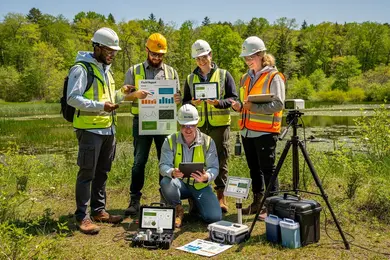
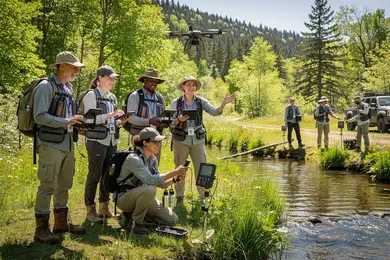
For instance, a recent graduate working on watershed management might spend mornings in field sampling and afternoons remotely analyzing GIS data. Awareness of such operational tradeoffs guides smarter job choices in this evolving but still hybrid-dependent industry.
Which Environmental Management niches offer remote roles?
Remote work in Environmental Management focuses on niches that leverage digital tools, data analysis, and policy work rather than field-based tasks. Practical roles that enable flexible remote or hybrid work emerge where workflows can be handled through virtual collaboration and specialized software. For example, a consultant assessing compliance might conduct document reviews and virtual audits from a home office instead of traveling to sites. This shift suits graduates seeking flexible jobs, but understanding which niches truly support remote work is crucial before committing. The following list outlines key remote-friendly niches for Environmental Management graduates and explains why these roles enable asynchronous or off-site work.
- Environmental Compliance Consulting: Professionals review regulatory documentation and conduct virtual audits to ensure adherence, relying mostly on digital records rather than on-site inspections, which allows for remote execution.
- Sustainability Reporting and Corporate Social Responsibility: This niche focuses on gathering data remotely and drafting reports that communicate environmental impact, making it well-suited for telework and asynchronous collaboration with stakeholders.
- Environmental Data Analysis and GIS Mapping: Specialists use software to analyze ecological data and create spatial maps, tasks that can be performed from any location with reliable internet access, supporting fully remote roles.
- Risk Assessment and Environmental Impact Modelling: Analysts run simulations and develop scenarios using complex software packages; since this process requires little physical presence, it fits into remote or hybrid work setups.
- Climate Policy Advisory: Advisers engage governments or organizations through teleconferencing to promote sustainable policies, eliminating the need for on-site visits while maintaining effective communication.
- Environmental Education and Training: This area increasingly uses online content creation and virtual workshops, allowing educators to reach broad audiences without geographic constraints.
According to a 2024 workforce analysis, remote job postings in Environmental Data Analysis and Sustainability Reporting grew by 18.7% in hiring volume, indicating a robust market demand for remote-capable expertise. Graduates interested in remote opportunities must weigh such growing fields against niches that require field assessments, which remain less adaptable to remote work and thus offer limited flexibility. Those wishing to enhance credentials for advanced remote roles might consider pathways like the EdD degree, which can further refine skills in policy or education sectors.
Remote Environmental Management job opportunities increasingly focus on roles where data interpretation and virtual communication dominate. Understanding these top remote niches for Environmental Management graduates can guide strategic career decisions aligned with evolving workforce trends.
What entry-level Environmental Management roles allow remote work?
Entry-level remote Environmental Management roles reflect growing employer demand for flexible engagement without sacrificing rigorous data handling and regulatory compliance. Recent analytics show a 28.4% rise in remote job listings for Environmental Data Analysts and Sustainability Coordinators, indicating an expanding market for graduates with robust software and remote collaboration capabilities. The following examples highlight typical roles, their core remote-compatible functions, and hiring expectations.
Common remote entry-level positions include:
- Environmental Data Analyst: Requires proficiency in GIS software and database management. Responsibilities include analyzing environmental impact data and preparing digital reports, tasks well-suited to remote work due to reliance on software tools and virtual coordination.
- Sustainability Coordinator: Focuses on tracking sustainability initiatives and reporting progress using collaboration platforms. Hiring typically demands strong communication skills and familiarity with environmental metrics, enabling effective remote teamwork across departments.
- Regulatory Compliance Assistant: Involves compiling documentation to meet environmental regulations and assisting with compliance reporting. This role demands attention to detail and knowledge of EPA reporting tools, facilitating remote completion of administrative tasks.
- Environmental Consultant Trainee: Supports senior consultants by preparing preliminary assessments and remote data validation. Candidates must exhibit aptitude in environmental modeling software and remote client communication to perform effectively.
- Remote Field Technician: Although partially hybrid, this role allows remote data entry and report generation for site visits conducted periodically by the technician. It requires technical skills in field data collection tools combined with remote analysis duties.
The availability of flexible remote roles for Environmental Management graduates expands options beyond traditional fieldwork, but candidates must balance technical certification with practical field readiness. Those seeking hybrid or fully remote careers will benefit from certifications in environmental data systems and remote project experience. For graduates evaluating further education options, exploring online library science masters programs can offer complementary skills in data management and research organization useful in remote environmental positions.
What is the average salary of Environmental Management graduates who are working remotely?
Environmental Management graduates working remotely typically start with median salaries between $48,000 and $57,000 annually. Entry-level roles with averages near $50,500 reflect employer caution in setting pay for remote candidates. These salaries expect strong environmental knowledge combined with digital communication and project management skills.
Earnings vary significantly based on additional technical requirements or certifications needed for remote tasks. Graduates who invest in continuous skill development and relevant credentials often position themselves for higher compensation and faster salary growth. Recognizing this, some employers emphasize ongoing upskilling to adapt to evolving remote work technologies and project demands.
The average remote salary for Environmental Management graduates is slightly lower than entry-level pay in related sustainability or resource management fields, which start closer to $55,000. The growing demand for remote roles has increased 12% faster than onsite positions, signaling shifting hiring trends favoring flexible work environments without drastic salary inflation.
For new graduates considering their career paths, weighing initial remote pay against long-term growth potential is critical. Practical decisions about supplementary training, such as leveraging bookkeeping courses for added project finance skills, can impact starting salaries and job readiness in remote Environmental Management roles.
Do remote Environmental Management jobs pay the same as on-site roles?
Remote Environmental Management roles typically pay 5-8% less than on-site positions, reflecting broader compensation trends based on worker location. Only about 22% of companies maintain strict pay parity, indicating that flexibility rather than uniformity often guides salary decisions. This gap is a crucial factor for graduates weighing remote options.
Compensation varies widely due to employer localization policies that adjust salaries according to regional cost of living. For example, a graduate living in a lower-cost area might accept a reduced salary compared to on-site colleagues in expensive metropolitan centers. Such regional pay bands reflect employer attempts to balance competitiveness with cost control.
Some organizations offset lower base pay for remote staff by shifting benefits, like lowering travel allowances while increasing home-office stipends. However, these trade-offs rarely close the pay gap entirely, suggesting graduates must evaluate total compensation rather than salary alone when choosing remote work.
Graduates should consider that an initial remote salary discount may compound over time, shaping career earnings and advancement. Prospective employees must weigh immediate savings from reduced commuting and flexible location against potential long-term financial implications in Environmental Management careers.
What benefits do remote Environmental Management employees receive?
Remote Environmental Management roles require benefits that address both the practical challenges of off-site work and the professional demands of the field. For example, a remote analyst working across various ecosystem sites must have flexible paid time off to manage unpredictable field hours while maintaining consistent reporting deadlines. A recent study found that 62% of environmental organizations with remote teams formalize equipment and training reimbursements, reflecting widespread employer recognition that remote settings need tailored support beyond standard benefits.
Below are key benefits shaping remote Environmental Management employment.
- Flexible Paid Time Off: Employers offer adaptable leave policies to align with irregular field schedules. This flexibility helps workers balance onsite research and administrative duties without sacrificing productivity or compliance with project timelines.
- Home Office Stipends: Remote workers often receive $500 to $1,000 reimbursements for setting up ergonomic and technology-equipped workspaces. This investment targets comfort and efficiency, crucial for sustained focus outside traditional office environments.
- Certification Support: Companies provide coverage or subsidies for professional certifications, which validate knowledge and regulatory compliance. This ensures remote employees remain current with evolving environmental standards and enhances career mobility.
- Wellness Budgets: Organizations allocate approximately 8% of remote worker compensation toward mental health and ergonomic aids. This reflects a growing awareness of isolation risks and aims to sustain employee well-being in decentralized teams.
- Retirement and Financial Planning Access: Benefits often mirror in-office plans but emphasize remote accessibility and portability, allowing long-term financial security despite geographic dispersion.
One Environmental Management professional explained that the home office stipend was a decisive factor when accepting a remote position. "Setting up a dedicated workspace with proper equipment made all the difference," they said. "Without it, I worried about back pain and distractions, which would hurt my ability to analyze data accurately and meet deadlines.
The wellness budget also helped with online yoga classes and ergonomic tools, which was a relief given the solitary nature of the work." This combination of flexible time, financial support, and health resources shapes the practical realities of remote Environmental Management careers.
Where can Environmental Management graduates look for remote jobs?
Success in securing remote roles within Environmental Management depends on using job platforms that combine broad accessibility with sector specificity. Graduates who rely solely on large generic job boards face stiff competition, reflecting the fact that application success rates for entry-level remote positions hover around 14.7%, according to recent hiring data. A strategic approach involves supplementing these widely known sites with niche and professional community resources that reveal contract and freelance opportunities less visible elsewhere. For example, a recent graduate targeting a remote environmental analyst position might first scan Indeed for volume, then pivot to specialized boards and sector networks to access more tailored listings and hidden openings.
The following list highlights key online channels useful for pinpointing legitimate remote Environmental Management roles, illustrating their strengths in matching job seekers to employers.
- Indeed and LinkedIn: These broad-based platforms rank highest in listing remote Environmental Management positions like sustainability coordinators. They use algorithmic job matching based on keywords and profiles, which helps capture numerous remote listings but generates high applicant competition that requires well-tailored resumes to stand out.
- EcoJobs and GreenJobs: Niche job boards focused exclusively on environmental careers, these sites filter postings to highlight role-specific opportunities. While volume is lower, their curated listings offer relevance and industry credibility, making them effective for candidates seeking specialized employers committed to remote work.
- Environmental Careers Organization Networks: Professional associations and their online forums provide access to contract and project-based remote work not found on traditional boards. Their peer-shared listings can include freelance consulting gigs, offering valuable experience despite potential instability.
- Recruitment Agencies and Digital Talent Marketplaces: Agencies increasingly use digital marketplaces for 68.4% of their remote Environmental Management hires. These platforms facilitate employer-vetted candidate matching, which can improve the quality of lead jobs but often require proactive networking and digital communication skills to leverage effectively.
What do Environmental Management employers look for in candidates?
Environmental Management employers hiring remote workers expect candidates to combine specialized knowledge with autonomous execution. For example, a consultant tasked with conducting an environmental impact report from a remote location must independently analyze geographic data, coordinate with multiple teams through virtual tools, and meet project deadlines without direct supervision. Specific qualifications sought reflect this complex skill set.
The following highlights key areas employers assess when evaluating remote candidates in Environmental Management.
- Technical Proficiency: Mastery of geographic information systems (GIS), environmental data analysis software like Python or R, and certifications such as Certified Environmental Professional (CEP) or LEED accreditation are essential. These skills demonstrate a candidate's ability to interpret complex datasets and support evidence-based decision-making in remote roles.
- Digital Literacy: Remote employers prioritize digital literacy tailored to environmental management tools. With 72% of firms requiring demonstrable competence in this area, candidates must show experience navigating specialized software to ensure accurate and timely analysis.
- Project Management Skills: Applicants need to efficiently manage timelines and resources in distributed team settings. Employers often use structured assessments or simulations to evaluate how candidates plan, track, and deliver milestones remotely, reflecting the importance of self-directed project oversight.
- Virtual Collaboration Competence: Success in remote environmental roles hinges on effective communication and cooperation across digital platforms. Candidates must prove their ability to maintain interdisciplinary coordination and adapt workflows within virtual environments to foster progress.
- Portfolio Evidence: Practical demonstration through documented projects-such as sustainability plans or impact assessments incorporating digital tools-validates applicants' problem-solving skills and real-world application of theoretical knowledge in remote contexts.
Ultimately, candidates who integrate environmental science expertise with robust digital competencies and remote working acumen align best with hiring trends. Such qualifications not only meet immediate job demands but also support resilient, long-term careers in a flexible, evolving field. For Environmental Management graduates considering further education or career shifts, consult programs offering a library degree to explore interdisciplinary skills that enhance both analytical and communication capabilities in environmental work.
How can Environmental Management graduates prepare for remote roles?
Environmental Management graduates seeking remote roles must build expertise beyond core academic knowledge to meet employers' digital and operational demands. For example, a graduate conducting a virtual environmental impact assessment for a consulting firm demonstrates both technical skill and remote collaboration ability, which employers prioritize. Effective preparation requires strategic development in several key areas.
The following items outline critical remote work competencies relevant to Environmental Management roles:
- Digital Tools Mastery: Build advanced proficiency in Geographic Information Systems (GIS), data visualization software, and remote collaboration platforms like Microsoft Teams or Slack. Mastery of these tools enables seamless project coordination and data analysis despite physical distance from team members or field sites.
- Cloud-Based Project Management: Gain experience using platforms such as Asana or Trello to organize tasks and workflows independently. This practice reflects the growing expectation for remote workers to self-manage and align with distributed team schedules without onsite supervision.
- Specialized Certifications: Pursue certifications in data analysis with Python or R, or enroll in environmental data science bootcamps. These certifications validate technical skills tailored for remote data handling and interpretation, enhancing graduates' competitiveness in flexible role hiring.
- Portfolio Development: Engage in independent projects like creating sustainability dashboards using public datasets. Such tangible evidence of applicable skills significantly increases hireability, supported by research showing graduates with remote-readiness training have a 30.4% higher hire rate.
- Technical and Cybersecurity Readiness: Secure reliable hardware, high-speed internet, and cybersecurity know-how to protect sensitive environmental data. This readiness is crucial for trusted remote work environments, where data integrity and confidentiality are paramount.
Targeting these preparatory strategies is essential in navigating remote Environmental Management career preparation strategies. Graduates can also explore interdisciplinary fields such as an online MFA visual arts to enhance data visualization skills, further increasing their value in remote roles.
How can Environmental Management graduates if remote roles are a good fit for them?
Environmental Management graduates benefit from a pragmatic appraisal of their personal work habits and professional demands to decide if remote roles offer a sustainable career option. Remote work requires managing independent tasks like data analysis and sustainability reporting without on-site supervision. For example, a graduate working remotely on watershed impact reports must self-direct priorities and balance communication across teams in different time zones. Considering such real-world challenges, several criteria can help determine if remote work fits a graduate's capabilities and expectations.
Key factors to evaluate include:
- Self-Discipline and Time Management: Remote roles demand autonomy in organizing workloads and meeting deadlines without direct oversight. Graduates should honestly assess their ability to maintain focus and structure their day to avoid procrastination or missed deliverables.
- Communication Skills in Digital Environments: Frequent virtual collaboration replaces in-person dialogue, increasing reliance on clear written and verbal communication. This skill affects project efficiency and reduces risks of misunderstanding that could delay environmental initiatives.
- Comfort with Reduced Fieldwork: Many remote jobs limit time spent on-site, focusing instead on remote sensing or data evaluation. Graduates who prefer hands-on field problem-solving need to decide if less physical engagement aligns with their satisfaction.
- Technology Access and Savviness: High-speed internet and proficiency with environmental software tools are essential. Lagging hardware or unfamiliarity with remote platforms can disrupt workflow and diminish job performance.
- Adaptability to Evolving Tools: Environmental monitoring technologies change quickly. Graduates must be prepared for continuous learning to stay productive and valuable in remote settings.
- Work-Life Boundary Management: Remote work blurs professional and personal time, increasing burnout risks. Successful candidates establish clear routines to safeguard mental health and maintain consistent productivity.
- Alignment with Employer Availability Expectations: Coordination with teams in other locations can require early or late hours. Graduates should confirm their willingness to accommodate varied schedules without undue stress or disruption.
A recent study found Environmental Management remote workers report a 23.5% improvement in work-life balance but also a 17.8% increase in feelings of isolation and communication issues, underscoring that graduates must weigh flexibility against potential social challenges when considering remote paths.
One Environmental Management graduate with an online degree shared an experience of hesitation before accepting a fully remote position. Initially concerned about missing field engagement, the graduate methodically evaluated communication demands and tech readiness during a trial period. Over time, establishing strict work hours and investing in robust software clarified the routine and reduced isolation. "I realized remote work suited me once I embraced the structure and proactively reached out to teammates. It took adjustment, but now I value the flexibility and autonomy more than I expected," they reflected, emphasizing how deliberate assessment shaped their successful transition.
References
- Admissions https://www.torontomu.ca/environmental-applied-science-management/admissions/
- Environmental Management Training | Supply Chain School https://www.supplychainschool.co.uk/topics/sustainability/environmental-management/
- Which Online Environmental Courses are Worth Studying? https://www.learndirect.com/pillar/which-online-environmental-courses-are-worth-studying
- Diploma in Environmental Management | Free Online Course | Alison https://alison.com/course/diploma-in-environmental-management
- Environmental Management Careers Guide - https://blog.rrc.co.uk/2026/01/05/environmental-management-careers-guide/
- Master's Degree Environmental Management https://europe.umgc.edu/online-degrees/masters/environmental-management
- the environmental management activities and sustainable ... https://conferences.vilniustech.lt/index.php/BM/article/view/300/304
- ISEP - Institute of Sustainability and Environmental Professionals https://www.isepglobal.org/learn/courses/certificate-in-sustainability-and-environmental-management/
- How to Apply to Environmental Graduate Programs https://www.cjbnetwork.com/articles/how-to-apply-to-environmental-graduate-programs
- Rising Popularity of Environmental Programs https://www.keg.com/news/rising-popularity-of-environmental-programs
Other Things You Should Know About Environmental Management
Many remote roles in Environmental Management tend to be project-based or contract-driven, which can lead to income variability and uncertain long-term employment. Graduates should prioritize opportunities with established organizations known for offering sustainable remote positions rather than gig or short-term contracts. Examining employer track records and asking for clarity on contract renewal policies can prevent surprises in job continuity and financial planning.
Remote roles often limit spontaneous in-person interactions that facilitate mentorship and cross-disciplinary learning critical in Environmental Management. Graduates should actively seek employers who provide structured remote training, virtual networking events, and collaborative platforms to offset these deficits. Prioritizing roles with clear continuing education support can sustain skill growth and professional connections despite physical distance.
Remote Environmental Management jobs frequently require balancing fluctuating field data collection deadlines with desk-based analysis, often compressing work into irregular hours to meet project milestones. Graduates must assess whether they can manage intensive bursts versus steady workflows, as remote settings blur work boundaries. Choosing roles with transparent expectations around availability and deadline flexibility is crucial to avoid burnout.
Fake or misleading remote job offers exist, particularly in fields with technical jargon like Environmental Management. Graduates should vet offers by confirming employer physical addresses, cross-checking company websites for remote work policies, and requesting detailed job descriptions beyond generic listings. Prioritizing recruitment processes with multiple interview stages and direct communication from established staff enhances trust before commitment.