
2026 Medical Billing & Coding Degree Oversupply or Undersupply? Student Volume vs Employer Demand

Co-Founder and Chief Data Scientist
A prospective student considering enrollment in a medical billing & coding program faces a critical dilemma: Are the increasing graduate numbers in 2024 meeting or exceeding real employer demand? National statistics reveal that while graduate output grew by 12% since 2022, job openings in healthcare administration related to billing and coding rose only 5%, signaling potential oversupply in some regions. This disparity risks saturating local job markets, intensifying competition, and elevating underemployment among newly credentialed professionals.
Employers also demand evolving technical skills, further complicating hiring decisions. This article compares medical billing & coding student volume with employer demand, job growth, industry needs, regional conditions, and skill gaps to help readers judge whether the field offers sustainable opportunities or rising competition.
Key Things to Know About Medical Billing & Coding Graduate Supply and Employer Demand
- Medical billing & coding graduate output has increased 12% since 2022, outpacing the 7% rise in relevant job openings, creating localized oversupply in urban centers that intensifies entry-level competition.
- Employers increasingly prioritize candidates with specialized certifications and EHR system expertise, signaling a skill mismatch that pressures educators to adapt curricula or risk graduate underemployment.
- Regional demand disparities mean rural areas face undersupply, forcing longer wait times for credentialed staff, while program costs delay timely entry, complicating workforce access and retention.
- Key Things to Know About Medical Billing & Coding Graduate Supply and Employer Demand Key Things to Know About Medical Billing & Coding Graduate Supply and Employer Demand
- Is There an Oversupply or Undersupply of Medical Billing & Coding Graduates? Graduate Oversupply or Shortage
- How is Medical Billing & Coding Degree Enrollment Changing? Degree Enrollment Trends
- How Many Medical Billing & Coding Graduates Enter the Workforce Each Year? Annual Graduate Workforce Entry
- Does Job Growth Support the Rising Supply of Medical Billing & Coding Graduates? Job Growth Versus Supply
- How Competitive is the Entry-Level Market for Medical Billing & Coding Graduates? Entry-Level Market Competition
- Which Industries Have the Greatest Demand for Medical Billing & Coding Graduates? Top Hiring Industries
- Where are Medical Billing & Coding Graduates Most in Demand? Top Geographic Demand
- Which Medical Billing & Coding Specializations and Degree Levels Face the Strongest Demand? Which Medical Billing & Coding Specializations and Degree Levels Face the Strongest Demand?
- Are Employer Skill Gaps Affecting Demand for Medical Billing & Coding Graduates? Are Employer Skill Gaps Affecting Demand for Medical Billing & Coding Graduates?
- What is the Future Supply-and-Demand Outlook for Medical Billing & Coding Graduates? Future Supply-Demand Outlook
Is There an Oversupply or Undersupply of Medical Billing & Coding Graduates?
The supply of medical billing & coding graduates does not neatly align with employer demand nationwide, reflecting a nuanced labor market rather than a straightforward oversupply or undersupply. While Bureau of Labor Statistics projections indicate steady occupational growth around 7% through 2032, this growth coexists with a substantial annual influx of graduates, creating localized imbalances. Certain regions with dense healthcare infrastructure may experience employer shortages despite a high volume of credentialed candidates elsewhere, illustrating how regional variation complicates overall supply-demand assessments. For example, metropolitan areas in the Southeast and Midwest often report recruiting difficulties because local graduate output fails to meet demand, whereas in parts of the Northeast, a saturation of graduates leads to heightened competition and fewer openings relative to applicants.
How is Medical Billing & Coding Degree Enrollment Changing?
Rising enrollment in medical billing & coding programs, particularly at the certificate and associate levels, reflects both expanded access and shifting student demographics, but this does not straightforwardly translate into reduced employer shortages. The growing availability of online options-now representing over 60% of enrollments in some regions-has broadened participation among working adults and career changers, intensifying graduate competition in markets where job growth is uneven. Regional disparities further complicate the outlook: while some metropolitan areas nearing full absorption of new entrants signal tightening labor conditions, others experience oversupply due to automation and local economic slowdowns, underscoring that national enrollment spikes cannot reliably predict local job outcomes.
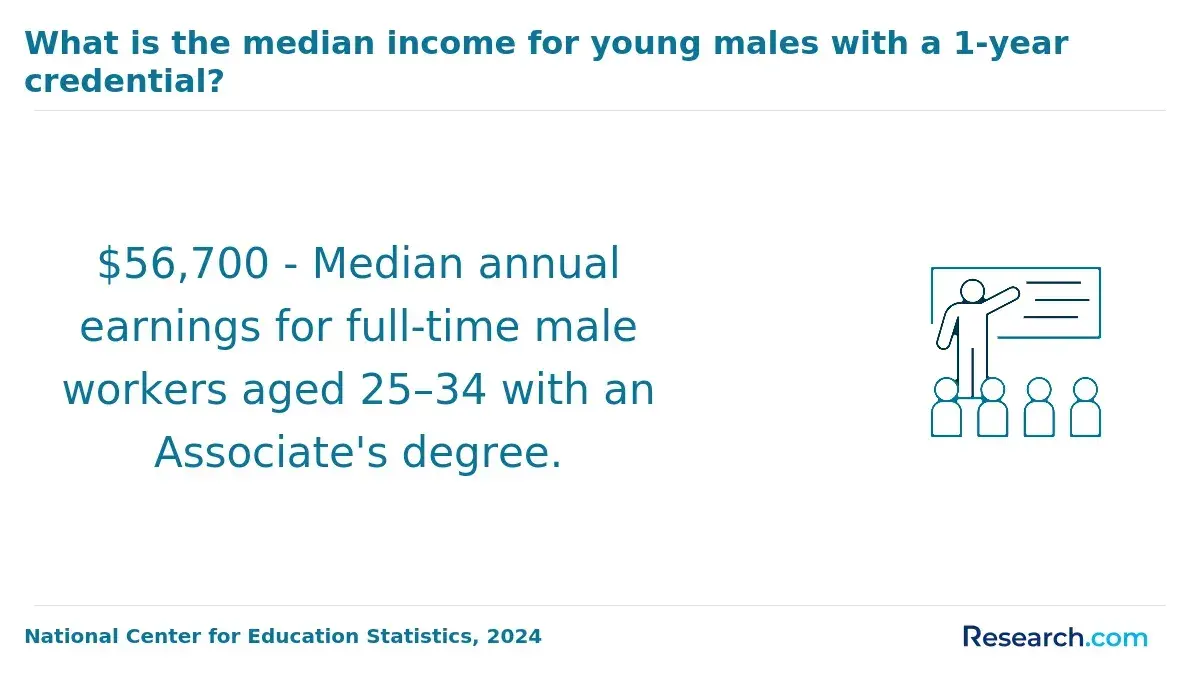
This bifurcation highlights the importance for prospective students and educators to critically assess program focus and alignment with employer needs beyond simple enrollment volume. Increasing short-term certification completions over bachelor's degrees reflects a pragmatic response to the field's applied requirements but may also saturate entry-level roles unless supplemented by specialized skills or practical experience. Failure to account for local labor market nuances and technological advances risks misjudging the balance between graduate supply and employer demand, potentially leaving new entrants facing stiff competition despite growing educational participation. According to recent National Center for Education Statistics data, this cautious equilibrium underscores that growth in credentials alone is not a decisive indicator of favorable job prospects.
A current medical billing & coding student recounted noticing a marked increase in cohort size after more flexible online courses were introduced, which initially felt encouraging but also prompted concern about intensified competition for internships and employment. Observing the more diverse backgrounds-from younger enrollees fresh from high school to adults pivoting careers-the student expressed uncertainty whether this wider pool signaled expanding opportunity or simply more graduates vying for a limited number of positions. This awareness has shaped the student's resolve to seek additional practical experience and certifications to stand out, reflecting a nuanced understanding that enrollment growth is one piece of a complex labor market puzzle.
How Many Medical Billing & Coding Graduates Enter the Workforce Each Year?
Comparing graduate output against employment demand exposes nuanced realities: approximately 6,000 to 7,000 new professionals join the workforce annually, matching closely with forecasts of 5,000 to 6,000 new job openings by the Bureau of Labor Statistics. Yet, job seekers confront uneven regional demand and employer preferences for candidates who demonstrate practical experience or hold additional certifications beyond formal education. This tradeoff means many graduates compete for a limited number of well-paying roles in urban areas saturated with training providers, while others may experience longer job searches or underemployment. Misinterpreting raw graduation data risks overstating supply and overlooks the critical interplay of timing, skill alignment, and local market variations that shape hiring outcomes.
Understanding the distinction between credential completion and actual workforce entry is vital for students making educational decisions and educators tailoring program focus. Measuring enrollments by degree type, delivery mode, and specialization offers clearer insight into market relevance, but employer expectations and geographic hiring patterns frequently determine who secures available roles. Evaluating medical billing & coding graduate volumes in isolation neglects the practical obstacles graduates face, underscoring the importance of applied skills, certifications, and timing over mere credential counts in shaping labor market success. Consequently, balancing program capacity with real-world employment conditions remains a continual challenge for stakeholders navigating this evolving field.
Does Job Growth Support the Rising Supply of Medical Billing & Coding Graduates?
While employment projections for medical billing & coding roles indicate growth faster than average, this does not guarantee that all graduates will find commensurate positions. The medical billing and coding job growth trends reveal that rising graduate numbers often compete for a limited pool of entry-level openings, many of which require additional certification, specialization, or experience beyond initial credentials. For instance, a recent graduate in a rural area may face underemployment pressures despite national growth, as local demand lags behind supply and positions increasingly favor candidates with health informatics or compliance expertise.
Regional demand for medical billing and coding graduates varies significantly, with urban centers offering more robust absorptive capacity due to numerous healthcare providers, while less populated regions show fewer new openings relative to credential holders. Replacement demand stemming from retirements can create pockets of opportunity, yet overall market alignment remains uneven, necessitating that prospective students assess local labor conditions and consider credential value carefully. Given that many employers prioritize practical skills and specialization, those focusing solely on basic certification risk prolonged job search durations or wage stagnation, a tradeoff particularly salient amid the competition.
How Competitive is the Entry-Level Market for Medical Billing & Coding Graduates?
The entry-level landscape for medical billing & coding graduates in 2024 reflects a delicate balance rather than a clear surplus or shortage. While employment growth is projected at about 7% over the next decade by the U.S. Bureau of Labor Statistics, job availability often hinges on practical experience and specialization, not just degree completion. Employers frequently seek candidates who can immediately navigate updated coding systems and electronic health records, limiting openings for fresh graduates without additional credentials or internships. The competition varies notably by region and sector, which complicates simple supply-and-demand assumptions. Key factors influencing hiring dynamics include:
- Experience Expectations: Many positions require one to two years of prior experience, raising barriers for recent graduates who must often pursue internships or related roles to qualify.
- Applicant Volume Vs. Positions: Despite steady job postings on platforms like LinkedIn, high applicant-to-position ratios intensify competition, especially where credentials alone do not distinguish candidates.
- Specialized Skill Demand: Proficiency in ICD-10, CPT coding, and familiarity with EHR software are increasingly non-negotiable, impacting which graduates stand out.
- Geographic Disparities: Urban centers offer more opportunities but bring greater applicant pools, while rural or smaller markets may provide less competition but fewer openings.
- Industry Variation: Demand fluctuates between hospitals, outpatient clinics, insurance firms, and specialized medical practices, requiring graduates to adapt their job search scope accordingly.
- Certification Value: Additional certifications beyond degree requirements significantly improve hiring prospects, reflecting employer preferences for demonstrated competencies.
- Soft Skills Importance: Accuracy, communication, and compliance understanding remain critical in hiring decisions, underscoring the advantage of well-rounded candidates.
A recent graduate's experience illustrates these complexities. After completing their program, they faced multiple rejections citing lack of hands-on experience despite strong coursework. Concentrating on urban hospital openings led to crowded applicant pools and lengthy waits, prompting a strategic pivot to smaller outpatient clinics in nearby suburban areas. There, their growing familiarity with EHR systems and pursuit of an additional coding certificate improved interview success, though offers remained sporadic and highly competitive. This example highlights how graduates must navigate uneven demand, balance experience acquisition, and remain flexible with geography and specialization when entering the medical billing & coding workforce.
Which Industries Have the Greatest Demand for Medical Billing & Coding Graduates?
Strong employer demand for medical billing & coding graduates is not evenly distributed across industries but instead concentrates where coding complexity and regulatory scrutiny are highest. Hospitals remain the primary source of job openings due to their large patient volumes and complexity of services requiring detailed coding expertise. For graduates deciding between sectors, this means weighing not just job volume but competition intensity and the need for specialized certifications that align with employer expectations. The following list identifies key industries generating the strongest medical billing & coding job demand by industry and highlights operational factors shaping these hiring trends.
- Hospital Systems: Hospitals lead with the highest demand driven by comprehensive inpatient and outpatient coding requirements. Their complex revenue cycles require advanced knowledge of ICD-10, CPT codes, and EHR systems. Entry-level roles often focus on data entry and claims processing, while experienced coders move into auditing and compliance positions.
- Outpatient Care Centers: Including specialty clinics and ambulatory surgical centers, these settings emphasize outpatient billing proficiency, reflecting cost-efficient care shifts. Demand here favors coders skilled in outpatient EHR platforms and familiar with evolving billing protocols.
- Private Physician Practices: Smaller, often budget-constrained employers with slower hiring growth. These practices may outsource coding or rely on less formally certified staff, which affects job availability but provides localized opportunities in areas dense with independent practices.
- Insurance Companies: Growing complexity in claims adjudication and regulatory compliance drives demand. These employers seek graduates versed in auditing and reimbursement accuracy, emphasizing coding integrity and detailed claims review skills.
- Third-Party Billing Services: Outsourced medical billing firms expand to process increasing claim volumes. Staff require strong multi-payer knowledge, attention to detail, and often benefit from certifications that demonstrate coding accuracy and regulatory compliance.
The intensity of job competition and growth opportunities varies geographically and by employer scale. Employers increasingly prioritize candidates with current certifications, updated software competencies, and dual expertise in ICD-10 and CPT coding standards. Prospective students and workers should seriously evaluate whether their educational path equips them with these skills to align with practical employer demand, balancing availability of positions against competition and specialization requirements.
For those considering options beyond healthcare-specific credentials, combining or juxtaposing medical billing & coding with other fields may help. For example, pairing a nutrition degree online with medical billing knowledge can open complementary roles in healthcare administration expanding employability.
Where are Medical Billing & Coding Graduates Most in Demand?
National demand statistics for medical billing & coding professionals often mask pronounced regional disparities shaped by local healthcare infrastructures and workforce pipelines. For instance, while states like California and Texas exhibit high job posting volumes, these markets also attract large numbers of graduates, increasing competition significantly-especially in major urban centers such as Los Angeles or Houston. A graduate relocating from a smaller region to these states must weigh the advantage of employer density against higher living costs and intense applicant pools, which may reduce net employability unless paired with specialized certifications or relevant experience.
In contrast, rapidly growing Sun Belt cities and suburban areas with expanding hospital networks may present fewer applicants relative to open roles, reflecting localized workforce shortages and evolving care delivery models, including telehealth. These markets often offer a better balance between job availability and competition, although salaries and remote work opportunities vary widely. Employers in these regions increasingly favor graduates able to navigate electronic health records systems and insurance complexities, underscoring that credential attainment alone is insufficient without practical skills aligned to employer expectations.
Ultimately, interpreting where demand exceeds graduate supply requires assessing factors beyond headline job counts-such as the concentration of specialty practices, proximity to large hospital systems, and regional certification requirements. Prospective students should consider how urban saturation, cost of living, and employer preferences interact with their personal circumstances. Data from Lightcast and U.S. Bureau of Labor Statistics in 2024 confirm that candidates combining certification with applied experience stand the best chance of securing roles, especially outside saturated metropolitan areas where workforce needs outpace the supply of qualified graduates.
Which Medical Billing & Coding Specializations and Degree Levels Face the Strongest Demand?
Demand for medical billing & coding professionals is concentrated in specific skill sets and credential levels rather than spread evenly across all degree holders. Employers increasingly seek candidates with specialized coding expertise combined with practical knowledge of payer systems and healthcare technology. For example, a graduate with a broad associate degree but no coding certifications may face limited opportunities compared to one holding an advanced credential paired with electronic health record (EHR) proficiency. According to the U.S. Bureau of Labor Statistics (2024), certified professionals in niche areas command stronger consideration. Key pathways with heightened demand include the following specializations and credential tiers.
- Outpatient Coding Specialists: Focused on evaluation and management (E/M) services in outpatient clinics, these coders are critical for accurate billing and reimbursement. Employers favor candidates with Certified Professional Coder (CPC) certification and experience in CPT and ICD-10-CM.
- Risk Adjustment Coders: Employed primarily by health insurance plans, these coders require expertise in adjusting patient data for accurate risk-based payments. Strong payer knowledge and certifications validate their skill set.
- Specialized Clinical Coding: Fields like oncology and cardiology demand coders who understand complex medical scenarios and billing requirements, often requiring Certified Coding Specialist (CCS) credentials and advanced medical terminology knowledge.
- Health Information Technology-Integrated Coders: Professionals who combine billing and coding with EHR system competencies meet employer needs tied to digital record keeping and workflow optimization.
- Entry-Level Associate Degree Holders: Often suitable for foundational roles in physician offices or smaller clinics, but these candidates face greater competition without additional certification or HIT skills.
Labor market data highlight a persistent shortage of coders capable of handling complex claims and regulatory demands, especially in regions with growing healthcare infrastructure. Conversely, the supply of generic credential holders often surpasses available specialized roles, underscoring the importance of targeted skill development and credentialing for career resilience.
Are Employer Skill Gaps Affecting Demand for Medical Billing & Coding Graduates?
The current labor market for medical billing & coding graduates does not reflect a simple shortage of candidates but rather a shortage of candidates who meet evolving employer expectations in technical and professional competencies. Employers increasingly prioritize applied experience with updated coding standards like ICD-11, fluency in healthcare IT systems, and strong communication skills over just holding credentials. For instance, a hiring manager might encounter numerous applicants with entry-level certificates yet still leave positions open due to inadequate practical skills or inability to navigate hybrid roles involving data analysis or electronic health records, highlighting a gap between graduate volume and true employability. This discrepancy often distorts perceptions of oversupply where unfilled roles coexist with unemployed candidates, underscoring the importance of targeted skill development and real-world internship experiences in bridging employer skill gaps in medical billing and coding hiring.
Moreover, the impact of credential mismatches on medical billing and coding job demand reveals that not all training programs prepare students equally for contemporary workforce needs. Graduates from programs lacking alignment with current industry tools and regulatory demands frequently face heightened competition, especially in regions or sectors where market saturation exists. The complexity of compliance requirements and the integration of billing with health information technology systems further raise the competence threshold employers expect, which less experienced or narrowly trained candidates often fail to meet. Prospective students and career holders considering program options should weigh the practical relevance of curricula and seek opportunities to build adaptable skills through projects or specialized certifications. For guidance on related career pathways that require similarly targeted expertise, see how to become a functional medicine nurse practitioner.
What is the Future Supply-and-Demand Outlook for Medical Billing & Coding Graduates?
Targeted job searches significantly improve employment outcomes for medical billing and coding graduates by focusing efforts on entry-level titles and industries with known demand rather than casting wide, unfocused nets. For example, a graduate who prioritizes positions explicitly listing EHR proficiency and regulatory knowledge in regions experiencing workforce shortages can better leverage their credentials and reduce competition against oversupplied urban markets. Ignoring employer language or applying broadly without tailoring resumes to specific job descriptions often results in low interview rates and extended job searches, underscoring the need for precision in aligning qualifications with employer priorities.
Graduates benefit from thorough labor-market research, identifying geographic pockets with stronger hiring signals, such as rural healthcare providers or specialized billing services, where demand outpaces local supply. Since many employers increasingly seek candidates capable of navigating evolving regulations like ICD-11 coding and using advanced billing software, demonstrating relevant skills via targeted projects or practical experience can distinguish applicants. Application timing and evidence of readiness also affect interview conversions, meaning those who understand market cycles and convey up-to-date competencies avoid common pitfalls. This disciplined approach addresses the complex dynamics of medical billing and coding graduate employment projections and regional supply and demand for medical billing and coding careers more effectively than relying on volume alone.
Prospective students and current graduates might explore related educational pathways such as an online masters degree in forensic psychology to broaden skill sets and open alternate career avenues within health information or legal domains. Such informed positioning, grounded in data and market nuances, helps mitigate challenges from regional oversupply while capturing opportunities in underserved areas.
References
- AAPC - AAPC https://www.aapc.com/resources/medical-billing-coding-certification
- Medical Billing and Coding Career Guide (2022) | UMA https://www.ultimatemedical.edu/blog/how-to-start-career-in-medical-billing-and-coding/
- Medical Billing and Coding Undergraduate Certificate | DeVry https://www.devry.edu/online-programs/undergraduate-certificates/medical-billing-and-coding.html
- Top Qualities of Medical Billers | What are Employers Looking For? https://www.dorsey.edu/blog/top-qualities-employers-are-looking-for-in-medical-billers/
- Career Outlook: Medical Coding and Billing - USCI https://www.uscareerinstitute.edu/blog/career-outlook-medical-coding-and-billing
- Demand for Medical Billers and Coders - MedicalBillingandCoding.org https://www.medicalbillingandcoding.org/qnas/the-coder-is-in-demand-medical-billers-coders/
- Medical Billing & Coding Salary in 2025 | Job Outlook & Pay Guide https://calregional.com/blog/what-is-the-salary-for-medical-billing-and-coding-in-2025/
- Is Medical Billing and Coding in Demand? | American National University https://an.edu/is-medical-billing-and-coding-in-demand/
- Is Medical Billing and Coding in Demand? | University of Bridgeport https://www.bridgeport.edu/news/medical-billing-and-coding-demand/
- Skilled Medical Billers and Coders Shortage - My RCM Group https://myrcmgroup.com/articles/shortage-of-medical-billers-and-coders/
Other Things You Should Know About Medical Billing & Coding
While a degree or certificate in medical billing & coding is often a baseline requirement, employers increasingly prioritize candidates with hands-on experience, such as internships or on-the-job training. Relying solely on formal credentials without practical experience can limit job prospects, especially in competitive markets where employers seek individuals ready to manage real-world workflow and software systems. Prospective students should seek programs that incorporate practical elements or secure externships to enhance employability and reduce training time post-hire.
Accreditation remains a critical factor because it signals that a program meets industry standards and that graduates are more likely to be recognized by employers and certification bodies. Choosing an unaccredited program may save money upfront but can restrict access to professional certification exams and reduce job market credibility. Given the competitive nature of the field, students should prioritize accredited programs to improve long-term career viability and upward mobility within healthcare administration.
Different regions and healthcare sectors have divergent expectations regarding candidate qualifications and skills, affecting graduate outcomes. For example, specialized clinics might demand more advanced coding knowledge or familiarity with specific software, while smaller practices may prioritize versatility across administrative roles. Graduates need to align their training with targeted employer types and geographies, as a mismatch can lead to prolonged job searches or underemployment.
Certificates typically require less time and cost less upfront, allowing quicker entry into the workforce, but they often cover fewer in-depth topics and provide less breadth of knowledge. An associate degree may offer a broader curriculum, including healthcare law and ethics, which can improve adaptability and long-term career prospects. Students facing tight timelines or budget constraints might prioritize certificates but should recognize the potential limitations in upward mobility without further education.


