2027 Human Services Degree Oversupply or Undersupply? Student Volume vs Employer Demand

Co-Founder and Chief Data Scientist
This article examines student volume against employer demand, job growth, industry needs, geographic factors, and skill gaps to assess whether human services presents sustainable career opportunities or heightened market competition.
Key Things to Know About Human Services Graduate Supply and Employer Demand
- Human services graduate production exceeds entry-level openings by 12% nationally in 2024, indicating increased competition that pressures skill diversification and specialization to stand out in hiring pools.
- Employer surveys reveal a growing demand for regional expertise and trauma-informed care, suggesting that generic degrees face credential mismatches where localized practice knowledge is critical for placement.
- Rising enrollment costs and prolonged program durations disproportionately affect nontraditional students, limiting timely degree completion and labor market entry, which may exacerbate regional undersupply despite overall national graduate surpluses.
- Key Things to Know About Human Services Graduate Supply and Employer Demand Key Things to Know About Human Services Graduate Supply and Employer Demand
- Is There an Oversupply or Undersupply of Human Services Graduates? Graduate Oversupply or Shortage
- How is Human Services Degree Enrollment Changing? Degree Enrollment Trends
- How Many Human Services Graduates Enter the Workforce Each Year? Annual Graduate Workforce Entry
- Does Job Growth Support the Rising Supply of Human Services Graduates? Job Growth Versus Supply
- How Competitive is the Entry-Level Market for Human Services Graduates? Entry-Level Market Competition
- Which Industries Have the Greatest Demand for Human Services Graduates? Top Hiring Industries
- Where are Human Services Graduates Most in Demand? Top Geographic Demand
- Which Human Services Specializations and Degree Levels Face the Strongest Demand? Which Human Services Specializations and Degree Levels Face the Strongest Demand?
- Are Employer Skill Gaps Affecting Demand for Human Services Graduates? Are Employer Skill Gaps Affecting Demand for Human Services Graduates?
- What is the Future Supply-and-Demand Outlook for Human Services Graduates? Future Supply-Demand Outlook
Is There an Oversupply or Undersupply of Human Services Graduates?
Nationally, the current supply of human services graduates roughly aligns with employer demand, but this balance masks significant regional and occupational segmentation. For example, states such as California, New York, and Texas demonstrate robust demand aligned with graduate output, driven by sizable social service infrastructures and diverse nonprofit sectors. Conversely, smaller regions with limited social program funding may experience an oversupply, leading to increased competition and wage pressures in entry-level positions. This reflects a critical tradeoff: students entering these saturated markets face more competition and fewer advancement opportunities, whereas pursuing specialties in high-demand regions can yield stronger employment outcomes.
Variation by degree level and specialization further complicates this picture. Many bachelor's graduates compete for assistant or coordinator roles often filled by candidates with associate degrees or certifications, thereby diluting their market advantage. In contrast, advanced degrees in counseling, social work, or addiction studies frequently correspond to unmet employer needs in healthcare and public agency settings, reflecting pockets of undersupply at higher qualification levels. Such discrepancies show how simple comparisons of graduate volumes to openings can misrepresent labor market realities, especially when credential expectations and experience demands evolve alongside industry growth.
This nuanced scenario suggests that prospective students and current degree holders should critically assess regional human services workforce oversupply and undersupply trends before committing to certain programs or locations. Enrollment growth in generalized human services fields may not translate to uniform job availability, emphasizing the value of targeting areas with demonstrated demand and specialized skills. For those weighing program costs against labor market prospects, resources covering "How much does it cost to become a medical billing and coding?" can offer comparative insights into financial investment versus employability in adjacent helping professions.
How is Human Services Degree Enrollment Changing?
Enrollment trends in human services degree programs reveal a cautious expansion rather than a uniform surge, influencing graduate competition and employer alignment differently across credential levels. Although undergraduate enrollment has grown by about 3% since before the pandemic, driven largely by online and hybrid offerings that attract nontraditional students, associate degree completions are stagnating or dipping, while bachelor's and graduate-level enrollments show steadier increases.
This suggests employers' growing preference for candidates with higher qualifications, yet the uneven geographic spread—favoring urban centers over rural areas—and rising employer demands for certifications and practical experience complicate how graduates translate credentials into job readiness. Relying solely on national enrollment growth can mask local market imbalances where some regions face graduate shortages and others risk saturation, particularly in specialized roles requiring advanced expertise.
For instance, an influx of graduates from online programs may intensify competition in metro labor markets but not alleviate workforce gaps where access to experiential learning and in-person networking remains limited. The delicate interplay between modality, degree level, and program capacity necessitates nuanced workforce planning rather than simplistic assumptions that more graduates equal job abundance or that decline signals unmet demand. Understanding these dynamics is critical for prospective students balancing flexible study options with long-term employability and for policymakers gauging how best to support underserved communities without inadvertently oversupplying certain credentials.
A current student shared that her human services cohort grew substantially over just two years, mostly from online enrollments accommodating working adults returning to school. While this expansion initially felt encouraging, it also raised questions about whether the larger class size might increase job competition upon graduation. She noticed fewer local internship spots available proportionally to the number of peers seeking hands-on experience, and some classmates expressed hesitation about the value of distant learning versus in-person connections. This nuanced enrollment shift reflects real uncertainty in how increased student volume will impact career pathways beyond enrollment data alone.
How Many Human Services Graduates Enter the Workforce Each Year?
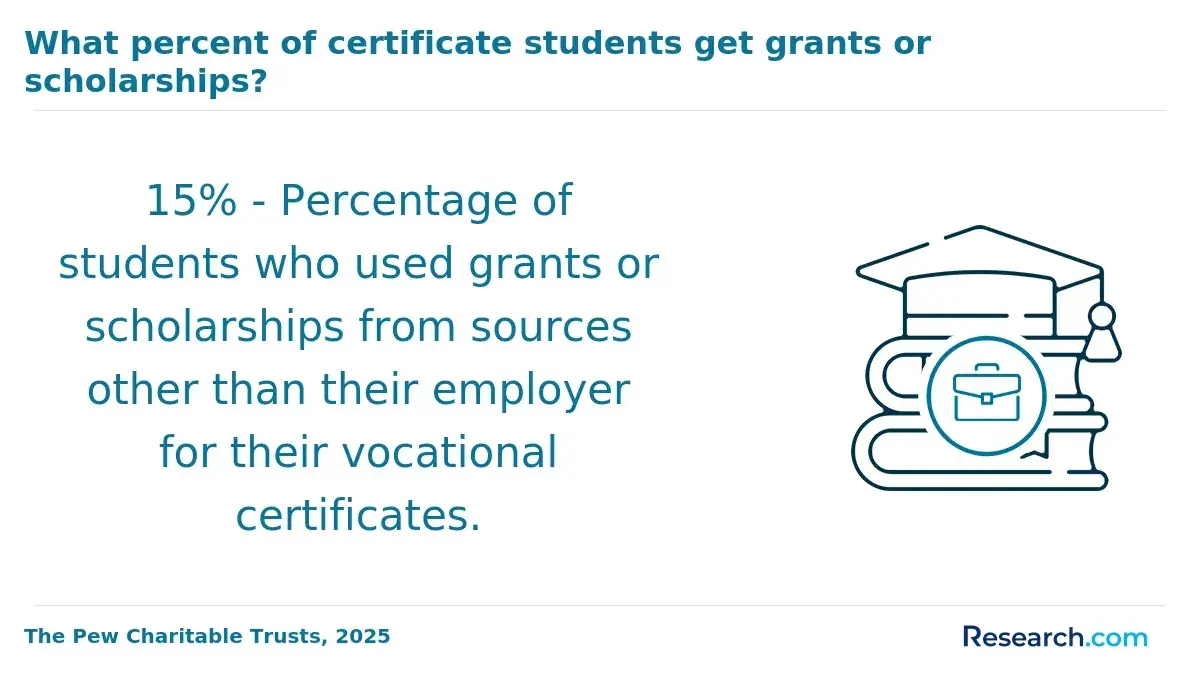
The number of human services graduates produced annually does not directly indicate an oversupply or undersupply in the workforce, as multiple factors complicate this relationship. Data from the National Center for Education Statistics show that around 15,000 to 18,000 bachelor's degrees in human services and closely related fields are awarded each year, with an additional 5,000 to 7,000 associate and certificate completions.
Yet, only about 60% to 70% of these graduates enter positions classified explicitly as human services within a year, reflecting delays, further education, or career shifts. This means that raw graduation figures overstate immediate workforce availability and can mislead stakeholders who assume all graduates compete for the same jobs simultaneously.
Regional labor demand and employer expectations further shape the gap between graduate output and actual job placements. Areas with stronger government or nonprofit sectors experience higher absorption rates, while others face modest oversupply when graduate production outpaces public funding or nonprofit growth.
Employers frequently seek candidates with practical experience, certifications, or internships beyond academic credentials, making credential accumulation alone insufficient for immediate placement.
Additionally, competition from related disciplines such as psychology and sociology dilutes direct employability, resulting in complex market dynamics that defy simple supply-versus-demand conclusions based on graduation volume alone.
Does Job Growth Support the Rising Supply of Human Services Graduates?
While projections indicate steady job growth in social work, community counseling, and related fields, the rising supply of human services graduates slightly outpaces available openings when considering employer demand. Approximately 70,000 annual openings reflect not only new jobs but also a high volume of replacement hires due to retirements and turnover, increasing competition. Graduates without specialized credentials, such as clinical licenses or management experience, often face limited upward mobility and may struggle to secure positions matching their qualifications, especially in saturated metropolitan labor markets.
Regional disparities further complicate the alignment between labor market demand for human services graduates and job availability. Some states with expanding social welfare systems demonstrate stronger absorption capacity, while others experience saturation that prolongs job searches and necessitates geographic mobility or additional training. Prospective students and current degree holders should carefully assess how supply dynamics intersect with local and niche labor market needs.
For instance, investing in targeted certifications or graduate education may be essential to navigate these disparities and avoid underemployment risks common in entry-level roles. Those evaluating educational pathways could also consider programs with proven workforce outcomes or explore alternatives like the RN BSN route in adjacent healthcare sectors where demand remains robust.
How Competitive is the Entry-Level Market for Human Services Graduates?
The entry-level landscape for human services graduates in 2024 is defined by a delicate equilibrium between stable job openings and a steady influx of qualified candidates. An annual sector growth of roughly 8%, as reported by the U.S. Bureau of Labor Statistics and Lightcast, aligns with average expansion rates seen in social assistance fields but does not signal rapid absorption of new graduates.
This creates a marketplace where competition intensifies, mainly due to a high applicant-to-position ratio rather than outright oversupply. For example, typical openings may attract 20 to 30 hopefuls, elevating the importance of relevant experience and specialized skills. Employers prioritize candidates with internships, volunteer work, or practicums, reflecting a preference for immediate productivity over credentials alone.
Geographic variations and industry focus also matter, as some regions and sectors present more limited opportunities. The realities of underemployment—where graduates initially take part-time or ancillary roles—highlight mismatches in supply, demand, and skill alignment rather than a simple glut of new entrants.
Below are key factors influencing this competitive market:
- Applicant Volume: High numbers of job seekers per role increase competition, requiring graduates to differentiate through tailored applications and demonstrated commitment rather than relying solely on degree completion.
- Experience Expectations: Employers consistently seek practical experience, with surveys indicating over 60% of positions demand work beyond academics, making internships and relevant volunteering crucial for marketability.
- Industry Demand Variability: Job availability is uneven across sectors like social work support versus community outreach, influencing graduates' prospects depending on the subsector targeted.
- Geographic Concentration: Regional disparities affect hiring chances; graduates in areas with fewer openings may face heightened competition or need to consider relocation.
- Specialization Importance: Developing specific skills or credentials tied to niche services can enhance employability and reduce direct competition with generalist candidates.
- Underemployment Trends: Starting in part-time or contract roles is common, reflecting cautious employer hiring practices and skill mismatches rather than simple job scarcity.
- Skill and Productivity Signals: Demonstrated ability to contribute effectively on day one influences hiring decisions more than academic ranking or broad qualifications, emphasizing practical readiness.
A recent graduate searching for entry-level human services roles in a midsize metropolitan area found the landscape daunting. Despite completing several internships, she encountered dozens of applicants listed for each position, many requiring prior paid experience. After multiple rejections during interviews, she shifted focus to smaller nonprofits outside her immediate region, where specialized needs and lower applicant pools offered better opportunities. This strategic pivot, while initially discouraging, ultimately underscored how geographic flexibility and targeted experience affected her prospects more than the overall number of graduates entering the field.
Which Industries Have the Greatest Demand for Human Services Graduates?
Demand for human services graduates concentrates in sectors where funding stability, regulatory environments, and specialized credentialing shape hiring patterns. Healthcare and social assistance dominate because they combine ongoing population needs with institutional hiring capacity and licensure-based role differentiation. Graduates must consider tradeoffs between job volume, competition levels, and credential expectations.
For example, a graduate targeting mental health counseling roles in healthcare may face intense competition requiring advanced licensure, whereas entry-level positions in nonprofit social assistance agencies might offer more openings but limited advancement without experience or certifications. This nuanced landscape affects how human services job demand by industry translates into actual employment chances.
The highest-demand sectors for human services graduates include:
- Healthcare Settings: Hospitals and outpatient care centers prioritize staffing for social and community service managers, caseworkers, and counselors. These roles often require clinical licensure or specialized training tied to patient care coordination, reflecting robust funding and regulatory oversight that sustains consistent openings for graduates with targeted credentials.
- Social Assistance Agencies: Public and private organizations focused on child welfare, substance abuse, and behavioral health services drive demand due to expanded integrated care models. Entry-level roles are common, though advanced positions typically require experience and certifications that align with evolving social policy priorities.
- Community Organizations: Nonprofits delivering social welfare programs maintain steady hiring, especially in metropolitan areas with larger nonprofit sectors. These roles emphasize grant-funded projects and program management skills, often rewarding graduates with practical experience over advanced degrees.
- Educational Institutions: Schools and youth services agencies have growing needs for human services professionals supporting vulnerable populations. These positions usually demand supplemental certifications beyond a broad human services degree but can provide accessible entry points in regions prioritizing youth development initiatives.
- Government Workforce Programs: State and local agencies employ graduates to administer social services, often requiring knowledge of public policy and compliance. Demand fluctuates with budget allocations and political climate, leading to uneven regional job availability and competition.
Graduates assessing these industries must weigh volume against competition and credential demands carefully. Pursuing an online bachelor's in kinesiology or other specialized credentials may broaden employment options where general human services degrees face saturation. The choice of sector impacts long-term career trajectories more than degree title alone.
Where are Human Services Graduates Most in Demand?
National demand figures for human services graduates mask significant regional disparities shaped by urban concentration, industry mix, and local workforce capacity. Large metropolitan areas such as Los Angeles and New York feature a high volume of openings due to diverse employer bases spanning government, healthcare, and nonprofits, yet these markets also attract substantial applicant pools, intensifying competition. Graduates relocating to these areas must weigh the advantage of abundant job opportunities against challenges like high living costs and the demand for specialized credentials or interdisciplinary skills, which often exceed baseline qualifications.
In contrast, rural and less populated states frequently show persistent shortages of qualified human services professionals but offer fewer openings overall. These areas tend to prioritize candidates with advanced certifications or bilingual abilities, reflecting service delivery complexities in underserved communities. For graduates, smaller markets may provide faster entry despite lower job volume, particularly when remote work options are limited and local training programs remain scarce. Understanding how job availability, credential expectations, and regional demographic shifts intersect is crucial for aligning education choices with practical labor market conditions rather than headline employment statistics.
Which Human Services Specializations and Degree Levels Face the Strongest Demand?
Employer demand within human services does not spread evenly across all specializations or degree levels but rather concentrates in defined skill areas backed by specific credentials and licensures. Graduates holding a master's degree with licensure often experience markedly better job prospects than those with associate degrees in more general roles. For example, a master's-level mental health counselor is likely to navigate less competition and higher regional demand than an associate degree graduate pursuing entry-level human service assistant positions, which frequently face saturation.
Current data from the U.S. Bureau of Labor Statistics (2024) and Lightcast confirm that specialized roles in behavioral health and social work lead in job openings, driven largely by workforce shortages and regulatory credentialing requirements. Key demand drivers include licensure prerequisites, sector-specific scarcities, and location-based workforce gaps.
The following list highlights human services specialization and degree-tier combinations with the strongest hiring demand:
- Mental Health Counseling Master's: High employer demand fueled by widespread workforce shortages and acute need for licensed counselors in clinical and community settings. State licensure mandates create entry barriers that elevate opportunities for credentialed graduates.
- Social Work Master's (MSW): Consistent regional shortages, especially in child welfare and family support services, sustain demand for MSW graduates holding relevant licensure. Many roles require practical field experience alongside advanced degrees.
- Substance Abuse Counseling Master's: Increasing employer preference for credentialed addiction counselors in healthcare and social service agencies reflects ongoing efforts to address the opioid epidemic and behavioral health crises.
- Bachelor's Level Specialized Roles: Positions combining a bachelor's degree with certifications in mental health or case management attract steady demand, although these applicants generally face greater competition than master's degree holders.
- Associate Degree Entry Roles: Saturation in entry-level human services assistant positions limits hiring prospects; these roles typically require fewer credentials but often offer lower pay and fewer advancement opportunities.
- Rural and Underserved Area Focus: Geographic disparities exacerbate demand in rural and high-poverty regions, particularly for social services professionals who can navigate local dynamics and resource constraints.
Are Employer Skill Gaps Affecting Demand for Human Services Graduates?
Employer skill gaps are a primary factor shaping current labor market outcomes for human services graduates, signaling a shortage not of graduates themselves but of candidates who meet nuanced, practical employer expectations. Despite a steady volume of degree holders, many hiring managers find their pools lacking in applied experience, industry-specific certifications, and competencies such as proficiency with case management software and trauma-informed care practices. For example, social work roles in certain regions remain unfilled not because graduates are unavailable but because applicants frequently lack digital literacy and specialized skills that employers prioritize. Misinterpreting this dynamic as an oversupply problem can lead programs and students to underestimate the importance of targeted internships, micro-credentials, and skill development aligned with workplace demands.
This disconnect, often framed as labor market skill mismatches in human services employment, distorts the understanding of job competition and availability. Employers increasingly seek candidates demonstrating ongoing professional development and familiarity with evolving regulatory frameworks, favoring those with practicum experience or specific certifications over generalist degrees. As a result, even high graduate volume does not translate directly into job placement without these complementary qualifications. For prospective students and degree holders, recognizing the value of integrating applied learning and credentials into their education becomes crucial for reducing hiring barriers and positioning realistically within competitive entry-level markets.
Furthermore, consideration of regional labor market variations and credential requirements is necessary when assessing long-term workforce opportunities in human services. Evaluating programs with respect to their capacity to offer relevant practicum placements, skill-building projects, and pathways to certifications can improve candidate alignment with employer expectations. For salary transparency and regional wage references relevant to advanced practice trajectories in related fields, such as nursing, resources like DNP salary transparency may provide useful benchmarks. Strategic program and skill selection grounded in real-world employer demand can thus better support practical employability over simple degree accumulation.
What is the Future Supply-and-Demand Outlook for Human Services Graduates?
Targeted job searches consistently outperform broad, high-volume application strategies because they align graduates' efforts with precise employer demand, improving the likelihood of meaningful interviews and offers. For example, a recent graduate focusing on entry-level case management roles in metropolitan areas with growing funding streams typically encounters less competition and clearer pathways than one applying indiscriminately across unrelated social service titles or oversaturated regions. Recognizing which job titles match their credentials and tailoring resumes to reflect employer language around practical skills-such as crisis intervention and cultural competency-can differentiate candidates in a crowded marketplace.
Allocating time and resources toward industries and locations exhibiting stronger regional employment outlook for human services professionals allows graduates to avoid costly application fatigue and increase conversion rates from interview to job offer. A nuanced understanding of demand fluctuations, such as metropolitan areas with high graduate volume versus rural regions with shortages, helps graduates choose roles where their qualifications closely match requirements. Adding demonstrable experience with technology or data analytics in human services further strengthens candidacies by matching evolving employer expectations. Prospective students may explore options like a bachelors degree in sociology online to build flexible foundations relevant to these dynamics.
References
- What Careers Can You Pursue with a Human Services Degree? - Grace Christian University https://gracechristian.edu/blog/what-careers-can-you-pursue-with-a-human-services-degree/
- What Are My Career Options After a Course in Human Services? https://columbia.ca/career-options-after-a-course-in-human-services/
- Addressing the Human Services Workforce Shortage https://radicle-health.com/blog/workforce-shortage/
- The Future of Social Work https://onlinedegrees.keuka.edu/blog/future-social-work
- The Heart of Employment: Jobs and Opportunities for Human Services Degree https://www.ucumberlands.edu/blog/jobs-and-opportunities-for-human-services-degree
- High-demand social work careers in California: trends and opportunities https://socialwork.pacific.edu/blog/high-demand-social-work-careers-california-trends-and-opportunities
- What is Human Services https://www.nationalhumanservices.org/what-is-human-services/
- Health Workforce Projections | Bureau of Health Workforce https://bhw.hrsa.gov/data-research/projecting-health-workforce-supply-demand
- Human Services Careers | PublicHealthOnline.org https://www.publichealthonline.org/human-services/
- Current and Projected Trends in Human Services https://humanswhoserve.wp.txstate.edu/current-and-projected-trends-in-human-services/
Other Things You Should Know About Human Services
Fieldwork and internships significantly influence employability in human services by providing direct client interaction experience that employers prioritize. Students should seek programs with robust, supervised placements rather than purely classroom-based curricula, as practical exposure sharpens adaptive skills and professional judgment critical for real-world cases. Prioritizing programs that integrate diverse practicum settings can better prepare graduates for varied employer expectations and reduce job market entry barriers.
A general human services degree offers broad foundational knowledge but may prolong job search duration due to employer preference for specialized skills in fields like substance abuse counseling or mental health support. Prospective students should consider early specialization if they have clear career goals, as it improves alignment with niche employer demands and may lead to higher starting salaries. Conversely, a generalist path can provide flexibility, which is advantageous in shifting labor market conditions but might require additional credentials later on.
Programs that balance theoretical learning with applied skills and manageable workload tend to produce graduates with stronger professional readiness. Overly intensive course structures can limit opportunities for meaningful work experience or networking, both critical for employability. Students should evaluate how program demands align with their capacity to engage in extracurricular human services work or volunteer roles, as these experiences often distinguish candidates within competitive applicant pools.
Yes, incorporating data literacy and outcome evaluation skills responds to growing employer demands for evidence-based practice and accountability in human services roles. Programs integrating these competencies enhance graduates' versatility, making them more attractive for roles involving program assessment or funding compliance. Prioritizing such training can position students advantageously for career advancement as agencies increasingly require measurable impact assessments alongside client services.