2027 Energy Engineering Career Outcomes by Degree Level Report: Pay, Employment, and Advancement Patterns

Co-Founder and Chief Data Scientist
Choosing the right degree level in energy engineering can reshape a career trajectory, yet prospective students and working professionals often face unclear distinctions between outcomes like pay and job stability. A 2024 study reveals that bachelor's degree holders constitute over 65% of energy engineering entrants but experience notably slower promotion rates compared to those with graduate degrees. This disparity highlights tradeoffs in access versus long-term mobility within a field where rapid technological shifts demand advanced expertise. Understanding these nuanced patterns is critical for those balancing education costs, time, and shifting employer expectations.
This article analyzes pay scales, employment prospects, and advancement trends across energy engineering degree levels, empowering readers to make informed educational and career decisions.
Key Things to Know About Energy Engineering Career Outcomes by Degree Level
- Associate degrees in energy engineering often lead to quicker labor market entry but limit advancement; mid-level roles dominate, reflecting employer preference for bachelor's credentials for technical leadership.
- Bachelor's holders unlock broader hiring pools and credential pathways, yet face competitive pressure from master's graduates in innovation-driven sectors, signaling nuanced employer valuation of advanced degrees.
- Master's and doctoral degrees offer specialized research and managerial prospects but entail higher education costs and longer timelines, necessitating careful weighing against practical return on investment in evolving energy fields.
- Key Things to Know About Energy Engineering Career Outcomes by Degree Level Key Things to Know About Energy Engineering Career Outcomes by Degree Level
- What Career Outcomes Can Students Expect From Each Energy Engineering Degree Level? Career Outcomes by Degree
- How Much Do Energy Engineering Graduates Earn by Degree Level? Salary by Degree Level
- Which Energy Engineering Degree Level Offers the Strongest Employment Prospects? Best Degrees for Employment
- What Entry-Level Jobs Can You Get With a Energy Engineering Degree? Entry-Level Career Opportunities
- How Do Energy Engineering Degree Levels Affect Career Advancement and Promotion Opportunities? Career Growth by Degree
- Is a Energy Engineering Degree Worth It Based on Salary, Employment, and ROI? Salary, ROI, and Value
- How Do Associate, Bachelor's, Master's, and Doctoral Energy Engineering Degrees Compare? Comparing Degree Levels
- Which Industries and Employers Hire Energy Engineering Graduates by Degree Level? Which Industries and Employers Hire Energy Engineering Graduates by Degree Level?
- What Skills, Credentials, and Experience Improve Energy Engineering Career Outcomes? What Skills, Credentials, and Experience Improve Energy Engineering Career Outcomes?
- Which Energy Engineering Degree Level Is Best for Your Career Goals? Choosing the Right Degree
What Career Outcomes Can Students Expect From Each Energy Engineering Degree Level?
Career outcomes in energy engineering are tightly linked to the degree level attained, with clear implications for employment scope, role complexity, and advancement potential. For example, individuals entering the workforce with associate degrees or certificates often secure entry-level technical and operational positions such as system operators or energy technicians, emphasizing hands-on facility tasks rather than strategic design responsibilities. These credentials offer expedited workforce access, but the limited advancement ceiling and employer preference for higher qualifications restrain upward mobility without additional education or targeted certification. This tradeoff is particularly relevant for working adults or military-affiliated students balancing time constraints and immediate employment needs against longer-term career trajectories.
Bachelor's degrees act as a critical threshold for broader engineering roles and leadership eligibility, providing the credentials necessary for licensure exams like the Professional Engineer (PE) and aligning with industry expectations for mid-level positions. Employers often look for bachelor's level preparation that includes internship or cooperative education experiences to ensure practical readiness, which directly impacts job placement in utility, renewable energy, and manufacturing sectors.
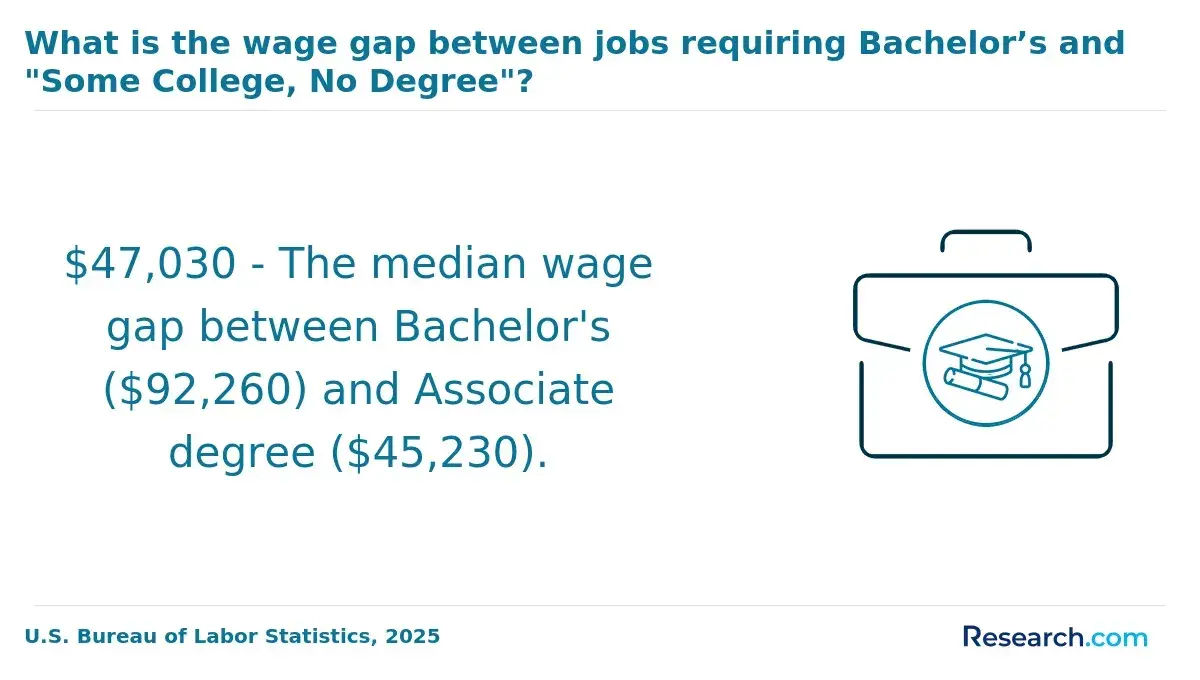
Data from the U.S. Bureau of Labor Statistics' 2024 Occupational Outlook report highlights stronger employment and pay trends for bachelor's degree holders compared to those with associate credentials, reinforcing the argument for transfer students and adult learners to invest in completing or advancing to this degree. Master's degrees further differentiate graduates by affording specialization in areas such as sustainable design or energy policy, positioning them for more senior technical and managerial roles with greater strategic influence and earnings growth. Doctoral graduates focus on research and innovation leadership, often engaging in academia or consulting, where their theoretical expertise shapes policy and directs cutting-edge project development but requires acceptance of more variable employment stability.
Since many employers weigh credentials alongside certifications and relevant work experience, prospective energy engineering students should consider how each credential level fits their career strategies, especially regarding leadership readiness and long-term mobility. Flexible degree completion options and credit transfers can mitigate time investments, yet advancing beyond entry-level often necessitates aligning studies with employer expectations for licensure and specialized competencies. For those interested in accelerated paths at the doctoral level, exploring the cheapest online doctoral programs in education may offer useful models for balancing speed and credential value, although analogous options in energy engineering are less common. Ultimately, understanding the nuanced employment and pay trends for energy engineering graduates by level helps inform realistic planning amid a shifting labor market landscape.
How Much Do Energy Engineering Graduates Earn by Degree Level?
Earnings for energy engineering graduates vary significantly across degree levels, influenced by factors such as licensure, industry demand, and geographic location. Entry-level roles attainable with certificates or associate degrees generally offer median wages between $50,000 and $65,000 but tend to limit eligibility for professional engineering positions or management. By contrast, bachelor's degree holders typically access median salaries ranging from $75,000 to $95,000, reflecting their qualification for licensed engineering roles and broader industry opportunities. Master's degrees often yield $95,000 to $120,000 annually and support transitions into leadership, research, or consultancy, though the additional time and tuition investment may not suit all learners or align with every employer's pay scale.
Doctoral graduates frequently command median salaries over $130,000 but often work in niche academic or policy roles with narrower employment markets and different advancement metrics. A critical consideration for prospective students-especially adult learners or those transferring credits-is how time and cost to advance between degrees weigh against incremental pay gains and job stability. Employers often emphasize licensure and practical experience as much as degree level, while regional salary variations and sector-specific credential requirements can alter outcomes. For workers balancing career interruptions or military service, shorter pathways and targeted certifications may offer quicker income gains, whereas graduate degrees suit those targeting specialized research or strategic roles in energy innovation.
A student who completed an associate degree initially planned to pursue a master's but reconsidered after reviewing local job listings emphasizing bachelor's credentials and PE licensure for many coveted roles. Noting that the leap to a master's involved considerable additional study and cost, the student chose instead to transfer credits and finish a bachelor's degree first, aiming to leverage the stronger wage boost and licensure eligibility. This decision reflected a nuanced understanding that while master's-level positions can be more lucrative, the requisite time and resource investment must align with practical advancement goals rather than assumed salary premiums alone.
Which Energy Engineering Degree Level Offers the Strongest Employment Prospects?
In energy engineering, a bachelor's degree generally offers the most balanced path to strong employment prospects by aligning with employer licensure requirements and opening access to design, compliance, and project leadership roles. For example, a graduate with a bachelor's degree is more likely to secure a professional engineering license, which remains a critical qualifier for many positions in regions with strict regulatory standards. While associate or certificate holders may enter the workforce faster and fill technician or operations roles, these positions often come with lower pay and fewer chances for advancement, reflecting a tradeoff between speed of entry and long-term career mobility.
Advanced degrees shift the value proposition toward specialization and managerial responsibility rather than immediate job placement. Master's degree holders typically command higher starting salaries and compete more effectively for consulting or senior technical roles, especially in emerging sectors like renewable energy systems, though this advantage varies by location and industry segment. Doctoral credentials contribute less to initial employment opportunities and more to research-intensive or academic careers, which require deeper technical expertise but represent a narrower labor market. According to recent labor data from 2024, bachelor-level graduates experience notably higher employment rates within six months post-graduation compared to those with only associate credentials, underscoring the practical benefits of completing a four-year program before entering the field.
What Entry-Level Jobs Can You Get With a Energy Engineering Degree?
Entry-level roles available to graduates with an energy engineering degree vary significantly by degree level, reflecting real differences in employer expectations and job function. Those with associate degrees often find positions focused on technical support and hands-on roles where practical certifications and field experience carry considerable weight. Conversely, bachelor's degree holders typically gain access to positions such as engineer-in-training or junior engineer roles that require stronger analytical skills and frequently integrate internship experience, which is increasingly valued by employers amid growing demand for advanced modeling and sustainability expertise.
The U.S. Bureau of Labor Statistics (2024) highlights that employers generally prefer candidates with at least a bachelor's degree, particularly for roles promising long-term mobility, licensure prospects, and project leadership potential. Progress toward Professional Engineer certification is often seen as a crucial milestone for advancement from junior roles. New graduates seeking the best starting careers with an energy engineering degree should carefully weigh these credentials against their access to internships, since practical experience remains a critical bridge to truly entry-level employment despite the label. The mismatch between "entry-level" job postings and actual experience requirements means many candidates benefit from prior apprenticeships or cooperative education.
For those considering alternative pathways or shorter programs, evaluating the potential tradeoffs in employment stability and skill-building opportunities is vital. This decision becomes clearer when considering specialized certifications or exploring the cheapest CACREP accredited programs online that may complement technical training. Ultimately, associating program choice with realistic entry-level job prospects and advancement options sharpens longer-term planning while avoiding career detours or unnecessary credential inflation.
How Do Energy Engineering Degree Levels Affect Career Advancement and Promotion Opportunities?
Degree level plays a pivotal role in determining how quickly and to what extent energy engineering professionals can advance into leadership or specialized technical roles. While bachelor's degrees commonly lead to operational or technical positions with promotion opportunities often following several years of hands-on experience, graduate degrees frequently open doors to managerial or strategic roles earlier in a career. For instance, many employers in energy sectors require a bachelor's degree plus professional licensure or certifications to qualify for mid-level supervisory roles. Data from the 2024 U.S. Department of Education's IPEDS and Lightcast labor analytics indicates that individuals with master's or doctoral degrees experience about 15% faster promotion rates over a decade, highlighting a clear but not automatic advantage in career mobility tied to advanced education.
However, the timing and value of pursuing an advanced degree depend heavily on factors like existing work experience, part-time study feasibility, and transfer credit availability, especially for working adults or military-affiliated students. Credentials such as Professional Engineer licensure or specialized renewable energy certifications often serve as essential gateways to leadership, regardless of degree level, underscoring the importance of aligning education with industry expectations. Those entering with only a bachelor's degree might face longer paths before senior responsibilities but can accelerate progression through targeted certifications and accumulated practical skills. Higher degrees foster strategic and research competencies that enhance promotion readiness, yet balancing education with ongoing professional duties remains a critical consideration for maximizing long-term advancement.
One energy engineering graduate reflected on these dynamics while weighing options to advance beyond a technical role. Initially hesitant about the time commitment for a master's, they questioned whether it would meaningfully improve internal promotion chances given their substantial hands-on experience. After consulting with mentors and industry contacts, they pursued a part-time graduate program complemented by a licensure exam, which ultimately boosted their confidence to apply for supervisory roles and meet explicit employer criteria. The process entailed managing work-study balance and uncertainty but proved valuable in navigating structured promotion pathways that prioritize both formal credentials and demonstrated expertise.
Is a Energy Engineering Degree Worth It Based on Salary, Employment, and ROI?
Higher degree levels in energy engineering correspond with increased salary potential and stronger employment stability, but this comes at the expense of longer completion times and higher educational costs. For example, bachelor's degree holders often experience entry salaries that lag behind those with graduate credentials, affecting the speed at which they can repay educational debt and realize positive return on investment. Employers in energy-intensive regions favor candidates with advanced technical skills or professional certifications, which reinforces the premium placed on master's or doctoral education. Those weighing the decision should consider the opportunity cost of extended study and potential geographic relocation to gain access to robust job markets with lower underemployment rates.
When evaluating return on investment for energy engineering graduates, the interaction between salary prospects, credential requirements such as Professional Engineer (PE) licensure, and regional labor demand is crucial. Approximately 15% struggle with loan repayment early in their careers, underscoring that job placement and local industry vibrancy influence financial outcomes more than degree completion alone. Adult learners, transfer students, or working professionals may improve affordability and reduce time-to-degree by leveraging transfer credits or part-time enrollment but must balance this against delayed earnings. Understanding these dynamics helps align education pathways with realistic career trajectories rather than relying on broad assumptions about degree value.
Those seeking practical guidance on cost-effective credentialing options might also explore alternatives like a paralegal certificate online, which can suit specialized workforce needs or complement technical qualifications in niche roles. Overall, salary and job prospects vary by degree level and local market factors, making individualized analysis essential for those considering an energy engineering degree salary and job prospects.
How Do Associate, Bachelor's, Master's, and Doctoral Energy Engineering Degrees Compare?
Holding an associate degree in energy engineering typically positions graduates for entry-level technical roles with limited scope for specialization or rapid advancement. These programs, often shorter and less costly, serve as viable pathways into the workforce or stepping stones toward bachelor's credentials through transfer agreements. However, many employers set the bachelor's degree as the baseline for roles involving system design, project leadership, or professional licensure eligibility, reflecting a critical threshold for securing more stable and flexible employment options. For instance, a technician with an associate degree may quickly enter the field but would face barriers advancing into supervisory or engineering roles without further education.
Bachelor's degree holders in energy engineering benefit from broader occupational access and are positioned for mid-career growth, often including eligibility for professional engineer licensure, which substantially affects earning potential and leadership opportunities. Master's programs build on this foundation by emphasizing specialization and research, enhancing credentials for advanced consultancy, management, and emerging sectors such as renewable energy, though this comes with longer study durations and increased financial costs. While doctoral degrees open doors primarily in academia, policymaking, and high-level research, their tangible employment advantages outside these niches are more limited, given extended completion times and significant debt risks. Data from 2024 labor statistics underline that bachelor's and master's graduates occupy the majority of technical leadership and specialized roles, marking a pragmatic balance between educational investment and career utility.
Which Industries and Employers Hire Energy Engineering Graduates by Degree Level?
In energy engineering, employer expectations and hiring patterns shift significantly across degree levels, influencing which industries and roles graduates access. Associate degree holders most often fill technical and technician positions in utilities, manufacturing, or construction sectors, where practical skills and certifications hold more hiring weight than advanced degrees. In contrast, bachelor's degree graduates broaden their scope to roles in renewable energy companies, government agencies, or oil and gas firms that demand engineering design expertise and often view licensure eligibility as a key factor for advancing into project management or analytical functions.
Master's degree holders typically attract employers in consulting firms, large infrastructure projects, and advanced manufacturing, leaning on deeper technical knowledge and leadership capabilities to secure specialized and supervisory roles. These positions generally offer higher starting salaries and faster promotion tracks, as supported by data from the National Center for Education Statistics. Doctoral graduates, meanwhile, are largely channeled toward academia, national laboratories, and energy policy organizations, where analytical rigor and research credentials are mandatory. Certificates and non-degree credentials mainly serve as mid-career upskilling tools rather than gateways to new sectors, often supporting employability in emerging fields such as smart grid technologies. Deciding whether to pursue additional credentials should factor in these tradeoffs between flexibility, advancement potential, and employer preferences within public, private, and regulated environments.
What Skills, Credentials, and Experience Improve Energy Engineering Career Outcomes?
Technical skills combined with professional credentials and practical experience critically shape career outcomes in energy engineering. Employers show a clear preference for candidates who supplement degrees with targeted certifications or licensure, reflecting validated expertise and ethical standards. For instance, bachelor's graduates who secure internship experience and focus on renewable energy technologies often enjoy higher initial employment prospects, while those pursuing licensure-such as Professional Engineer status-gain distinct advantages for mid-level to senior roles. These certifications act as proven benchmarks in recruitment processes, and portfolio evidence showcasing successful project outcomes further enhances candidates' appeal by demonstrating applied problem-solving capabilities.
Advanced credentials, including master's degrees integrated with licensure preparation, open pathways to leadership and specialized technical positions, indicating a tangible return on investment for those balancing work, prior credits, and ongoing education. This credential stacking, aligned with diversified exposure to real-world projects, is especially important for adult learners, military-affiliated students, and transfer candidates who must optimize time and resources. Moreover, soft skills like communication and project management are weighted alongside technical expertise in employer assessments, influencing promotion readiness and upward mobility. Strategic program choices that enable licensure eligibility and applied learning connect directly to enhanced employment access and career flexibility within the energy sector.
Decision-making around educational pathways also involves recognizing the evolving technical and cross-disciplinary demands embedded in workforce planning. Students considering a library science degree or related fields should note that energy engineering professional certifications and licensure requirements emphasize integrating analytical competencies with career-focused experience. Ultimately, the value of transitioning between degree levels hinges on how well programs facilitate these industry standards, providing clear evidence that advancing credentials directly correlates with improved pay, job stability, and long-term advancement potential.
Which Energy Engineering Degree Level Is Best for Your Career Goals?
Deciding on the best energy engineering degree for advancement depends largely on how graduates prioritize employment access, technical specialization, and leadership eligibility. A bachelor's degree often provides the necessary credential for entry-level engineering roles with about 75% employment placement within the first year according to U.S. Bureau of Labor Statistics data, but it may restrict upward mobility without additional credentials such as professional engineering licensure. For example, working professionals seeking managerial or research-focused roles typically find master's programs offer better promotion prospects within three years, though this comes with increased indebtedness and time investment, as indicated by College Scorecard data showing a 15%-25% higher median student debt load for master's degree holders. Many employers value relevant work experience alongside academic qualifications, so transfer-credit strategies and program flexibility can substantially affect career trajectory for adult learners and those balancing work with study.
Doctoral programs in energy engineering suit careers requiring high technical expertise, interdisciplinary research, and executive leadership but usually entail longer time to completion and delayed employment compared to bachelor's or master's programs. Given the specialized nature of many regulated or leadership roles, additional education beyond a bachelor's is often necessary for sustained advancement, particularly as licensure requirements vary by state and influence professional mobility.
Pathways including certificates and part-time or accelerated options can complement degree programs, especially for veterans or working adults exploring technical upskilling. Prospective students might also review options such as cybersecurity programs online for veterans when considering cross-disciplinary skill enhancement. Aligning degree choice with targeted outcomes and real-world employer expectations remains critical for maximizing long-term return on investment in energy engineering degree career outcomes.
References
- Energy Engineering Jobs | Engineering Jobs In Energy Sector https://www.energyutilitiesjobs.co.uk/engineering/
- Average engineering salary: how much does an engineering school graduate earn? https://www.ece.fr/en/faq-all-the-answers-to-your-questions/engineering-school-salary-how-much-do-you-earn-after-graduating-from-an-engineering-school/
- Career Opportunities in Renewable Energy Engineering https://www.nesfircroft.com/resources/blog/career-opportunities-in-renewable-energy-engineering/
- How to prepare for a career in renewable energy? – Clean Energy 4 Africa https://cleanenergy4africa.org/how-to-prepare-for-a-career-in-renewable-energy/
- EnergyDegrees.org: The Energy Education Website https://www.energydegrees.org/
- Skills for Success in Renewable Energy Careers: Technical Proficiency and Soft Skills | EuroClimateJobs https://www.euroclimatejobs.com/article/861/skills-for-success-in-renewable-energy-careers-technical-proficiency-and-soft-skills
- Renewable Energy Engineer: Empowering Sustainable Futures https://enable.green/esg-roles/green-energy-careers/renewable-energy-engineer-job-description/
- Verification Required https://www.energyjobline.com/news-article/engineering/what-jobs-can-you-get-engineering-degree
- Salaries https://engineers.scot/careers/salaries
- Graduate engineering salary round up https://targetjobs.co.uk/careers-advice/engineering/graduate-engineering-salary-round
Other Things You Should Know About Energy Engineering
The intensity and specialization of coursework grow notably from associate to doctoral levels, with bachelor's programs often emphasizing broad technical foundations while master's and doctoral studies demand deep research and project management skills. Prospective students should weigh how much time and effort they can realistically commit, especially working adults balancing employment. If immediate application of skills in industry is a priority, a bachelor's may offer a better balance, whereas advanced degrees require substantial dedication to theoretical and experimental work that can delay workforce entry.
Many employers reserve roles centered on research, design innovation, or leadership in emerging energy technologies for candidates with master's or doctoral degrees. This expectation means that those targeting cutting-edge innovation or strategic development roles should prioritize graduate education. For students focused on operational or maintenance roles, a bachelor's degree suffices, but overlooking advanced degrees can limit access to higher-responsibility projects and competitive salaries in innovation-driven sectors.
Jumping straight into a master's program offers continuity in education and quicker progression toward advanced expertise, which can be advantageous for employers valuing recent academic exposure to the latest technologies. However, working before returning to graduate study can provide clarity on career goals and enhance the relevance of advanced coursework. Those with clear innovation or management ambitions should consider immediate postgraduate study, while others may benefit from industry experience to inform their specialization and improve eventual career impact.
Higher degree levels tend to broaden geographic mobility by qualifying graduates for specialized positions often clustered in energy hubs or research centers, whereas lower degree holders may find opportunities more localized within regional plants or utilities. Candidates prioritizing flexibility and broader local employment may opt for bachelor's-level credentials to quickly enter the workforce. Conversely, those open to relocation and seeking roles in R&D or policy influence will find advanced degrees essential to accessing these concentrated job markets.