2027 Wind Power Forecasting Capstones: What to Look for in a Data Science Master's

Co-Founder and Chief Data Scientist
A wind power forecasting capstone can be valuable career evidence - but only if the master's program lets you build and evaluate a credible forecast, not merely apply a model to convenient data. For prospective students interested in renewable energy analytics, the key questions are whether suitable data, technical coursework, domain guidance, and a workable project timeline are available. This guide explains what a strong project looks like and how to check whether a program can support one before you enroll.
Key Things You Should Know
- Look for a capstone that predicts a defined power-generation target at an operationally relevant horizon, then tests it against simple baselines using data that would have been available when each forecast was made.
- Ask programs to confirm capstone topic flexibility, access to suitable data, and supervision in time-series modeling or energy systems; a renewable-energy elective alone does not establish those capabilities.
- The U.S. Bureau of Labor Statistics projects 35% growth in data scientist employment from 2025 to 2035, but that broad occupation forecast does not measure demand for wind-forecasting specialists.
What Is a Wind Power Forecasting Capstone in Data Science?
It is a graduate project that uses historical information - often weather forecasts, generation records, and operational context - to predict future wind electricity output. A useful project specifies what is predicted, where, when the prediction is issued, and how far ahead it applies. Those choices determine which data and evaluation methods are appropriate.
A project might forecast output for one facility, a portfolio, or a broader grid region. These are not interchangeable tasks: regional generation data can support a regional forecast, but it cannot validate claims about individual turbines. Nor should students assume every data science master's permits an energy-specific capstone. Some assign projects or require an approved sponsor, while others allow a student-proposed topic.
Why Does Wind Power Forecasting Matter for Renewable Energy Careers?
Wind generation changes with weather, while grid operators and energy businesses must make decisions before actual output is known. Forecasts can inform scheduling, trading, storage use, and planning for changes in generation. The most relevant horizon depends on the decision: a near-term operational forecast and a day-ahead planning forecast solve different problems.
This makes the capstone a way to demonstrate more than model accuracy. An employer can examine whether you understood forecast timing, explained uncertainty, and translated errors into operational consequences. A technically strong project is less persuasive if it optimizes a metric without identifying who would use the result or when.
What Should a Wind Forecasting Capstone Include?
A strong capstone follows the path from an operational question to an auditable result. When comparing program project requirements, look for enough time and faculty support to complete these connected parts:
- Define the task: Specify the generation target, location, forecast issuance time, prediction horizon, and intended user.
- Establish usable data: Document generation and weather sources, time zones, missing periods, capacity changes, and permission to use or publish the records.
- Build fair comparisons: Test a persistence or other simple baseline before assessing more complex statistical or machine-learning models.
- Evaluate as forecasts: Use later periods for testing, report an appropriate error measure such as mean absolute error, and examine difficult conditions such as rapid output changes.
- Make the work inspectable: Provide reproducible code or a clear methods record, limitations, and a stakeholder-facing explanation of what the forecast can and cannot support.
Forecast-time data leakage is a critical red flag. If a project predicts tomorrow's output using tomorrow's observed weather rather than a weather forecast available today, its test performance may overstate real-world usefulness. Where decisions depend on risk, prediction intervals and an assessment of their calibration can add more value than another small improvement in average error.
Public U.S. resources can help students scope a project: the National Renewable Energy Laboratory's WIND Toolkit includes modeled wind-resource and power data, while U.S. Energy Information Administration grid data can support certain regional analyses. Neither should be assumed to provide measured output from a particular wind farm. Confirm geographic coverage, timestamps, data rights, and whether the source matches the claim you want to make.
Which Data Science Courses Support Wind Power Forecasting Projects?
Prioritize probability and statistics, time-series analysis, machine learning, data engineering, and model evaluation. Coursework in optimization or energy systems can help connect predictions to decisions, but the project also needs practical skills in joining weather and generation data and handling changing time intervals.
Read syllabi and past project descriptions rather than relying on course titles. A passing time-series unit is different from a course that teaches rolling backtests, uncertainty estimation, and forecasting with information available at prediction time. Data analytics programs at the master's level may also be worth comparing if they offer stronger applied forecasting and project supervision than a program labeled "data science."
How Do Online and Campus Data Science Master's Programs Compare?
Delivery format does not, by itself, determine capstone quality. The consequential difference is whether the format gives you dependable access to collaborators, computing resources, faculty feedback, and any required industry partner. These are common trade-offs to investigate, not guarantees about a particular school.
| Format | Potential advantage | Capstone constraint to verify |
| Online | May allow continued employment and a project tied to an existing employer | Meeting times, remote data access, group-work expectations, and faculty availability |
| Campus | May offer easier access to in-person research groups or local partners | Whether those opportunities are open to master's capstone students and fit the project calendar |
Choose based on confirmed project arrangements rather than presumed networking advantages. For working students, online data science master's options for professionals are most attractive when capstone milestones and required meetings fit their schedules. Ask whether a student may propose a wind topic, work with an outside sponsor, and retain a publishable version of the final work.
What Are the Admission Requirements for a Data Science Master's?
Requirements vary by institution. Programs may assess prior work in programming, calculus, linear algebra, and statistics, along with academic records and evidence of readiness. Wind-industry experience can strengthen a proposed project, but it does not automatically replace a stated quantitative prerequisite. Conversely, lack of wind experience does not necessarily rule out a well-scoped capstone.
If application writing is a barrier, online machine learning master's degrees with no application essay provide another admissions format to investigate. An essay waiver says nothing about forecasting depth or permission to pursue a wind project. Check the current admissions page for formal requirements, then separately ask the program how students secure capstone approval and an advisor.
How Much Do Data Science Master's Programs Cost and Take to Complete?
There is no reliable single price or completion time for this project goal. Both depend on the school's current tuition schedule, required credits, fees, enrollment pace, and whether additional courses are needed. A capstone may also extend the timeline if access to a sponsor or restricted data is delayed.
Compare each program's total expected cost to completion, not just its advertised per-credit tuition: include mandatory fees, required software or computing, possible travel, and the cost of an extra term if the project slips. For funding possibilities, review financial assistance pathways for a data science master's; eligibility and actual awards depend on the student and institution. Before committing, request a current degree plan showing when the capstone begins and how a part-time student completes it.
Which Accreditation Standards Should You Verify Before Enrolling?
Verify that the university holds recognized institutional accreditation through the U.S. Department of Education or Council for Higher Education Accreditation records, then confirm the degree appears in the institution's current catalog. Do not assume a data science program needs a specialized engineering accreditation; whether specialized accreditation applies depends on the particular program and credential.
If studying online from another state, also confirm that the institution can enroll students where you live. Accreditation, state authorization, and capstone access are separate questions. An accredited degree does not establish that the program will approve your proposed topic or provide the data and supervision it requires.
What Careers and Salaries Can Wind Forecasting Skills Support?
A relevant capstone can support applications for data scientist, energy analyst, forecasting analyst, or related roles with utilities, renewable-energy firms, grid organizations, and analytics teams. Job titles and expectations vary: some positions emphasize production modeling, while others emphasize software, market analysis, or grid operations.
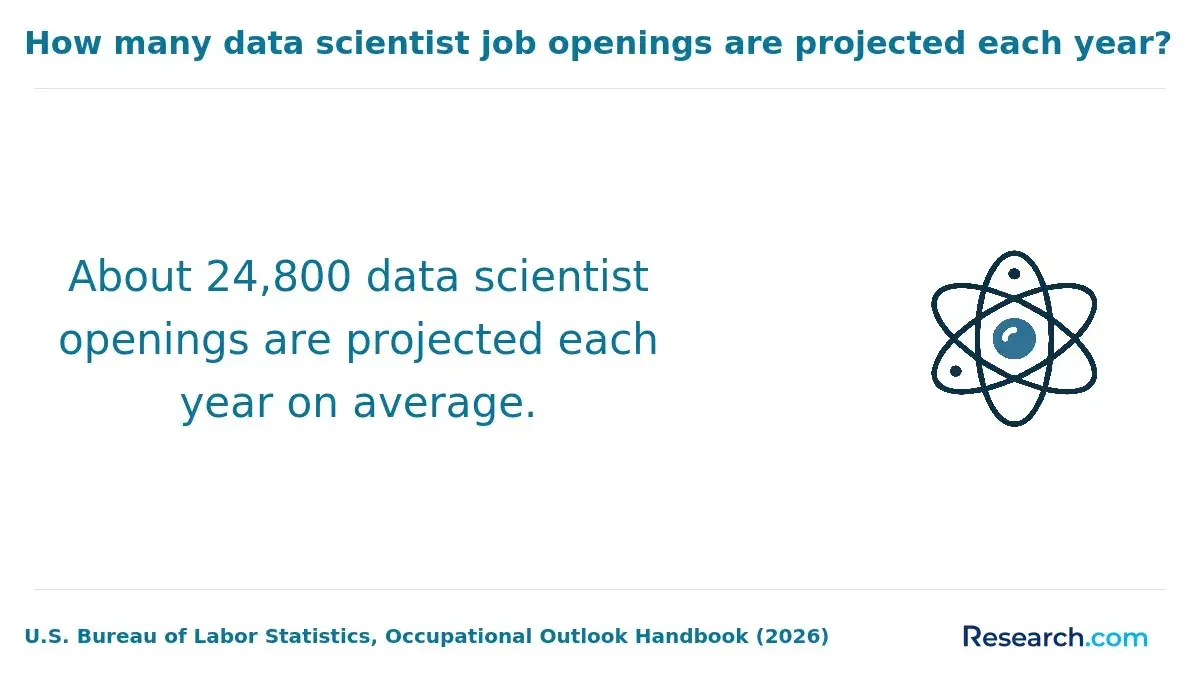
The U.S. Bureau of Labor Statistics reports a $120,230 median annual wage for data scientists in May 2025. That is an occupation-wide figure, not a salary estimate for new graduates or wind-forecasting roles; experience, employer, location, and duties matter. When assessing data science degrees linked to in-demand skills, favor evidence that graduates can demonstrate forecast evaluation, reliable code, and clear communication - not a claim that one capstone ensures a particular job or pay level.
What Certifications Strengthen a Wind Energy Data Science Career?
No general certification substitutes for a defensible wind forecasting project. A cloud-platform or data-engineering certification may be useful if target job postings call for that platform and your capstone demonstrates its use. Training in power systems or energy markets may help when the role requires domain knowledge, though a course or certificate is not the same as professional licensure.
Choose a credential only after checking representative vacancies for your intended role. If a certification would consume time needed to obtain usable data, conduct a fair backtest, or document your project, the capstone is likely the better immediate investment.
Other Things You Should Know About Data Science
No. Wind speed is an important input, but electricity output also depends on turbine characteristics, operating conditions, and other constraints. State clearly which variable your project predicts.
No. Forecasting predicts output for specified future times; an annual energy assessment estimates production over a much longer period for a different planning purpose.
Only within your data-use agreement. Ask your sponsor and program whether you may share methods, aggregated results, or a separate demonstration using public data without exposing restricted records.
Identify the parts you personally designed, built, or evaluated, and distinguish them from the team's overall result. Be ready to explain your decisions and the project's limitations.
References
- SDWPF: A Dataset for Spatial Dynamic Wind Power... - PMC https://pmc.ncbi.nlm.nih.gov/articles/PMC11187227/
- Numerical Weather Prediction | noaa.gov https://www.ncei.noaa.gov/products/weather-climate-models/numerical-weather-prediction
- Taming Wind Power With Better Forecasts | IEEE Spectrum https://spectrum.ieee.org/taming-wind-power-with-better-forecasts
- End-to-end data-driven weather prediction | Nature Index https://www.nature.com/articles/s41586-025-08897-0
- An introduction to multivariate probabilistic forecast evaluation - ScienceDirect https://www.sciencedirect.com/science/article/pii/S2666546821000124
- Different methods for forecasting wind power - News | NCAR & UCAR News https://news.ucar.edu/3891/different-methods-forecasting-wind-power
- Improving Predictability of Wind Power Generation Using Empirical Data | MIT Climate Portal https://climate.mit.edu/posts/improving-predictability-wind-power-generation-using-empirical-data
- Short-Term Wind Energy Yield Forecasting: A Comparative Analysis Using Multiple Data Sources | mdpi.com https://www.mdpi.com/1996-1073/18/16/4393
- Open Data | iea-wind.org https://iea-wind.org/task43/task-43-open-data/
- Forecasting of wind power curtailment events | fraunhofer.de https://publica.fraunhofer.de/bitstreams/25c35a90-7b4f-48ac-b142-0a867f32879d/download