2027 Berkeley MIDS Preparation for Analytics Consulting: A Guide for Prospective Students

Co-Founder and Chief Data Scientist
Berkeley's Master of Information and Data Science (MIDS) may appeal to prospective students who want to solve clients' business problems with data, not just build models. The decision is whether its technical training, online format, and cost match the consulting work you hope to do.
This guide connects the program's subject areas to consulting tasks, identifies preparation gaps to address, and shows what to verify with Berkeley before applying or enrolling.
Key Things You Should Know
- Berkeley MIDS can support analytics consulting preparation through statistics, data engineering, machine learning, and communication, but the degree alone does not establish client-facing experience.
- Before applying, assess your coding and quantitative readiness; before enrolling, confirm the current course requirements, live-session schedule, any travel requirement, and full program cost.
- The U.S. median annual wage for data scientists was $120,230 in May 2025, according to the Bureau of Labor Statistics (BLS). That occupation-wide figure is not a Berkeley MIDS graduate salary or a consulting offer.
What Is Berkeley MIDS, and How Does It Prepare Students for Analytics Consulting?
Berkeley MIDS is a graduate data science degree from the University of California, Berkeley School of Information. Its relevance to analytics consulting lies in combining analytical methods with the work of defining a question, evaluating evidence, and explaining results. A consultant might need to determine why customers leave, assess whether a pricing change worked, or translate a forecast into a decision a client can make.
Technical coursework is only part of that preparation. Consulting also requires negotiating a workable scope, recognizing unreliable data, presenting uncertainty, and adapting recommendations to a client's budget or operations. Prospective students should examine current project descriptions and ask whether they can practice those activities - not assume that completing a model is equivalent to delivering a client engagement.
Is Berkeley MIDS Accredited and Recognized for Data Science Careers?
UC Berkeley holds institutional accreditation from the WASC Senior College and University Commission (WSCUC). Accreditation applies to the institution; it is not a separate endorsement of MIDS as a consulting credential or a guarantee that an employer will prefer it.
For hiring, the more useful question is how well you can demonstrate relevant work alongside the degree. Ask prospective employers which skills and experience they value for your target role. If you need formal accreditation documentation for tuition reimbursement or another purpose, confirm the institution's current status through Berkeley and WSCUC before committing.
What Careers Can Berkeley MIDS Graduates Pursue in Analytics Consulting?
Potential paths include analytics consultant, data science consultant, business intelligence consultant, and analytics roles within firms that advise clients. These titles vary substantially: one team may emphasize dashboards and stakeholder workshops, while another expects production machine learning or experimental design. Graduates may also pursue in-house analytics jobs that build experience before a move into consulting.
Choose a target role before selecting electives or projects. For example, a prospective marketing analytics consultant needs credible measurement and experimentation work; someone targeting technical implementation needs stronger data engineering and deployment evidence. For a wider view of adjacent roles, consider data science study options for emerging data roles. Treat job titles as starting points for reading actual postings, not as promised outcomes of the degree.
What Courses Does Berkeley MIDS Include for Consulting-Focused Data Analysts?
Berkeley MIDS covers subjects relevant to consulting, including statistics, data engineering, machine learning, and communicating analysis. Course names, electives, and requirements can change, so use Berkeley's current catalog to establish what you would actually take. The table connects broad subject areas to the work a consulting-focused student should look for in course descriptions and projects.
| Subject area | Consulting relevance |
| Statistics and experimentation | Distinguishing a plausible explanation from evidence that supports a decision. |
| Data engineering | Assessing whether client data can be combined, cleaned, and used reliably. |
| Machine learning | Evaluating predictive approaches against simpler, more maintainable alternatives. |
| Visualization and communication | Making assumptions, limitations, and findings understandable to stakeholders. |
A course title does not establish how much consulting practice it offers. Look for assignments involving an ambiguous problem, a defensible choice of methods, and a presentation to a nontechnical audience. If client-facing work is your main goal, ask Berkeley how often students encounter externally defined projects and what access they have to the work afterward for a portfolio.
What Are the Admission Requirements for Berkeley MIDS?
Applicants should use Berkeley's current MIDS admissions page for the authoritative list of degree, transcript, application, and testing requirements. Requirements can differ by application cycle. Do not treat a recommended preparation topic as a formal prerequisite - or assume that a missing skill automatically rules you out - without checking the stated policy.
For consulting-focused preparation, assess whether you can write and explain code, reason through statistics, and communicate a business problem clearly. Evidence might include relevant coursework, professional analysis, or a project showing both a technical result and its limitations. If one area is weak, targeted study can improve readiness, but it does not necessarily fulfill a formal admission requirement.
Applicants comparing application workload across schools can review ML master's programs without personal statements. That comparison does not establish Berkeley's current essay policy; verify MIDS requirements directly before planning your application.
Is Berkeley MIDS Online or Campus-Based?
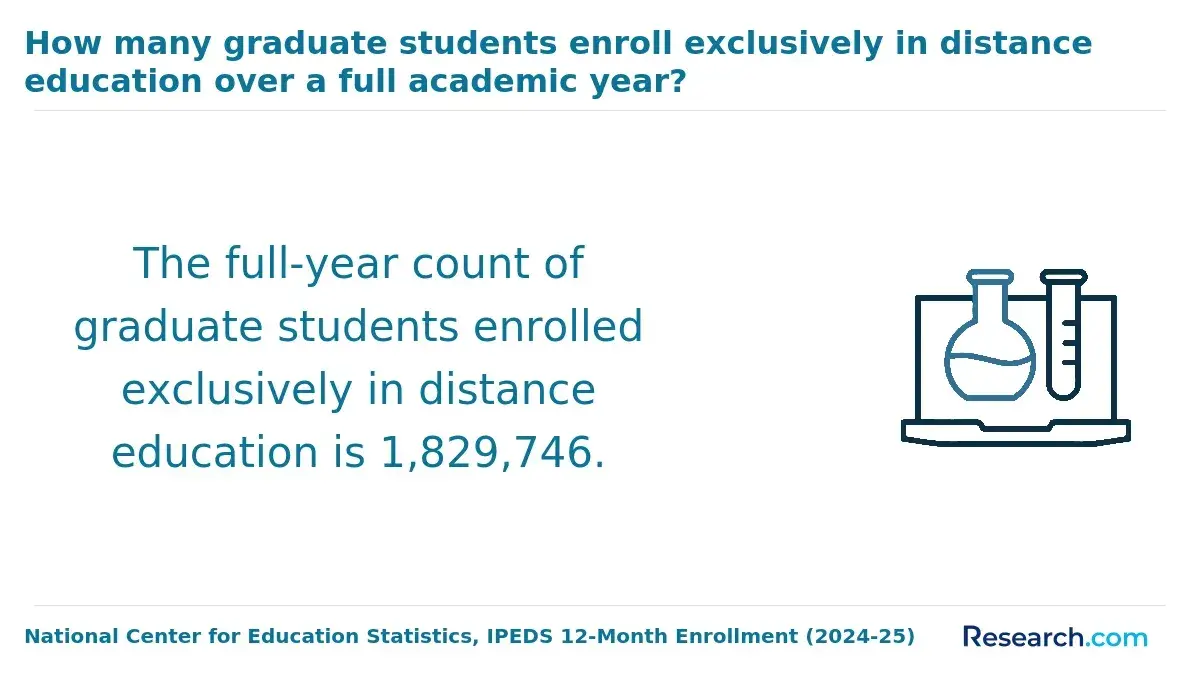
Berkeley MIDS is designed as an online program with live learning components. That can suit working professionals who want to remain employed while studying, but "online" does not necessarily mean that every activity is self-paced or that no travel is required.
Before enrolling, confirm the current live-session times, attendance expectations, group-work schedule, and any in-person requirement with Berkeley. This matters particularly if you work client hours that change without notice. A program whose scheduled activities you can attend consistently is more useful than one you can fit only into an ideal week.
How Long Does Berkeley MIDS Take, and How Much Does It Cost?
Completion time depends on the available pace, course sequencing, and whether you maintain continuous enrollment. Tuition and fees can change by term. Rather than rely on an older advertised total, request Berkeley's current required-unit count, per-unit tuition, mandatory fees, and estimated completion schedules for the pace you intend to follow.
Calculate the commitment using the cost categories below. A lower course load may be easier to combine with client work, but it can extend the period over which you pay expenses and balance study with employment.
- Tuition: Multiply the current per-unit rate by the units required under your approved plan.
- Mandatory fees: Add charges Berkeley identifies as required, rather than treating tuition as the full bill.
- Situational costs: Budget for any required travel, equipment, materials, and financing costs that apply to you.
- Opportunity cost and support: Account for reduced paid work, if relevant, and subtract only employer assistance or aid you have confirmed.
When comparing online data science master's tuition options, apply the same cost categories to each school. A tuition-only comparison can obscure fees, travel, or differences in required units.
What Skills Do Analytics Consultants Need to Succeed After Berkeley MIDS?
Analytics consultants need to turn an unclear request into an answerable question, test whether the available data supports that question, and recommend an action proportionate to the evidence. Coding and modeling matter, but so do interviewing stakeholders, documenting assumptions, explaining uncertainty, and handing over work a client can maintain.
Build portfolio evidence around those connected tasks. A strong project states the client-style decision, compares a reasonable baseline with a more complex approach where appropriate, explains limitations, and ends with a recommendation. A common mistake is to show only model accuracy: a prospective client or employer also needs to know what the analysis would change and what could make its conclusion unreliable. Use permitted data and make your own contribution clear, especially in group work.
What Salary Can Berkeley MIDS Graduates Earn in Analytics Consulting?
There is no single verified salary for Berkeley MIDS graduates working in analytics consulting. Pay varies with prior experience, employer, location, technical responsibilities, and whether a role is primarily advisory or hands-on. Public occupation data can provide context, but it cannot predict an individual graduate's offer.
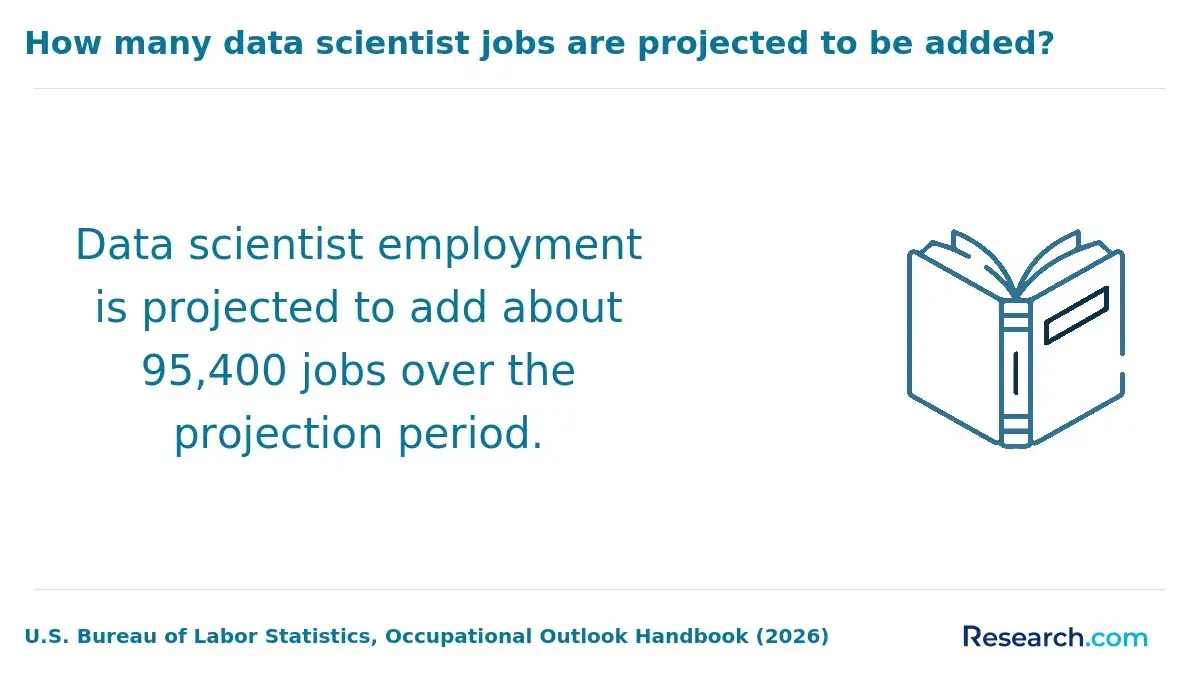
The BLS reports a $120,230 median annual wage for U.S. data scientists in May 2025 and projects 35% employment growth from 2025 to 2035. Neither measure isolates consultants or Berkeley alumni; the median includes workers at different career stages. Compare offers for the specific roles you want and consider compensation alongside workload and advancement opportunities. Sector-by-sector data science earnings comparisons can provide additional context, but they should not be read as a return-on-tuition forecast.
How Should Students Compare Berkeley MIDS With Other Data Science Programs?
Compare programs against the kind of consultant you want to become, using equivalent evidence for each. Berkeley MIDS may be a stronger fit if its current projects, technical breadth, and live online experience suit your goals and schedule. A different program may be more suitable if it offers a better-matched specialization, a more workable timetable, or a lower total cost.
For a practical comparison, ask each program for the same information: required courses and available electives; opportunities to frame and present stakeholder problems; live attendance and travel obligations; expected completion pace; and an itemized cost for that pace. Then review a project or assignment example rather than judging depth from course names alone. If a faster, AI-centered curriculum is your priority, AI graduate programs that can take less than two years offer a distinct comparison - but check whether they develop the broader analytical and communication skills your consulting target requires.
Avoid choosing solely by institutional name, advertised tuition, or an occupation-wide salary figure. Your best next step is to identify two target job descriptions, map their requirements to each program's current coursework and projects, and obtain a written cost and scheduling estimate before deciding.
Other Things You Should Know About Data Science
Not without permission and an appropriate basis for sharing it. Follow contractual and organizational rules; when necessary, use public or synthetic data to demonstrate the method without exposing a client's information.
Analytics consulting is not generally a separately licensed profession. Specific work can still be subject to employer policies, contracts, and industry rules, particularly when sensitive data is involved.
It may, depending on your employer's policy. Confirm the annual limit, eligible expenses, grade requirements, payment timing, and any obligation to repay assistance if you leave.
It can be difficult without a track record of delivering projects and finding clients. An employed analytics role may offer a more structured way to build that experience before working independently.
References
- Online group projects in higher education - PMC https://pmc.ncbi.nlm.nih.gov/articles/PMC10038701/
- Career Services - Master of Analytics https://analytics.berkeley.edu/career-services/
- Information and Data Science (MIDS) | Berkeley Graduate Division https://grad.berkeley.edu/program/information-and-data-science-mids/
- What Can I Do With a Degree in Data Science? Career Paths & Skills | Harvard SEAS https://seas.harvard.edu/news/what-can-i-do-degree-data-science-career-paths-skills
- MIDS Electives | Duke MIDS https://datascience.duke.edu/academics/electives/
- Online Master of Information and Data Science | UC Berkeley School of Information https://www.ischool.berkeley.edu/programs/mids-online
- UC Berkeley iSchool Online Admissions https://ischoolonline.berkeley.edu/admissions/
- 2025 MSDS Employment Statistics - School of Data Science https://datascience.virginia.edu/pages/2025-msds-employment-statistics
- Application Checklist & Requirements | columbia.edu https://ma.stat.columbia.edu/applications-checklist/
- What You Need to Know for Consulting Recruiting: Summer 2025 | Columbia Career Education https://www.careereducation.columbia.edu/news/june-2024/what-you-need-know-consulting-recruiting-summer-2025