2027 Nonprofit Donor Retention Capstones: What to Look for in a Data Science Master's

Co-Founder and Chief Data Scientist
A nonprofit donor retention capstone can show whether a data science master's prepares you to solve a real fundraising problem - or merely teaches you to build a model. This guide is for prospective students who want to work with nonprofit data. It explains what a credible project requires, which program features make one feasible, and what to confirm before enrolling. The most important distinction is whether you can turn an analysis of past gifts into a responsible, usable decision for a nonprofit.
Key Things You Should Know
- Look for a program that permits an applied capstone, supports external partners or approved datasets, and provides guidance on data privacy and stakeholder communication; do not assume it offers a donor retention project.
- A strong project defines who is eligible to return, compares a simple baseline with more complex methods, tests on later gifts, and recommends an outreach action the nonprofit could realistically evaluate.
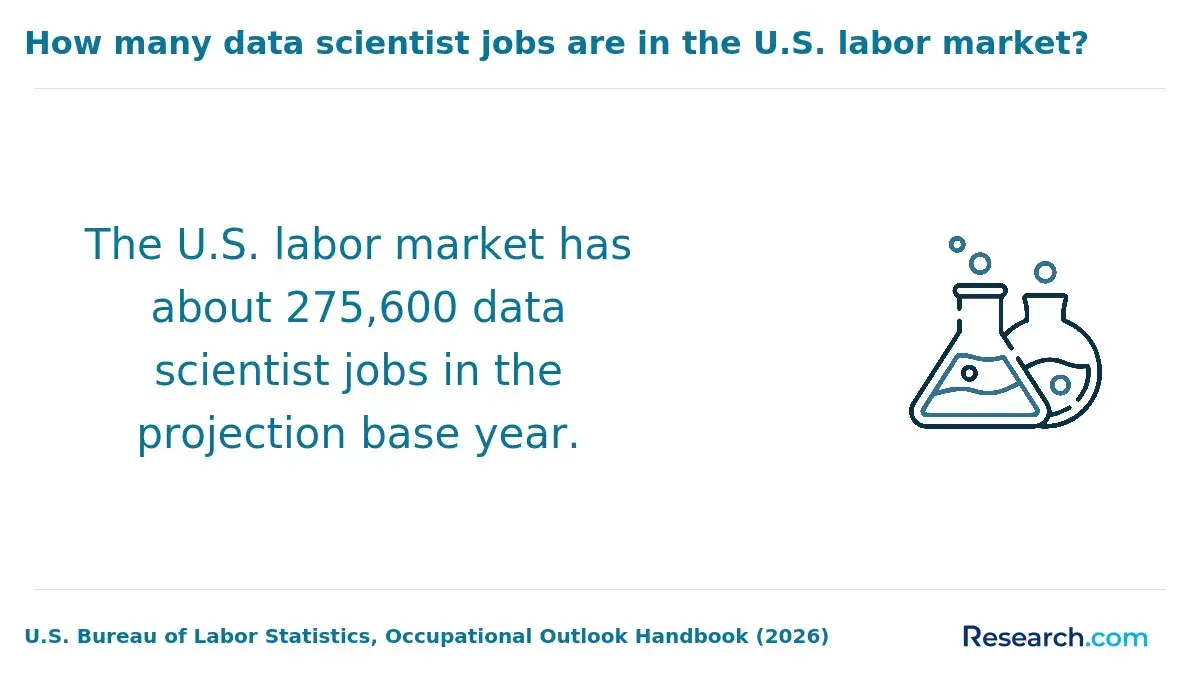
- The U.S. Bureau of Labor Statistics projects 35% growth in data scientist employment from 2025 to 2035, but that occupation-wide forecast does not establish demand for nonprofit-specific roles or predict a graduate's outcome.
What is a nonprofit donor retention capstone in a data science master's program?
It is an applied project that investigates whether past supporters make another gift within a defined period and how a nonprofit might respond. The deliverable might include a reproducible analysis, a risk-ranking tool, an evaluation plan, and recommendations for fundraising staff. Some programs require a capstone; others offer a thesis, practicum, or elective project instead. None of those labels alone establishes that students can work on donor retention.
The project's first decision is its retention definition. For example, a team could study donors who gave in one annual period and whether they gave in the next. Monthly donors, first-time donors, and people whose gifts were pledged but not received may need separate treatment. Changing those definitions can change both the measured retention rate and which donors appear suitable for outreach.
What coursework prepares students to analyze nonprofit donor retention?
Look beyond a course titled "machine learning." A useful curriculum combines statistical inference, SQL and data management, predictive modeling, experimental design, and communication with nontechnical stakeholders. Fundraising records may contain duplicate identities, missing campaign information, changing gift codes, and uneven contact histories; data preparation can matter as much as model selection.
Courses in causal inference or experimentation are especially useful if your goal is to assess whether an outreach campaign increases giving. A prediction that someone will donate is not evidence that contacting them caused the gift. If you are comparing an AI-focused curriculum with a broader statistics-and-data-science curriculum, use AI degree comparisons based on career interests to frame the trade-off; for this capstone, sophisticated models should not replace sound evaluation.
How do you choose an accredited data science master's program?
Confirm the institution's current accreditation through its published information and the relevant recognized accreditor, then inspect the specific program's capstone rules. Institutional accreditation and permission to pursue an external project answer different questions. Ask whether a nonprofit partner can supply data, whether remote students receive the same project support, and who approves access to sensitive records.
A useful comparison is to request recent capstone descriptions or a project rubric. Evidence of faculty supervision, an achievable partner-approval process, and expectations for reproducible work is more informative for this goal than a program's general promise of "real-world projects." A red flag is assuming that an attractive sample project means future students can obtain the same dataset or partner.
What should a donor retention capstone project include?
A strong capstone moves from a decision a fundraising team actually faces to an evaluation it could use. The following components distinguish a credible project from a donor list scored without context:
- Defined decision and population: State whether the nonprofit wants to understand attrition, prioritize limited outreach, or test an intervention; document donor eligibility and the prediction window.
- Permissioned, documented data: Record where gifts and contacts came from, how identities were reconciled, what fields may be used, and how access and retention of records are controlled.
- Defensible analysis: Compare a simple recency- or gift-frequency baseline with any advanced model; keep later gifts out of training features and evaluate on a later time period.
- Decision-relevant evaluation: Assess performance for the outreach capacity the nonprofit has, check whether results differ across meaningful donor groups, and report uncertainty rather than only an overall accuracy figure.
- Practical handoff: Provide reproducible code or a documented workflow, explain limitations to staff, and propose a small, measurable test before routine use.
Donor records are sensitive. The project should avoid exposing names or contact details in a public portfolio, respect consent and contact preferences, and use de-identified or synthetic examples when publication rights are unclear. A model that targets people who would have donated anyway may waste staff time; an outreach experiment can test value more directly, but it requires the nonprofit's agreement and an appropriate design.
How do online and campus-based data science master's programs compare?
Either format can support this capstone. The meaningful difference is often access: a campus program may make local partner meetings easier, while an online program may let a working nonprofit employee use an approved project at their own organization. Neither arrangement guarantees permission to use donor records.
Before choosing, check meeting schedules, group-project requirements, faculty availability, and whether the capstone can be completed remotely. Students balancing employment may also want to compare short-format online data science graduate programs, while confirming that a faster schedule leaves enough time for data agreements, cleaning, and partner feedback.
What are the admission requirements for a data science master's degree?
Requirements vary by program, but applicants commonly need to demonstrate readiness for quantitative work and programming through prior courses, professional work, or other evidence the program accepts. Experience in fundraising can supply valuable domain knowledge without necessarily fulfilling a formal mathematics or coding prerequisite.
If you need preparation, ask admissions staff which specific courses must be completed for eligibility and which skills can be developed before classes begin. Application paperwork varies too: online ML master's programs with simplified essay requirements may interest applicants comparing application processes, but an easier application is not evidence that a program supports nonprofit capstones.
How long does a data science master's degree take and cost?
There is no reliable single time or price for programs capable of supporting this project. Published schedules depend on credit requirements, course availability, and enrollment pace; the capstone may also depend on partner approval. Compare each school's current tuition and mandatory fees for the same expected completion path, then account for materials, any campus visits, and time away from paid work.
If affordability is decisive, low-cost online data science master's programs can help build a shortlist. Verify current charges directly with each school, along with whether capstone credits, extended enrollment, or travel would change your total. A lower tuition figure is less useful if the program cannot support the project you want to complete.
What careers can donor retention data science graduates pursue?
A donor retention capstone can provide relevant portfolio evidence for nonprofit analytics, fundraising operations, constituent insights, and broader data analyst or data scientist roles. Its transferability is strongest when it demonstrates careful data engineering, evaluation, and communication - not just familiarity with one fundraising platform.
Choose the target role before choosing electives. A nonprofit analytics position may reward experience translating results for development staff; a general data scientist role may call for deeper modeling and software practices. For a broader comparison of pathways, see choosing a data science degree for data career opportunities. Neither the capstone nor the degree guarantees a particular job.
What salary and job outlook can data science graduates expect?
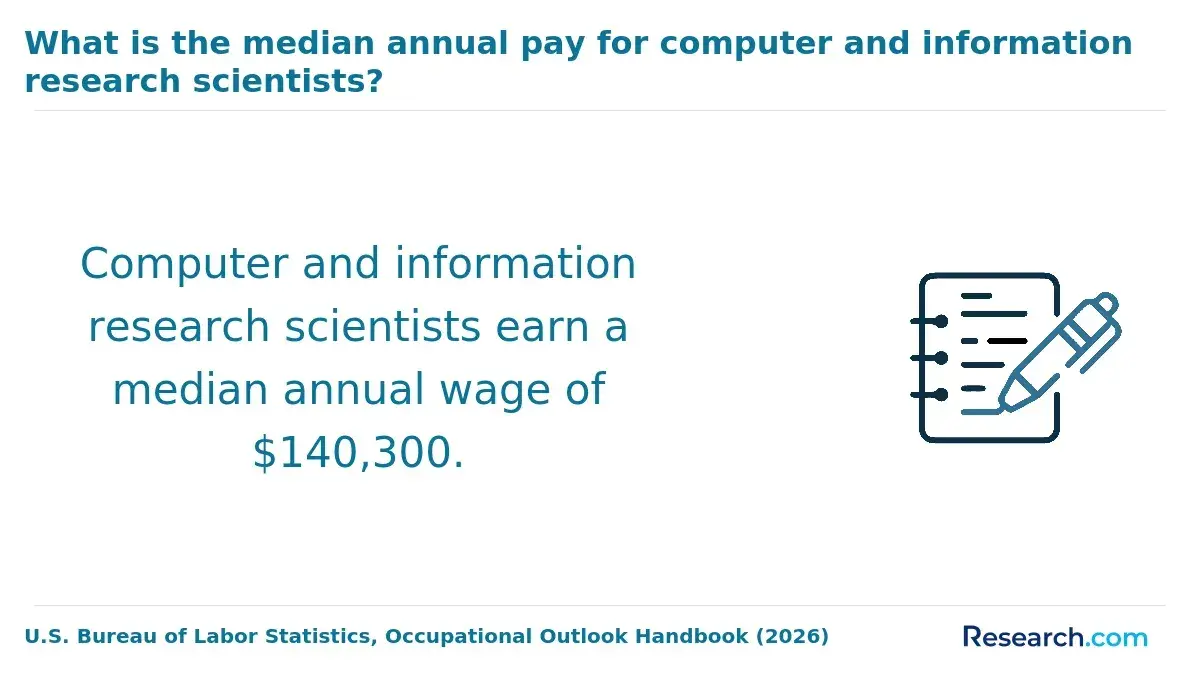
The U.S. Bureau of Labor Statistics reports a $120,230 median annual wage for data scientists in May 2025 and projects 35% employment growth from 2025 to 2035. These are U.S. occupation-wide measures, not starting salaries, nonprofit pay figures, or outcomes attributable to a master's degree. Use them to understand the broader market, then investigate pay for the particular role, employer type, and location you are considering.
Do data science careers require certifications or professional licenses?
Data scientist roles generally do not have a universal professional-license requirement. Employers may value particular tools or credentials, but a certificate should not be mistaken for authorization to handle a nonprofit's donor records. Data access depends on the organization's policies, agreements, and applicable privacy obligations.
For this career goal, a well-documented project often provides clearer evidence of ability than a tool certificate alone. Check actual job postings before paying for an additional credential, and ask a prospective capstone partner what training or approvals it requires.
Other Things You Should Know About Data Science
Yes, if you have a dataset you are permitted to use. Make its limitations explicit: a public or synthetic dataset may not capture real contact histories, consent preferences, or operational constraints. Do not publish private donor information to demonstrate your work.
No. If returning donors are common, accuracy can hide poor identification of donors the team could help retain. The project should assess results against a simple baseline and the nonprofit's actual outreach capacity.
Only if that supports a clearly defined decision and the data can support it. Predicting whether a donor returns and estimating a future gift are different tasks; combining them can make results harder to validate or explain.
Ownership and publication rights depend on the university's policies and any agreement with the nonprofit. Settle access, reuse, portfolio permissions, and handoff expectations before receiving data - not after the project is finished.
References
- Frequently Asked Questions | Protecting Student Privacy https://studentprivacy.ed.gov/frequently-asked-questions
- Partnering with Students to Develop a Capstone for a... - PMC https://pmc.ncbi.nlm.nih.gov/articles/PMC11732519/
- Guidance: Data Security and Privacy | lehigh.edu https://research.lehigh.edu/policies-guidance-forms/guidance-data-security-and-privacy
- What is a Capstone Project? | Masters of the Environment | Student Support & Advising Services https://www.colorado.edu/menv/capstone-project
- Capstone Projects | Fels Institute of Government https://www.fels.upenn.edu/student-experience/capstones
- Nonprofit Management Capstone Project | Columbia University School of Professional Studies https://sps.columbia.edu/academics/masters/nonprofit-management/capstone-project
- Donor Retention Strategy for Fundraising Teams (2026) | afpglobal.org https://careers.afpglobal.org/career-resources/finding-talent-8/donor-retention-strategy-for-fundraising-teams-2026-41
- Donor Retention: Definition, Calculation, and Benchmarks | bloomerang.com https://bloomerang.com/nonprofit-glossary/donor-retention