2027 Document Intelligence in an Online Data Science Master's: Courses, Projects, and Program Selection

Co-Founder and Chief Data Scientist
Choosing an online data science master's for document intelligence takes more than finding "NLP" in a course list. If you want to build systems that extract, search, classify, or analyze information in documents, you need to know whether a program offers the right technical depth and room for a substantial project.
This guide shows you what to look for in the curriculum, how to assess project opportunities, and which practical constraints to check before enrolling.
Key Things You Should Know
- Look for a combination of machine learning, natural language processing, data engineering, and evaluation; a course title alone does not establish document intelligence depth.
- A strong project tests a complete document workflow - including extraction errors, human review, and privacy - not just a model's performance on clean text.
- The U.S. Bureau of Labor Statistics projects 35% growth in data scientist employment from 2025 to 2035, but that occupation-wide figure does not predict demand for a particular document intelligence role or program graduate.
What is document intelligence in an online data science master's program?
Document intelligence applies data science to information stored in contracts, forms, reports, correspondence, and other documents. A system might convert a scanned page to text, identify fields or entities, classify its contents, retrieve relevant passages, and present results for a person to verify. Unlike analysis of a tidy database, the work must account for layout, ambiguous language, missing information, and errors introduced at each stage.
In a master's program, the subject may appear under natural language processing (NLP), information retrieval, computer vision, applied machine learning, or data engineering rather than under the name "document intelligence." Students need Python and data-handling skills, a working knowledge of statistics and machine learning, and enough software engineering to test a multi-stage workflow. The strongest fit depends on your goal: document search calls for retrieval and relevance evaluation, while form processing places more weight on OCR, layout, extraction, and error handling.
When reading a catalog, distinguish a passing example from a full unit, a dedicated course, an advanced elective, and a supervised project. Ask for recent syllabi or assignment descriptions if the catalog does not show what students actually build.
What courses do online data science master's programs typically include?
Online data science master's curricula commonly combine statistical foundations, programming, machine learning, and applied work, but their electives vary. The table maps course areas to document intelligence tasks so you can judge what a particular curriculum would let you practice.
| Course area | Relevance to document intelligence | Depth to look for |
| Statistics and machine learning | Model selection, uncertainty, and error analysis | Held-out evaluation and comparisons with simple baselines |
| NLP and information retrieval | Text classification, entity extraction, search, and language models | Assignments using real documents and task-specific evaluation |
| Data engineering and databases | Ingestion, document storage, metadata, and reproducible pipelines | Work with messy inputs, versioning, and repeatable processing |
| Computer vision or multimodal ML | Scanned pages, tables, and page layout | Projects that retain visual or spatial information rather than using clean text alone |
| Responsible AI and security | Privacy, access controls, bias, and review of consequential outputs | Explicit treatment of sensitive data and failure modes |
Do not assume every program offers all these areas or that every student can take each elective. Check prerequisites, how often relevant courses run, and whether the program allows you to combine them before the capstone. For document-heavy goals, an NLP course plus a realistic applied project can be more useful than several loosely related AI electives.
What projects and capstone experiences build document intelligence skills?
A convincing capstone solves a defined document problem from ingestion through evaluation. Examples include extracting fields from invoices, finding relevant passages in policy documents, or routing incoming forms for review. A polished demo is not enough: assess whether the student can identify where the system fails and what those failures cost its users.
When evaluating a program's project requirement - or planning your own - look for evidence of the following:
- A bounded task and usable data: Define the document types, target outputs, permissions, and what a successful result would allow a user to do.
- A reproducible workflow: Preserve preprocessing choices, dataset versions, model settings, and a baseline for comparison.
- Meaningful evaluation: Separate training and test documents by source or document family where appropriate, and measure extraction accuracy, retrieval relevance, or review workload against the task.
- Failure and privacy analysis: Examine poor scans, unusual layouts, sensitive information, unsupported answers, and when a person must take over.
- A usable deliverable: Explain the interface, operational limits, and decisions a stakeholder should not delegate to the system.
Ask whether capstones can use student-proposed topics, whether faculty with NLP or information-retrieval expertise supervise them, and what data-use rules apply to employer documents. If a program offers only clean, preprocessed datasets, you may need an independent project to demonstrate end-to-end document work.
How do online and campus-based data science master's programs differ?
The academic question is not whether instruction happens on a screen; it is whether you can take the needed courses and complete a well-supported project. Online study may make it easier to remain employed and use an approved workplace problem. Campus study may make in-person research groups, labs, and informal collaboration easier to access. Neither format establishes technical depth by itself.
Compare the same practical conditions for both formats: live-session times, access to faculty and computing resources, group-project scheduling, capstone supervision, and any required travel. An online program with strong feedback on applied work may suit a working professional better than a campus option with relevant electives they cannot attend. A campus program may be preferable if close involvement in a particular lab is central to the goal.
If speed is a major constraint, examine course sequencing rather than assuming online means faster. The schedules discussed for accelerated online master's study in AI provide a useful comparison point, but verify that a faster schedule still leaves time for the document-focused electives and project you want.
What are the admission requirements for an online data science master's?
Requirements vary by program. Applicants may be asked to show prior study or proficiency in programming, calculus, linear algebra, and statistics, along with transcripts and other application materials. Work experience can strengthen an application, but it does not automatically satisfy a formal course prerequisite.
Compare your background with each program's published requirements, then ask admissions staff whether missing preparation must be completed for credit before entry or can be addressed after admission. For a prospective document intelligence student, Python fluency and statistical reasoning deserve particular attention: NLP tools are easier to use responsibly when you can diagnose data and evaluation errors.
If your background is outside computing, AI graduate admission through foundation courses may offer ideas for closing gaps. Confirm directly whether any foundation course is accepted by the data science program you intend to enter.
How long does an online data science master's take and cost?
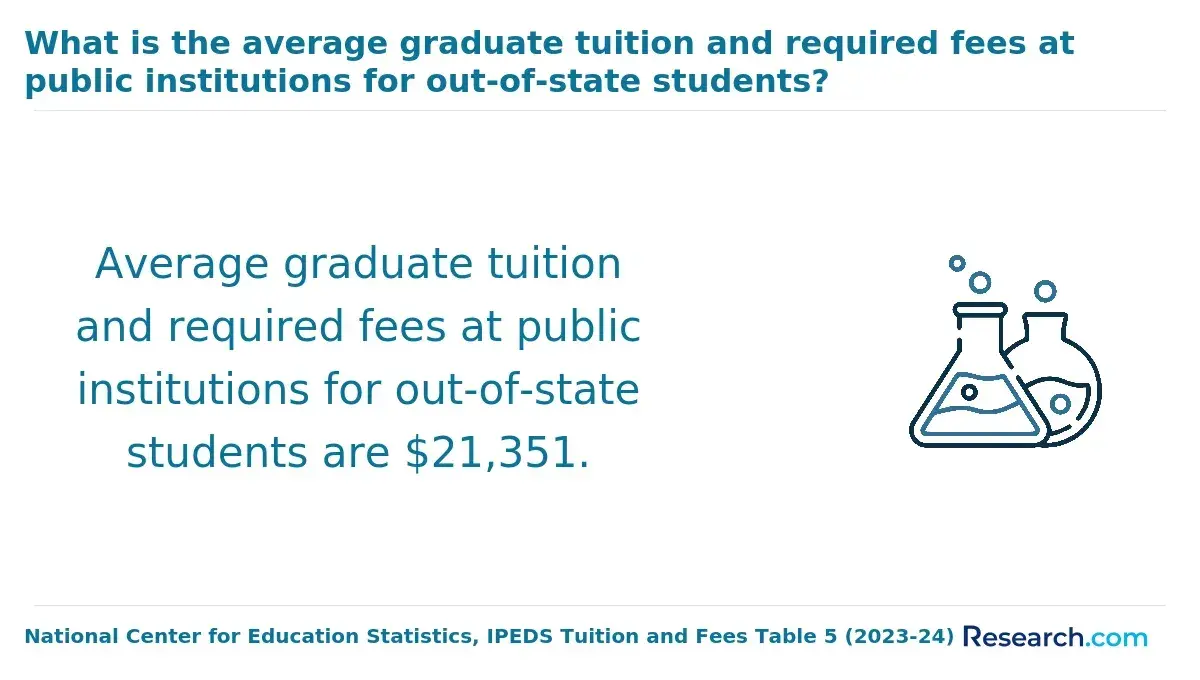
Time and total cost depend on the institution, credit requirements, course availability, study pace, and fees. Without a specific program and tuition schedule, a reliable price or completion time cannot be stated. A document intelligence focus can also affect pacing if NLP or related electives have prerequisites or run infrequently.
Request a written cost and schedule estimate based on the courses you would actually take. Include tuition, mandatory fees, software or computing charges, materials, possible travel, and any additional term needed to finish the project. Compare that total with your available time and any employer tuition support; the lowest advertised tuition is not necessarily the lowest cost to complete.
If an AI degree is also on your shortlist, lists of affordable university programs in AI can help identify alternatives. Compare their full costs and document-related coursework with data science programs on the same basis rather than treating different degree titles as interchangeable.
How can you verify accreditation for an online data science master's?
Check institutional accreditation before relying on a program's marketing language. Search the institution in the U.S. Department of Education's accreditation database, confirm its current recognized accreditor, and make sure the degree is awarded by that institution. Accreditation of a university does not, by itself, tell you how deeply its data science program teaches document intelligence.
Also confirm that the institution can enroll students residing in your state and ask whether the online degree has any required campus activities. State authorization and accreditation answer different questions; neither should be inferred from a program's availability to apply online. If an employer requires a particular accreditation or credential, obtain its requirements before enrolling.
What careers and salaries can an online data science master's support?
Document intelligence skills can be relevant to data scientist, machine learning, NLP, information retrieval, and document-automation work. The role you can pursue depends on your existing experience as well as your portfolio: building a search prototype, for example, demonstrates different strengths from maintaining a production extraction pipeline.
The U.S. Bureau of Labor Statistics reports a May 2025 median annual wage of $120,230 for data scientists. That is an occupation-wide midpoint, not an entry-level offer, a document intelligence salary, or a return attributable to a master's degree. For a more targeted career decision, compare job descriptions in your intended industry with your planned courses and projects; data science salary opportunities across sectors provide further context, though employer, location, and prior experience still matter.
What is the job outlook for data science graduates in the United States?
The U.S. Bureau of Labor Statistics projects 35% employment growth for data scientists from 2025 to 2035. This indicates growth for the broad occupation, not a forecast for document intelligence specialists or a guarantee of a job after graduation.
Use that outlook as context, then inspect the work behind positions you might seek. Some postings emphasize modeling and experimentation; others require document pipelines, retrieval, deployment, or domain-specific review processes. A program is a better fit when its assessed coursework and projects prepare you for the responsibilities you actually find in target roles.
Which certifications and professional standards complement a data science master's?
No single certification is required across document intelligence roles. A relevant cloud, data-engineering, or machine-learning certification may help demonstrate familiarity with a particular platform, but it should complement - not replace - evidence that you can evaluate and maintain a document workflow. Choose one only when target employers use the technology it covers.
Standards of practice matter more than a badge when documents contain confidential or consequential information. Look for instruction in access control, data minimization, reproducibility, evaluation across document types, and human review. If policy and risk management are central to your intended work, choosing an AI ethics and governance track may be worth comparing with a technically focused data science degree.
Other Things You Should Know About Data Science
Not without first converting the scans into usable text or otherwise processing the page images. Check whether your intended project needs OCR, layout information, or both.
No. Its output still needs evaluation against the specific task, including checks for missing fields, incorrect passages, and answers unsupported by the source document.
Only if you have permission that covers the intended use and disclosure. Otherwise, use appropriately licensed public or synthetic documents and explain how the project reflects a realistic workflow.
Only if the institution formally offers and records one. Otherwise, your course selections, project documentation, and portfolio will need to show that focus.
References
- General Schedule Qualification Policies | U.S. Office of Personnel Management https://www.opm.gov/policy-data-oversight/classification-qualifications/general-schedule-qualification-policies/
- Applied Learning Experiences - UW Information School https://ischool.uw.edu/programs/msim/curriculum/applied-learning-experiences
- M.S. in Data Science and Artificial Intelligence | CU Online https://online.campbellsville.edu/online-degrees/ms-masters-data-science-artificial-intelligence/
- Application Instructions | Duke Engineering Master's Programs https://masters.pratt.duke.edu/apply/instructions/
- Online Master's in Data Science (MSDS) | Northwestern University https://sps.northwestern.edu/masters/data-science/
- Process Documents with Azure AI Document Intelligence | Washington University in St. Louis https://careers.washu.edu/classes/process-documents-with-azure-ai-document-intelligence/
- Data Science Specialization | Information School | University of Washington https://msimonline.ischool.uw.edu/msim-online/data-science-specialization/
- Recent Capstone Projects | College of Information Science https://infosci.arizona.edu/industry/capstone/projects
- All Capstone Projects - Duke MIDS https://datascience.duke.edu/capstones/
- Applications Process & Requirements | Illinois https://siebelschool.illinois.edu/admissions/graduate/applications-process-requirements