2027 Biodiversity Monitoring Capstones: What to Look for in a Data Science Master's

Co-Founder and Chief Data Scientist
A biodiversity monitoring capstone can show whether a data science master's program prepares you to solve a real conservation problem, not just train a model on an environmental dataset.
If you hope to work with wildlife observations, acoustic recordings, camera traps, or remote sensing, the crucial question is whether a program gives you access to suitable data, ecological guidance, and enough project time to produce a defensible result. This guide helps you assess those conditions before you enroll.
Key Things You Should Know
- Look for a capstone that tests a specific monitoring decision, accounts for imperfect detection or sampling bias, and delivers reproducible work a conservation partner could use.
- Confirm access to data, an ecology-informed adviser, and permission to share portfolio materials before treating a proposed project topic as a program promise.
- The U.S. Bureau of Labor Statistics reports a $120,230 median annual wage for data scientists in May 2025, but that occupation-wide figure does not establish pay for biodiversity roles.
What is a biodiversity monitoring capstone in a data science master's program?
A biodiversity monitoring capstone is an applied graduate project that uses data to assess species, habitats, or changes in ecological communities over time. The strongest projects begin with a decision: for example, whether acoustic surveys can identify sites needing follow-up visits, or whether camera-trap coverage is sufficient to compare wildlife activity across locations.
The deliverable should be more than an accurate classifier. It might include documented data preparation, an analysis or model, validation appropriate to the ecological question, a reproducible code repository, and a report that explains uncertainty to a park manager, researcher, or conservation organization. A useful result can also be a finding that the available data cannot support a proposed comparison.
Program terminology varies: a school may offer a capstone, practicum, thesis, or client project. None of those names guarantees that biodiversity topics are available. Before applying, ask whether students may propose external partners, who approves projects, when topics are assigned, and whether an adviser with ecological expertise can participate.
What skills should a biodiversity data science capstone demonstrate?
A strong capstone connects technical performance to ecological validity. A model that recognizes birds in recordings, for instance, is less useful if it fails at new sites, confuses background noise with calls, or cannot distinguish an unrecorded species from a species that was not detected.
These project components reveal whether a program can support work beyond a classroom demonstration:
- Question and sampling design: Define the species, place, time period, monitoring method, and decision the analysis will inform; identify uneven survey effort and other sources of bias.
- Data engineering and methods: Document cleaning, location and time joins, versioning, and appropriate methods such as geospatial analysis, computer vision, acoustic classification, or statistical modeling.
- Evaluation: Test on sites, devices, or time periods not used for training when the intended use involves new conditions; report errors that matter to the stakeholder, not accuracy alone.
- Reproducibility and delivery: Provide code, data provenance, model or analysis documentation, and a usable report or workflow, subject to data-sharing permissions.
- Responsible use: Check permissions for recordings and images, protect sensitive species locations, and explain the consequences of false detections or missed detections.
AI can speed identification in large collections of images or recordings, but automated labels still need validation against the conditions in which they will be used. Students comparing responsible AI tracks in graduate programs should ask whether ethics training reaches project-level decisions about data rights, disclosure, and model limitations.
What coursework prepares students for biodiversity monitoring projects?
Look for a sequence that lets you acquire data, analyze it, and defend an ecological interpretation. Course titles alone are weak evidence: inspect syllabi and recent projects to see whether students actually work with spatial, temporal, or imperfectly labeled data.
The distinction below helps separate core preparation from electives that become important for particular capstone ideas.
| Coursework area | Contribution to a monitoring capstone | Especially useful when |
| Statistics and experimental design | Supports uncertainty estimates, comparisons, and assessment of sampling bias | Making claims about change over time or differences among sites |
| Programming and data engineering | Builds reliable pipelines for combining observations and survey metadata | Handling records from multiple sensors or organizations |
| Geospatial and time-series analysis | Connects observations to place, habitat, season, and survey effort | Mapping distributions or analyzing repeated monitoring |
| Machine learning and model evaluation | Supports classification and testing beyond training data | Working with camera-trap images or acoustic recordings |
| Ecology or environmental science | Helps interpret detection, habitat, and biological plausibility | Making recommendations from model outputs |
If a program has strong data analytics graduate study choices but no ecology coursework, a qualified external co-adviser may fill part of the gap. Confirm that the program permits that arrangement rather than assuming an outside scientist can formally supervise your capstone.
How do online and campus-based data science programs support field research?
Field access is helpful, but it is not essential to every biodiversity capstone. An online student might analyze appropriately licensed, existing observations or partner-supplied sensor data. A campus-based student might have easier access to field teams or equipment, yet those opportunities still depend on faculty projects, schedules, and permissions.
Choose based on the work your proposed project actually requires. If you need to design surveys, deploy sensors, or verify labels in the field, ask about equipment, travel, safety training, and who pays for fieldwork. If you plan to analyze existing data, prioritize reliable data access, remote computing, adviser availability, and a clear process for partner feedback.
A warning sign in either format is a program that advertises environmental applications but cannot explain how students obtain project data or supervision. Ask to see examples of completed projects and confirm whether any in-person requirement applies to the capstone itself.
What accreditation should a data science master's program have?
Check that the university holds recognized institutional accreditation, then confirm that the specific master's program is offered by that institution. A specialized biodiversity or data science accreditation is not a substitute for examining the curriculum, capstone rules, and faculty expertise; do not assume such a designation is required for conservation analytics work.
For an online program, also verify that the school can enroll students in your state and disclose any required in-person activities. Accreditation and authorization address different questions, and neither guarantees access to a biodiversity project or eligibility for a particular job.
What are the admission requirements for a data science master's degree?
Requirements vary by school, but applicants should expect programs to assess quantitative preparation, programming readiness, academic history, and evidence that they can complete graduate work. For a biodiversity capstone, ecology or field experience can strengthen a proposed direction without replacing any stated mathematics or computing prerequisites.
If your background is in biology or conservation, compare each program's formal prerequisites with your transcript and demonstrable coding experience. If your background is in computing, show how you will obtain ecological guidance before making claims from wildlife data.
AI programs for applicants without a computer science major offer another preparation comparison, but their admissions policies and environmental project opportunities must be checked separately.
Ask admissions staff which prerequisites must be completed before enrollment, which can be taken during the degree, and whether independent study or professional work counts as evidence of readiness. Preparation for success is not necessarily formal fulfillment of a requirement.
How long does a data science master's degree take and cost?
Completion time and price depend on the program's credit requirements, tuition schedule, enrollment pace, and project structure. A biodiversity capstone can add practical costs that a tuition figure misses, particularly if it requires field travel, sensors, paid computing, or access to restricted data. Do not budget for those expenses until the program and project partner clarify who supplies what.
For a meaningful comparison, request the current total program tuition and mandatory fees, then ask when capstone credits are taken and whether an extended project would require another term of enrollment.
Compare that figure with likely travel, equipment, and reduced-work-hour costs. Investigate assistantships, employer support, and paying for graduate data science study before deciding that the lowest advertised tuition is the cheapest route.
A common mistake is paying a premium for presumed field access that is not part of the degree. Get written confirmation of any funded placement, equipment access, or partner arrangement that matters to your decision.
Which careers use data science skills in biodiversity monitoring?
Relevant work spans conservation research, environmental consulting, government monitoring, and organizations that develop ecological data tools. Job titles may include environmental data scientist, geospatial analyst, ecological modeler, remote-sensing analyst, or research data specialist.
The work differs: some roles focus on building data pipelines and models, while others require survey design, species knowledge, and communication with land managers.
Match your capstone to the role you want. A prospective ecological analyst benefits from demonstrating sampling design and uncertainty; a candidate for a computer-vision role should show robust evaluation across cameras, sites, or seasons. A model-only portfolio may be a poor match for positions that require defensible ecological interpretation.
If your main goal is general AI engineering rather than environmental decision-making, inexpensive online graduate programs in AI may be worth comparing. They are not automatically a substitute for a program that can support an ecology-informed capstone.
What salaries and job outlook can biodiversity data scientists expect?
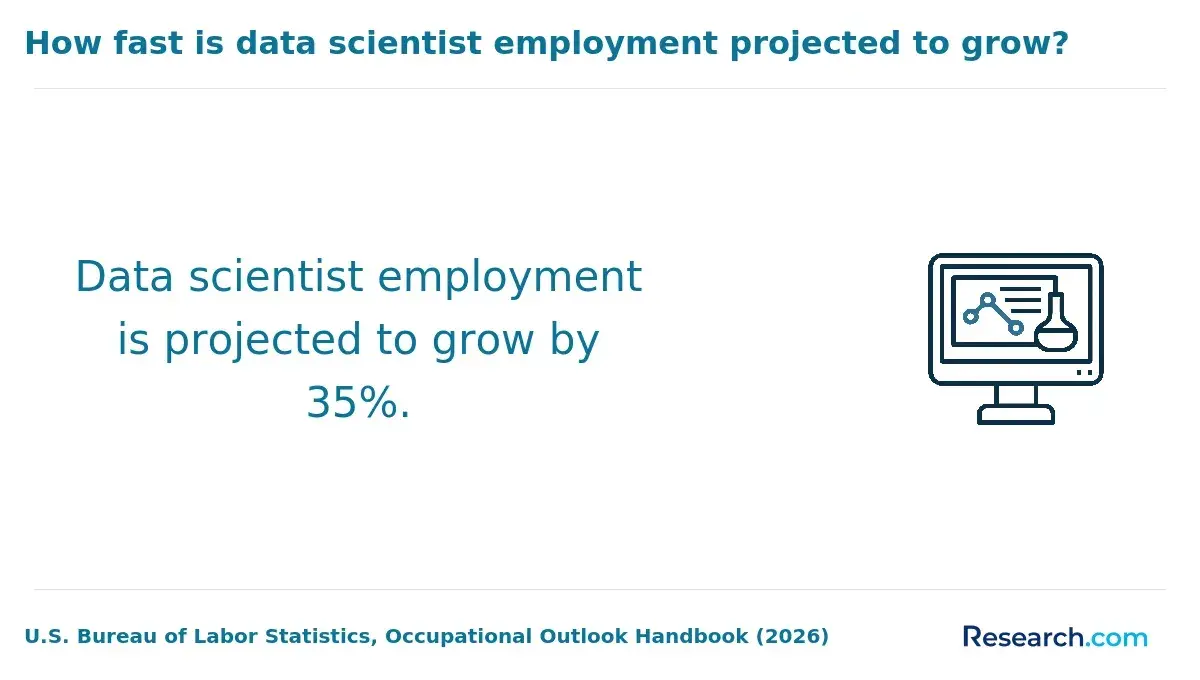
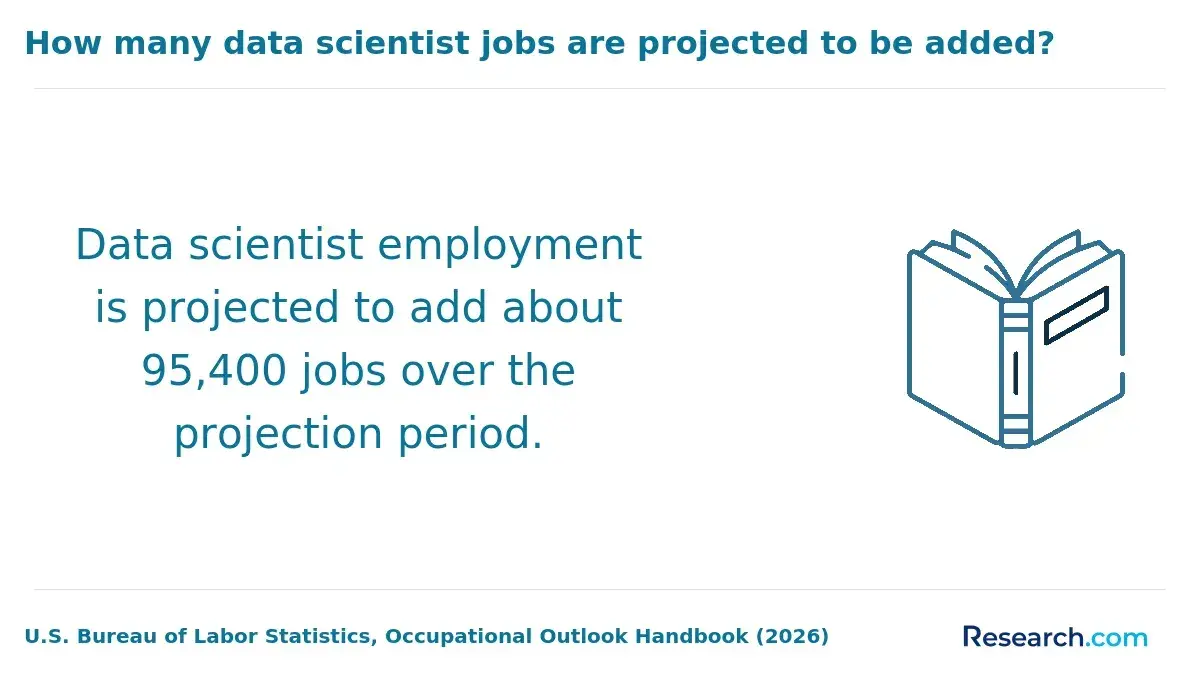
The U.S. Bureau of Labor Statistics reports a median annual wage of $120,230 for data scientists in May 2025 and projects 35% employment growth from 2025 to 2035. Those figures describe the broad data scientist occupation, not a separately measured biodiversity specialty. They should not be treated as a conservation-job salary offer or as evidence that a master's degree caused a particular outcome.
To assess a program's career value, ask for outcomes tied to the actual roles you seek, including employer type, location, and graduates' prior experience. If biodiversity-specific placement or salary results are not published, do not substitute the national data scientist median for them. Your portfolio's relevance, domain experience, and the jobs available where you are willing to work may matter more than an occupation-wide average.
Which certifications and standards strengthen biodiversity data careers?
No single certification replaces a well-executed monitoring project. For many roles, employers can evaluate documented code, sound analysis, and an explanation of ecological uncertainty more directly than a generic software badge. A tool-specific credential may help when a target posting repeatedly names that tool, but check the postings before paying for one.
Standards can be more consequential for the capstone itself. Darwin Core provides a common vocabulary for sharing biodiversity occurrence data, while clear metadata, documented coordinate handling, and reproducible workflows help others interpret a dataset correctly. Use a standard when it fits the project's data and partner requirements; do not claim compliance merely because a dataset uses familiar column names.
Other Things You Should Know About Data Science Programs
Yes. A transparent analysis that identifies inadequate survey coverage or uncertain detections can be more useful than an unsupported claim of population change. Explain what evidence would be needed for a firmer conclusion.
No. Academic submission, public portfolio sharing, and journal publication have different approval and quality requirements. Discuss authorship, partner review, data permissions, and any publication plans early.
Ownership and reuse depend on university policy, source-data licenses, and the partner agreement. Request those terms before starting, especially if a public code repository is important to your job search.
Ask whether you may share a redacted report, synthetic-data demonstration, approved figures, or a description of your methods and validation. Obtain approval before posting restricted records or sensitive locations.
References
- Monitoring and Evaluation for Restoration Projects | NOAA https://www.fisheries.noaa.gov/national/habitat-conservation/monitoring-and-evaluation-restoration-projects
- Capstone Project | Masters in Conservation and Restoration Science at UCI https://mcrs.bio.uci.edu/program-structure/capstone-project/
- Academics | Master's Degrees Biodiversity Data Analytics | Columbia University School of Professional Studies https://sps.columbia.edu/academics/masters/biodiversity-data-analytics
- MSDS Capstone Projects - College of Information Science https://infosci.arizona.edu/ms-data-science/capstone-projects
- Best Practices for Managing and Publishing Camera Trap Data | gbif.org https://docs.gbif.org/camera-trap-guide/en/