2027 Data Science Master's vs. a Machine Learning Certificate for a Software Engineer

Co-Founder and Chief Data Scientist
A software engineer choosing between a data science master's and a machine learning certificate is deciding how much new depth they need—not simply which credential sounds stronger. A certificate may help an engineer add machine learning to an existing role. A master's may be a better fit for a substantial move into statistical analysis, experimentation, or data science. This guide compares the skills, costs, time commitments, and career signals that matter most so you can choose a pathway that matches your target work.
Key Things You Should Know
- Choose a certificate for a focused skills gap: It is usually the narrower route when you already write production software and want to build or deploy machine learning applications.
- Choose a master's for a broader transition: Look for sustained study of statistics, inference, data management, and applied projects if you want to pursue data science rather than primarily engineering roles.
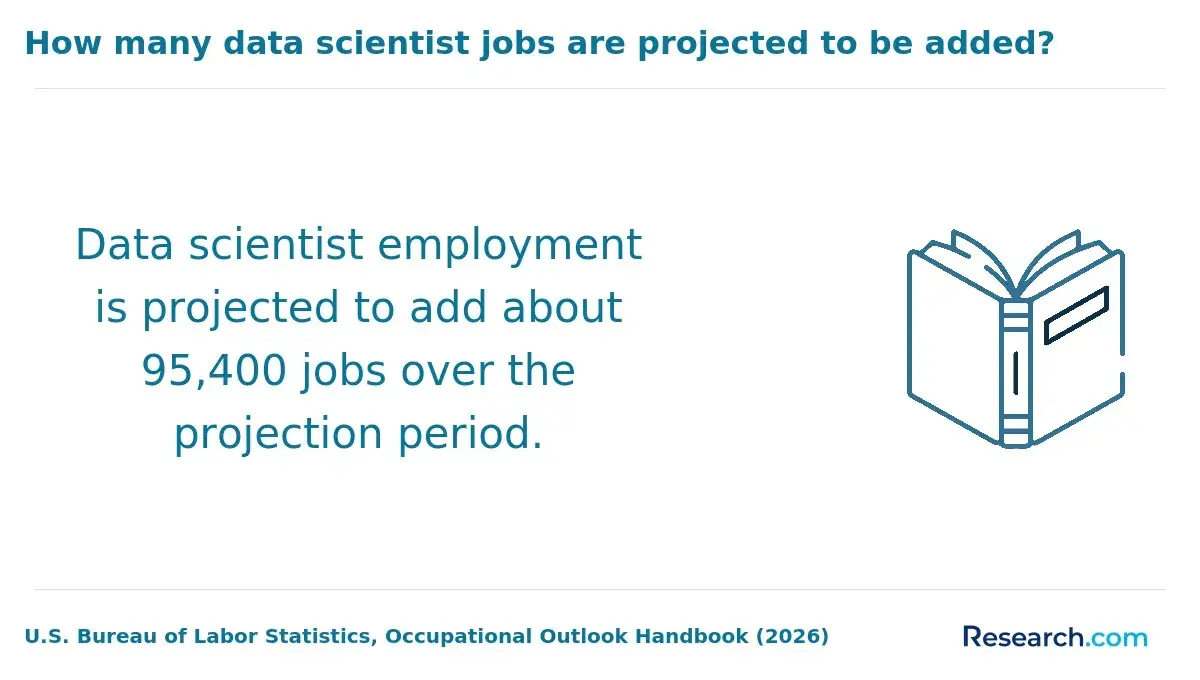
- Do not treat either credential as a job promise: The U.S. Bureau of Labor Statistics projects 35% growth in data scientist employment from 2025 to 2035, but that occupation-wide forecast does not predict an individual graduate's outcome.
Should a software engineer choose a data science master's or a machine learning certificate?
Choose the certificate if your goal is to add machine learning to software engineering work and you can identify a specific skill gap. Choose the master's if your target role requires deeper statistical reasoning, research design, or end-to-end data science work that a short sequence of courses will not cover. Neither choice is universally better: employers evaluate relevant experience and demonstrated work alongside credentials.
Start with the jobs you would actually apply for. An engineer targeting ML engineering or AI product development should compare coursework in model evaluation, data pipelines, deployment, and monitoring. Someone targeting data scientist positions should also look for probability, statistical inference, experimental design, and communication with nontechnical stakeholders.
If a certificate is too narrow but a data science degree is broader than you need, a machine learning master's may be another option; online machine learning master's cost limits can help frame that separate comparison.
What are the career benefits of a data science master's degree?
A well-matched master's can give a software engineer structured practice with the parts of data science that coding experience alone may not demonstrate: choosing valid methods, handling uncertain or biased data, interpreting results, and explaining decisions. A substantial project or capstone can connect those skills to the engineer's existing strengths in reproducible code and production systems.
The degree may also provide a recognizable graduate credential when a posting prefers advanced study. That is a potential advantage, not proof that a degree is required or that it will produce a promotion. Before enrolling, check whether your target postings ask for graduate education, whether the curriculum fills your actual gaps, and whether graduates' reported roles resemble the work you want.
What can a machine learning certificate help software engineers do?
A machine learning certificate can provide a defined route into tasks such as training and evaluating models, integrating predictions into applications, or working with data and ML teams. It is most useful when its assignments let you produce evidence beyond a completion badge: a documented problem, a suitable baseline, appropriate evaluation, and an explanation of how the model would behave in use.
Certificate depth varies widely. A short introductory course may help you explore the field but may not prepare you to own an ML system. A more rigorous university graduate certificate may have assessed coursework and prerequisites, yet still omit the statistics or breadth of a full master's. Read the course descriptions and assessment requirements rather than relying on the word "certificate."
How do data science master's curricula compare with machine learning certificate coursework?
The comparison below describes common areas of emphasis, not requirements shared by every program. Use it to inspect actual course lists and projects before deciding whether a credential teaches what your target role demands.
| Dimension | Data science master's | Machine learning certificate |
| Scope | Typically spans statistical methods, data work, computing, and application | Typically concentrates on a smaller set of ML topics |
| Technical emphasis | May include inference, experimentation, databases, modeling, and ethics | May emphasize algorithms, model evaluation, and implementation |
| Applied evidence | May offer an extended capstone or several substantial projects | May offer course projects; their scope varies |
| Credential | Graduate degree | Completion or graduate certificate, depending on the provider |
For an engineer, the decisive question is often what the syllabus adds to existing skills. Do not pay to repeat introductory programming unless it supports a needed transition. Look for substantive work with messy data, sound evaluation, and reproducible results. If you are comparing degrees by career relevance, online data science degrees and labor market alignment provide another way to examine that fit.
What are the admission requirements for each learning pathway?
Master's admissions requirements vary by institution and may include a bachelor's degree, transcripts, quantitative preparation, programming experience, recommendations, or a statement of purpose. Certificate rules vary even more: an open-enrollment course may have no formal academic prerequisite, while a graduate certificate may require admission and prior mathematics or computing coursework. Professional software experience can demonstrate readiness, but it does not automatically satisfy a published academic prerequisite.
Compare your background with each program's stated requirements, paying particular attention to linear algebra, calculus, probability, and statistics. If a topic is missing, ask admissions whether a proposed course would formally satisfy the requirement before paying for it. Also ask whether certificate credits can later count toward a master's; never assume they will transfer or apply automatically.
How do online and campus-based options compare for working engineers?
Online study can reduce commuting and make continued employment more practical, but "online" does not necessarily mean self-paced. Scheduled classes, team projects, proctored assessments, and fixed deadlines can still conflict with on-call rotations. Campus study may offer in-person interaction and facilities, but it can add travel or require a different work schedule. Neither format establishes academic quality by itself.
Ask each program for a sample term schedule, expected weekly workload, synchronous attendance rules, and any campus visits. Compare those obligations with your busiest work periods rather than your average week. If time to completion is a major constraint, a guide to shorter online data science master's degrees can help you identify questions to ask about pace; a shorter published timeline may still require an intensive course load.
How long do these programs take, and how much do they cost?
There is no reliable single price or completion time for either credential without naming specific programs. A certificate generally involves fewer courses than a master's, but schedules and charges vary by provider. A master's may permit part-time study, while a certificate can still take longer than expected if required courses are offered infrequently.
Request a written estimate based on your enrollment status. For a master's, account for required credits, tuition rate, mandatory fees, materials, and any travel. For a certificate, check whether the advertised price covers assessments and the credential itself. In both cases, include time away from paid work if the schedule would require it, and subtract employer assistance only after confirming eligibility and reimbursement conditions. To compare degree options on a consistent basis, compare affordable data science master's programs, then verify current charges with each institution.
A common mistake is comparing a certificate's advertised course price with a master's tuition figure while ignoring fees or the number of courses still needed. Compare the cost of completing each pathway, not its lowest displayed price.
Which jobs and salaries can each pathway lead to?
A software engineer with relevant projects may use a certificate to compete for ML-focused responsibilities within an engineering team; a master's may support applications to data scientist or other analytically focused roles. Neither credential determines a job title. The strongest evidence will connect your existing engineering experience, new methods, and project outcomes to a particular employer's requirements.
According to the U.S. Bureau of Labor Statistics, the median annual wage for data scientists was $120,230 in May 2025. That is an occupation-wide U.S. figure—not a starting salary, a salary for certificate holders, or an estimate of what a master's will add to an engineer's pay. For more context on how compensation can differ by field, compare data science graduate pay across industries; then assess opportunities against your current compensation, location, experience, and intended role.
What are the job outlook and industry demand for data professionals?
The Bureau of Labor Statistics projects 35% employment growth for U.S. data scientists from 2025 to 2035. That signals demand for the occupation overall, but it does not measure demand for a particular certificate, degree, or entry-level applicant. Software engineers should not assume that a growing occupation makes every career switch straightforward.
AI adoption makes it especially important to distinguish using a model from evaluating whether it works reliably for a real problem. Compare current postings for your target role: if they emphasize deployment and software infrastructure, strengthen those skills through relevant ML work; if they emphasize inference and experimentation, seek sustained statistical training. Use the postings as a skills check, not as evidence that any credential guarantees employment.
How can software engineers evaluate accredited and reputable programs?
For a U.S. master's, verify the institution's accreditation through an official institutional or recognized accreditor source, then examine the specific program's curriculum. Institutional accreditation does not mean every data science program has a separate programmatic accreditation. For a certificate, first identify who awards it: an accredited university, a training provider, or a vendor. The provider's name alone does not establish graduate credit or transferability.
Before committing, use the same checks for each option you are seriously considering:
- Inspect assessed work: Ask for syllabi, project expectations, and evidence of feedback—not just topic names.
- Confirm the credential: Determine who issues it, whether courses carry academic credit, and whether that credit can apply to another program.
- Verify the full commitment: Obtain current charges, course availability, attendance rules, and a realistic part-time sequence in writing.
- Test career claims: Ask how any employment or salary outcomes were collected and whether they describe students with prior engineering experience.
Treat vague placement promises, undisclosed fees, and claims that a certificate is equivalent to a degree as reasons to ask more questions. The best choice is the program whose verified coursework and practical demands match the work you intend to do next.
Other Things You Should Know About Data Science
No. A certificate usually records completion of a course or program. A professional certification generally indicates that a person met an organization's assessment requirements. Check what was evaluated and who issued the credential.
Yes. You can start with a project relevant to your engineering work, document the data and baseline, evaluate the model appropriately, and explain limitations. That exercise can also reveal whether you need focused coursework or broader study.
Not necessarily. Ask whether you can contribute to a bounded task, such as testing a model or improving a data pipeline, while exploring education options. Real work can clarify which skills you still need.
Explore ML tasks within engineering before committing to a broad career change. A small project or focused course can help you test your interest without assuming that a new job title is the goal.
References
- What Financial Aid Offers Don't Tell You About the Cost of College | U.S. GAO https://www.gao.gov/blog/what-financial-aid-offers-dont-tell-you-about-cost-college
- Cost of Attendance (Budget) | 2025-2026 Federal Student Aid Handbook https://fsapartners.ed.gov/knowledge-center/fsa-handbook/2025-2026/vol3/ch2-cost-attendance-budget
- Difference Between Graduate Certificate and Master's Degree - Rosemont College https://rosemont.edu/whats-the-difference-between-graduate-certificate-and-masters-degree/
- Key Financial Aid Terms | passhe.edu https://www.passhe.edu/students/financial-aid-terms.html
- Machine Learning Engineer vs. Data Scientist | University of San Diego Online Degrees https://onlinedegrees.sandiego.edu/machine-learning-engineer-vs-data-scientist/
- Certificate vs. Degree: Pros, Cons, and Career Outcomes | National University https://www.nu.edu/blog/certificate-vs-degree/
- Data Science and Artificial Intelligence Master's Degree Program | Harvard Extension School https://extension.harvard.edu/academics/programs/data-science-artificial-intelligence-graduate-program/
- Certificate vs. Degree: Which Is Right for You? | UC San Diego Division of Extended Studies https://extendedstudies.ucsd.edu/news-events/extended-studies-blog/certificate-vs-degree-making-the-right-education-decision
- Is a Course, Specialization, Certificate or Degree Right for You? | UW Professional & Continuing Education https://www.pce.uw.edu/news-features/articles/course-certificate-graduate-degree-right-you
- Software engineering practices for machine learning | sciencedirect.com https://www.sciencedirect.com/science/article/pii/S0164121223003023