
2027 Online Data Science Master's After a Bachelor's in Sports Management: Prerequisites and Program Fit

Co-Founder and Chief Data Scientist
A bachelor's in sports management can provide useful business and industry knowledge for data science, but it may not cover the math and programming expected in a technical master's program. If you want to analyze sports performance, ticket sales, or another kind of data, the decision is not simply whether you can apply.
It is whether your preparation matches a program's entry requirements and curriculum. This guide helps you identify gaps, choose an appropriate program, and decide what to do before applying.
Key Things You Should Know
- A sports management degree does not automatically qualify or disqualify you; compare your transcript with each program's stated requirements in calculus, statistics, and programming.
- Choose a program with foundational support if your quantitative preparation is limited, but check whether preparatory courses formally satisfy admission requirements.
- The U.S. Bureau of Labor Statistics reports a $120,230 median annual wage for data scientists in May 2025; that occupation-wide figure is not an expected starting salary or a return promised by a master's degree.
What is a data science master's degree, and can sports management graduates pursue one?
A data science master's teaches students to work with data through programming, statistics, modeling, and communication. Sports management graduates can pursue one when they meet the particular program's admissions standards. A degree title alone is neither proof of technical readiness nor a barrier to admission.
Program fit depends on your intended work. If you want to build predictive models or move into data scientist roles, examine the depth of mathematics and computing. If you mainly want to interpret attendance, sponsorship, or marketing results for a sports organization, an applied program with strong analytics and business coursework may fit better. Neither path removes the need to understand how data and models can mislead decision-makers.
What prerequisites do online data science master's programs require?
Requirements vary by institution. Some programs specify prior coursework; others consider demonstrated preparation or offer introductory study. The table separates skills a sports management graduate may already use from technical gaps worth checking against each admissions page.
| Area | Possible sports management preparation | Potential gap for graduate study |
| Statistics | Research methods or business analytics | Probability, statistical inference, and regression |
| Mathematics | Business math or quantitative coursework | Calculus and linear algebra, if required |
| Programming | Spreadsheets or analytics software | Writing and debugging code in Python or R |
| Data work | Reporting on fans, operations, or finances | SQL, data cleaning, and reproducible analysis |
Start with your transcript, not your degree name. Ask admissions staff whether a missing course must be completed for credit, whether a graded course from another institution is acceptable, and whether conditional admission is available. Self-study and short courses can improve readiness, but they do not necessarily fulfill a formal prerequisite. If your main interest is AI, AI programs for applicants without a computer science major offer a related comparison; check their math and coding expectations just as carefully.
How can a sports management bachelor's prepare you for data science?
Depending on your coursework and experience, sports management may have taught you to define business questions, interpret budgets, conduct research, and explain findings to nontechnical stakeholders. Those skills matter when an analysis must lead to a decision rather than merely produce a model.
Sports settings also provide concrete questions: Which factors are associated with season-ticket renewals? How should an organization forecast event staffing? Does a performance metric remain useful across different leagues or seasons? Domain knowledge helps you spot weak comparisons and operational constraints. It does not replace statistical validation or programming, so use prior projects as evidence of problem-framing ability while building separate evidence of technical skill.
What admission requirements do online data science master's programs have?
Beyond prerequisites, applications commonly ask for academic records and evidence that you can complete graduate-level work. Exact requirements - including tests, references, minimum grades, and whether professional experience counts - must be confirmed with each program. Do not assume a portfolio substitutes for a required course.
A strong application explains the transition specifically: identify the sports or business problems you have worked on, show what analysis you performed, and describe the programming and statistics you have learned since graduation. If your transcript is thin in quantitative subjects, ask whether a graded prerequisite completed before applying would be more persuasive than an ungraded certificate. That answer may change which application deadline is realistic.
What do online data science master's programs teach?
Relevant curricula typically combine data management, statistical methods, programming, machine learning, and communication. Course titles alone do not show depth: compare syllabi, prerequisites, assignments, and project requirements to see whether students actually clean data, evaluate models, and explain limitations.
For a sports-focused path, look for room to work with time-series, customer, or operational data, as appropriate to your goal. Ask whether a capstone can address a sports question and whether students may use public data if an employer will not release its records. Training in privacy and responsible data use matters when records concern athletes, employees, or customers. If governance is a central career interest, graduate study combining AI ethics and governance may be worth comparing with a general data science curriculum.
How do online data science programs compare with campus-based programs?
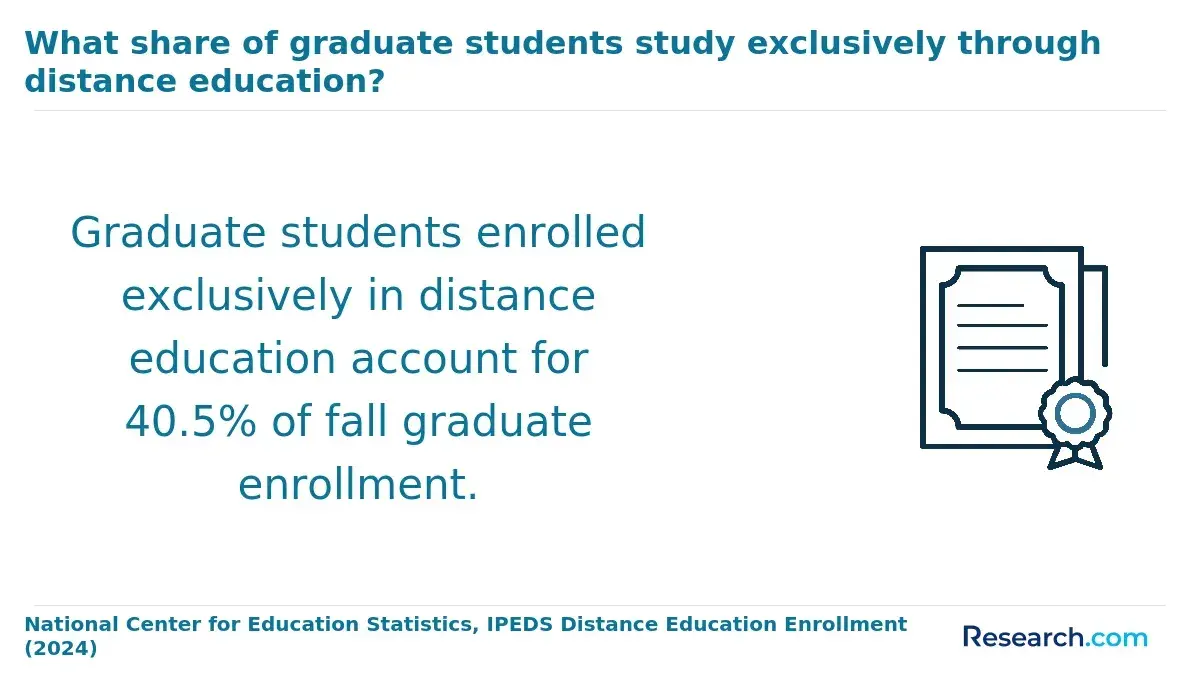
Delivery format does not, by itself, establish academic rigor. Compare the same features in both formats: access to instructors, technical support, team projects, career services, and opportunities to get feedback on code and analysis. An online program may be easier to attend while employed; a campus-based option may suit someone who wants regular in-person collaboration.
Check whether "online" includes live sessions, timed exams, group meetings, or campus visits. These details matter more than the label if you work irregular hours in sports operations. For a closer look at scheduling trade-offs, consider graduate data science study while working. Choose a format you can sustain while making time to practice unfamiliar math and programming.
How long do online data science master's programs take and cost?
Time to completion depends on required credits, prerequisite work, course availability, and whether you study full or part time. Published tuition may also omit mandatory fees, software or equipment, and any required travel. Without a named program and its current fee schedule, a reliable total price or completion date cannot be given.
Request a degree plan for your intended pace and an itemized estimate covering prerequisites as well as graduate courses. Ask whether changing your course load affects tuition or financial aid, and check the conditions of any employer reimbursement. You can compare affordable data science master's programs, but compare their total costs on equivalent terms - not one school's tuition-only figure with another's broader estimate.
Which careers can sports management graduates pursue after earning a data science master's?
Potential directions include sports business analyst, fan or marketing analyst, operations analyst, and data scientist roles inside or outside sports. A sports management background may be especially relevant when the work involves explaining results to teams, venues, sponsors, or business leaders. More technical data scientist roles generally call for stronger evidence of coding, modeling, and statistical judgment.
The U.S. Bureau of Labor Statistics projects data scientist employment to grow 35% from 2025 to 2035. That national projection signals demand for the occupation, not the number of openings in sports or a likelihood of employment for a particular graduate. To make a transition credible, build projects that show your methods and limitations, and consider analyst roles if they better match your existing experience. A master's can deepen your preparation, but it is not necessary for every analytics job.
How much can data science professionals earn after graduate school?
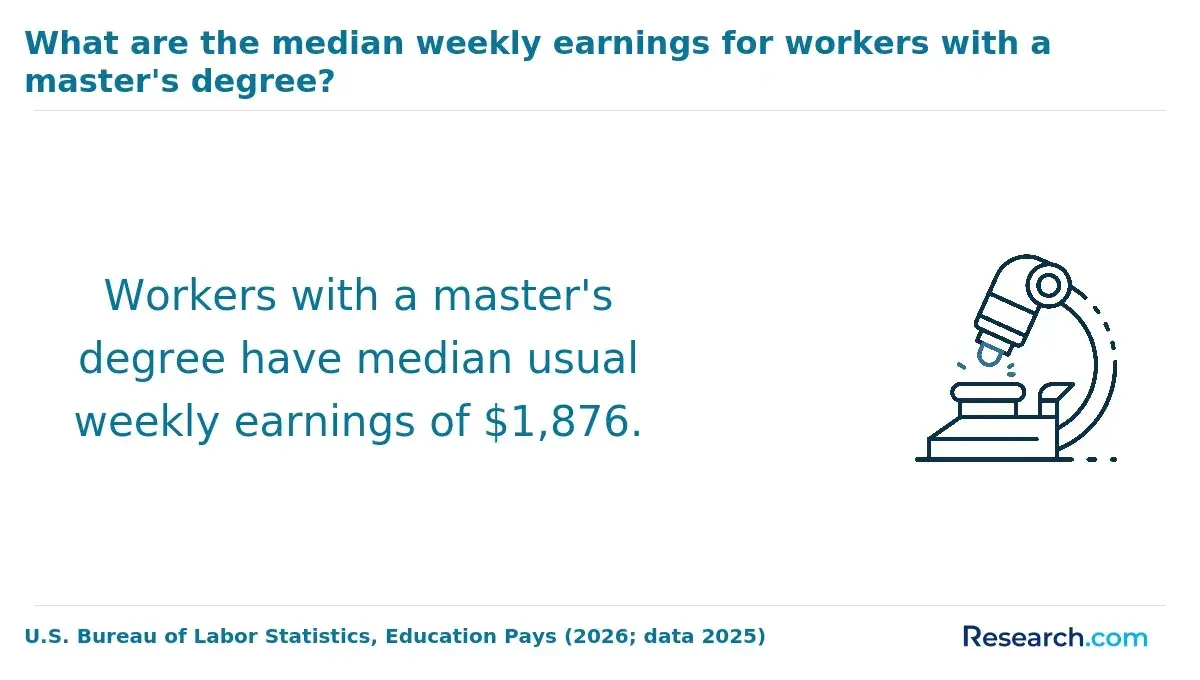
The U.S. Bureau of Labor Statistics reports a median annual wage of $120,230 for data scientists in May 2025. This describes workers across experience levels and employers; it is not a graduate starting-pay estimate and cannot establish how much a degree will raise your salary.
Compare likely roles rather than assuming one data science pay level applies everywhere. Industry, location, technical responsibilities, and prior experience all affect compensation. For broader context, review data science compensation across industries. When weighing tuition against potential earnings, use roles you could realistically seek after graduation - not the occupation-wide median as a promised outcome.
How can you evaluate an accredited online data science master's program?
Verify that the institution holds recognized accreditation, then assess the specific degree. Institutional accreditation does not tell you whether its data science curriculum matches your preparation or career goal. Also confirm that the school can enroll students where you live; online availability and state authorization are separate questions.
Before applying, compare programs using these questions. They expose fit problems that a ranking or an appealing course title may miss:
- Which prerequisites are mandatory, and what evidence will satisfy each one?
- How much assessed work involves programming, statistics, model evaluation, and communicating results?
- Can the available electives and projects support your intended sports or non-sports role?
- What are the full cost, expected course sequence, live-attendance obligations, and student support options?
- What graduate outcomes does the program report, and who is included in those figures?
Choose a program that is technically demanding enough for your target role but offers a feasible path from your current skills. A common mistake is selecting the most specialized-sounding degree without checking prerequisites or project depth. Another is treating unverified salary claims as evidence that its price will pay off.
Other Things You Should Know About Data Science
Often, yes, if its terms permit your intended use. State the source, document how you cleaned the data, and explain the limits of your conclusions. Avoid implying that public data gives you permission to disclose private athlete or customer information.
No. Strong general methods can support sports projects, but check whether you will have enough elective or project flexibility to apply them to your interests.
Possibly. Get approval from both the employer and program before planning around proprietary records. Ask about confidentiality rules and have a public-data alternative in case access is denied.
Not necessarily. A course may help you prepare without counting toward admission prerequisites or the master's degree. Obtain the program's written policy before paying for it on the assumption that it will transfer.
References
- Master's in Data Science - Pace University Online https://online.pace.edu/graduate-programs/ms-in-data-science/
- What Can I Do With a Degree in Data Science? Career Paths & Skills | Harvard SEAS https://seas.harvard.edu/news/what-can-i-do-degree-data-science-career-paths-skills
- MS in Data Science, Curriculum & Specializations | Northwestern University https://sps.northwestern.edu/masters/data-science/curriculum-specializations.html
- How to Apply - Master in Data Science & Analytics - Georgetown https://analytics.georgetown.edu/admissions-tuition/how-to-apply/
- 8 Top Sports Analytics Jobs [+ Salary Guide] | University of San Diego Online Degrees https://onlinedegrees.sandiego.edu/sports-analytics-careers/
- What You'll Learn in Applied Data Science: Modeling to AI | Bay Path University https://www.baypath.edu/news/bay-path-university-blogs/post/what-you-ll-learn-in-applied-data-science-modeling-to-ai/
- MS in Data Science | columbia.edu https://datascience.columbia.edu/education/ms-data-science
- 12 Data Science Skills (+10 Hard-Won Career Lessons) | Syracuse University https://ischool.syracuse.edu/data-science-skills/
- Syracuse Online Master's in Applied Data Science https://onlinegrad.syracuse.edu/information-science/applied-data-science/
- Master of Science in Sports Analytics - Luddy Indianapolis | Luddy School of Informatics, Computing, and Engineering https://luddy.indianapolis.iu.edu/academics/masters/data-science/sports-analytics/index.html


