2027 Real-Time Machine Learning in an Online Data Science Master's: Courses, Projects, and Program Selection

Co-Founder and Chief Data Scientist
Real-time machine learning is a demanding specialization to evaluate from a program webpage. A course may teach strong predictive modeling without covering the streaming data, deployment, and monitoring needed to make predictions as events arrive. If you are comparing online data science master's programs, this guide will help you identify substantive coursework, assess project opportunities, and decide whether a program fits your technical goals, schedule, and budget.
Key Things You Should Know
- Look for evidence of an end-to-end workflow: ingesting events, generating timely features, serving predictions, and monitoring performance. A course title alone does not establish that depth.
- Ask whether you can complete a streaming or low-latency project with measurable latency and model-quality results; a standard offline capstone may not serve the same goal.
- Career demand is relevant but not a degree-level promise: the U.S. Bureau of Labor Statistics (BLS) projects 35% growth in data scientist employment from 2025 to 2035.
What is real-time machine learning in an online data science master's program?
Real-time machine learning uses recently arriving data to produce or update predictions within a time limit that matters to the application. A fraud alert may need to arrive before a transaction is approved; a recommendation delivered after a user leaves the page has little value. Real-time inference means serving predictions promptly, while online learning means updating a model as new observations arrive. A system can do one without the other.
Graduate-level study should connect statistical learning to the engineering decisions behind a working system: event ingestion, feature freshness, delayed labels, model serving, latency, reliability, and drift monitoring. It should also address the trade-off between speed and accuracy. Training a model once on a static dataset or running a notebook more quickly does not, by itself, demonstrate real-time machine learning.
Which courses teach real-time machine learning and data science fundamentals online?
Start with foundations in probability, statistics, programming, databases, and machine learning. Without them, it is difficult to judge whether a fast prediction is also valid. Relevant advanced material may appear under titles such as distributed computing, data engineering, stream processing, machine learning systems, or MLOps rather than "real-time machine learning."
The distinction is depth, not vocabulary. A catalog mention might indicate one lecture; a dedicated course might cover architectures and evaluation; an elective paired with a substantial project might let you build and test a system. Compare syllabi and assessed work, not just course names. In particular, look for treatment of event time versus processing time, late-arriving data, training-serving consistency, model deployment, and monitoring.
Also check sequencing and availability. If the relevant systems course requires a prerequisite you cannot complete in time, or the elective is not offered regularly to online students, it may not be a practical path through the degree. Ask the program for a recent syllabus and an example degree plan showing how the courses fit together.
What projects do online data science master's students complete?
Projects vary by program and course. Some students analyze fixed datasets; others build deployed applications or complete a capstone with an external partner. Do not assume that an online master's offers a streaming-data capstone - or that students may freely choose its topic. Confirm the actual project rules before applying.
For a real-time machine learning portfolio, a strong project does more than report model accuracy. It defines when a prediction must arrive, records how data and labels arrive, compares against a simple baseline, and tests what happens when events are delayed or the data distribution changes. The project should document reproducible code and any privacy or access constraints.
For example, a healthcare monitoring concept could compare timely alerts with false alarms, but a student would need appropriately accessible data and careful handling of sensitive information. Readers committed to that domain can also compare artificial intelligence degree options for healthcare professionals; domain fit may matter more than a general streaming elective.
Ask whether online students receive infrastructure access, technical supervision, and permission to publish a sanitized portfolio version. Those details determine whether an appealing project idea is feasible.
How do online and campus-based data science master's programs compare?
Neither format inherently provides deeper real-time machine learning training. The relevant differences are access to specific courses, computing resources, collaboration, and project supervision. This comparison highlights what to verify rather than assuming one format has a universal advantage.
| Consideration | Online program | Campus-based program |
| Course access | Check whether systems electives are open to online students and offered when needed. | Check whether the desired electives are offered and fit the campus schedule. |
| Project work | Confirm remote access to computing tools, teammates, and faculty feedback. | Confirm lab access, supervision, and any limits on capstone topics. |
| Scheduling | Check live-session times, group work, and required visits. | Check class times, commuting, and attendance expectations. |
Choose online study when its schedule and verified technical offerings let you complete the work without relocating. Campus study may be more suitable if a particular lab, research group, or in-person project is central to your goal. If your target is primarily AI model development rather than streaming data systems, lower-cost artificial intelligence master's options provide a different comparison - but check their deployment coursework before treating them as substitutes.
What are the admission requirements for an online data science master's?
Requirements vary by institution. Programs may assess prior coursework in calculus, linear algebra, statistics, and programming, but some allow applicants to demonstrate preparation in other ways. Professional experience or self-study can strengthen an application without necessarily fulfilling a formal course prerequisite.
For real-time machine learning study, assess your readiness in two layers: can you explain and evaluate a predictive model, and can you work with code, databases, and software systems? If one layer is weak, ask admissions staff which preparatory courses they accept and whether you can take the relevant graduate electives after completing them. Applicants comparing a different technical route can use information on AI master's degrees for non-CS graduates to frame questions about entry requirements, while confirming the policies of each data science program directly.
How long does an online data science master's take and cost?
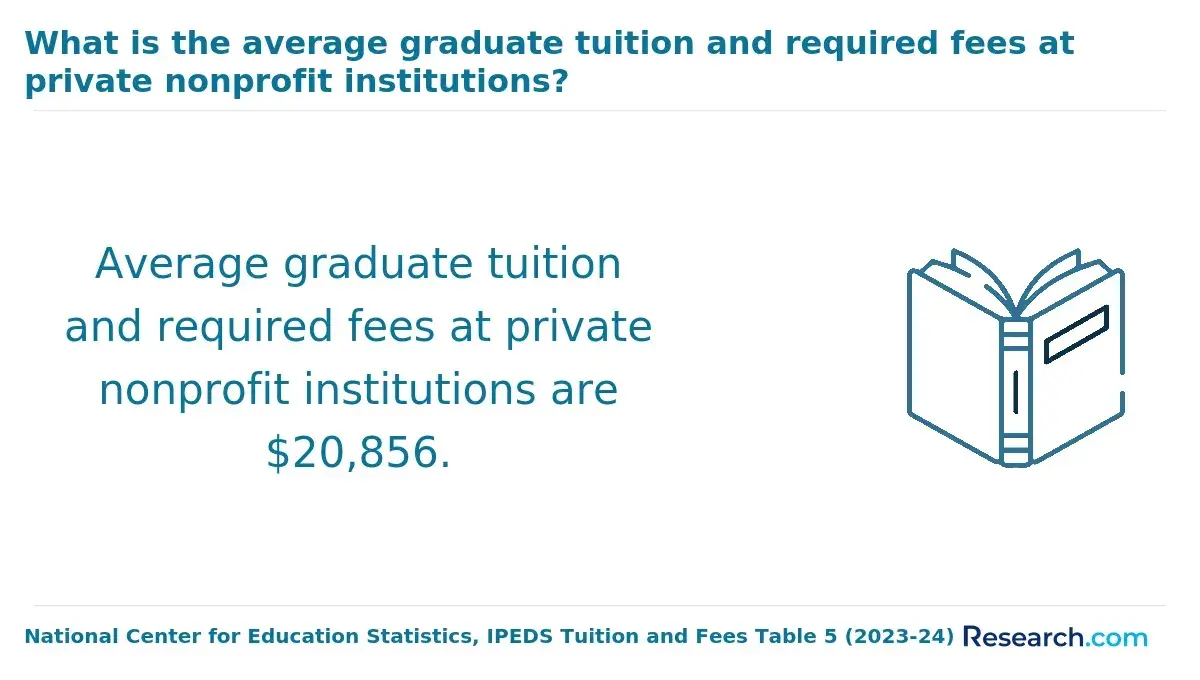
There is no reliable single duration or price for online data science master's programs. The answer depends on required credits, enrollment pace, course rotation, tuition policy, and fees. A program with the right elective may still take longer if that course is offered infrequently or has prerequisites.
Compare a written, program-specific estimate covering tuition for all required credits, mandatory fees, software or computing charges, and any travel. Then account for the pace you can sustain while working and the possibility that a longer schedule changes your costs. Do not compare one school's tuition-only figure with another's full estimated cost. If price is your main constraint and your interests extend beyond data science, affordable online artificial intelligence degrees may broaden your shortlist; verify that any alternative still teaches the systems skills you want.
Before enrolling, request the current tuition schedule and a degree plan for your intended course load. Ask whether employer assistance applies and what happens to your timeline and charges if you pause or retake a course.
How can you verify online data science master's accreditation?
Verify the institution's current accreditation through its official disclosures and the accreditor's directory, then confirm that the online master's is offered by that institution. Accreditation is an institutional quality check; it does not establish that a particular course teaches streaming systems or that a degree will meet an employer's preferences.
Also ask the university whether it is authorized to enroll students residing in your state and whether any in-person activity is required. State authorization and accreditation answer different questions. If a webpage is unclear, get confirmation from the university before paying an enrollment deposit.
What careers and salaries can an online data science master's lead to?
Relevant paths may include data scientist, machine learning engineer, or data engineer, depending on your prior experience and the program's technical depth. Real-time project experience is especially pertinent when a role involves production predictions, streaming pipelines, or monitoring; it does not replace the software engineering skills some employers expect.
According to BLS, the median annual wage for U.S. data scientists was $120,230 in May 2025. That is a wage for people employed in the occupation, not an expected starting salary or an outcome attributable to a master's degree. Your likely opportunities depend on your experience, location, employer, and the responsibilities of the role. For more context on differences across employers, see this guide to industry-specific data science salaries.
What is the job outlook for data scientists and machine learning professionals?
BLS projects 35% employment growth for data scientists from 2025 to 2035, much faster than the average for all occupations. This supports considering data science as a career field, but it does not measure demand specifically for real-time machine learning graduates or predict an individual applicant's prospects.
Use the outlook alongside actual job descriptions for roles you want. If postings emphasize distributed systems, deployment, and software engineering, favor programs where you can practice those skills. If they emphasize experimentation and statistical analysis, a broader data science curriculum may be the better fit. Current interest in AI makes this distinction more important: experience training models is not necessarily experience operating them reliably.
How do you choose a reputable online data science master's program?
Choose on evidence of accessible technical depth, not on a ranking or a list of tools. A strong shortlist should contain programs whose online students can take relevant coursework, complete meaningful projects, and obtain the support needed to finish.
Use the following questions when requesting information from each program; comparable answers will make your decision easier.
- Which currently offered courses cover streaming data, model serving, and monitoring, and can online students take them?
- What assessed work demonstrates those skills: a brief assignment, a full course project, or a capstone?
- What prerequisites, course rotations, computing resources, and faculty support affect whether I can complete that path?
- What are the current total charges and a realistic completion plan at my intended pace?
A red flag is a program that advertises "real-time AI" but cannot identify where students build or evaluate a time-sensitive system. Choose a broader program instead if it provides stronger fundamentals and your intended job does not require streaming infrastructure. Choose the systems-focused option when its available coursework and projects match the work you want to do.
Other Things You Should Know About Data Science
Usually, understanding programming, data structures, and databases is a more transferable starting point. Check each program's stated prerequisites; a particular tool may be taught in a course rather than required for admission.
Yes. A model can be trained periodically on stored data and still serve predictions as new events arrive. Online learning - updating the model continuously - is a separate design choice.
Define when a prediction becomes too late to be useful, then measure end-to-end delay as well as predictive quality. Include the time spent obtaining and preparing incoming data, not just the model's computation time.
Only if your employer and program permit it and you can meet confidentiality, privacy, and publication requirements. Ask about those restrictions early; a public or synthetic dataset may make a portfolio project easier to share.
References
- Technology readiness levels for machine learning systems | nih.gov https://pmc.ncbi.nlm.nih.gov/articles/PMC9585100/
- How to Become a Data Scientist | Harvard SEAS https://seas.harvard.edu/news/how-become-data-scientist
- MS in Data Science | Online | $9900 | Eastern University https://www.eastern.edu/academics/graduate-programs/ms-data-science
- M.S. in Data Science, Online | virginia.edu https://datascience.virginia.edu/degrees/msds-online
- Online Program - UChicago Data Science Institute https://datascience.uchicago.edu/education/masters-programs/online-program/
- Master's in Data Science - University of Notre Dame https://datascience.nd.edu/masters/
- Real-Time ML Pipelines: Machine Learning on Streaming Data | Conduktor https://www.conduktor.io/glossary/real-time-ml-pipelines
- Mitigating model drift in machine learning | Aerospike https://aerospike.com/blog/model-drift-machine-learning/
- Learning From Data Streams: Foundations of Stream Learning | lamarr-institute.org https://lamarr-institute.org/blog/stream-learning-foundations/
- Streaming Data for Machine Learning: Unlocking Online ML | Striim https://www.striim.com/blog/machine-learning-streaming-data/