2027 Teacher Preparation Programs With Paid Residencies or Apprenticeships

Co-Founder and Chief Data Scientist
Choosing how to become a teacher can mean deciding between unpaid student teaching and a paid, job-embedded route. Teacher residencies and registered apprenticeships can reduce income disruption while providing supervised classroom experience. The U.S. Bureau of Labor Statistics reports a $62,340 median annual wage for kindergarten and elementary school teachers in May 2024.
This guide explains how paid pathways work, what they cost, how they lead to licensure, and how to identify a program that fits your state, schedule, and teaching goals.
Key Things You Should Know
- Paid teacher residencies usually pair a yearlong classroom placement with a mentor teacher, coursework, and a stipend or salary; apprenticeships are generally employment-based pathways with progressive responsibility and wages.
- Licensure is state-specific: a paid placement alone does not qualify someone to teach independently unless the program meets the state's approved preparation, testing, clinical-hour, and background-check requirements.
- For financial context, the May 2024 median annual wage was $62,340 for kindergarten and elementary teachers and $64,580 for high school teachers, according to the U.S. Bureau of Labor Statistics; local pay, grade level, and district contracts can differ substantially.
What are teacher preparation programs with paid residencies or apprenticeships?
Teacher preparation programs with paid training let aspiring teachers earn income while completing the supervised practice and education required for a teaching credential. They are designed to address a major barrier in conventional preparation: student teaching is commonly full-time and unpaid, making it difficult for career changers, paraprofessionals, and people supporting families to participate.
A teacher residency is typically a district-university partnership. A resident works alongside an experienced mentor teacher for an academic year, takes licensure coursework, receives coaching, and may receive a stipend, tuition support, or district salary. Many residencies focus on local shortage areas such as special education, bilingual education, STEM, and high-need schools.
A teacher apprenticeship is usually an employment-centered pathway, often connected to a registered apprenticeship framework. An apprentice may begin as a paraprofessional, instructional aide, substitute, or teacher candidate and receive paid, progressively more independent classroom training while completing related instruction through a college or approved provider.
The distinction matters because the employment relationship, pay structure, degree requirements, and commitment after completion can be very different.
| Feature | Teacher residency | Teacher apprenticeship |
| Typical structure | Cohort-based clinical placement with a mentor teacher | Paid employment and structured on-the-job learning |
| Compensation | Stipend, tuition support, or salary depending on partner district | Wages, often designed to increase as responsibilities grow |
| Academic component | Usually a bachelor's, master's, or post-baccalaureate licensure program | Related college coursework or approved instruction leading toward credentials |
| Best fit | Candidates able to join a full-time cohort and accept a placement | Working school staff and career changers needing continued employment |
| Common obligation | May require teaching in the sponsoring district after licensure | May require continued employment or completion of apprenticeship milestones |
Neither label automatically indicates quality or eligibility for a license. The important question is whether the particular pathway is approved for the certificate and state where you intend to teach.
How do paid teacher residencies and apprenticeships work in practice?
In practice, candidates are matched with a school, mentor, grade band, and subject area. They generally spend several days each week in classrooms while completing evening, weekend, online, or summer coursework. Early responsibilities may include small-group instruction, lesson support, and observation; later responsibilities can include planning and leading lessons under supervision.
Residency candidates usually follow a fixed cohort calendar. They may be placed in one classroom for the full school year, allowing them to see student progress, family communication, assessment cycles, and classroom routines from beginning to end. This continuity can be especially useful for candidates who have not previously worked in schools.
Apprenticeships often serve current school employees. A paraprofessional, for example, may remain on payroll while working toward a bachelor's degree or initial credential. The school employer, preparation provider, and candidate should define the work schedule, mentor support, wage progression, course sequence, and pathway to a teaching role in writing.
Before accepting an offer, confirm the practical terms that affect whether paid training is financially workable:
- Ask whether compensation is a stipend, hourly wage, salaried employee pay, tuition remission, or a combination of these benefits.
- Confirm whether pay continues during summer terms, testing periods, school breaks, and required coursework.
- Request the expected weekly schedule, including commute time, evening classes, preparation, and mentor meetings.
- Read any service agreement carefully, including the number of years you must teach, the district location, and repayment conditions if you leave early.
- Verify who pays for tuition, fingerprinting, exams, transportation, licensure applications, and classroom materials.
A paid route can be a strong choice for people who need predictable income and intensive coaching. It may be a weaker fit for someone who needs complete control over placement location, wants to move out of state soon, or cannot meet a full-time school-day schedule.
What degrees and credentials can you earn through these programs?
The credential you earn depends on your education when you enter and on state rules. Candidates without a bachelor's degree may complete an undergraduate education degree while working in a school-based role. Candidates who already hold a bachelor's degree commonly pursue a post-baccalaureate certificate or a master's degree with initial licensure.
For career changers, a master's pathway can provide advanced coursework plus a first teaching license, but it is not automatically the fastest or least demanding option. Compare program intensity, clinical requirements, and state approval rather than relying on broad labels such as easiest masters degree to get.
The following pathways show what a candidate may earn. Actual program titles and license endorsements vary by state.
| Starting point | Common paid-pathway outcome | Typical use |
| High school diploma or some college | Associate-level coursework, bachelor's degree, and initial licensure pathway | School employees building toward a first degree and teaching role |
| Bachelor's degree outside education | Post-baccalaureate certificate or master's degree with initial licensure | Career changers seeking elementary, secondary, or special education certification |
| Existing teaching license | Added endorsement, specialist credential, or graduate degree | Licensed teachers moving into high-need subjects or leadership roles |
| Paraprofessional experience | Apprenticeship-related instruction plus degree and licensure requirements | School staff seeking to move into a lead teacher position |
Be precise about the difference between a degree, a certificate, and a license. A college may award a graduate certificate, but the state education agency decides whether its preparation requirements support initial certification. Likewise, an apprenticeship completion certificate may document training without replacing the degree or examinations required for a standard license.
What are the typical admission requirements for paid residency and apprenticeship pathways?
Requirements depend on whether the program prepares undergraduate or post-baccalaureate candidates, but applicants should expect both academic and employment screening. District partners need to confirm that candidates can work safely with students and complete the responsibilities of the paid role.
Most programs evaluate the following areas before placement. Reviewing them early helps applicants avoid missing a school-year hiring or cohort deadline.
- A high school diploma, associate degree, or bachelor's degree appropriate to the pathway.
- Official transcripts and minimum GPA or satisfactory academic-progress standards set by the college or state.
- Background check, fingerprinting, child-safety clearances, and eligibility to work for the employing district.
- Subject-matter prerequisites, which may include coursework, an assessment, or demonstrated content knowledge.
- Application materials such as a résumé, personal statement, recommendations, interview, and classroom observation.
- Commitment to a designated district, high-need subject, grade level, or post-completion service period when required.
Do not assume prior classroom work waives academic requirements. Paraprofessional experience is valuable, but it may not substitute for a bachelor's degree, required subject coursework, or state examinations. Conversely, applicants with a bachelor's degree should not assume they must earn a second bachelor's; a state-approved post-baccalaureate or master's route may be more efficient.
A common mistake is applying only to the college and overlooking district hiring deadlines. Ask whether you need separate applications for university admission, the residency cohort, a district job, and financial aid.
How do online, hybrid, and campus-based options compare for these programs?
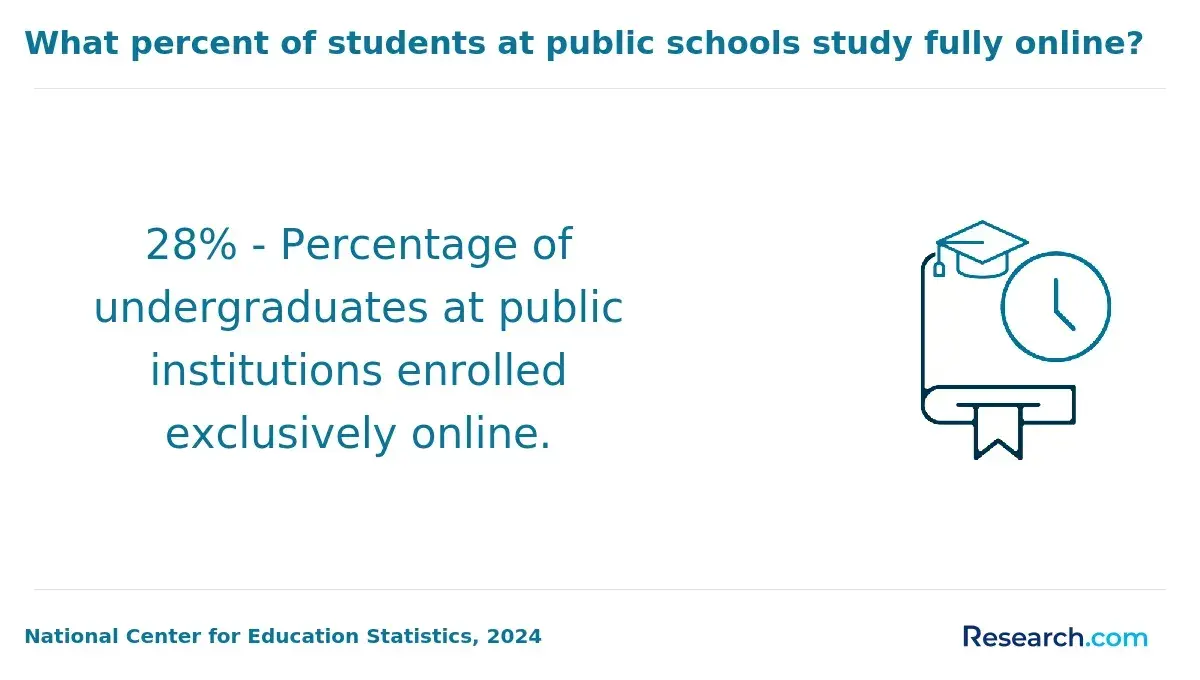
Paid clinical training must occur in real schools, so no initial teacher preparation pathway is fully online in the practical sense. Programs may deliver lectures, assignments, advising, and some assessments online, but observation, mentoring, and supervised teaching still require an approved local placement.
Online and hybrid programs can make coursework more accessible for working candidates, especially if they offer asynchronous classes. Candidates who prefer self-paced academic work may also compare best competency-based colleges, but should verify that a competency-based format includes the specific state-approved clinical sequence needed for teacher licensure.
| Format | Advantages | Trade-offs and best fit |
| Online coursework with local paid placement | Reduces travel to campus and can support working schedules | Requires strong time management; local placement approval is essential |
| Hybrid residency | Combines virtual coursework with cohort meetings and school-based coaching | Often balances flexibility and support; may require periodic campus travel |
| Campus-based residency | Frequent in-person faculty access and cohort community | Can work well for local full-time candidates; commute and scheduling may be less flexible |
| District-led apprenticeship | Direct employment connection and on-the-job learning | May offer the least geographic flexibility because the job location drives the program |
The right format is the one that works in the state where you plan to license. Before enrolling, get written confirmation that the provider can place or supervise you in your district and that completion meets the requirements of your intended state - not merely the state where the college is located.
What coursework and clinical training do paid teacher residency programs include?
Paid pathways cover the same core purpose as traditional teacher preparation: candidates must learn how to teach content, support diverse learners, manage classrooms, assess learning, and meet professional responsibilities. The difference is that the coursework is deliberately connected to day-to-day work in a classroom.
Course sequences commonly include child or adolescent development, learning theory, instructional planning, literacy, assessment, classroom management, culturally responsive practice, special education law and supports, English learner instruction, and subject-specific pedagogy. Secondary candidates also need depth in their intended content area.
Clinical training should move beyond observation. A high-quality program documents mentor feedback, formal evaluations, planned teaching responsibilities, and opportunities to use student-learning evidence to improve instruction. Residents should gradually take responsibility for lessons, small groups, assessments, family communication, and whole-class instruction while a qualified mentor remains accountable for the classroom.
Technology is increasingly part of this preparation. Candidates may learn to use learning-management systems, accessibility tools, student-data platforms, and AI-enabled tools responsibly. However, technology training should support professional judgment rather than replace instruction in child development, curriculum, privacy, and relationship-building.
Ask to see the clinical handbook before enrolling. It should state the number and type of observation cycles, mentor qualifications, who evaluates you, what happens if a placement is not a good fit, and how the program supports candidates who need additional practice.
How long do these programs take, and what do they cost versus traditional routes?
Time to completion depends mostly on your starting education and the license you seek. A candidate with a bachelor's degree may complete a structured post-baccalaureate or master's licensure route in roughly one to two academic years, while someone beginning without a bachelor's degree needs a longer undergraduate sequence. Paid employment does not necessarily make a program shorter; it makes the required clinical period more financially manageable for some candidates.
Traditional routes often charge tuition while requiring unpaid student teaching. In a paid residency, compensation may offset living costs, and some partners provide tuition assistance. In an apprenticeship, wages may continue throughout training. Yet candidates can still face tuition, fees, exam costs, and a lower income than they would earn in a full-time noneducation job.
This comparison identifies the cost questions that matter more than an advertised tuition figure.
| Cost or time factor | Traditional student-teaching route | Paid residency or apprenticeship route |
| Clinical-placement income | Often unpaid | May include stipend, wages, salary, or benefits |
| Tuition responsibility | Usually paid by the student unless aid applies | May be student-paid, subsidized, reimbursed, or waived depending on partner terms |
| Schedule | Often includes a full-time student-teaching term | School employment and coursework run together |
| Service commitment | Usually none beyond program requirements | May require teaching for a sponsoring district after completion |
| Best financial comparison | Total tuition plus lost wages and living costs | Total tuition and fees minus reliable compensation, while valuing any service obligation |
Military-affiliated candidates should also ask whether their education benefits, transfer credits, and deployment-related policies fit the program calendar. Comparing military friendly online colleges can help identify institutions that may offer flexible support, but the teacher-preparation program must still satisfy state clinical and licensure rules.
To compare offers, request a written net-cost estimate that separates tuition from mandatory fees and identifies every source of guaranteed versus conditional funding. Do not count a possible future salary or an unconfirmed stipend as money available for current expenses.
How do paid residencies and apprenticeships lead to teacher licensure or certification?
Paid training leads to licensure only when it is part of a state-approved educator preparation route or is formally recognized by the state education agency. States set their own rules, so a program that supports certification in one state may not meet requirements elsewhere.
Most candidates complete a sequence that includes approved coursework, supervised clinical practice, background clearance, required content or pedagogy assessments, and an application to the state licensing authority. Some states issue an interim, intern, temporary, or residency credential that allows a candidate to teach while finishing requirements. These credentials have limits and renewal rules, so candidates should understand them before accepting a position.
Use this checklist to verify the licensure path before committing to a program:
- Identify the exact state, grade range, subject, and endorsement you want on your first license.
- Check whether the preparation provider is approved by that state for that specific pathway.
- Ask which assessments, clinical hours, academic prerequisites, and background checks remain your responsibility.
- Confirm whether the paid role is allowed under a provisional credential, supervised placement, or apprentice classification.
- Ask how graduates document completion and whether the provider assists with the state application.
- If you may relocate, contact the destination state about reciprocity and any additional coursework or testing requirements.
A common error is confusing institutional accreditation with state program approval. Accreditation can be an important quality signal, but it does not by itself guarantee that a particular specialty, online placement, or out-of-state candidate is eligible for licensure.
What teaching roles, salaries, and career advancement can graduates expect?
After obtaining the appropriate license, graduates may work as elementary, middle, or high school teachers; special education teachers; English learner teachers; career and technical education teachers; or subject-area teachers. Availability depends on local vacancies and on whether the candidate holds the endorsements districts need.
According to U.S. Bureau of Labor Statistics May 2024 wage data, median annual pay was $62,340 for kindergarten and elementary school teachers, $64,270 for special education teachers, and $64,580 for high school teachers. These national medians are useful benchmarks, not starting-salary promises: public-school pay commonly follows local salary schedules tied to degree level and years of experience, while private-school compensation may follow different practices.
| Career stage | Typical role | Advancement consideration |
| Initial licensure | Classroom teacher in the approved grade band or subject | Build evaluation evidence, complete induction requirements, and maintain license renewal records |
| Early specialization | Teacher with an added endorsement or high-need assignment | Special education, bilingual education, STEM, and reading credentials may expand eligibility |
| Experienced practice | Mentor teacher, department lead, instructional coach, or curriculum role | Requirements vary by district and may include leadership experience or graduate study |
| School leadership | Assistant principal, principal, or district administrator | Usually requires a separate state-approved leadership credential or license |
Teaching can be a strong fit for people motivated by student learning, collaboration, and a school-year work rhythm, but it is not a simple route to maximizing income. If salary is your primary criterion, compare teaching with other fields using resources on highest paid degrees and weigh pay against mission, benefits, location, schedule, and required licensure.
Career advancement is not limited to administration. Teachers can develop expertise in curriculum, intervention, special populations, instructional technology, mentoring, or district-level professional learning. The most useful first step is selecting an initial endorsement that matches documented local demand rather than assuming a general credential will open every role.
How can you evaluate and choose a high-quality, accredited program with paid training?
A high-quality paid pathway is transparent about its approval status, employer relationship, candidate costs, mentor support, and post-completion obligations. The best option is not necessarily the one with the largest advertised stipend; it is the one that provides a credible route to the license and teaching role you want at a manageable net cost.
Start by comparing a short list of programs using the same questions. This protects you from focusing on a headline benefit while missing a restrictive service agreement, unsupported online placement, or credential that does not transfer to your target state.
- Verify state approval for your exact license area and confirm the college's institutional accreditation and educator-preparation authorization.
- Request the full financial package in writing, including wages or stipend, tuition charges, fees, benefits, aid conditions, and repayment obligations.
- Ask how mentors are selected, trained, compensated, and given time to observe and coach residents.
- Confirm whether you will be an employee, what benefits apply, and what happens if the district changes your assignment.
- Review required service years, geographic restrictions, resignation terms, and any repayment clause with care.
- Ask for recent completion, licensure, placement, and retention information, along with definitions for each outcome.
- Speak with current residents or apprentices about workload, mentor access, course scheduling, and support when challenges arise.
Red flags include vague claims that a program is "certification ready," pressure to sign a contract before receiving financial terms, no clear answer about state approval, unusually limited mentor contact, and promises of automatic employment or licensure. A program can be legitimate yet still be the wrong fit if its placement district, service commitment, or schedule conflicts with your responsibilities.
As a final decision step, compare the program against your alternative: a traditional preparation route, a district job while studying part time, or a different career path. Calculate the likely net cost, income during training, time to license, location constraints, and downside if you need to withdraw. That comparison makes the value of paid training visible rather than assumed.
Other Things You Should Know About Teaching
Not always. Some programs provide a stipend, while others hire candidates as employees with wages or salaries. Pay, benefits, and summer compensation depend on the district and program agreement, so request written terms before enrolling.
In some pathways, yes, but most states require a bachelor's degree for a standard teaching license. An apprenticeship may let you work in a school while completing the degree and preparation requirements over time.
They can be, provided the program is state-approved for your intended license and can supervise an approved local clinical placement. Online coursework does not remove the requirement for in-person classroom experience.
Possibly. Many funded residencies include a service commitment, often requiring graduates to teach in the sponsoring district or high-need school for a stated period. Review the contract for repayment conditions before accepting funding.
References
- Registered Teacher Apprenticeship Programs: A 50-State Scan https://edtrust.org/rti/registered-teacher-apprenticeship-programs/
- Teacher Residencies: State and Federal Policy to Support... https://learningpolicyinstitute.org/media/4418/download
- Prepared To Teach | Making Paid Teacher Residencies a Reality https://www.preparedtoteach.org/
- Teacher Residency and Registered Apprenticeship Programs https://nctresidencies.org/teacher-residency-and-registered-apprenticeship-programs/