2027 MLIS Programs With Digital Preservation Lab Access for Fully Online Students

Co-Founder and Chief Data Scientist
Choosing an online MLIS for digital preservation can be difficult because "lab access" may mean remote software, digital collections, faculty projects, or an optional campus visit - not a physical lab available to distance learners. This distinction matters for archivists and digital stewards building hands-on skills. The U.S. Bureau of Labor Statistics projects employment for archivists, curators, and museum workers to grow faster than the average for all occupations.
This guide helps prospective students verify access, compare program formats, assess costs, and select an MLIS that fits their preservation career goals.
Key Things You Should Know
- Fully online MLIS students can develop digital preservation skills, but they should confirm whether a school provides remote access to preservation tools, real collection projects, loaner equipment, or only lecture-based coursework.
- An ALA-accredited MLIS is the standard credential for many U.S. librarian positions; archives and digital preservation employers may also prioritize demonstrated technical skills, portfolios, and relevant experience.
- Graduate tuition varies substantially: NCES reports average annual graduate tuition and fees of $12,596 at public institutions for in-state students and $29,931 at private nonprofit institutions for the 2023-24 academic year.
What are MLIS programs with digital preservation labs?
An MLIS, or Master of Library and Information Science, prepares students to organize, preserve, provide access to, and manage information. A digital preservation-focused MLIS adds training in protecting digitized and born-digital materials such as scanned newspapers, oral-history files, websites, emails, research data, and audiovisual recordings.
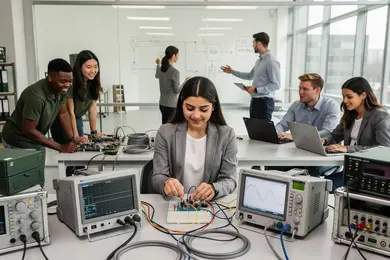
A digital preservation lab is not a standardized term. At one school, it may be a physical space with scanners, audiovisual digitization equipment, and controlled storage. At another, it may be a virtual environment where students use preservation software, analyze metadata, create checksums, or complete a practicum with a library or archive. For fully online students, the most meaningful question is not whether a school uses the word lab, but whether distance learners can use its resources in a structured, supervised way.
The comparison below separates common access models so applicants can distinguish practical experience from a course title alone.
| Access model | What an online student may do | Best fit | Question to verify |
| Remote preservation environment | Use cloud-based tools, shared storage, metadata systems, and virtual lab demonstrations | Students who need fully location-independent study | Which tools can distance students access outside scheduled classes? |
| Project-based course | Create a preservation plan, inventory files, generate fixity information, or process a digital collection | Students who need portfolio material | Will the project use a real collection and receive practitioner feedback? |
| Local practicum | Work with an approved archive, museum, library, or records office near home | Students able to arrange supervised fieldwork | Who approves sites, and how many practicum hours are required? |
| Optional campus intensive | Use physical equipment during a short residency or workshop | Students who can travel occasionally | Is travel required, optional, and included in tuition? |
Digital preservation is a strong fit for students who enjoy both cultural heritage work and technical problem-solving. Students seeking a primarily public-service, school-library, or youth-services career may benefit more from an MLIS pathway aligned with those goals.
Which online MLIS programs offer lab access?
There is no single national directory that verifies digital preservation lab access for every online MLIS program. Schools also change course rotations, software licenses, practicum rules, and residency requirements. As a result, applicants should treat published lab descriptions as a starting point and obtain a current written answer from the program before enrolling.
Fully online or primarily online MLIS programs commonly provide preservation preparation through electives in digital curation, digital libraries, archives, metadata, records management, and field experience. Programs worth investigating include those offered by San José State University, the University of Alabama, the University of Missouri, the University of North Texas, and the University of Wisconsin-Milwaukee, among other institutions. Availability of a particular lab, course, or on-site experience can vary by term and student location.
Use this screening framework when reviewing online programs. It focuses on evidence that matters more than a marketing label.
| Program evidence to look for | Why it matters for online students | Potential red flag |
| Named digital preservation, digital curation, or archives electives | Shows the curriculum reaches beyond general library technology | One broad technology class is presented as preservation specialization |
| Remote access instructions for software or collections | Clarifies whether distance learners can practice with the same systems as campus students | Access is described only for students physically on campus |
| Required or elective practicum details | Can create supervised experience and local professional connections | No process exists for approving sites outside the school's region |
| Faculty research and partner institutions | May provide projects, mentoring, and collection-based learning | Faculty expertise is unrelated to the advertised specialization |
| Recent course schedule | Confirms that desired electives are offered regularly enough to complete the degree | Essential electives appear infrequently or have limited enrollment |
Ask admissions staff to connect you with a faculty member or current student in the preservation area. Also confirm the institution's standing through resources on online accredited colleges, then separately verify programmatic ALA accreditation where it is relevant to your target role.
A common mistake is selecting a school because it has a digitization lab on campus while assuming remote students can participate. Avoid this by asking whether online students have completed lab-based assignments during the last academic year and what access method they used.
How do fully online students use digital preservation labs?
Fully online students usually gain lab-like experience through instructor-designed projects, remote platforms, recorded equipment demonstrations, virtual meetings, and local internships. The goal is to practice the preservation workflow: identify materials, assess risk, document files, create metadata, make copies, monitor integrity, and plan long-term access.
Students should expect meaningful practice to involve both technical and organizational decisions. A preservation system cannot solve unclear ownership, missing metadata, inaccessible file formats, or the absence of a sustainable storage plan.
A productive online learning sequence generally follows these steps:
- Learn preservation concepts such as authenticity, fixity, provenance, storage redundancy, file formats, and access rights.
- Apply concepts to a sample collection by creating an inventory, risk assessment, metadata crosswalk, or preservation policy.
- Use assigned or publicly available tools to examine files, create checksums, package content, or document workflows.
- Receive feedback from an instructor, archivist, librarian, or practicum supervisor and revise the project.
- Save approved work products in a portfolio with a short explanation of the problem, process, tools, and outcome.
Remote study works especially well for collection assessment, metadata, policy writing, web archiving concepts, file management, and digital curation planning. It is less complete for students who specifically need repeated hands-on training with flatbed scanners, audiovisual playback decks, photographic equipment, or specialized digitization hardware. Those students should prioritize a local practicum or an optional in-person intensive.
Before committing, ask about accessibility, required personal hardware, software costs, time-zone expectations, and whether a practicum can be completed at your workplace. These details often determine whether an online format is genuinely workable.
What accreditation should MLIS programs have?
For many professional librarian jobs in the United States, an MLIS accredited by the American Library Association is the most portable and widely recognized credential. ALA accreditation evaluates the master's program rather than the institution as a whole. It does not guarantee that a specific specialization, elective, or lab meets every employer's needs.
Accreditation should be the first check for applicants targeting public, academic, or special-library positions that explicitly require an ALA-accredited degree. Some archives, museums, records offices, digital humanities centers, and private-sector information roles may accept related degrees or emphasize experience instead, but requirements vary by employer.
This checklist helps applicants verify both institutional quality and professional fit.
- Confirm that the exact MLIS degree - not merely the university - is listed as ALA-accredited, and check whether accreditation is current.
- Review the program's delivery format to ensure online students can complete every required component without unexpected residency or travel.
- Compare the curriculum with job postings in your target field, especially requirements involving archives, metadata, digital asset management, or records.
- Ask whether graduates pursuing school-library work must meet additional state licensure requirements, since an MLIS alone may not qualify them.
Do not confuse regional or institutional accreditation with ALA accreditation. Both can matter: institutional accreditation supports federal aid eligibility and transfer evaluation, while ALA accreditation is often the profession-specific requirement for librarian roles. Students considering eventual doctoral study can also compare PhD online options after building research interests and professional experience.
What courses cover digital preservation skills?
The strongest digital preservation pathway combines preservation theory with technical practice and contextual knowledge of libraries, archives, museums, records, and copyright. Course names differ across schools, so applicants should read descriptions, prerequisites, assignments, and recent schedules rather than relying on titles alone.
The following course areas signal a curriculum that can support entry-level digital preservation work. A program does not need every course, but students should be able to build a coherent sequence.
| Course area | Skills commonly developed | Why it supports preservation work |
| Digital preservation or digital curation | Lifecycle planning, risk analysis, storage strategy, preservation policy | Builds the framework for managing materials over time |
| Archives and records management | Appraisal, arrangement, description, provenance, retention | Connects technical preservation to collection stewardship |
| Metadata and information organization | Descriptive, administrative, technical, and preservation metadata | Makes digital content understandable, findable, and manageable |
| Digital libraries or repositories | Platforms, access workflows, user needs, content management | Explains how preserved material is delivered to users |
| Digitization and audiovisual preservation | Capture planning, quality control, file formats, documentation | Useful for institutions converting analog collections to digital form |
| Copyright, ethics, and policy | Rights review, privacy, access restrictions, responsible stewardship | Addresses legal and ethical limits on preservation and access |
Students should also seek projects involving spreadsheets, data cleanup, controlled vocabularies, file naming, documentation, and basic command-line or scripting exposure where available. AI tools may assist with transcription, description, and discovery, but they do not eliminate the need to verify metadata, protect sensitive material, manage rights, or preserve authentic files.
A frequent mistake is taking several interesting technology electives with no final portfolio or field experience. A better approach is to select courses that build toward one demonstrable preservation project and a practicum aligned with the type of institution where you want to work.
What admissions requirements do MLIS programs set?
Online MLIS programs typically require a bachelor's degree from an accredited institution, official transcripts, an application, a statement of purpose, and recommendations or references. Requirements vary by school. Some programs specify a minimum undergraduate GPA, while others use holistic review or admit applicants conditionally.
Applicants generally do not need a library science bachelor's degree. Relevant backgrounds include history, English, computer science, education, communications, art, public administration, social sciences, and business. For digital preservation, applicants can strengthen their materials by describing experience with collections, research, records, databases, scanning, audiovisual media, websites, or community history projects.
Prepare the following before application deadlines, especially if you need transcripts or recommendation letters from multiple institutions:
- A focused statement explaining your target role and why the program's preservation, archives, metadata, or practicum options fit that goal.
- Official transcripts and an honest explanation of any academic record issues when the application provides space for context.
- Two or more professional or academic references who can discuss your research, organization, communication, technical learning, or service abilities.
- A current résumé that highlights transferable work, volunteer, internship, or project experience.
- A preliminary plan for completing any practicum locally if you live outside the institution's region.
Applicants changing fields should not assume they need another full bachelor's degree before applying. Shorter training, volunteer work, or a project portfolio may be more efficient; compare this route with 6 month certificate programs that pay well only when a shorter credential fits your immediate employment goal. A certificate is not generally a substitute for an ALA-accredited MLIS where employers specifically require the degree.
How long do online MLIS programs take?
Most online MLIS programs require roughly 36 credit hours, although total credits and graduation requirements vary. A full-time student may finish in about two years, while part-time students commonly take three years or longer. Summer enrollment, transfer-credit policies, course sequencing, and practicum availability can change the timeline.
Accelerated study makes sense for students with substantial weekly availability, reliable technology, and a clear specialization plan. Part-time study is usually the better choice for full-time workers, caregivers, or students who need time to complete a local practicum without overloading their schedule.
This comparison shows the practical trade-off between pace and flexibility.
| Study pattern | Typical advantage | Primary trade-off | Best suited for |
| Full-time | Earlier completion and faster access to advanced electives | Higher weekly reading, project, and group-work demands | Students with flexible work or financial circumstances |
| Part-time | More manageable alongside employment and family responsibilities | Longer time before degree completion and possible course-rotation delays | Working adults and career changers |
| Accelerated | Condenses coursework into shorter terms | Limited room to recover from schedule disruptions or add electives | Highly organized students with strong time availability |
| Part-time with practicum | Lets students integrate coursework with local experience | Requires early planning with the program and host site | Students building preservation experience while enrolled |
Ask whether required preservation electives are offered every term. An advertised two-year plan may not be realistic if a needed course is offered once a year or requires a prerequisite sequence. Students who still need undergraduate preparation may explore a best accelerated bachelor's degree online pathway, but should confirm that it aligns with their longer-term MLIS admissions goals.
How much do online MLIS programs cost?
The total cost of an online MLIS depends on per-credit tuition, required credits, residency status, university fees, technology charges, books, software, and travel for any optional or required intensive. Published tuition should be compared using the total estimated cost for the credits you will actually need, not a single per-credit figure.
For context, the National Center for Education Statistics reported average graduate tuition and fees of $12,596 at public institutions for in-state students and $29,931 at private nonprofit institutions in 2023-24. These are broad institutional averages, not MLIS-specific prices, so use them as a benchmark rather than a program quote.
When requesting a financial estimate, separate the costs below to avoid underestimating the investment.
| Cost category | What to check | Why it affects online students |
| Tuition | Per-credit rate, total credits, and online or out-of-state rate | Online students may not receive an in-state rate at every public university |
| Mandatory fees | Technology, student services, library, graduation, and distance-learning charges | Fees can materially change the term total |
| Course materials | Books, software, storage, equipment, and digitization supplies | Some preservation projects require tools beyond standard coursework |
| Experiential learning | Travel, background checks, insurance, and unpaid practicum time | These costs may not appear in the tuition estimate |
| Financing | Scholarships, employer support, assistantships, and federal loan eligibility | Funding availability differs sharply between online and campus students |
Federal Direct Unsubsidized Loans for graduate students are generally capped at $20,500 per academic year, subject to federal eligibility rules and aggregate limits. Borrow only after comparing expected debt with likely local job opportunities and starting pay. Employer tuition benefits, professional association scholarships, a paid library position, and a lower-cost public program can improve the financial case.
Do not choose solely by tuition. A slightly higher-priced program may be the better value if it offers an accessible practicum, regularly scheduled preservation courses, strong advising, and tools you can use remotely. Conversely, avoid paying a premium for a specialization that is unavailable to online students.
What careers use digital preservation training?
Digital preservation training supports careers in libraries, archives, museums, universities, government agencies, historical societies, research centers, nonprofits, and organizations that manage long-lived digital records. Job titles vary widely, and many entry-level roles combine preservation with archives processing, metadata, digitization, repository support, or digital asset management.
The roles below illustrate how an MLIS preservation concentration can translate into different work settings. Actual requirements depend on the employer, collection type, and seniority level.
| Career path | Typical responsibilities | Helpful MLIS preparation |
| Digital preservation librarian | Develops preservation workflows, policies, storage strategies, and access plans | Digital curation, repositories, metadata, policy, and project management |
| Digital archivist | Appraises, arranges, describes, and provides access to born-digital records | Archives theory, records management, digital forensics concepts, and description |
| Digital collections librarian | Manages digitized collections, platforms, metadata, and user access | Digitization, metadata, digital libraries, and user experience |
| Metadata specialist | Creates and improves structured description for discovery and management | Cataloging, linked data concepts, controlled vocabularies, and quality control |
| Repository or scholarly communications specialist | Supports research outputs, institutional repositories, and preservation planning | Research data, copyright, repositories, and faculty outreach |
| Records or information governance analyst | Manages retention, access, disposition, and organizational information risk | Records management, policy, compliance, and information lifecycle management |
Students who want public-facing librarian work should pair preservation training with reference, instruction, collection development, or community engagement courses. Those aiming for technical preservation roles should prioritize metadata, repository systems, scripting or data skills, and evidence of completed projects. A portfolio often helps employers understand what you can do beyond the degree title.
What salaries and job outlook apply to MLIS graduates?
Salary outcomes for MLIS graduates vary by occupation, geographic area, employer type, experience, union coverage, and technical specialization. The degree does not produce one standard salary. Digital preservation positions can be competitive because they are specialized and may be concentrated in larger institutions, university libraries, government archives, and cultural heritage organizations.
The U.S. Bureau of Labor Statistics reported a median annual wage of $64,320 for librarians and library media specialists in May 2024. This national median is useful for broad planning, but it does not isolate digital preservation roles, and early-career offers may be lower or higher depending on location and duties.
The BLS projects employment for archivists, curators, and museum workers to grow faster than the average for all occupations over the 2023-33 period. For prospective students, that outlook supports the value of relevant skills, but it should not be interpreted as a guarantee of an opening in a particular city or institution.
To evaluate return on investment, compare local postings with your expected total program cost and likely debt. Look for recurring requirements - such as ALA accreditation, archives coursework, metadata standards, repository experience, digitization quality control, or project management - and choose electives that address the requirements appearing most often.
One common mistake is using a national median wage to justify borrowing without examining entry-level jobs near home. A better approach is to review several current postings, identify realistic starting roles, and ask each program whether it publishes internship, practicum, placement, or graduate-employment information.
Other Things You Should Know About Library Science
Yes, if the degree includes relevant coursework and you build practical experience through remote projects, a local practicum, internships, volunteer work, or a job in a library or archive. Confirm that any lab or practicum resources are genuinely available to distance learners.
Not always. Many roles emphasize metadata, preservation planning, archives management, documentation, and project coordination. Basic comfort with spreadsheets, file systems, data cleanup, and technical terminology is valuable, while scripting can strengthen candidates for more technical positions.
It is commonly preferred or required for librarian roles, but archives employers vary. Some may accept related graduate degrees, especially when candidates have archival experience, digital curation skills, or subject expertise. Read target job postings before choosing a degree.
Ask which preservation electives are offered regularly, whether online students can access the same software and projects as campus students, how local practicums are approved, whether travel is required, and what portfolio-ready work prior online students have completed.
References
- Online vs. In-Person Library Science Programs https://www.librariancertification.com/online-vs-in-person-library-science-programs/
- Best Digital Curation Programs: Online & Campus (2026) https://www.mastersinlibraryscience.org/degree/digital-curation/
- Best Online MLIS Degree Programs, Updated for 2026 https://www.librarysciencedegrees.org/programs/online/masters-mlis