2027 Federal Aid Eligibility vs. Accreditation: Why One Does Not Guarantee the Other

Co-Founder and Chief Data Scientist
A school's claim that students can use federal aid does not automatically mean its credits will transfer, its programs meet licensing requirements, or employers will recognize its credentials. This matters because the maximum Federal Pell Grant for the 2026-27 award year is $7,395. This guide is for prospective students comparing colleges, career schools, and online programs. It explains the difference between Title IV eligibility and accreditation, shows what to verify, and helps you avoid using aid on a credential that does not support your goal.
Key Things You Should Know
- Title IV eligibility means a school or program is approved to participate in federal student-aid programs; it is not a blanket endorsement of academic quality, transferability, or career value.
- The 2026-27 maximum Pell Grant is $7,395, so confirming exactly which program, location, and enrollment format qualify can materially affect your out-of-pocket cost.
- Before enrolling, verify the school in the U.S. Department of Education database, confirm its accreditor's status, and ask receiving schools, licensing boards, or employers whether the credential fits your intended use.
How do federal aid eligibility and accreditation differ?
Federal aid eligibility is authorization to take part in Title IV federal student-aid programs, such as Pell Grants, Direct Loans, and Federal Work-Study. A school generally must meet federal requirements, have a valid Program Participation Agreement with the U.S. Department of Education, and satisfy other oversight conditions. Eligibility may apply to an institution, a branch, an additional location, or only certain programs.
Accreditation is a quality-review process conducted by an accrediting agency. Institutional accreditors evaluate the college as a whole, while programmatic accreditors evaluate a particular field or program. Recognition by the Department of Education or the Council for Higher Education Accreditation can matter, but accreditation alone still does not answer every question a student has.
The comparison below shows why students should treat these as separate checks rather than interchangeable labels.
| Question | Federal aid eligibility | Accreditation |
| Primary purpose | Allows participation in specified federal aid programs | Assesses educational quality against an accreditor's standards |
| Who oversees it | U.S. Department of Education, with state and accreditor roles in the oversight framework | An institutional or programmatic accrediting agency |
| What it does not prove | That credits transfer, a program leads to licensure, or employers will accept it | That every student or program is eligible for federal aid |
| Best student use | Estimate whether federal grants and loans may be available | Evaluate quality, transfer prospects, and professional-pathway fit |
For most degree-seeking students, the strongest fit is a school with active Title IV participation, recognized institutional accreditation, and a program whose outcomes match the intended transfer, licensing, or employment goal. Students considering prestigious online universities should also verify whether the individual online program and their state of residence create any additional restrictions.
Why can a college receive Title IV aid without institutional accreditation?
The common shorthand that "accreditation is required for federal aid" is incomplete. Accreditation is usually a major part of the federal oversight structure, but federal law and regulations contain limited pathways, exceptions, and transitional circumstances. In addition, a school can be institutionally accredited while a particular program lacks the specialized accreditation needed for a regulated profession.
A school may appear aid eligible without the institutional accreditation a student expects for several reasons:
- It may qualify through a specific statutory or regulatory exception, such as certain public postsecondary institutions or limited religious-training institutions.
- Its Title IV approval may be tied to a particular approved location, program, or period rather than every offering advertised by the institution.
- Its accreditation status may be changing, under review, newly granted, withdrawn, or reported differently across databases due to timing.
- It may be using the term "accredited" to describe a program, a state approval, an authorization, or an affiliation rather than recognized institutional accreditation.
These situations are not automatically improper. They do, however, require a more careful review. Do not assume that eligibility for a Direct Loan means the credential will be accepted by a bachelor's degree program, a state licensing board, or a hiring manager.
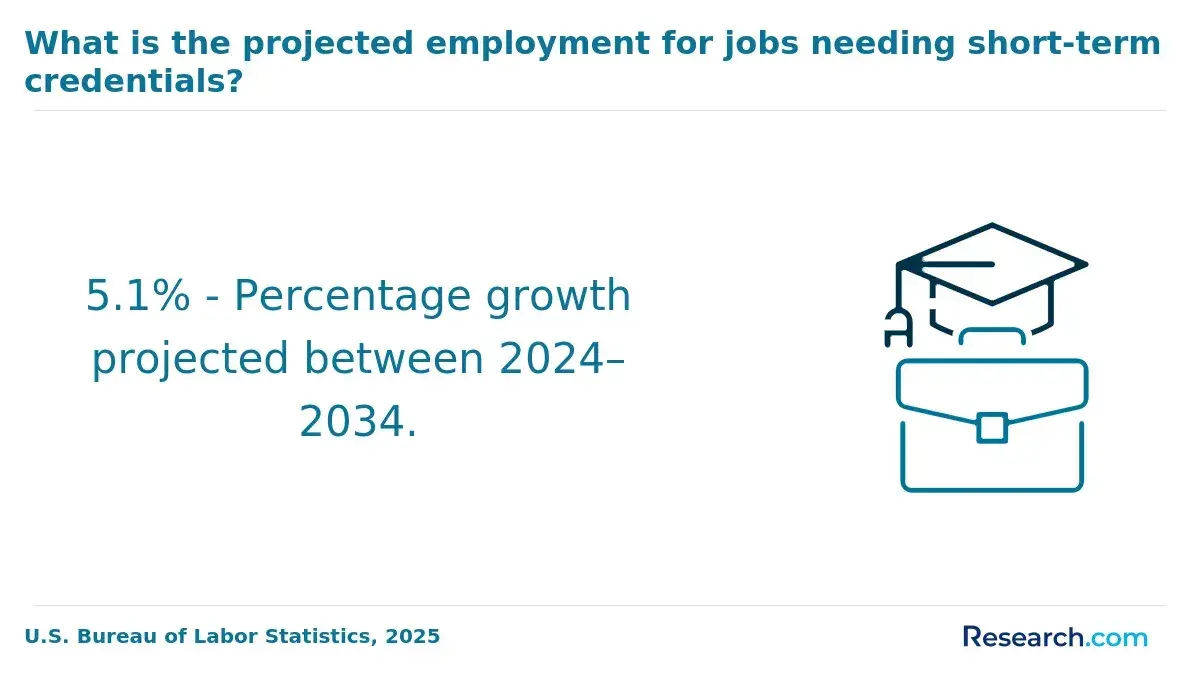
Students seeking a short credential should be especially precise. A program marketed as what degree can I get online in 6 months may be attractive for speed, but a claimed completion time does not establish that the program is degree-granting, aid eligible, transferable, or suitable for a licensed occupation.
Which federal approvals matter besides accreditation for aid eligibility?
Federal student-aid participation rests on more than one approval. Students should think of it as a compliance framework: the federal government, state oversight bodies, and accreditors each have distinct responsibilities. A favorable answer from one party does not replace verification with the others.
These are the approvals and records most relevant to a student deciding whether aid can be used safely:
- Program Participation Agreement: The agreement between the institution and the Department of Education that permits participation in specified Title IV programs.
- Federal School Code: The code used on the FAFSA; it helps identify a school but does not by itself confirm that every program is eligible.
- State authorization or licensure: State approval to operate may be required, particularly for institutions serving students across state lines.
- Eligible program approval: A school can participate in Title IV while some programs, courses, clock-hour offerings, or locations are ineligible.
- Gainful-employment and financial-value transparency disclosures: Where applicable, these disclosures can help students examine costs, debt, completion, and earnings information for certain programs.
Ask the financial-aid office for a written answer identifying the exact program, credential level, campus or online location, and start date that qualify for aid. Then compare that answer with the information in federal databases and the enrollment agreement. This is more reliable than relying on a general statement that "financial aid is available."
Institutional accreditation examines the college or university broadly: governance, finances, student support, academic assessment, faculty resources, and institutional effectiveness. Programmatic accreditation focuses on preparation in a particular discipline, such as nursing, engineering, business, counseling, teaching, or clinical health fields.
This distinction matters most when a student needs a license, certification examination, or professional credential. An institution can have recognized institutional accreditation, yet its individual program may not meet the specialized standards required by a licensing board or professional employer.
The table separates the questions each type of accreditation can help answer.
| Type of accreditation | Typical scope | Most useful for | Important limitation |
| Institutional | The entire college or university | Overall quality review, transfer evaluation, and federal oversight context | Does not necessarily satisfy profession-specific licensing requirements |
| Programmatic | A department, curriculum, or professional program | Licensure preparation, specialized curriculum, and field-specific expectations | Does not automatically mean the full institution is Title IV eligible |
| State approval | Authority to operate or offer a program in a state | Confirming legal operation and some state-specific requirements | Is not the same as accreditation or a guarantee of transferability |
For business administration and many general academic programs, programmatic accreditation can be a meaningful quality signal but is not always required for entry-level employment. For nursing, teacher preparation, counseling, and other regulated fields, the relevant state board's requirements should drive the decision. Verify the rules before paying a deposit, especially for online programs that place students in practicum or clinical sites.
Most mainstream degree-granting colleges that participate in Title IV are institutionally accredited. The more likely areas of confusion are specialized institutions, narrowly exempt institutions, and schools whose marketing uses "approved," "licensed," "authorized," or "recognized" as though those terms meant institutional accreditation.
Students may encounter the issue most often in the following settings:
- Religious institutions that qualify under a religious-training exception but do not hold institutional accreditation.
- Public postsecondary institutions operating under a statutory accreditation exception.
- Career schools with aid-eligible programs that are not designed for broad academic credit transfer.
- Institutions in an accreditation transition, including a change in accreditor or a status under review.
- Online providers that offer both aid-eligible and non-aid-eligible products, certificates, continuing education, or partner-delivered programs.
None of these categories should be judged automatically as good or bad. A narrowly focused religious program may be appropriate for a student pursuing ministry in that tradition, while it may be a poor choice for someone expecting to transfer into a secular bachelor's program. The key is whether the credential's recognition matches the student's intended next step.
For students who prioritize flexible pacing, compare the school's formal credential status with the structure of best self paced online college options. Self-paced delivery can be useful for working adults, but course pacing does not eliminate requirements for satisfactory academic progress, attendance rules where applicable, or program-specific aid eligibility.
No. Accreditation can make a credential easier to evaluate, but it does not compel another college to accept credits, a licensing board to approve an applicant, or an employer to value a particular degree. Each decision is made under separate policies and standards.
Transfer institutions commonly review course content, grades, credit level, learning outcomes, and their own residency requirements. Licensing boards may require a specific degree type, curriculum, supervised practice, exam, background review, or programmatic accreditation. Employers may focus on skills, work experience, portfolio evidence, institutional reputation, and whether the role legally requires a credential.
Use this comparison to match your verification step to the outcome you actually need.
| Desired outcome | What to confirm before enrollment | Who can give the most reliable answer |
| Transfer to another college | Whether named courses will be accepted toward the intended major | The receiving college's registrar or transfer-credit evaluator |
| Professional licensure | Whether the program meets education and placement requirements in your state | The relevant state licensing board |
| Employer acceptance | Whether the credential is relevant to the occupation and hiring market | Employers, job postings, and professionals in the field |
| Federal aid | Whether the specific program and enrollment arrangement are Title IV eligible | The school's financial-aid office and Department of Education records |
A frequent mistake is asking the enrolling school whether its credits "transfer." The more useful question is whether your target school will accept particular credits toward your target major. Get the answer in writing when possible, because verbal assurances may not bind a receiving institution.
Verification should happen before you submit an enrollment deposit, sign a financing agreement, or decline another admission offer. Use the school's name, campus location, and exact program title; similarly named schools, branch campuses, and partner programs can have different approvals.
Follow these steps to build a record of what was represented to you:
- Search the Department of Education's College Scorecard and accreditation database for the institution's legal name and location.
- Confirm that the school's accreditor is listed and check the accreditor's own directory for the institution's current status, scope, and any public actions.
- Ask the financial-aid office whether your exact program, credential, modality, and start term are Title IV eligible, and request the answer by email.
- Review the net price, refund policy, withdrawal consequences, satisfactory academic progress rules, and whether the school calculates aid for clock hours, credit hours, or subscription periods.
- If transfer or licensure is your goal, contact the receiving institution or state board before you enroll, not after you accumulate credits.
- Save screenshots, emails, catalog pages, and disclosures in case the program description later changes.
Students comparing degree paths can also use a career-first filter. Review best majors in college alongside program eligibility, required credentials, and local job expectations. A lower-cost aid-eligible program is not necessarily the better investment if it cannot support the career or transfer pathway you need.
Start with official records rather than school advertising. Federal databases can identify institutional characteristics and aid participation information, while accreditors and state agencies supply details that may not appear in one central federal search result.
The following sources answer different questions, so using more than one is usually worthwhile.
- College Scorecard: Search for the institution, compare reported cost and outcome information, and confirm that you are viewing the correct campus or online entity.
- U.S. Department of Education Database of Accredited Postsecondary Institutions and Programs: Check the institution, accrediting agency, accreditation status, and scope of recognition.
- Federal Student Aid school search and FAFSA school-code tools: Identify schools associated with federal student-aid processing, then confirm the specific program with the financial-aid office.
- Accreditor directories: Verify current institutional or programmatic status directly with the agency named by the school.
- State higher-education and licensing-board websites: Check authority to operate, complaints information where available, and state-specific professional eligibility.
Database information can lag behind a status change, acquisition, closure, or new location. When records conflict, pause enrollment and request a written explanation that identifies the effective date and the exact entity covered. For a high-cost program, consider asking the school whether it will allow you to cancel without penalty while you verify the discrepancy.
Schools may legitimately advertise that federal aid is available, but the claim becomes misleading when it is presented as proof of universal quality, automatic affordability, guaranteed employment, or unrestricted transferability. Marketing language should never be your only evidence.
Watch for these warning signs, especially when the school is urging you to enroll quickly:
- The school says it is "federally approved" but will not name its accreditor, provide its Program Participation Agreement details, or identify which programs qualify for aid.
- Admissions staff promises that all credits transfer but cannot provide a written policy or name receiving institutions that have evaluated the courses.
- The program is described as leading to licensure, yet the school will not confirm eligibility for your state or identify the relevant licensing board.
- The financial-aid offer emphasizes loan availability but does not clearly show tuition, fees, books, equipment, living costs, refund rules, and expected borrowing.
- The school pressures you to sign immediately, discourages comparison shopping, or asks you to rely on verbal statements rather than written disclosures.
- Its website uses vague badges, "recognition" language, or accreditation claims that do not appear in the accreditor's directory.
One warning sign does not prove misconduct, but multiple unresolved issues should change your decision. Ask for documentation, compare alternatives, and do not let an approaching start date replace due diligence. Federal loans must generally be repaid even if a credential later has limited transfer or labor-market value.
What should students do before enrolling if the two statuses do not match?
If a school is aid eligible but lacks the institutional or programmatic accreditation you expected, decide based on your intended outcome rather than the label alone. The program may still fit a narrowly defined purpose, but it carries more risk when you need broad transfer options, a state license, graduate-school admission, or portability across employers and states.
Use this decision framework before committing:
- Write down the outcome you need within the next two to five years: entry-level work, transfer, bachelor's completion, graduate study, certification, or licensure.
- Ask the school to document the precise Title IV eligibility of your program and to explain any accreditation exception or limitation.
- Contact the third party that controls your next step, such as a receiving college, state licensing board, certification body, or prospective employer.
- Compare total cost rather than aid alone. Include grants, loans, fees, required equipment, living expenses, lost wages, and the amount you would need to borrow.
- Read the catalog and enrollment agreement for withdrawal, refund, teach-out, transcript, and credit-transfer policies.
- Choose a different institution if the school cannot provide clear written verification that the credential serves your stated goal.
A school with both recognized institutional accreditation and Title IV eligibility is often the lower-risk choice for students who are uncertain about future transfer or career plans. A specialized or exempt school can make sense when its mission and credential are directly aligned with a clearly defined goal and you have independently confirmed downstream acceptance.
Federal aid answers, "Can this student use certain federal funds here?" Accreditation and downstream verification answer, "Will this education work for the student's actual goal?" A sound enrollment decision requires both answers.
Other Things You Should Know About Business Administration
In limited circumstances, yes. Some institutions may qualify through a statutory or regulatory exception, while others may have status changes or specialized arrangements. Students should verify the exact school and program through official records and request written confirmation from the financial-aid office.
No. A FAFSA school code helps identify an institution for aid processing, but eligibility can differ by program, credential, location, enrollment status, and academic period. Confirm your specific program before enrolling.
No. Accreditation and Title IV participation are separate concepts. Also, "nationally accredited" is an informal phrase that can be confusing; check the actual accrediting agency, its recognition status, and whether the credential meets your transfer or licensing needs.
You may still be responsible for repaying the loans, even if another college declines the credits. Before borrowing, ask the intended receiving institution to evaluate transferability and compare the program's total cost with alternatives that better support your goal.
- A comprehensive guide to types of financial aid for college students https://www.citizensbank.com/learning/types-of-federal-financial-aid.aspx
- FAFSA Assets https://www.collegedata.com/resources/pay-your-way/how-student-and-parent-assets-affect-your-financial-aid
- Maximizing Your Aid Eligibility - Finaid https://finaid.org/financial-aid-applications/maximize/
- Paying for college https://www.commonapp.org/plan/paying-for-college/
- The Basics of Federal Student Financial Aid http://perspectives.acct.org/stories/the-basics-of-federal-student-financial-aid