2027 State-by-State Acceptance of Online Interior Design Master's Programs for Licensure

Co-Founder and Chief Data Scientist
Choosing an online interior design master's program can be complicated by varied state licensure requirements that affect graduates' career mobility. Some states demand specific residency periods or clinical hour completions, while others emphasize curriculum content or accreditation type, creating patchy acceptance of identical degrees.
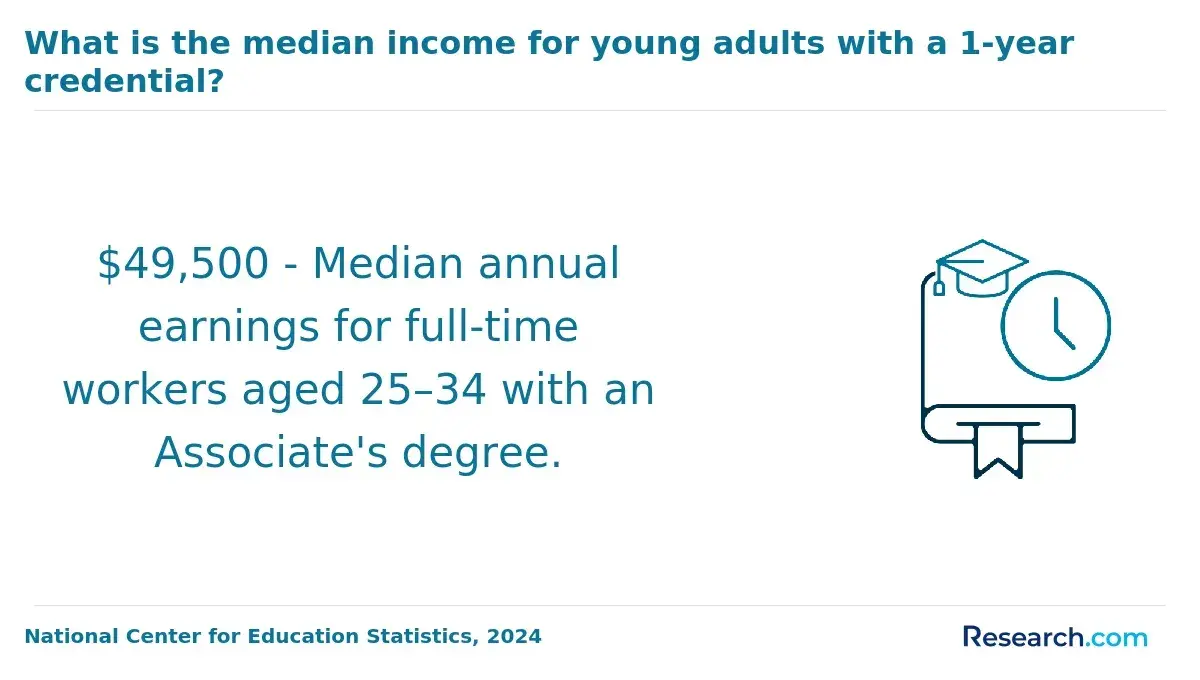
With a 22% rise in adult learners enrolling in online graduate programs reported by the National Center for Education Statistics in 2024, understanding these regulatory differences becomes vital. This landscape shapes students' timing and location choices for licensure, especially for those who anticipate relocating or need to meet diverse board standards across state lines.
Key Things to Know About State-by-State Acceptance of Online Interior Design Master's Programs for Licensure
- Residency requirements vary widely, creating timing and cost tradeoffs for students who must meet state-specific mandates in person, limiting mobility for military-affiliated or geographically flexible learners despite rising online enrollment.
- States differ in clinical hour mandates, affecting employability by influencing real-world skill assessments; inconsistent standards challenge graduates seeking licensure portability across jurisdictions.
- Accreditation designations remain critical as many boards accept only certain agencies' approvals, forcing prospective students to balance wider access against potential licensure barriers tied to institutional recognition.
How Do State Licensing Boards Define Acceptance of Online Interior Design Master's Programs for Licensure Purposes?
Acceptance by state licensing boards of an online interior design master's degree is not a uniform or guaranteed process; it hinges on distinct frameworks that vary considerably depending on the board's established criteria and review mechanisms. For some states, acceptance means a program has been formally approved and explicitly recognized, ensuring graduates meet licensure prerequisites without further scrutiny.
Elsewhere, boards assess applications on a case-by-case basis, examining transcripts and curriculum details to confirm equivalency with traditional on-campus programs. Other boards rely solely on generalized accreditation standards like those from CIDA, often without detailed review of the nuances specific to online delivery. This definitional ambiguity leads to risk for students and professionals who assume that any accredited online master's program meets the diverse state-by-state licensure acceptance of online interior design degrees without additional verification.
Three main categories govern these evaluations: statutory mandates, regulatory agency rules, and administrative board practices-all shaping how programs and applicants are judged. This article delves into these governance layers and program review variations to clarify the fragmented, state-level licensing landscape students and professionals must navigate.
- Formal Approval: Some licensing boards pre-approve a specific roster of online programs that fully comply with their educational and clinical standards, offering clear pathways to licensure without additional equivalency exams or documentation.
- Case-by-Case Review: Many boards individually assess online degrees by reviewing course content, accreditation status, and mode of delivery, often requiring supplemental proof of practical training or professional experience before granting acceptance.
- General Accreditation Acceptance: A subset of boards bases acceptance primarily on recognized accrediting bodies, applying a broad standard that may overlook differences in curriculum rigor or hands-on components uniquely affected by online formats.
- Risk of Assumption: Erroneously assuming all accredited online master's programs satisfy every state's licensure requirements can cause delays or outright rejection, especially where states have specific residency, clinical hour, or curricular mandates not universally standardized.
- Governance Categories: The interplay of statutory law, regulatory frameworks, and administrative precedent determines how boards interpret and apply standards to online Interior Design master's degrees, influencing whether these programs suffice for licensure in each jurisdiction.
State licensing boards often assess online interior design master's programs based on how these programs fulfill regional accreditation criteria and meet state-specific licensure prerequisites.
For detailed insight into educational pathways that align with such regulatory complexities, professionals should also consider resources like the best online AI degree programs as examples of how evolving degree delivery models impact professional acceptance and workforce integration.
Which States Have Formally Approved Online Interior Design Master's Programs as Licensure-Qualifying?
Licensing acceptance of online interior design master's degrees varies widely and can materially affect career mobility and licensure timelines. For example, a military-affiliated professional relocating frequently may find their online degree valid in one state but subject to additional scrutiny or outright rejection in another, complicating licensure portability and delaying workforce entry.
- Clear Statutory Acceptance: A small subset of states explicitly define online interior design master's degrees as meeting licensure educational requirements when the program maintains recognized accreditation and covers essential competencies. These states have modernized statutes or administrative rules that equate distance learning to traditional programs, minimizing barriers for graduates irrespective of physical campus attendance.
- Accreditation-Dependent Approval: Many states do not directly address online delivery but rely heavily on the program's accreditation status. States in this category typically accept degrees accredited by bodies such as the Council for Interior Design Accreditation (CIDA) or the National Architectural Accrediting Board (NAAB). However, these states often require documented clinical or internship hours, placing a premium on verifiable supervised experience beyond coursework.
- Conditional or Additional Review Required: In several states, online degrees undergo case-by-case evaluation. Applicants may need to submit detailed syllabi, demonstrate equivalency of supervised practical hours, or pass supplemental exams. This discretionary review by boards introduces uncertainty and can result in extended application processing or additional requirements, impacting career timelines.
- States with Restrictions or Ambiguity: Some states enforce explicit limits on online degree acceptance due to residency requirements, mandatory on-site clinical experience, or restrictive interpretation of program formats. Others present ambiguous or outdated regulatory language leading to inconsistent board decisions. Graduates seeking licensure here should anticipate complex, often opaque approval processes with unpredictable outcomes.
Given ongoing regulatory evolution and uneven accreditation recognition across jurisdictions, prospective interior design master's students and licensure candidates must treat this overview as a preliminary regulatory map rather than definitive legal guidance. Direct confirmation with state licensing boards-a process outlined later in this article-is essential to verify current policies and ensure educational alignment with intended state requirements before enrollment decisions are finalized.
What Role Does Regional Accreditation Play in State Acceptance of an Online Interior Design Master's Degree?
Regional accreditation acts as a gatekeeper rather than a definitive endorsement for state boards reviewing online interior design master's degrees for licensure. Granted by one of six bodies recognized by the U.S. Department of Education-such as WASC or Middle States-this form of accreditation validates an institution's overall academic and operational quality but does not ensure specific program rigor. Many state licensing boards insist on regional accreditation as a minimum threshold for acceptance, yet they often require additional scrutiny to confirm the degree aligns with their licensing standards.
This distinction is essential because a regionally accredited degree lacking programmatic validation related to interior design can face rejection or demands for supplementary education in some states. For example, a military-affiliated individual moving across states may find their degree accepted in one jurisdiction but questioned in another based solely on these nuanced accreditation differences.
Prospective students should carefully verify that their online program holds current regional accreditation in good standing and must inquire whether regional accreditation suffices for their target state's licensure requirements or if programmatic accreditation-such as that from the Council for Interior Design Accreditation-is also mandated.
This due diligence is critical for career changers and professionals planning licensure portability. Those exploring graduate options may also consider how various degree pathways impact licensure, such as comparing regionally accredited interior design degrees with other offerings like an online masters psychology degree, which may have different licensing frameworks.
- Regional Accreditation: Ensures institutional quality through bodies recognized federally but does not guarantee specialized credential acceptance in interior design licensure.
- Programmatic Accreditation: Certification from specialized agencies verifying the curriculum meets professional design standards crucial for licensure eligibility.
- State Acceptance Variability: Some states license on regional accreditation alone; others require validation of clinical hours, curriculum, or programmatic accreditation.
- Licensure Consequences: Graduates from only regionally accredited programs may encounter delays, additional paperwork, or extra coursework depending on state board policies.
- Verification Necessity: Candidates must confirm both accreditation status and state-specific licensure criteria before enrollment to avoid future barriers.
States often hinge licensure approval on whether an online interior design master's degree holds the correct programmatic accreditation rather than just institutional or regional accreditation. This distinction is critical: many states mandate graduation from programs vetted specifically by recognized industry accreditors to ensure curricula align with licensure standards. Programs lacking such accreditation can constrain graduates' eligibility, potentially requiring extra verification steps, additional coursework, or delayed examination access.
- National Programmatic Accreditation: Accreditations from bodies like the Council for Interior Design Accreditation (CIDA) or the Foundation for Interior Design Education Research (FIDER) serve as key qualifiers for most licensing boards. These endorsements indicate compliance with industry curriculum expectations, smoothing pathways through state licensure processes and often bolstering employer credibility.
- State-Approved Program Status: Certain states operate their own approval mechanisms independent of national bodies. Degrees from these programs may be accepted within that state but limit portability, posing challenges for graduates who relocate or seek licensure elsewhere due to inconsistent recognition.
- Unaccredited or Regionally Accredited-Only Programs: Graduates from programs without specific interior design accreditation face significant licensure risks. Licensure boards may view those credentials skeptically or outright disqualify them, prompting supplementary requirements that can prolong professional entry.
- Licensure Risks and Mobility: For students uncertain of where they will practice-such as military affiliates-the variation in state requirements creates practical risks. Early investigation of both program accreditation and individual state board criteria is necessary to avoid unexpected barriers.
- Written Confirmation: Seeking official, up-to-date programmatic accreditation verification in writing from the program helps ensure claims about licensure eligibility are accurate and verifiable before committing.
Several states maintain firm expectations that online interior design master's degrees include some in-person or residential elements to be deemed licensure-eligible. This insistence reflects licensing boards' concerns that critical hands-on competencies and client interaction skills resist thorough assessment through asynchronous coursework alone.
For instance, a candidate who completes an entirely online program without direct observation or standardized practical evaluation may face delays or denials when applying for licensure in these jurisdictions, limiting employment mobility and career progression.
- Residency Requirements: A subset of states requires brief on-campus residencies or weekend intensives. These sessions facilitate direct faculty evaluation, portfolio critique, and immersive skill verification considered essential benchmarks for minimum professional competency.
- Simulation Labs and Practical Demonstrations: Certain boards mandate visits to simulation labs or studios, allowing candidates to perform supervised design tasks that replicate real-world workflow and client engagement dynamics, reinforcing applied proficiency beyond theoretical knowledge.
- Orientation or Immersion Weeks: Some states expect initial in-person orientations to foster peer networking and professional socialization, elements boards tie to readiness for collaborative practice absent from purely virtual program formats.
- Rationale for In-Person Elements: Licensing authorities emphasize that synchronous evaluations-such as live project reviews or simulated client interactions-are vital to confirming ethical judgment, communication skills, and clinical competence, which asynchronous modules alone may fail to guarantee consistently.
- Distinction from Practicum Hours: These on-campus or residency mandates differ from practicum or internship field requirements typically fulfilled off-site and regulated separately in licensure statutes.
- Advice for Geographically Mobile Students: Individuals unable to commit to in-person components should proactively clarify requirements and waiver options with programs, and concurrently verify with their intended state board how such in-person criteria influence degree acceptance and licensure eligibility.
State licensing boards rigorously evaluate supervised clinical or practicum hours earned through online interior design master's programs, often resulting in uneven acceptance depending on multiple compliance factors. For example, a licensed professional relocating to a new state frequently encounters hurdles when their previously obtained practicum hours, completed under an online curriculum with local site placements, do not meet the new jurisdiction's criteria.
This discrepancy affects employability and licensure timeline, underscoring the critical importance of anticipatory verification before enrollment or site selection. Boards exercise discretion on acceptance based on factors that directly impact the integrity and relevance of the candidate's practical experience.
- Supervisor Qualifications: Boards expect supervisors to hold valid licensure or credentials in interior design or related fields, ensuring appropriate oversight and evaluation of the student's work. Without credible supervision, hours are often dismissed or accepted only under conditions.
- Site Approval: Placement locations require prior approval to confirm they provide legitimate industry experience within compliant environments. Online programs relying on locally arranged, unaffiliated sites risk rejected hours due to lack of formal agreements or recognized status within the student's licensure state.
- Hour Documentation: Detailed, signed logs articulating activities and hours are mandatory. Boards reject poorly documented or vague records, emphasizing verifiability and consistency.
- Accreditation Compliance: Programs accredited by recognized bodies such as CIDA have increased acceptance, whereas non-accredited program hours face skepticism or outright denial by various state boards.
- Residency and State-Specific Standards: Some states impose residency requirements or additional mandates limiting acceptance of hours completed out-of-state or in unguided placements, complicating licensure portability for geographically mobile students.
- Proactive Student Steps: Candidates should request comprehensive, written descriptions of how supervised hours are approved and documented by prospective programs and rigorously align these with their target state board's standards before practicum placement. Early communication with both academic advisors and licensing boards reduces the risk of rejected hours and associated licensure delays.
Such evaluations significantly affect career changers entering from adjacent design fields, military-affiliated individuals, and recent undergraduates who must navigate complex, regional acceptance of practicum hours for online interior design licensure. Considering these practical realities can guide smarter educational choices and better workforce alignment. For professionals exploring interdisciplinary graduate pathways, institutions offering relevant clinical experience documentation can enhance employability prospects, much like trends seen in specialized programs such as online MBA entrepreneurship.
Licensure portability for online interior design master's graduates is hindered by the absence of a dedicated interstate compact, forcing reliance on varied state reciprocity agreements that often impose unique conditions. Unlike fields with established compacts-such as nursing or architecture-interior design licensure lacks a unified system, complicating credential transfers and prolonging approval timelines for those relocating or practicing across states.
- Compact Absence: No existing interstate compact specifically governs interior design licensure, leading states to independently evaluate and accept credentials without standardized mutual recognition.
- State Reciprocity: Some states honor out-of-state credentials but typically require additional steps, like residency proof, local examinations, or mandatory clinical hours, which can delay or restrict licensure portability for online program graduates.
- Accreditation Sensitivity: States commonly mandate degrees from accredited programs (such as by CIDA), meaning graduates from online or less traditional programs might encounter extra scrutiny or outright rejection.
- Future Compact Potential: Should a compact emerge for interior design, it would streamline cross-state licensure, benefiting military personnel and geographically mobile professionals by reducing redundant compliance hurdles.
- Variability in Requirements: Even with reciprocity, clinical hour minimums, curriculum standards, and residency rules differ widely, creating an inconsistent regulatory landscape that graduates must navigate carefully.
- Strategic Research Imperative: Prospective students should verify their target states' licensure frameworks and inquire about prior graduates' success in multi-state credentialing to avoid unforeseen barriers post-graduation.
States handle licensure applications from graduates of out-of-state online interior design programs with considerable variation, reflecting divergent regulatory priorities and workforce concerns. Unlike graduates from in-state or brick-and-mortar programs, online degree holders often encounter heightened scrutiny due to the absence of a uniform interstate compact for interior design licensure. This disparity introduces practical challenges: a candidate planning to relocate or seeking licensure in multiple states must anticipate differing evaluation standards, timelines, and possible additional requirements, which can delay or complicate entry into the workforce.
For example, a military spouse who completes an online master's degree in interior design may find their eligibility accepted without issue in one state but subject to extensive review and additional coursework in another. Such inconsistencies reinforce the necessity of early proactive engagement with licensing boards. Research shows that many employers in design-related fields prefer candidates with clearly documented clinical or practicum experiences aligned to state standards, underscoring the real-world impact of these evaluative processes on employability.
- Documentation: Applicants must submit official transcripts, detailed course descriptions, and proof of program accreditation. Some boards require direct communication with the educational institution to confirm program authenticity and scope.
- Review Timeline: Boards typically take weeks to months to review applications, with delays common when programs are not pre-approved, as additional verification and curriculum comparisons are necessary.
- Evaluation Criteria: Accreditation status, state-specific curriculum mandates, clinical hour equivalencies, and demonstrable competencies are scrutinized thoroughly, often more so for out-of-state online degrees.
- Appeals and Equivalency: Applicants may need to submit syllabi, complete extra coursework, or attend interviews to establish equivalency if their degree is questioned.
- Additional Steps for Out-of-State Graduates: Transcript evaluations by third-party agencies, supplemental education verification, or in-person exams are more frequent for online, non-resident graduates.
- Residency and Clinical Hours: Some states require residency periods or higher clinical/practical hours than those typically included in online programs, posing further barriers.
- Advisory Recommendation: Prospective students should contact the licensing board in their intended state before enrollment. Early inquiry about how prior applicants with their chosen online program have been treated can prevent costly delays and inform decision-making.
Those considering online pathways in interior design should also be aware that while there is increasing demand across healthcare systems for allied design professionals, timing their graduate applications is crucial. Data from recent enrollment cycles show a growing share of specialized programs admitting students on a rolling basis, which affects board review timing and workforce entry.
Finally, individuals exploring interdisciplinary options-for instance, combining healthcare with environmental design-may find resources such as child psychologist masters programs illustrative for understanding how licensure portability challenges can manifest across fields.
The states imposing the most restrictive acceptance criteria for online interior design master's programs create significant hurdles for graduates seeking licensure, often necessitating strategic foresight and rigorous planning. For example, a student pursuing licensure in California or New York must anticipate requirements that go well beyond standard accreditation, including in-person practicums, portfolio reviews, or board-specific approvals-conditions that can render fully online degrees insufficient without supplementary local experience.
These regulatory complexities underscore the importance of evaluating state licensing board policies before enrolling, especially for those navigating career transitions or geographically mobile lifestyles.
- California: The California Architects Board enforces some of the nation's strictest standards, requiring online programs to fulfill narrow accreditation criteria and frequently demanding supplemental in-person components or comprehensive portfolio assessments. Its case-by-case evaluation approach includes detailed scrutiny of clinical hour documentation, with pending legislation signaling continued stringent oversight that deters acceptance of unverified online degrees.
- New York: New York mandates that interior design master's programs possess accreditation from specific regional bodies or board-approved institutional status. Online-only degrees without this recognition face rigorous review, often needing proof of on-site internships or residencies. This state prioritizes tangible experiential learning, complicating pathways that rely solely on virtual instruction.
- Texas: Texas licensing emphasizes residency instruction hours embedded within master's curricula, frequently rejecting fully online programs unless accompanied by documented, supervised practicum experience. The Texas Board of Interior Design Examiners maintains a conservative enforcement posture with no clear sign of imminent regulatory easing.
- Florida: Florida's board requires strict accreditation coupled with verified supervised work experience, particularly scrutinizing online graduates. Its acceptance criteria hinge on historical board rulings emphasizing mentorship and competency assessment beyond coursework alone.
For prospective students facing these stringent requirements, verifying whether a program meets state-specific degree acceptance is a non-negotiable step before enrollment. Consulting licensure attorneys or credentialing specialists becomes essential when degrees fall into gray areas, ensuring candidates do not jeopardize licensure progress or workforce eligibility.
Those considering mobility between states or uncertain about future practice locations will also find navigating state licensing boards' varying acceptance of online interior design master's programs challenging, highlighting the need for proactive credential research. Additionally, for recent graduates or professionals comparing graduate pathways, understanding the broader acceptance landscape-including how other fields, such as business, handle credit transfer policies-can provide useful context.
For example, examining the online MBA accepting transfer credits demonstrates how transferability and accreditation influence educational decisions in related domains, adding perspective to the unique barriers encountered in interior design licensure.
State licensing boards weigh curriculum requirements heavily when determining if an online interior design master's program qualifies for licensure, often producing divergent outcomes across states. Boards do not simply accept general accreditation but insist on specific coursework and practical components aligned with their mandates. For example, a candidate completing an online program lacking mandated clinical hours or ethics training may find their eligibility questioned or delayed in licensure processes in states with stringent curriculum reviews.
This creates a practical challenge for geographically mobile students and career changers unable to predict which state they will seek licensure in, as program acceptance varies sharply by jurisdiction. To navigate these complexities, students must systematically compare the curriculum of each prospective program against the target state's list of required courses and clinical experience, available from the board's official website.
Effective program advisors should facilitate this line-by-line verification, highlighting gaps such as missing clinical methodologies, multicultural competence training, diagnostic courses, or ethics modules. This pre-enrollment diligence is critical because employers increasingly prefer candidates from programs that demonstrate comprehensive compliance with regulatory and practical training standards, which correlate with licensure success and readiness for diverse interior design roles.
- Curriculum Alignment: Licensing boards require coursework in design theory, clinical methods, ethics, multicultural competence, and diagnostics to ensure graduates meet professional standards.
- Common Gaps: Omissions in state-mandated clinical hours, hands-on projects, or ethics content often lead to degree non-acceptance.
- Verification Process: Applicants should obtain current licensure curriculum details from state boards and compare them directly to course catalogs.
- Advisory Support: Advisors must clarify curricular alignment and identify potential deficiencies during counseling.
- Residency and Accreditation Variables: Some states require in-person clinical training or residency components that fully online programs may not satisfy.
- Implications for Mobile Students: Limited program acceptance across states reduces professional flexibility for candidates uncertain about where they'll seek licensure.
What Graduates Say About Obtaining Licensure From Online Interior Design Master's Programs
- Raul: "Balancing a full-time job and family obligations meant I needed a program with maximum flexibility, which is why I opted for an online interior design master's. While I gained valuable skills and was able to build a solid portfolio, I found that many employers still prioritized candidates with hands-on internship experience, so I supplemented my studies with part-time internships. The licensure helped open doors to remote consulting roles, though I'm mindful that advancement in traditional firms might require additional onsite experience."
- Elisha: "After switching careers midstream, financial constraints made an in-person program impossible, so I chose an online interior design master's for affordability and accessibility. This decision allowed me to quickly enter the workforce with a strong foundation, but I soon realized that employers were more impressed by my internship work and certifications than the degree itself. While I appreciate the licensure, I'm now focusing on building local connections to overcome some hiring barriers I didn't anticipate."
- Michael: "Juggling a demanding work schedule, I was drawn to an online interior design master's because it offered accelerated completion and respected licensure. The program was challenging, but it equipped me with practical design software skills that helped me secure a junior designer role. However, I discovered that despite my degree, salary growth was slower without extensive portfolio experience, so I'm actively seeking freelance projects to enhance my resume beyond formal education."
Other Things You Should Know About Interior Design Degrees
While many states have become more receptive to accredited online programs due to broader distance learning adoption, acceptance remains uneven and often contingent on program delivery format and clinical components. States with stricter in-person or synchronous requirements have maintained more restrictive stances, which complicates mobility for graduates of primarily asynchronous programs. Prospective students should prioritize programs that explicitly meet the most widely accepted standards in multiple states to maximize flexibility given the ongoing regulatory divergence.
Several states still require NCIDQ certification or eligibility before granting licensure review, including New York, Illinois, Nevada, and Florida. Boards such as California’s and Texas’s may also require specific education plus supervised experience, so applicants should check the state board’s rules before enrolling.
Disparate acceptance criteria constrain professionals aiming for multi-state practice or relocation, often requiring repeated licensure processes or bridging education. This fragmentation discourages cross-state mobility, particularly for military-affiliated or geographically flexible individuals. Those targeting wider career options should seek programs with accreditation and curricula aligned with national standards and states participating in licensure compacts, as these provide streamlined pathways and reduce bureaucratic obstacles over time.
- Online Certified Residential Interior Designer from Louisiana State University - Shreveport https://careertraining.lsus.edu/training-programs/residential-interior-designer-course-online/
- Online Degrees Make Design Dreams Possible — New York School of Interior Design https://www.nysid.edu/atelier-mag/online-degrees-make-design-dreams-possible
- 8 Interior Design Certifications That Will Level Up Your Career https://gatherit.co/blog/8-interior-design-certifications-that-will-level-up-your-career
- Licensure Portability 101 https://plus.aamft.org/licensure-portability-101/
- Our Work https://compacts.csg.org/our-work/
- Jurisdictions and Requirements - CIDQ https://www.cidq.org/for-certificate-holders/jurisdictions-and-requirements/
- A Glimpse into Interior Design Licensing Legislation | Does Your State Require a License to Practice Interior Design? — Dakota Design Co - Business Consulting for Interior Designers https://www.dakotadesigncompany.com/blog/does-your-state-require-a-license-to-interior-design
- Regionally Accredited Online Colleges: What You Need to Know | Tiffin University https://go.tiffin.edu/blog/regionally-accredited-online-colleges-what-you-need-to-know/
- Accreditations and Recognition — IDI USA https://www.theinteriordesigninstitute.com/us/en/accreditations
- Interstate Licensure Portability: Logistics and Barriers for Professional Counselors - The Professional Counselor https://tpcjournal.nbcc.org/interstate-licensure-portability-logistics-and-barriers-for-professional-counselors/