2027 Should You Choose a BS in Business Administration or A Lean Six Sigma Black Belt for Your Next Career Step?
Audited and Verified:
Our Editorial and Data Verification Process
Research.com uses government datasets, official education statistics and primary institutional information to support its career and degree guides. Our review process checks factual accuracy, occupational definitions, source dates and the requirements associated with the credentials discussed.
How This Article Was Fact-Checked
Our editorial team verifies salary estimates, employment projections, education requirements and program information against original data providers and official organizations. Salary figures are checked against the relevant occupational definitions and reporting periods. Information about licensure, accreditation and required in-person training is reviewed separately.
Fact-checked and verified on:

Co-Founder and Chief Data Scientist
A BS in Business Administration and a Lean Six Sigma Black Belt can both support advancement, but they solve different career problems. The degree builds broad business knowledge and may meet a bachelor's requirement; Black Belt training develops advanced process-improvement skills, typically for people who can apply them at work.
If you are deciding how to use your next stretch of time and money, the key is to identify the role you want and the qualification it actually requires. This comparison explains the credentials, their practical trade-offs, and how to choose without assuming either one guarantees a promotion.
Key Things You Should Know
- Choose the BS if your target jobs require a bachelor's degree or you need broad preparation in finance, management, marketing, and operations.
- Choose Black Belt training if you already work with processes and can lead a measurable improvement project; a certificate or certification does not replace a bachelor's degree requirement.
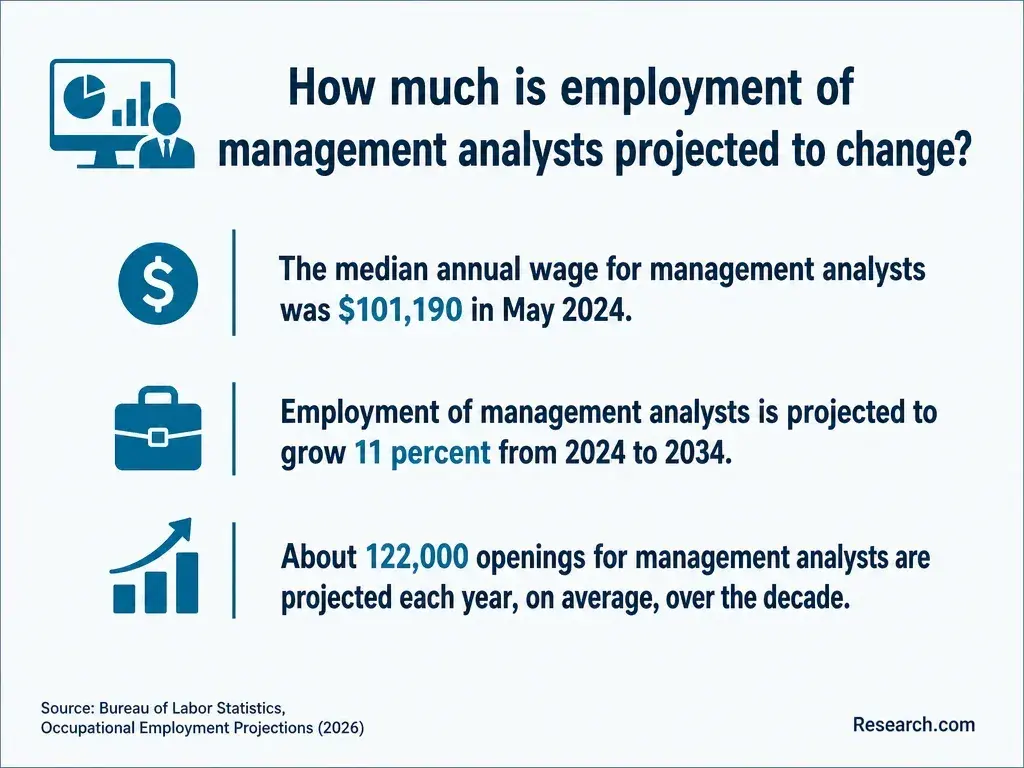
- Check the job, not the label: the U.S. Bureau of Labor Statistics reports a $101,860 median annual wage for management analysts in May 2025, but that occupation-wide figure is not an expected salary for either credential.
What Is the Difference Between a Business Administration Degree and Lean Six Sigma Black Belt?
A BS in Business Administration is an undergraduate academic degree covering several business functions. A Lean Six Sigma Black Belt is an advanced process-improvement qualification focused on reducing defects and variation, improving flow, and leading projects. "Black Belt program" may mean a training course, a course-completion certificate, or preparation for a separate certification exam; those are not interchangeable.
The comparison matters most when an employer specifies a credential. A Black Belt cannot satisfy a stated bachelor's-degree requirement, while a business degree alone does not demonstrate Black Belt-level methods or completed improvement work. If your target is specifically to coordinate projects rather than lead process analysis, compare project management degrees with prior-credit pathways before committing to either option.
Which Career Goals Fit a BS in Business Administration or Lean Six Sigma Black Belt?
Start with your current responsibility and the next job's tasks. The BS generally fits an early-career employee seeking wider access to business roles, or an experienced employee blocked by a bachelor's requirement. Black Belt training fits someone already involved in operations, quality, service delivery, or process analysis who can obtain data, work with stakeholders, and lead an improvement effort.
Neither path makes someone a manager on its own. For example, a warehouse supervisor moving toward supply chain leadership may need business finance and procurement knowledge as well as process-improvement skill. If the missing qualification is a degree, accelerated degree planning for supply chain undergraduates may be more relevant than a Black Belt; any advertised completion time still depends on accepted credits and course availability.
If your employer accepts documented project results for the role you want, the narrower credential may be the more direct next step. If you cannot access an appropriate project, consider introductory process-improvement training first rather than paying for advanced training you cannot yet apply.
What Are the Education and Certification Requirements for Each Path?
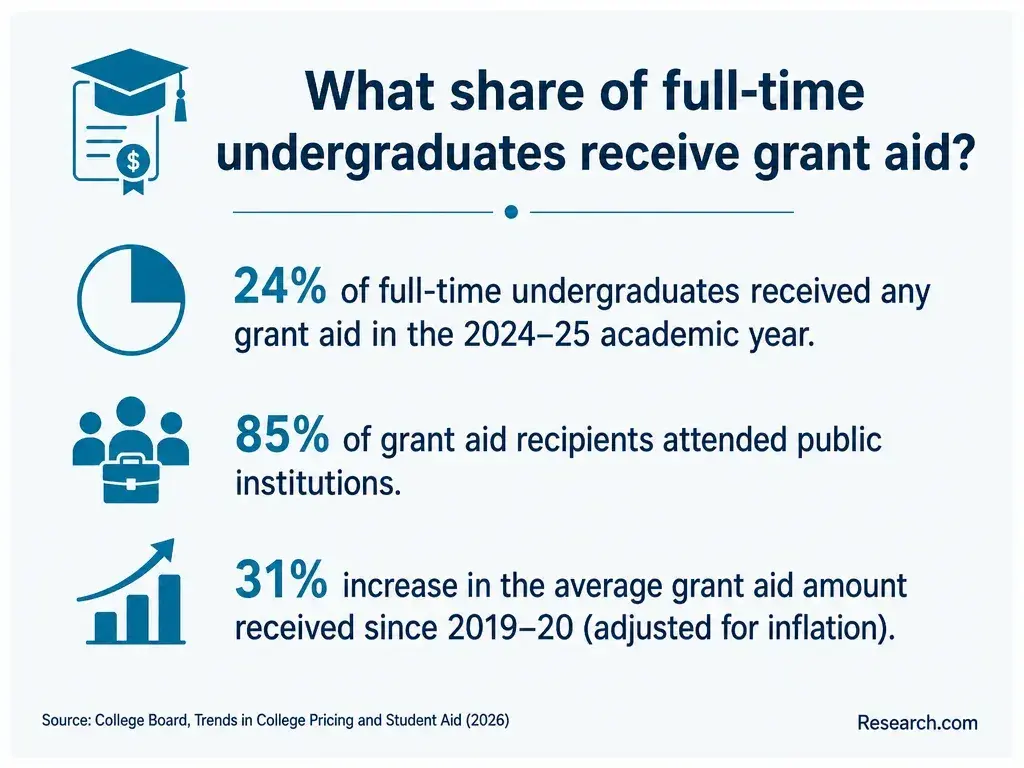
To earn a BS, students must complete their institution's general education, business, elective, and residency requirements. Prior college work can shorten the remaining path, but accepted transfer credits do not necessarily satisfy business-core requirements. Review required credits before entering business administration study, then request an official evaluation from the school you plan to attend.
Black Belt requirements depend on the awarding organization. Some providers award a training certificate after coursework; independent certifiers may require an exam, documented work experience, completed projects, or a combination. For example, ASQ's Certified Six Sigma Black Belt has experience and project-documentation requirements. Confirm the current rules with the certifier before paying for a preparatory course: finishing that course does not automatically award its certification.
Business administration courses commonly introduce accounting, finance, marketing, organizational behavior, operations, and quantitative decision-making. The mix and depth vary by school and concentration. That breadth helps when a process decision affects budgets, customers, staffing, and strategy - not just cycle time.
Black Belt instruction concentrates on defining a problem, measuring a baseline, analyzing causes, improving a process, and controlling the result, often called DMAIC. It may include process mapping, sampling, statistical analysis, and change management. To demonstrate these skills responsibly, learners need suitable data, stakeholder input, and permission to use workplace information; a classroom exercise is not evidence of an implemented improvement.
If your goal is a specific function such as HR, compare its specialized coursework and credential expectations separately. Understanding human resources degree levels can help distinguish broad business study from preparation targeted to HR work.
A bachelor's degree usually represents several years of undergraduate study, although prior credits and enrollment pace can change the remaining time substantially. Black Belt coursework is generally shorter, but completing any required workplace project can extend the timeline. Compare the time until you hold the actual qualification, not just the length of its classes.
There is no reliable single price for either option. Degree costs depend on remaining credits, tuition, fees, books, and time away from work; Black Belt costs may include training, an exam, retakes, and project support. For a degree comparison, use an official credit evaluation and itemized charges rather than an advertised starting price. Low-tuition pathways to a business administration degree are worth examining, but the lowest tuition rate may not produce the lowest completion cost.
Employer funding can change the decision. Ask whether it covers degree courses, certification exams, or both, and whether reimbursement arrives only after successful completion.
Neither format is inherently better. An online BS may suit an employed student, but group assignments, scheduled exams, and fixed deadlines can still limit flexibility. Campus study may make it easier to build local relationships and access on-site support. Compare the timetable and required activities, not the delivery label; accelerated bachelor's program comparisons are most useful when you also check the weekly workload.
Online Black Belt lessons can teach methods effectively, but they do not create access to a real improvement project. For either format, ask how instructors review statistical work, whether software is required, and how a project is supervised or assessed. Choose the setting in which you can practice the methods and get meaningful feedback.
Business bachelor's admission generally involves secondary-school credentials or previous college records; transfer applicants may face separate course or GPA rules for entry into the major. A school's admission decision, transfer-credit award, and final degree audit are distinct. If speed matters, check prerequisite sequences and remaining requirements before relying on faster-paced business degree study options.
Black Belt training providers may allow open enrollment, while certifying organizations can impose separate eligibility conditions. Ask for the exact credential name, the organization that issues it, and the experience or project evidence needed to earn it. If you have never led an improvement effort, admission to a course should not be mistaken for readiness to complete an advanced certification.
A BS can support applications for roles such as operations coordinator, procurement specialist, HR specialist, or project coordinator, subject to each employer's experience and skill requirements. A Black Belt may strengthen an experienced applicant for process-improvement, quality, or operational-excellence work. Neither credential by itself promises a particular job title.
Look at the tasks behind postings. An HR role may call for employee-relations knowledge; an operations role may value evidence of process measurement; a project role may prioritize scheduling and stakeholder coordination. If HR is your target and you already have college credits, HR bachelor's programs with flexible transfer pathways may be a closer match than either a general business degree or a Black Belt. Compare requirements against your existing work samples, not just your résumé's job titles.
Neither qualification has a single salary: wages are reported for occupations, not for everyone holding a particular degree or certification. The U.S. Bureau of Labor Statistics reports that management analysts earned a median annual wage of $101,860 in May 2025, with employment projected to grow 10% from 2025 to 2035. That occupation can involve improving organizational efficiency, but its median includes experienced workers and is not a starting wage or a Black Belt pay estimate.
For a useful financial comparison, identify jobs you could realistically pursue after each path, then compare their requirements with your current experience and the full cost of qualifying. A less expensive course may have limited value if the target employer requires a bachelor's; conversely, a full degree may be unnecessary if you already meet the educational requirement and need stronger project evidence. If project management is your goal, affordable online study routes in project management offer another cost comparison, but check whether those programs teach the skills named in your target postings.
How Can You Choose an Accredited and Reputable Program?
For a BS, verify the institution's recognized accreditation and confirm the exact degree, curriculum, transfer policy, and total remaining cost. AACSB, ACBSP, and IACBE business accreditation have different scopes; check whether a school's claim covers the program you are considering. When comparing economical online college programs in business, also ask about required-course availability and career support.
For Black Belt training, accreditation of the training provider is not the same as certification of an individual. Verify who awards the final credential, its exam and project rules, instructor qualifications, assessment methods, and any renewal requirements. Before enrolling in either path, bring a target job posting to an adviser or training provider and ask which stated requirements the program will - and will not - help you meet.
Other Things You Should Know About Business Administration
Possibly. Confirm the certifier's project rules and obtain employer permission before using internal data or presenting results. Academic credit, if you also pursue a degree, requires separate school approval.
It can be a sensible way to test your interest and build project experience. A Green Belt is not a universal prerequisite; check the requirements of the Black Belt credential you want.
Policies differ by issuer. Check the credential's current renewal, continuing-education, and fee rules before enrolling.
Yes, if you have permission to share it. Remove confidential, personal, and proprietary information, and distinguish your own contribution from the team's work.
- Career and Technical Education: A Primer | congress.gov https://www.congress.gov/crs-product/R47166
- Annual Earnings by Educational Attainment - COE https://nces.ed.gov/programs/coe/indicator/cba/annual-earnings
- Reasons to Become a Lean Six Sigma Black Belt | Georgia Tech Professional Education https://pe.gatech.edu/blog/industry-trends/Reasons-to-Become-a-Lean-Six-Sigma-Black-Belt
- Certification Programs vs. Degrees in Today's Market | Computer Systems Institute https://www.csinow.edu/blog/certification-programs-vs-degrees-in-todays-market/
- Green Belt & Black Belt: Lean Six Sigma Careers & Salary | Innovative Learning https://www.purdue.edu/leansixsigmaonline/blog/green-belt-and-black-belt-salary-comparisons-and-career-path-insights/
- How Long Does It Take to Get Your Business Degree? | UMass Global https://www.umassglobal.edu/blog-news/long-does-take-get-your-business-degree
- Certificate vs. Degree: Which Is Right for You? | UC San Diego Division of Extended Studies https://extendedstudies.ucsd.edu/news-events/extended-studies-blog/certificate-vs-degree-making-the-right-education-decision
- What Can I Do with a Business Administration Degree? | CTU https://www.coloradotech.edu/degrees/studies/business-and-management/articles/what-can-i-do-with-a-business-administration-degree
- Lean Six Sigma Certification: Overview & Career Options | sixsigmaonline.org https://www.sixsigmaonline.org/lean-six-sigma-certification/
- 21 Jobs You Can Get With a Business Management Degree | indeed.com https://www.indeed.com/career-advice/career-development/business-management-degree-jobs