2027 BS in Business Administration Decision Guide: An Open Admission Policy or Direct Entry to the Business Major
Audited and Verified:
Our Editorial and Data Verification Process
Research.com uses government datasets, official education statistics and primary institutional information to support its career and degree guides. Our review process checks factual accuracy, occupational definitions, source dates and the requirements associated with the credentials discussed.
How This Article Was Fact-Checked
Our editorial team verifies salary estimates, employment projections, education requirements and program information against original data providers and official organizations. Salary figures are checked against the relevant occupational definitions and reporting periods. Information about licensure, accreditation and required in-person training is reviewed separately.
Fact-checked and verified on:

Co-Founder and Chief Data Scientist
An offer of admission does not always mean you have a place in the business major. At one school, eligible applicants may enter a BS in Business Administration directly; at another, they may first enroll at the university and later compete for a place in business. This distinction matters if you need a predictable course sequence, are transferring credits, or must budget around work. This guide explains what each policy promises, what to verify in writing, and how to compare programs by your actual path to graduation - not just the ease of the initial application.
Key Things You Should Know
- Open admission is not necessarily admission to the business major. Check whether you can declare business immediately or must meet later GPA, prerequisite, or capacity rules.
- Direct entry can make the major pathway clearer, but it does not guarantee graduation. You must still satisfy course, academic-standing, and residency requirements.
- Compare the next required milestone, not just the acceptance decision. Ask each school for its major-admission policy, transfer-credit evaluation, and projected course sequence before committing.
What Is a BS in Business Administration?
A Bachelor of Science in Business Administration is an undergraduate degree built around general business functions such as accounting, finance, marketing, management, operations, and quantitative decision-making. Its exact curriculum depends on the school. A BS may emphasize quantitative coursework, but the initials alone do not establish how much math or analytics it requires compared with a BBA or BA in business.
For this decision, the crucial question is when you gain access to the degree's required business courses. Admission to a university, admission to a pre-business track, and admission to the BS major can be separate decisions. If your goal is specifically organizational leadership rather than a broad business core, compare the required courses and entry rules with faster bachelor's routes in organizational leadership.
How Do Open Admission and Direct Entry Differ for Business Majors?
Open admission generally means applicants who meet a school's stated baseline qualifications can enroll, subject to its actual policies. It does not necessarily remove requirements for a particular major. Direct entry means an applicant admitted under the program's rules enters the business major without a later competitive application. Some schools use other models, including pre-business status or conditional major admission.
The comparison below separates the initial admissions decision from the later hurdle that could affect your graduation plan. Confirm the precise policy for the campus, delivery format, and term you intend to enter.
| Admission model | What the offer establishes | What remains uncertain |
| Open admission with immediate major declaration | Eligible students can enroll and begin the business major. | Placement, prerequisite, course-availability, and graduation rules still apply. |
| Open admission to the institution, followed by business admission | Eligible students can enroll at the school. | A later application, GPA threshold, prerequisites, or limited major capacity may stand between enrollment and the BS. |
| Direct entry to business | Admitted applicants enter the major under the offer's terms. | Required courses, minimum grades, and continued academic standing still matter. |
The less obvious risk is paying for introductory courses without knowing whether a place in the major will follow. Ask admissions and the business school whether admission to business is automatic after specified requirements or competitive among qualified students. For a broader pool of schools to investigate, a nationwide comparison of online business programs is a starting point - not a substitute for checking each school's major-entry policy.
What Are the Admission Requirements for a Business Administration Bachelor's Degree?
Requirements vary by applicant and admission stage. First-year applicants may need a secondary-school credential and transcripts; transfer applicants usually need prior college transcripts. Schools may also set GPA or course requirements. A separate business-school application may require grades in introductory accounting, economics, mathematics, or statistics even when the university itself has an open admission policy.
Before applying, request a written answer to these questions from admissions or the business school:
- Will my offer name the BS in Business Administration major, a pre-business track, or only the institution?
- If business admission occurs later, what courses, grades, deadlines, and capacity rules apply?
- Which of my prior courses satisfy business prerequisites rather than counting only as electives?
- If I miss a requirement, can I repeat a course or reapply, and under which catalog policy?
Transfer students should send official transcripts for the school's evaluation; accepted credits are not necessarily credits applied to the major. Applicants from non-business backgrounds should distinguish required prerequisites from recommended preparation. If federal aid is part of your enrollment plan, investigate FAFSA-accepting colleges for business administration students, then confirm the specific program's aid eligibility with its financial-aid office.
Most programs combine general education with a business core and upper-level work. Common subjects include financial and managerial accounting, economics, finance, marketing, management, business law, statistics, and operations. A school may also require a concentration, internship, or capstone; none should be assumed without checking its catalog.
Course sequence matters more to this admissions decision than a course list alone. If accounting or statistics must be completed before upper-level business study - and before a separate major application - an open-admission route can take longer than its initial acceptance suggests. Request a term-by-term plan showing prerequisites and when required classes are offered. If your objective is primarily project coordination, compare the BS coursework with economical project management education online; a specialized route may fit better, though a degree or single course does not confer a professional certification.
Completion time depends on credits that apply to the degree, enrollment pace, prerequisite order, and course availability. Prior college work can shorten the path, but an accepted elective may not replace a required business course. A later application to the major can also create a wait between finishing prerequisites and starting upper-level classes.
Ask each school for a degree audit and a projected schedule based on your transcripts and intended pace. Mark the point at which you are guaranteed - or must apply for - business-major access. Compare that schedule with accelerated online degree programs only after checking whether the faster calendar requires a heavier workload or limits transfer options. Treat a preliminary estimate as a planning tool, not a graduation guarantee.
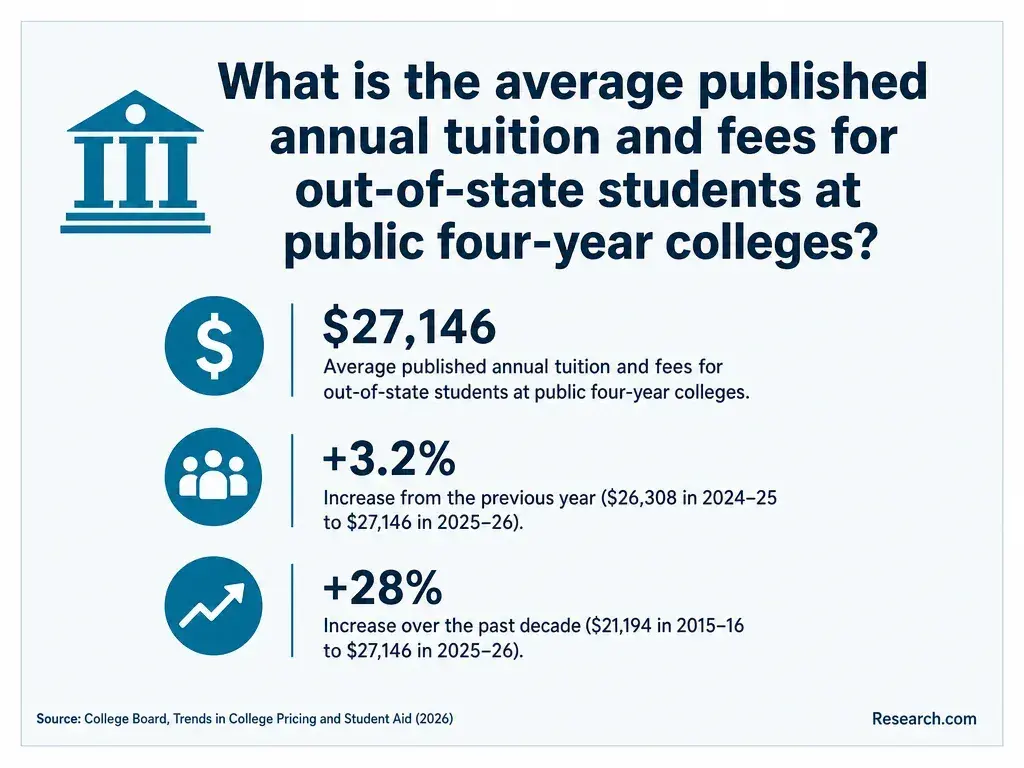
The meaningful comparison is the estimated cost to finish the BS, not the advertised tuition rate or application fee. Request an itemized estimate for remaining required credits, mandatory fees, books, software, travel, and any additional terms caused by prerequisites or delayed major entry. Check whether tuition is charged by credit, course, or term and whether the quoted rate applies to your residency and delivery format.
An open-admission option can be financially attractive if required courses are available and major entry is clear. It can be riskier if you must pay for prerequisite terms before learning whether you can enter business. Compare low-tuition pathways to a business administration degree using each school's written credit evaluation and aid offer. Grants reduce the amount owed; loans must generally be repaid. Neither should be assumed before eligibility is confirmed.
Neither format resolves an uncertain major-admission policy. Online study may reduce travel, while campus study may make scheduled classes and in-person networking easier. For working students, the decisive issue is whether required business courses - and any pre-major prerequisites - fit their available hours.
Ask about live attendance, group projects, exam proctoring, internship or campus visits, and whether required courses run in the terms you need. Confirm that the online and campus versions follow the same business-entry rules; do not infer that from a shared degree name. Working-adult business administration program comparisons can help identify options to investigate, but the current course schedule is the better test of feasibility.
Check institutional accreditation in the U.S. Department of Education's accreditation database or the accreditor's own directory, including the school and location offering your program. Separately, if a school advertises AACSB, ACBSP, or IACBE accreditation, check the business accreditor's directory for the exact scope. Institutional accreditation and business-school or programmatic accreditation are different claims.
Then examine the evidence most relevant to this decision: the current catalog's major-admission policy, a sample degree audit, required-course schedules, advising access, and published outcomes with their cohort definitions. Accreditation alone does not prove that students gain timely entry to the major or secure jobs. If comparing online business colleges with competitive costs, apply the same accreditation and course-availability checks to every finalist.
A BS in Business Administration can support applications for roles in operations, sales support, marketing coordination, human resources, and project coordination. Fit depends on your courses, work experience, and evidence that you can handle the role's tasks - not merely on admission to or completion of the major. Internships and supervised projects can help demonstrate spreadsheet work, professional communication, process analysis, or customer research.
Use your target role to test both programs. If supply chain work is the goal, check whether either BS offers relevant operations courses and applied experience, then compare it with supply chain bachelor's degrees in three years or less. A general business degree does not automatically qualify a new graduate for management, and specialized or regulated work may have separate requirements.
What Are the Salaries and Job Outlook for Business Graduates?
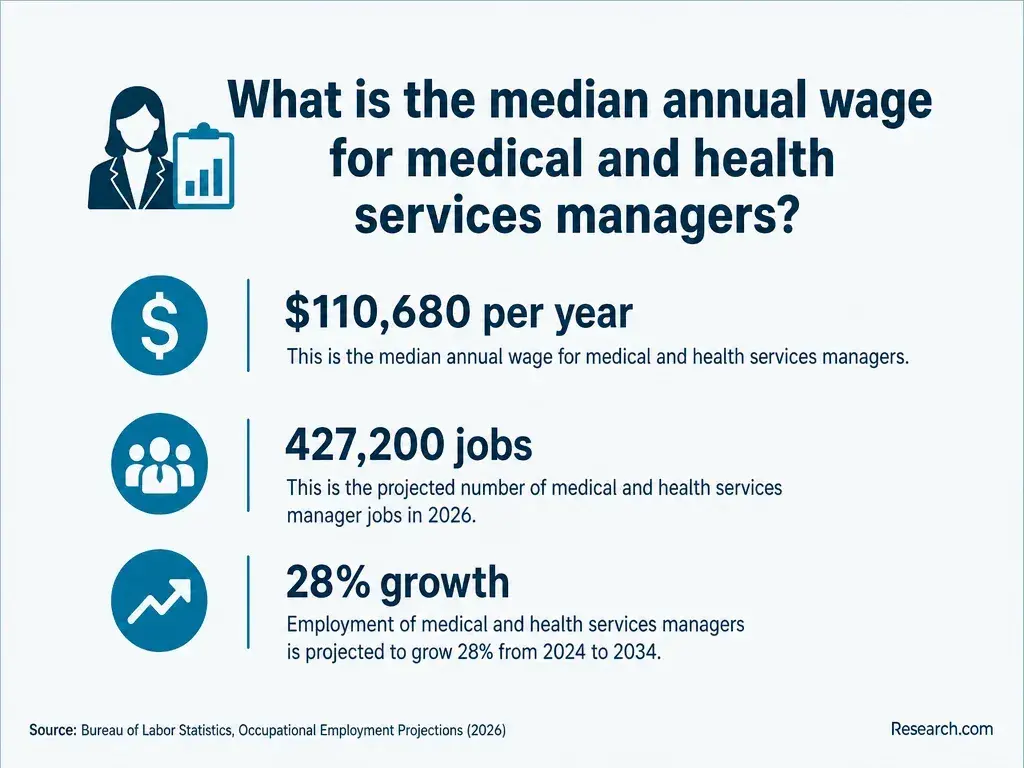
There is no single salary or growth rate for BS in Business Administration graduates: labor statistics track occupations, not the earnings of everyone with a particular degree. As one relevant example, the U.S. Bureau of Labor Statistics reports a May 2025 median annual wage of $75,940 for human resources specialists and projects 6% employment growth from 2025 to 2035. Those occupation-wide figures are not an expected starting salary or a promise of employment.
For a financial decision, compare the cost and time of each admission pathway against jobs you could realistically pursue given your experience. Account for borrowing rather than treating the wage median as guaranteed income. Students weighing a more specialized path can also review grants versus loans for project management bachelor's study when assessing how financing changes the cost of that alternative.
Other Things You Should Know About Business Administration
Often, but the change may require approval or a new application to the business school. Ask admissions whether it affects your offer, orientation, or assigned courses before requesting it.
Ask whether the school offers a defined pre-business route, when you may reapply, and whether meeting its stated criteria guarantees admission. Compare that route with an offer that already admits you to the major.
Not automatically. A school may assess prior learning for credit, but admission waivers and academic credit are separate decisions. Request the applicable policies before relying on either.
First ask when you will receive an official evaluation and whether your acceptance or deposit is refundable. Without a degree audit, you may not know how much coursework remains or whether prior classes meet business prerequisites.
- Major Changes for Applicants and Newly Admitted Students | ucsb.edu https://admissions.sa.ucsb.edu/major-changes
- Core Curriculum - Undergraduate | Master of Science in Financial Technology https://eccles.utah.edu/programs/undergraduate/core-curriculum/
- Jones College of Business Admission Policy | Jones College of Business Undergraduate Advising https://busadv.mtsu.edu/admission_policy/
- Business Majors | Information For - Undergraduate Admissions https://admissions.nd.edu/information-for/business-majors/
- Manning School of Business Admission Requirements | uml.edu https://www.uml.edu/catalog/undergraduate/business/policies/undergraduate-admission-requirements.aspx
- Admission Standards & Academic Policies | Barry S. Miller College of Business https://business.ucf.edu/centers-institutes/office-of-professional-development/cba-policies/
- Admission to Business Majors | Undergraduate Programs | UConn School of Business https://undergrad.business.uconn.edu/prospective/current-students/
- Restricted access to lucrative college majors harms underrepresented students most | Brookings https://www.brookings.edu/articles/restricted-access-to-lucrative-college-majors-harms-underrepresented-students-most/
- Admission and Certification Requirements | Herbert Wertheim College of Business https://wertheim.fsu.edu/undergraduate/admission-and-certification-requirements
- B.S. in Applied Economics & Management application requirements - Cornell SC Johnson College of Business https://business.cornell.edu/admissions/undergraduate/bs-aem/application-requirements/