2027 Security Specialist Careers: Skills, Education, Salary & Job Outlook

Co-Founder and Chief Data Scientist
Choosing a security specialist career means deciding whether you want a job built around protecting systems, data, and people from digital risk. The field can be demanding: employers often expect a mix of IT fundamentals, cybersecurity knowledge, hands-on troubleshooting ability, and recognized certifications. Technology also changes quickly, so the best candidates are not just trained once; they build the habit of continuous learning.
The upside is substantial for people who enjoy analytical work, pressure-tested problem solving, and practical defense. Employment is projected to grow 29% over the next decade, and median salaries are around $93,000. This guide explains what security specialists do, what skills and credentials matter, how salaries and advancement work, and how to decide whether this career path fits your goals.
Key Things You Should Know About Security Specialist Career
- The typical earning potential for a security specialist in the United States is around $78,700 per year, with most salaries ranging from $53,000 to $99,500.
- The field is highly stable and growing fast, with cybersecurity roles expected to increase by 32% from 2022 to 2032, reflecting strong demand and secure career prospects.
- A bachelor's degree in computer science, information technology, or a related field is usually required to start, along with certifications like CompTIA Security+, CISSP, or CISM to stand out.
- Success depends on skills such as network security, threat analysis, risk assessment, incident response, knowledge of security tools, problem-solving, attention to detail, and strong communication abilities.
- Career advancement often leads from entry-level specialist roles to senior specialist, security analyst, security manager, and can progress to leadership roles like Chief Information Security Officer with experience and advanced certifications.
What do security specialists do?
Security specialists help organizations prevent, detect, and respond to threats against their computer systems, networks, applications, and data. Their work supports business continuity: when security controls fail, organizations can face data loss, financial damage, downtime, legal exposure, and reputational harm.
The role is practical rather than theoretical. Security specialists review alerts, investigate suspicious activity, test for weaknesses, support incident response, document risks, and help enforce security policies. In smaller organizations, one specialist may cover a broad range of tasks. In larger employers, the role may be narrower, such as monitoring security tools, supporting compliance, handling endpoint protection, or assisting with vulnerability management.
A day in the life of security specialists
A typical day may include checking security dashboards, reviewing system logs, investigating alerts, updating tickets, meeting with IT teams, and documenting findings for managers or auditors. Some days are routine and focused on prevention. Others can shift quickly if a phishing campaign, malware infection, unauthorized login, or system vulnerability requires immediate action.
Security specialists usually work in office, remote, or hybrid environments. They often operate independently while still coordinating closely with network administrators, systems engineers, software teams, compliance staff, and leadership. The job rewards people who can stay calm, ask precise questions, and explain technical risks in plain language.
What are the key responsibilities of security specialists?
Security specialists are responsible for reducing cyber risk before incidents happen and supporting a fast, organized response when they do. The exact duties vary by employer, but most roles combine monitoring, testing, documentation, user education, and hands-on security tool management.
- Monitor systems and networks for suspicious activity, attempted breaches, policy violations, and vulnerabilities using security tools and alerting platforms.
- Perform security tests and assessments to identify weaknesses in hardware, software, networks, user access, and configurations.
- Install, configure, update, and maintain controls such as firewalls, antivirus tools, encryption systems, endpoint protection, and access safeguards.
- Support or develop security policies, incident response procedures, disaster recovery plans, and acceptable-use guidelines.
- Respond to incidents by helping contain threats, gather evidence, identify root causes, and coordinate remediation with IT and business teams.
- Train employees on cybersecurity practices such as password hygiene, phishing awareness, safe data handling, and reporting suspicious activity.
The most challenging vs. the most rewarding tasks
The hardest part of the job is often incident response. During a suspected breach, security specialists must work quickly with incomplete information, separate real threats from false positives, preserve evidence, and communicate clearly while systems or data may be at risk. Mistakes can be costly, so judgment matters as much as technical skill.
The most rewarding work is preventing damage before it occurs. Closing a serious vulnerability, stopping a phishing attack, improving access controls, or helping an organization recover cleanly from an incident can have a visible impact. If you want to enter the field faster, fast track college programs may help you build the academic foundation for these responsibilities more efficiently.
What are the key skills for security specialists?
Security specialists need both technical depth and professional judgment. Employers look for candidates who can use security tools, understand how systems are attacked, document findings, and work well with people who may not have a cybersecurity background.
The essential security specialist skills 2025 include hard skills such as:
- Intrusion detection: Monitoring systems for unauthorized access, abnormal behavior, and possible compromise.
- Malware analysis and mitigation: Recognizing malicious software, supporting containment, and helping remove or neutralize threats.
- Programming knowledge (Python, C, C++, SQL): Writing scripts, automating tasks, querying data, and supporting forensic or investigative work.
- Cloud security: Protecting cloud-based systems, identities, configurations, and data while supporting compliance requirements.
Soft skills are just as important because security work rarely happens in isolation. Strong candidates also show:
- Critical thinking: Evaluating evidence carefully instead of reacting to every alert as if it has the same severity.
- Problem-solving: Choosing workable fixes under time pressure and within business constraints.
- Communication skills: Translating technical findings into clear recommendations for managers, users, and IT teams.
- Adaptability: Adjusting as attackers, tools, infrastructure, and regulations change.
The one overlooked skill that separates the good from the great
One underrated skill is adversarial thinking: the ability to consider how an attacker might bypass controls, exploit habits, or chain small weaknesses into a larger breach. This mindset helps specialists move beyond checklist security and focus on real-world risk.
For example, a specialist may notice that a technically compliant system still exposes sensitive data because of weak user permissions, poor monitoring, or an overlooked third-party connection. That kind of foresight supports proactive defense rather than reactive cleanup.
Strong technical and analytical skills can open doors in high-paying sectors, especially finance and insurance, where security risk is closely tied to business risk. If you need a flexible starting point, the top online colleges with open admissions policies can help you compare accessible academic options for building relevant skills.
Starting a security specialist career is easier when you treat it as a sequence of skill-building decisions rather than one large leap. Most candidates progress from basic IT knowledge to hands-on security experience, then use certifications and specialization to qualify for stronger roles.
- Build foundational knowledge: Learn networking, operating systems, databases, basic programming, security principles, and common attack methods through a degree program, coursework, labs, or structured training.
- Gain practical experience: Look for internships, help desk roles, IT support jobs, home labs, capture-the-flag exercises, or volunteer projects that let you troubleshoot real systems and document your work.
- Obtain professional credentials: Use certifications to validate your skills, especially when you are moving from general IT into cybersecurity or competing for entry-level security roles.
- Specialize and advance: Choose a direction such as cloud security, incident response, vulnerability management, governance, or penetration testing based on your strengths and the roles available in your market.
- Pursue continuous learning and leadership: Keep current with tools, threats, and regulations while building the communication and project skills needed for senior or management roles.
A common mistake is trying to collect advanced credentials before developing practical ability. Employers often want proof that you can investigate problems, follow procedures, communicate clearly, and make sound decisions under pressure. Build a portfolio of labs, projects, reports, or work examples whenever possible.
The most common qualification for a security specialist role is a bachelor's degree in a computer-related field such as Cybersecurity, Computer Science, Information Systems, or Information Technology. Some employers consider candidates with an associate degree plus relevant experience, especially for roles connected to IT support, network administration, or security operations. However, a bachelor's degree is generally preferred for many security specialist positions.
Certifications can be especially useful because they show employers that your knowledge maps to recognized cybersecurity standards. Essential entry-level certifications include CompTIA Security+ from CompTIA and the Systems Security Certified Practitioner (SSCP) from ISC2.
Training does not end with school or certification. Internships, supervised workplace training, labs, and incident-response exercises help candidates apply security concepts in real environments. Federal or Department of Defense roles may require specific training such as the GS101.01 course, which includes eLearning and instructor-led sessions with practical exams.
Are advanced degrees or niche certifications worth the investment?
Advanced credentials can be valuable, but they should match your career target. A Master of Science in Cybersecurity or certifications such as CISSP or Certified Ethical Hacker may support advancement into senior, leadership, consulting, or specialized technical roles. They also require serious commitment: these options often cost $20,000 to $60,000 and require 1-2 years of study, with ongoing certification maintenance obligations.
For many security specialists, the strongest return comes from a bachelor's degree, entry-level certifications, and hands-on experience. Advanced degrees are most useful when you need them for leadership, research-heavy work, policy roles, or employers that clearly prefer graduate education. At the mid-level, many hiring managers still prioritize proven skills, incident experience, and relevant certifications over additional academic credentials.
Before committing to a program, compare tuition, accreditation, career services, flexibility, and how directly the coursework connects to roles you want. To see how cybersecurity-related education compares with other high-earning undergraduate paths, review the best bachelor degrees to make money.
Security specialist earning potential depends on experience, location, employer type, technical specialization, certifications, and level of responsibility. Entry-level security specialists earn around $46,825 per year, while seasoned professionals nearing senior-level roles often earn up to $98,557 annually.
The security specialist average salary 2025 sits at a median of $70,893 per year. Use that figure as a planning benchmark, not a guarantee. Compensation can vary widely between rural and urban labor markets, small employers and large enterprises, and industries such as government, finance, insurance, technology, healthcare, and professional services.
Salary growth usually comes from moving beyond basic monitoring into higher-responsibility work. Specialists who can lead incident response, secure cloud environments, manage compliance obligations, automate workflows, or design stronger controls may qualify for better-paying roles. Certifications and degrees can help, but they are most powerful when paired with documented experience and measurable results.
The job outlook for security specialists is strong. The projected growth rate is 33% from through 2033, much faster than the average for all occupations. Demand remains high because organizations rely on digital systems and must continuously defend against attacks, data exposure, fraud, ransomware, and operational disruption.
The key factors shaping the future outlook
The first major factor is the increasing frequency and sophistication of cyber threats. Attackers continue to target cloud platforms, user credentials, third-party vendors, endpoints, and poorly configured systems. Organizations need trained specialists who can help identify and reduce those risks.
The second factor is the expansion of digital infrastructure. Cloud computing, Internet of Things (IoT) devices, remote work environments, and interconnected business systems create more points of exposure. Each new platform or device can introduce additional security requirements.
The third factor is regulation. Frameworks such as GDPR and CCPA require organizations to take data protection and compliance seriously. Employers often need security specialists who can support audits, document controls, train users, and help maintain defensible security practices. Flexible programs at accredited non-profit online universities may help working adults prepare for these needs while continuing to gain experience.
Security specialist work is usually collaborative, even when much of the analysis is done independently. Specialists may spend long stretches reviewing logs, alerts, vulnerabilities, or documentation, but they must also coordinate with IT teams, managers, vendors, auditors, and end users. Cybersecurity is rarely a solo function because risk touches systems, people, policies, and business operations.
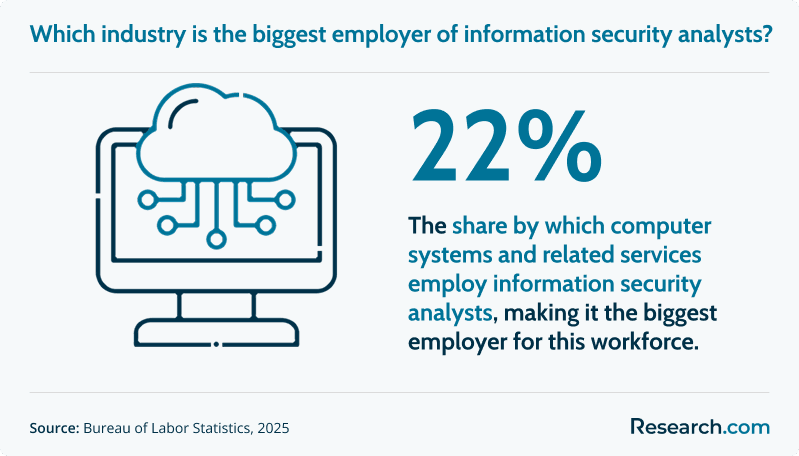
Common work settings include companies in computer systems design and related services, finance, and insurance industries, as well as government agencies, healthcare organizations, schools, and large businesses with internal IT departments. Remote and hybrid work are common for monitoring, analysis, reporting, and some support tasks. Sensitive investigations, hardware-related work, classified environments, or regulated operations may require on-site presence.
Schedules are usually full-time and may follow standard business hours. However, security incidents do not always happen during the workday. Some roles require evening, weekend, holiday, or on-call work, especially in security operations centers, incident response teams, and organizations that run critical systems around the clock.
A security specialist career can be meaningful, stable, and intellectually engaging, but it is not low-pressure work. The best fit is someone who can handle responsibility, keep learning, and stay focused during uncertain situations.
Pros
- Clear purpose: The work protects people, systems, data, and business operations from real harm.
- Strong problem-solving opportunities: Specialists investigate complex issues and make decisions that can improve an organization’s security posture.
- Variety: Tasks may include monitoring, training, testing, response, documentation, and collaboration across teams.
- Career mobility: The role can lead into engineering, incident response, cloud security, governance, consulting, or leadership.
Cons
- High stress during incidents: Active threats require speed, accuracy, and calm communication.
- Continuous learning demands: Tools, threats, platforms, and regulations change frequently.
- Heavy responsibility: Missed alerts, weak controls, or poor communication can have serious consequences.
- Routine work: Monitoring, documentation, ticket updates, and compliance tasks can be repetitive but are still essential.
If the pros appeal to you but you need a flexible path into the field, the best affordable online schools for job holders can help you compare options designed for working adults.
Security specialist career advancement opportunities are broad because cybersecurity has multiple tracks. Some professionals move into senior technical roles, while others shift toward management, consulting, architecture, compliance, or specialized response work.
Clear promotion paths for cybersecurity specialists
- Entry-level security specialist (Security Analyst or SOC Analyst): Monitors systems, reviews alerts, escalates suspicious activity, supports investigations, and follows established response procedures.
- Mid-level security specialist (Senior Analyst, Security Engineer, Security Manager): Handles escalated incidents, improves controls, leads projects, mentors junior staff, and helps shape security processes.
- Leadership roles (Security Manager, Security Architect, CISO/CSO, Security Consultant): Designs enterprise security strategies, manages teams or clients, aligns security investments with business priorities, and oversees organizational risk.
Key specialization areas to advance your career
- Cloud security: Protect cloud infrastructure, identities, workloads, configurations, and data as a Cloud Security Specialist or DevSecOps Engineer.
- Penetration testing & red teaming: Simulate attacks to identify weaknesses before real attackers exploit them.
- Incident response & forensics: Investigate breaches, preserve evidence, contain threats, and support recovery.
- Governance, risk, and compliance (GRC): Align security policies, controls, and documentation with legal, regulatory, and industry requirements.
- Application security: Identify and reduce software vulnerabilities during development and deployment.
To advance, focus on evidence of impact. Examples include reducing false positives, improving response times, closing high-risk vulnerabilities, automating repetitive tasks, passing audits, or leading cross-functional security improvements. Promotions often follow from trust, communication, and demonstrated judgment as much as from technical credentials.
If you are interested in cybersecurity but unsure whether security specialist is the best fit, compare adjacent roles. Many share similar foundations but differ in how much time they spend on analysis, engineering, consulting, monitoring, or physical protection.
- Security Analyst: Focuses on identifying threats, assessing risk, reviewing alerts, and recommending mitigation strategies.
- Security Engineer: Designs, implements, and maintains technical security systems, often requiring stronger infrastructure and configuration skills.
- Security Consultant: Advises organizations on security strategy, assessments, policies, and improvements, often across multiple clients or projects.
- Security Operations Center (SOC) Analyst: Provides continuous monitoring and rapid response support, often in shift-based environments.
- Physical Security Specialist: Protects facilities, people, and physical assets through risk analysis, access control, procedures, and security planning.
Choose based on your preferred work style. If you like real-time investigation, SOC work may fit. If you enjoy building systems, consider security engineering. If you prefer policy, audits, and risk conversations, GRC may be stronger. If you want variety and broad organizational exposure, security specialist or consulting roles may be a better match.
- Earl: "I wanted to protect vulnerable communities from the increasing wave of online abuse and fraud, especially within LGBTQIA+ spaces where such threats can be silent but severe. Enrolling in a cybersecurity boot camp was my first step toward gaining the concrete skills needed to fight back against data theft and digital mistreatment. Through hands-on labs and instructor support, I learned how to identify vulnerabilities and design defenses that actually make a difference. Knowing that my work helps create a safer internet gives me a deep sense of purpose every day."
- Sybil: "Starting out with no technical background, it was tough facing job listings that demanded years of experience before even getting a foot in the door. The feeling of self-doubt was real as I took on challenging modules and labs designed to push my limits. What helped me most was having mentors who understood my struggles and who helped me translate all my past experiences into concrete strengths for the cybersecurity job market. Their guidance turned that overwhelming gap into a clear, achievable path."
- Dorian: "Completing the Ethical Hacking Boot Camp was empowering - I gained not just knowledge but the confidence to speak up as a security expert with a unique perspective. I especially value being able to bring a trans voice into security conversations where diverse representation is rare and sorely needed. When colleagues and recruiters recognize my expertise and connect with me on LinkedIn, it reinforces how important visibility is in this field. It's rewarding to feel respected and to contribute meaningfully to securing the digital world."
Key Findings
- Security specialists protect networks, systems, applications, data, and users by monitoring threats, testing controls, supporting incident response, and improving security practices.
- The career requires a mix of IT fundamentals, cybersecurity knowledge, hands-on practice, communication skills, and continuous learning.
- A bachelor's degree in Cybersecurity, Computer Science, Information Systems, or Information Technology is commonly preferred, though some roles may accept an associate degree plus relevant experience.
- CompTIA Security+ from CompTIA and the Systems Security Certified Practitioner (SSCP) from ISC2 are key entry-level certifications to consider.
- Entry-level security specialists earn around $46,825 per year, the security specialist average salary 2025 is a median of $70,893 per year, and seasoned professionals nearing senior-level roles often earn up to $98,557 annually.
- The outlook is strong, with employment projected to grow 29% over the next decade and a projected growth rate of 33% from through 2033.
- Advancement can lead to roles in cloud security, penetration testing, incident response, forensics, GRC, application security, security architecture, consulting, or leadership.
Other Things You Should Know About Security Specialist
Employers often value CompTIA Security+ for entry-level roles, CISSP for experienced specialists, and Certified Ethical Hacker for offensive-security work. ISC2, CompTIA, and EC-Council issue these credentials. Many postings also ask for one to three years of hands-on security experience alongside certification.
The job outlook for security specialists in 2027 is positive, with a projected increase in demand due to the rise in cyber threats across industries. As organizations invest in stronger cybersecurity measures, the need for skilled security specialists equipped to protect sensitive data and infrastructure is growing.
- Security Specialist Salary in Warsaw, Poland (2025) - ERI SalaryExpert https://www.salaryexpert.com/salary/job/security-specialist/poland/warsaw
- security specialist https://www.randstad.ca/job-seeker/job-profiles/security-specialist/
- Security Consultant - Alternative Careers and Similar Jobs (Updated for 2025) https://resumeworded.com/career-profiles/security-consultant-career-profile
- Essential skills and careers in information security - H-X Technologies https://www.h-x.technology/blog/essential-skills-careers-information-security
- How to Become a Cybersecurity Specialist https://cybersecurityguide.org/careers/security-specialist/
- Target Security Specialist Job Description https://corporate.target.com/careers/career-areas/stores/hourly/security-specialist
- Top 20 Security Specialist Interview Questions and Answers (Updated 2025) https://www.cvowl.com/blog/security-specialist-interview-questions-answers
- Understanding the Security Specialist Role & How to Become One | Sep 11, 2025 https://www.readysethire.com/job-search/position-overview/security-specialist
- Example Career: Security Management Specialists https://www.wvu.edu/academics/careers/security-management-specialists