2027 Return on Investment of an Online Sports Management Bachelor's Degree: Salary vs Cost

Co-Founder and Chief Data Scientist
Many professionals with unrelated undergraduate degrees consider an online sports management bachelor's degree to enter the growing sports industry but wonder if the investment justifies the financial and time commitments. The Bureau of Labor Statistics reports a 10% employment growth rate in sports-related occupations through 2031, indicating expanding opportunities.
However, average salaries vary widely, creating uncertainty about potential returns. This article analyzes salary outcomes versus tuition costs to provide a clear picture of return on investment. It aims to help prospective students make informed decisions about pursuing an online sports management bachelor's degree in today's competitive market.
Key Things to Know About the Return on Investment of an Online Sports Management Bachelor's Degree
- Average tuition for online sports management bachelor's degrees ranges from $15,000 to $40,000, significantly lower than many traditional programs, offering budget-conscious students affordable pathways to graduation.
- Graduates report median starting salaries near $50,000, with experienced professionals earning upwards of $75,000, highlighting positive salary growth relative to investment.
- Beyond salary, the degree enables career advancement, increased job security, and access to professional networks critical for long-term success in sports management.
What Is the True Cost of Earning an Online Sports Management Bachelor's Degree From Enrollment to Graduation?
Costs associated with earning an online sports management bachelor's degree extend beyond tuition, encompassing various direct and indirect expenses. These are crucial for students balancing budgets and career goals.
- Tuition Fees: Published tuition rates vary significantly by school, ranging from $15,000 to over $40,000 for the entire program. However, many students pay considerably less after factoring in grants, scholarships, and institutional aid, which can reduce out-of-pocket expenses by 30% to 50%, according to data from the National Center for Education Statistics, IPEDS, and individual university net price calculators.
- Technology and Course Fees: Online sports management degree programs frequently charge additional fees, typically between $200 and $800 annually, to maintain digital platforms, learning management systems, and other technologies essential for coursework delivery.
- Textbooks and Materials: While online courses often utilize digital resources, students may still encounter costs of $1,000 to $2,000 for specialized textbooks, case studies, or software licenses necessary to complete the curriculum successfully.
- Proctoring and Exam Costs: Some institutions require online proctoring for exams, adding several hundred dollars over the program's duration. These fees generally range from $50 to $150 per proctored test.
The total estimated cost of an online sports management bachelor's degree usually falls between $20,000 and $45,000. These figures provide a realistic baseline for prospective students to evaluate their financial investment compared to expected salary outcomes and career benefits.
For those exploring healthcare fields, comparing these expenses with similar investments in online pharmacist programs can offer additional perspective on education costs and returns. Keeping the cost of earning an online sports management bachelor's degree in mind, it is essential to weigh financial aid opportunities and institutional choices for optimal ROI.
How Does the Starting Salary for Sports Management Bachelor's Degree Graduates Compare to the Total Cost of the Degree?
The starting salary for graduates with a bachelor's degree in sports management typically varies depending on the specific career path. According to Bureau of Labor Statistics (BLS) data, median annual salaries for entry-level roles such as event coordinators, sports agents, or assistant athletic directors generally range from $40,000 to $50,000.
This provides a foundation to evaluate how soon one can recover the degree's cost after graduation. The starting salary for sports management bachelor's graduates in the US offers realistic salary expectations for those entering the workforce.
Comparing these salaries to the total tuition cost versus salary outcomes for sports management degrees clarifies financial planning. Tuition and fees for an online sports management degree can range widely, approximately $20,000 in best-case scenarios with financial aid, and upwards of $60,000 without significant aid.
Dividing the cost by the salary suggests a payback period of about 6 to 9 months in low-cost cases, while higher costs can extend repayment to 18 months or more. For those seeking cost savings, programs such as the cheapest online BSN programs may offer insight into managing tuition expenses.
It is important to remember that starting salary marks only the beginning of financial growth in this field. The BLS projects healthy salary increases as professionals gain experience and take on greater responsibilities, often doubling their initial salary over a decade.
This progression enhances the long-term return on investment beyond the initial compensation and tuition considerations.
What Is the Average Return on Investment (ROI) for an Online Sports Management Bachelor's Degree Over a 10-Year Career?
Return on investment (ROI) in higher education measures the financial gain a graduate achieves by comparing total costs of their degree with the additional earnings they make over time versus those without the degree.
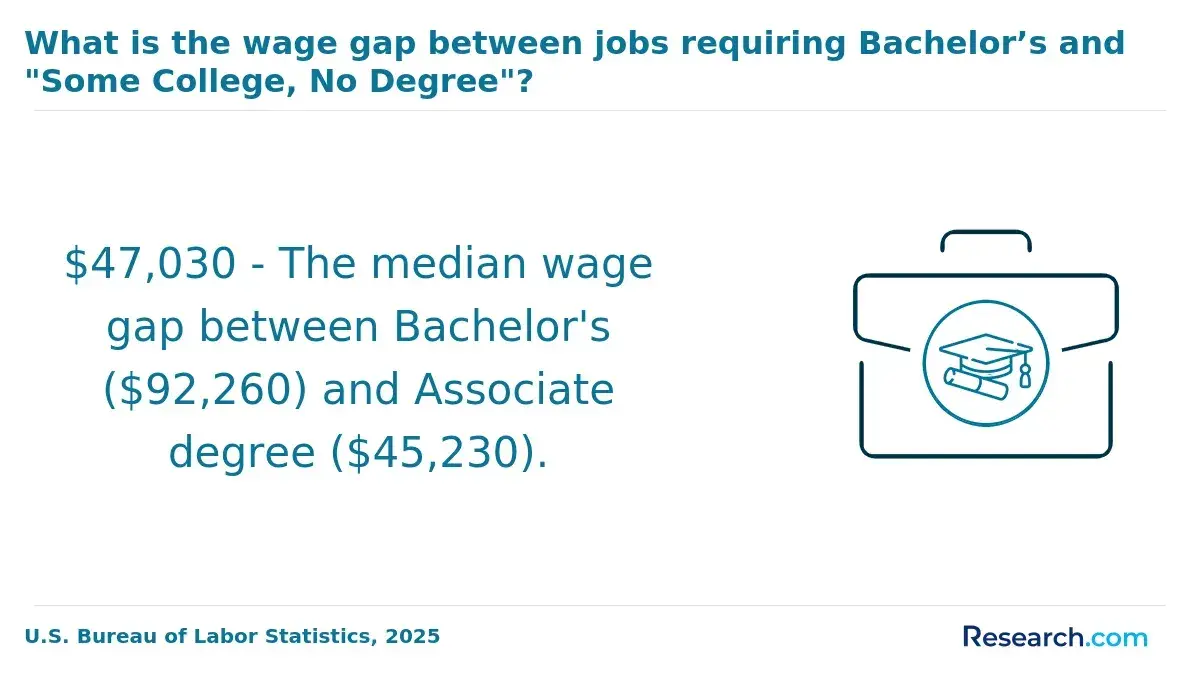
This is commonly calculated over a 10-year span, contrasting cumulative wages of bachelor's degree holders against those with only a high school diploma or associate degree in the same field. Georgetown University's Center on Education and the Workforce and PayScale's College ROI Report provide benchmarks showing that bachelor's degrees generally offer a meaningful financial uplift, though returns vary by discipline.
For an online sports management bachelor's degree, median starting salaries for related roles like athletic trainers and sports agents register around $55,000 annually, based on Bureau of Labor Statistics data.
Assuming a 3% yearly salary increase, total earnings over a decade approach $620,000. In comparison, individuals with only a high school diploma typically start near $35,000 with 2% yearly raises, totaling roughly $400,000 over 10 years. Deducting program costs-usually between $40,000 and $60,000-yields a net income increase of approximately $160,000 to $180,000 over this period.
A professional who enrolled in an online sports management bachelor's degree after thoroughly evaluating the financial implications shared that "balancing work, school, and family was overwhelming at times, but I carefully planned my budget knowing the degree's earning potential."
He described the process as "a calculated risk worth taking," emphasizing that the financial forecast and flexible online format helped him stay motivated. "Seeing clear numbers made the decision less daunting, and now I'm progressing in my career with confidence the degree was a smart investment."
How Do Online Sports Management Program Tuition Rates Compare Across Public, Private, and For-Profit Institutions?
- Public Institutions: These universities offer some of the most affordable tuition rates for an online sports management degree tuition comparison, particularly for in-state students. Many have flat-rate online tuition fees between $7,000 and $15,000 per year, simplifying budgeting. However, out-of-state students might face higher rates, which can impact overall costs. Public schools often balance cost with reasonable graduation rates, presenting a solid option for budget-conscious learners and working professionals.
- Private Nonprofit Colleges: Tuition at these institutions typically ranges from $20,000 to $40,000 annually. Although the upfront cost is higher, strong graduation rates, respected reputations, and robust alumni networks often enhance job prospects and long-term return on investment. These factors make private nonprofits appealing for students valuing career advancement and professional development.
- For-Profit Institutions: These schools often advertise lower tuition under $15,000 per year, making them appear budget-friendly. However, challenges such as lower graduation rates and skepticism from some employers regarding credibility may hinder salary growth and career progression. This can reduce the overall ROI despite initially lower costs.
Careful evaluation of cost differences in sports management programs by institution type is crucial. The cheapest options do not always yield the best financial returns when considering graduation success and employer recognition. Prospective students should also investigate outcomes data and institutional effectiveness.
For those interested in accelerated healthcare tracks alongside their sports management studies, exploring fast track medical programs might provide valuable insight into similar cost-versus-outcome dynamics.
What Long-Term Salary Growth Can Sports Management Bachelor's Degree Holders Expect Over a 20- to 30-Year Career?
- Early Career Growth: Entry-level salaries for sports management graduates typically fall between $45,000 and $55,000 per year. During the first five years, wage increases are gradual as individuals gain foundational knowledge and build industry connections.
- Mid-Career Acceleration: After five to ten years, salaries generally rise more sharply, reflecting promotions to supervisory or managerial roles like assistant sports director or marketing coordinator. Data from PayScale shows wages in this phase often reach $65,000 to $80,000.
- Advanced Career Milestones: With 15 to 20 years of experience, professionals frequently obtain senior leadership positions such as athletic director or sports operations manager, where salaries surpass $90,000. This stage showcases the impact of accumulated expertise and expanded managerial duties.
- Lifelong Earnings Premium: Over a 30-year career span, holding a bachelor's in sports management can add approximately $500,000 to $750,000 in lifetime earnings compared to peers without a degree, reflecting both higher starting pay and steady advancement.
- Career Security and Advancement: Beyond financial gain, degree holders often enjoy enhanced job security and access to specialized roles in areas like sports marketing, compliance, or facility management, supporting long-term professional growth.
A professional who forged her path after completing an online sports management bachelor's degree shared that navigating the early years meant balancing part-time work while studying. She recalls feeling uncertain about immediate payoffs but emphasizes how gaining practical experience alongside education built her confidence.
Over time, she witnessed tangible salary improvements aligned with increased responsibilities and leadership roles, underscoring that persistence and continual skill development are key. She noted, "The degree opened doors, but it was the consistent commitment to learning and adapting that truly advanced my career."
How Does the ROI of an Online Sports Management Bachelor's Degree Compare to an Associate Degree or a Professional Certificate?
When evaluating the return on investment for online sports management credentials, cost and career outcomes vary significantly across degree types.
- Cost Difference: A bachelor's degree in sports management typically requires four years and 120 credits, with tuition ranging from $20,000 to $40,000. Associate degrees take about two years to complete and cost between $6,000 and $15,000. Professional certificates usually can be finished in under a year, with prices spanning from $1,000 to $5,000 depending on the program.
- Median Salary: Median annual pay for bachelor's degree holders in sports management roles ranges from $50,000 to $70,000, according to Bureau of Labor Statistics data. Those holding an associate degree earn closer to $35,000 to $45,000, while certificate holders often start in entry-level jobs with median salaries between $25,000 and $35,000.
- Short-Term Investment: For individuals needing quicker entry into the workforce or who have limited upfront funds, certificates and associate degrees offer appealing options. Certificates focus on fast-tracking skills for niche roles such as sports marketing assistants or operations coordinators with minimal financial exposure. Associate degrees provide a balance between cost and credentials, sometimes serving as a foundation for transferring credits toward a bachelor's program.
- Long-Term Return: The bachelor's degree offers enhanced earning potential and broader career pathways over time. Graduates are qualified for leadership and management positions in athletic administration that typically pay higher salaries and offer more stability. A comprehensive curriculum also fosters stronger professional networks and skill development valued in the sports industry.
- Decision Framework: Candidates should assess their financial resources, career goals, and timeline. Those seeking minimal debt and rapid employment may find certificates or associate programs more suitable. Conversely, those targeting leadership roles and maximum salary growth might consider investing in a bachelor's degree despite the longer time and higher expenses.
- Non-Financial Returns: Beyond income, bachelor's degree holders often experience greater job security, more opportunities for advancement, and a well-rounded skill set, making it a valuable long-term credential in sports management.
Which Online Sports Management Specializations or Concentrations Yield the Highest Earning Potential After Graduation?
Graduates specializing within an online sports management bachelor's degree often experience higher median salaries compared to those with a generalist background, according to the Bureau of Labor Statistics (BLS).
Choosing the right concentration can significantly influence salary outcomes and return on investment.
- Sports Marketing and Promotion: Median salaries range from $65,000 to $75,000 annually. Roles focus on sponsorship coordination, brand management, and advertising. This specialization emphasizes digital marketing and fan engagement strategies and generally does not require additional certification, keeping costs low.
- Sports Analytics and Data Management: Median salaries are approximately $70,000 to $80,000. This track develops skills in data interpretation and performance metrics critical to professional and collegiate sports. Additional certification in data analysis software or advanced statistics may increase costs but improve competitiveness.
- Facility and Event Management: Graduates earn median salaries near $60,000 to $70,000. This specialization targets operations of sports venues and large-scale events. Some positions recommend certifications in event planning or facility management, slightly raising training costs but providing strong job security.
- Athlete Representation and Sports Law: This niche often requires supplemental education such as paralegal certification or contract law licensure. Though investment is higher, salaries can exceed $80,000, reflecting the specialized skills required for contract negotiation and compliance.
Generalist sports management graduates typically see median incomes between $50,000 and $60,000. Students should consider how certification costs and time commitments balance against the salary premium for technical or legal specialties.
These factors help optimize time-to-ROI based on prior experience and career goals, especially for budget-conscious first-generation students and working professionals.
How Do Employer Tuition Reimbursement and Financial Aid Reduce the Net Cost of an Online Sports Management Bachelor's Degree?
Employer tuition reimbursement programs can substantially reduce the net cost of an online sports management bachelor's degree by covering a significant portion of tuition expenses. Under IRS Section 127, employers may offer up to $5,250 annually in tax-free tuition benefits, which do not count as taxable income.
Many companies structure these programs to cover either a fixed percentage or the full tuition cost, depending on specific policies and an employee's length of service. Data from the Society for Human Resource Management (SHRM) reveals that about 60% of U.S. employers provide some form of tuition assistance, indicating strong corporate backing for continuing education.
Alongside this employer support, federal and institutional financial aid further lowers the actual cost of an online sports management bachelor's degree. Grants and scholarships, which require no repayment, reduce tuition bills directly. Federal programs like Pell Grants and subsidized loans offer low-interest rates and deferred payment options during enrollment.
Students often combine these resources with employer reimbursement to shrink their education costs significantly, improving affordability for working professionals and first-generation college students on a tight budget.
To illustrate, a working student enrolled in a $30,000 total tuition program could receive $5,250 annually from employer reimbursement and $10,000 through federal aid. This combined support reduces the out-of-pocket tuition to roughly $14,750, excluding living expenses.
Leveraging these benefits can also enhance non-financial returns such as career advancement, job security, and professional growth, critical factors for those evaluating the true value of their investment. Readers interested in career potential may also explore the job outlook for medical billing and coding, which offers insights on a related healthcare profession.
What Hidden Costs Should Students Factor Into the Total Investment of an Online Sports Management Bachelor's Degree?
When calculating the return on investment for an online sports management degree, many students overlook additional expenses beyond tuition that significantly affect the total cost. These hidden costs include technology fees, proctoring services, graduation fees, course-specific software licenses, and professional organization memberships.
According to College Board research and institutional disclosures, these added expenses can total $1,000 to $2,000 or more over a typical bachelor's program. This increase can delay the break-even timeline for recouping educational investments through salary gains.
Technology fees range from $100 to $300 per semester, covering online learning platforms, software updates, and tech support vital for remote coursework. Proctoring services for exams typically cost between $30 and $50 each and accumulate over multiple tests.
Graduation fees near $100 compensate administrative costs for degree conferral. Some courses require specialized software licenses costing $50 to $200 per class to facilitate sports analytics or management simulations. Additionally, annual fees from professional organization memberships, recommended or required for networking and resources, range from $80 to $150.
For students managing tight budgets, factoring in these online sports management degree additional expenses is essential for realistic financial planning. These costs impact not only tuition affordability but also the length of time needed to realize a positive financial return on the degree.
Requesting a comprehensive cost-of-attendance breakdown that includes all extra fees before choosing a program helps avoid unexpected charges and supports informed decisions aligned with career goals. Comparing programs with verified salary outcomes, such as those reported by the Bureau of Labor Statistics and IPEDS, offers a clearer picture of both financial and non-financial returns.
When exploring related fields, investigating an exercise science and nutrition degree online can provide additional perspectives on investment and career pathways.
How Does the Accreditation Status of an Online Sports Management Program Affect Graduate Salary and Employability?
Regional accreditation evaluates the overall quality of an institution and is widely respected by employers, graduate programs, and licensure boards. Programmatic accreditation targets specific academic disciplines but may not hold equal value across all hiring contexts unless granted by a recognized authority in sports management or business.
According to surveys by the National Association of Colleges and Employers (NACE), hiring managers strongly prefer degrees from regionally accredited schools, linking them to better-prepared candidates and more competitive salary offers.
The Society for Human Resource Management (SHRM) supports these findings, noting that graduates from fully accredited programs often benefit from faster hiring processes and quicker career advancement.
Choosing an online sports management program without proper accreditation can restrict access to important opportunities, including eligibility for professional licensure exams, admission to graduate schools, and positions in government or healthcare sectors that demand regionally accredited degrees.
Prospective students should confirm program accreditation through trusted sources like the U.S. Department of Education's database or the Council for Higher Education Accreditation (CHEA) before committing.
What Entry-Level Job Titles and Salary Ranges Are Available to Graduates of Online Sports Management Bachelor's Programs?
Graduates with an online sports management bachelor's degree often start in roles that vary widely in salary based on industry and credentials. Entry-level positions typically include:
- Sports Marketing Coordinator: Median pay ranges from $40,000 to $50,000, with technology and entertainment sectors generally offering the highest earnings due to larger marketing budgets.
- Athletic Trainer Assistant: Starting salaries fall between $35,000 and $45,000, especially within healthcare and education. Professional certifications can elevate wages even for beginners.
- Event Coordinator: Compensation usually ranges from $38,000 to $48,000. These roles are common in sports teams, event planning firms, or government agencies.
- Sports Analyst: Entry pay is around $42,000 to $52,000, particularly within media and finance industries that emphasize data analysis.
- Facilities Manager Assistant: Earnings often range from $37,000 to $47,000, with education and recreation departments being common employers. Experience or internships can enhance starting salaries.
- Sales Representative (Sporting Goods): Initial pay typically falls between $36,000 and $46,000, often supplemented by commissions in retail or wholesale sectors.
- Community Outreach Coordinator: Salaries usually range from $34,000 to $44,000, mostly within nonprofit and government organizations. Volunteer experience can increase starting pay.
- Sports Program Administrator: Starting earnings average $40,000 to $50,000, primarily in education and municipal recreation. Specializing in program management may accelerate growth early on.
Internships and targeted certifications-such as Certified Athletic Administrator or digital marketing credentials-can significantly boost entry-level salaries.
Graduates entering higher-paying sectors like technology or finance often see quicker returns on their tuition investment. This range of roles reflects the diverse career opportunities available and the varying timeline for recovering educational costs through employment.
What Graduates Say About the Return on Investment of Their Online Sports Management Bachelor's Degree
- Benny: "Choosing the online sports management bachelor's degree was a deeply calculated decision for me-I compared the cost against the potential career benefits and realized the ROI was very promising. The flexibility of studying online allowed me to work simultaneously, which enhanced my practical understanding and made the tuition feel like a solid investment. Since graduating, I've seen notable growth in both my income and professional network, confirming the long-term value of this program."
- Greyson: "The non-financial returns of the online sports management bachelor's degree have been invaluable-beyond salary, it opened doors to leadership roles and provided job security in a competitive market. Reflecting on my experience, I appreciate how the curriculum's real-world focus and remote delivery helped me balance life responsibilities while preparing for career advancement. The degree truly paid off in ways that transcended the simple numbers on a paycheck."
- Cooper: "Earning my online sports management degree dramatically shifted my career trajectory-I moved from entry-level positions to management within a year of graduation. While cost was an important consideration, I was more focused on the potential for professional impact, and this program delivered. The combination of a respected curriculum and flexible format made the ROI not just a financial gain but a meaningful step forward in my industry presence."
Other Things You Should Know About Sports Management Degrees
Geographic location plays a significant role in determining salary, with urban areas and regions hosting major sports franchises or corporate headquarters typically offering higher wages. Additionally, graduates working in professional sports teams, sports marketing firms, or athletic administration generally earn more than those in community recreation or educational settings. Understanding local job markets and industry trends is crucial for realistic salary expectations.
Employer surveys consistently rank a sports management bachelor's degree as valuable for foundational knowledge in business, marketing, and leadership specific to the sports industry. Labor market data reflect steady demand for these graduates, particularly in event management, sports marketing, and facility operations roles. The degree is seen as a key credential for career entry and upward mobility within the sector.
Prospective students can utilize cost-benefit analysis by comparing total program costs-including tuition, fees, and time investment-with projected salary outcomes based on reputable salary data sources. Tools that factor in potential scholarships, financial aid, and time to degree completion provide a clearer financial picture. This approach empowers students to select programs that align with their career goals and financial capacity.
References
- Types of Sports Management Degrees https://www.allbusinessschools.com/sports-management/degrees/
- Is College Worth it? | Return on Investment Analysis of College Degree https://educationdata.org/college-degree-roi
- Best Degrees in Sports Management Online 2025 https://www.onlineu.com/degrees/sports-management
- Sport and Fitness Administration/Management Graduate Program Tuition https://www.collegetuitioncompare.com/amp/graduate/
- Is an Online Sports Management Degree as Useful as a Traditional One? - Sports Management Degree Guide https://www.sports-management-degrees.com/faq/is-an-online-sports-management-degree-as-useful-as-a-traditional-one/