2027 Online vs On-Campus Forensic Accounting Degree Programs: Pros & Cons

Co-Founder and Chief Data Scientist
Choosing between an online and on-campus forensic accounting degree is not just a question of convenience. It affects how you study fraud examination, how you build professional relationships, how much you pay, and how quickly you can move toward roles in accounting, auditing, compliance, investigation, or financial crime analysis.
Online learning has become a normal part of higher education, with recent data showing that over 40% of college students in the U.S. enrolled in at least one online course. Forensic accounting programs have followed that shift because many prospective students are working adults, career changers, military-connected learners, or accounting professionals who cannot pause their jobs to attend classes on campus.
This guide compares online and on-campus forensic accounting programs across the questions that matter most: structure, admissions, support, completion time, cost, aid, credibility, employer perception, salary outcomes, and personal fit. The goal is to help you choose the format that matches your schedule, budget, learning style, and career plans without assuming that one option is automatically better for everyone.
Key Benefits of Online vs On-Campus Forensic Accounting Degrees
- Online forensic accounting programs offer flexibility that allows students to balance work and study, with over 60% of learners citing scheduling convenience as a primary advantage.
- Many online degrees cost 20-30% less than on-campus programs, making forensic accounting education more accessible to a wider range of students.
- On-campus forensic accounting programs provide direct access to networking opportunities and hands-on experiences, with 75% of graduates reporting stronger professional connections formed during their studies.
Are online vs. on-campus forensic accounting programs structured the same way?
Online and on-campus forensic accounting programs usually cover the same core subject matter, especially when they are offered by the same accredited institution. Students in both formats may study fraud examination, auditing, financial statement analysis, internal controls, business law, ethics, data analytics, and investigative methods. The main difference is not what students are expected to learn, but how the program delivers instruction and how students participate.
Forensic accounting is an applied field, so structure matters. A strong program should give students practice with case analysis, documentation, professional communication, and evidence-based reasoning, whether those activities happen in a classroom, online platform, or hybrid environment.
- Course delivery: Online programs often combine recorded lectures, digital assignments, discussion boards, virtual meetings, and case-based projects. Some classes are asynchronous, while others require live attendance. On-campus programs rely more heavily on scheduled in-person classes, real-time classroom discussion, and immediate access to instructors before or after class.
- Scheduling: Online programs may offer multiple start dates, part-time enrollment, full-time enrollment, or accelerated terms. This can help students who work, travel, or manage family responsibilities. On-campus programs more often follow fixed semester or quarter calendars with set meeting times and less room to rearrange coursework.
- Student engagement: Online students need to be intentional about participating because informal hallway conversations and spontaneous study groups are less common. On-campus students typically have more natural opportunities to talk with classmates, attend events, and build relationships with faculty.
- Hands-on learning: Both formats can include case studies, audit simulations, data analysis assignments, and capstone projects. The quality depends on program design, not simply delivery mode. Prospective students should ask whether the program uses realistic fraud cases, accounting software, analytics tools, and writing assignments that mirror professional investigation work.
- Internships and recruiting: On-campus students may have easier access to local employers, career fairs, and school-sponsored recruiting events. Online students may need to take more initiative by contacting employers in their own region, using virtual career services, and asking the program how it supports remote internship searches.
The practical takeaway is simple: online and on-campus programs can be academically comparable, but they create different daily experiences. Students who need structure and face-to-face accountability may prefer campus learning. Students who need flexibility and can manage deadlines independently may be better served online.
Are admission requirements the same for online vs on-campus forensic accounting degree programs?
Admission standards are usually similar for online and on-campus forensic accounting programs, particularly when both formats lead to the same degree from the same institution. Schools generally do not lower academic expectations because a program is online. However, online applicants may be asked to show that they are ready for independent, technology-based learning.
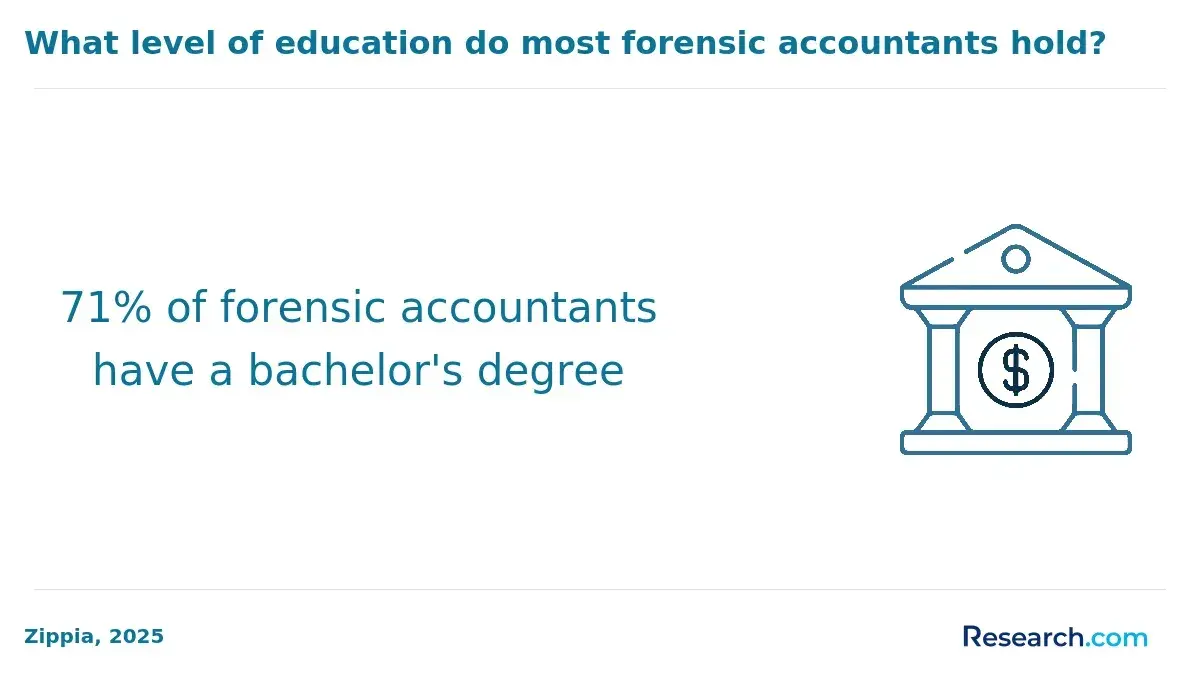
Applicants should read admission requirements carefully because forensic accounting degrees may be offered at different levels. Undergraduate programs often admit students with a high school diploma or equivalent, while graduate programs commonly expect a bachelor's degree in accounting or a related field. Some graduate programs also expect prior coursework in accounting, auditing, taxation, or business law.
- Academic qualifications: Undergraduate applicants typically need a high school diploma or equivalent. Graduate applicants typically need a bachelor's degree in accounting or a related field. GPA expectations are usually the same across formats, and graduate programs often expect a minimum of 3.0 on a 4.0 scale.
- Application materials: Both online and campus applicants may need to submit an application form, official transcripts, letters of recommendation, a résumé, and a personal statement. Online programs often make document submission easier for remote students through digital portals.
- Prerequisite coursework: Graduate programs may require foundational accounting and auditing courses. Career changers should ask whether prerequisites must be completed before admission or whether they can be taken during the early part of the program.
- Work experience: Most undergraduate forensic accounting programs do not require professional experience. Some graduate programs may prefer applicants with accounting, auditing, finance, compliance, law enforcement, or investigation experience, especially if the curriculum is designed for working professionals.
- Technical readiness: Online programs may require orientation modules, technology checks, or statements about time management and online learning readiness. This is not usually a major admission barrier, but it helps schools identify whether students are prepared for self-directed coursework.
- Scheduling fit: Scheduling is not technically an admission requirement, but it should influence where you apply. Working adults may want to compare flexible formats, including options listed among the best accelerated online degrees for working adults, before committing to a program calendar.
- Employer and licensure considerations: Applicants planning to pursue CPA eligibility, CFE preparation, or accounting licensure should confirm that the program's credits meet the requirements relevant to their state or professional goal. Delivery format matters less than accreditation, curriculum, credit hours, and institutional recognition.
A common mistake is applying only because a program is convenient. Convenience helps, but admission should be evaluated alongside accreditation, faculty expertise, curriculum depth, support services, and alignment with professional certification goals.
Do online forensic accounting students receive the same academic support as on-campus students?
Online forensic accounting students can receive support comparable to on-campus students, but the experience is different. The best online programs do not simply post readings and leave students on their own. They provide tutoring, library access, faculty office hours, career advising, technical support, and structured communication channels.
The key question is not whether support exists on paper. It is whether support is easy to access when students need help with accounting concepts, fraud cases, writing, research, software, internships, or career planning.
- Tutoring services: Online students may use virtual tutoring, online writing centers, accounting help sessions, and recorded academic workshops. On-campus students may have in-person tutoring, drop-in labs, and group study options. In either format, students should ask whether tutoring is available for upper-level accounting and forensic accounting topics, not just general coursework.
- Faculty access: On-campus students can speak with instructors during class, after class, and during office hours. Online students typically use email, learning platform messages, video calls, and virtual office hours. Response-time expectations matter; strong online programs publish clear faculty availability policies.
- Library and research tools: Students in both formats usually receive access to digital libraries, accounting databases, journals, and research guides. On-campus students may also use physical collections and in-person research assistance. Online students should confirm remote access to databases needed for business, law, accounting, and fraud research.
- Career services: Both formats may include résumé reviews, interview preparation, job boards, career coaching, and employer events. On-campus students may benefit from local recruiting and in-person networking. Online students should look for virtual career fairs, alumni connections, and guidance for finding internships in their own region.
- Peer networking: On-campus students often build relationships through classes, events, student organizations, and informal study groups. Online students may connect through group projects, discussion boards, alumni communities, and virtual meetups. Online networking can work well, but students must participate consistently.
- Technical support: Online students depend heavily on stable access to learning platforms, testing systems, video tools, and accounting software. Before enrolling, ask whether technical support is available during evenings or weekends, especially if you plan to study outside normal business hours.
Students comparing programs should request specifics: tutoring hours, career service access, software requirements, faculty response policies, internship support, and whether online students can use the same advising and alumni resources as campus students.
How long does it take to complete an online vs an on-campus forensic accounting degree?
Completion time depends on degree level, enrollment status, transfer credits, course availability, prerequisites, and whether the program uses traditional semesters or accelerated terms. Online programs often provide more pacing options, while on-campus programs tend to follow a more fixed academic calendar.
In general, flexibility can shorten or lengthen the timeline. A motivated full-time online student may move quickly through an accelerated structure, but a working student may intentionally take fewer courses each term to avoid burnout. Campus students may benefit from a predictable path, but they have less control if required courses are offered only at certain times.
- Online forensic accounting degree: Online programs frequently offer full-time, part-time, and accelerated tracks. Some fully online master's degrees may be finished in as little as 12 months by full-time students, while part-time students often take about two years. Asynchronous coursework and year-round scheduling can help students fit classes around employment and family responsibilities.
- On-campus forensic accounting degree: On-campus programs usually follow structured semester schedules with set meeting times. A master's degree generally takes about two years to complete, and bachelor's degrees require approximately four years. Some master's programs allow completion in 18 months, but in-person attendance and limited scheduling flexibility may make the timeline harder for students working full time.
- Hybrid and certificate options: Hybrid programs and short-term certificate courses combine online coursework with in-person components. These options may be completed more quickly, usually between 8 and 12 months, and can be useful for students who want focused forensic accounting training without committing immediately to a full degree.
Students comparing timelines should also look beyond advertised completion times. Ask how often required courses are offered, whether prerequisites add extra terms, whether transfer credits are accepted, and whether the pace is realistic while working. If you are still comparing accounting-related paths, a broader guide on how long does it take to get an accounting degree online can help you understand how online timelines often vary by degree level and enrollment pace.
One professional who completed an online forensic accounting degree described the trade-off clearly. He was able to continue working and meet family responsibilities, but the flexible format required discipline. He originally expected to finish in just over a year, but a realistic workload and work-life balance pushed the timeline closer to two years.
His experience reflects a common pattern: online programs can make faster completion possible, but they do not make the work easier. The best timeline is the one that allows you to complete the program successfully, retain the material, and apply it in professional settings.
Are online forensic accounting programs cheaper than on-campus ones?
Online forensic accounting programs are often cheaper overall, but not always cheaper in tuition alone. The real savings usually come from avoiding relocation, housing, meal plans, parking, and commuting. Some online programs also charge lower tuition or extend in-state rates to online students, but others charge similar rates to campus programs plus technology or distance-learning fees.
To compare costs accurately, students should calculate total cost of attendance, not just tuition per credit. A program with slightly higher tuition may still be cheaper if it allows you to keep working, avoid relocation, and complete the degree faster. A low-tuition program may become expensive if it lacks financial aid eligibility, requires extra prerequisites, or charges high fees.
- Tuition and fees: Online forensic accounting programs may charge lower or comparable tuition. Public institutions may offer favorable online tuition structures, including cases where in-state rates apply more broadly. Students should confirm whether tuition differs by residency, course level, or delivery format.
- Living expenses: Online students can often avoid campus housing, meal plans, parking, relocation, and daily commuting. These indirect expenses can significantly affect affordability, especially for students who already have stable housing or employment.
- Technology costs: Online students may need a reliable computer, high-speed internet, webcam, accounting software, exam proctoring tools, or platform fees. These costs are usually smaller than relocation or housing costs, but they should still be included in the budget.
- Work continuity: A major financial advantage of online study is the ability to remain employed while enrolled. This can reduce borrowing and help students gain relevant experience while completing the degree.
- Campus-based value: On-campus programs may cost more in total, but some students benefit from in-person recruiting, local employer relationships, graduate assistantships, campus jobs, and direct faculty access. Those benefits may be worth the added cost for students who learn best in person or want a campus-centered experience.
- Financial aid availability: Accredited online programs can qualify for the same federal financial aid as campus programs. Students should verify accreditation, institutional participation in federal aid programs, and enrollment-status requirements before assuming aid will apply.
Students evaluating affordability may also compare related undergraduate pathways, including the easiest online bachelor's degree programs online, while remembering that “easy” should never replace questions about accreditation, career fit, and accounting preparation.
What are the financial aid options for online vs on-campus forensic accounting programs?
Online and on-campus forensic accounting students may have access to many of the same financial aid options when they enroll in an accredited, aid-eligible institution. The biggest differences usually involve state residency rules, enrollment status, program eligibility, and whether a scholarship is limited to campus-based students.
Before applying, students should confirm three things: whether the school is properly accredited, whether the program participates in federal aid, and whether their planned enrollment level qualifies for aid. This is especially important for online students, certificate students, and part-time learners.
- Federal aid: Students in accredited forensic accounting programs, whether online or on campus, can apply for federal aid by submitting the FAFSA. Federal aid includes grants, work-study, and subsidized loans. Eligibility depends on the institution's accreditation, federal participation status, degree level, and the student's enrollment status.
- State aid: State grants and scholarships often depend on residency and school location. On-campus students attending in-state public institutions may have clearer access to state aid. Online students may qualify when enrolled through an eligible state school, but out-of-state online students should check restrictions before counting on state funding.
- Scholarships and grants: Universities, professional associations, foundations, and private organizations may offer merit-based or need-based aid. Forensic accounting students may also find awards related to fraud examination, accounting, auditing, or financial investigation, including the Ritchie-Jennings Memorial Scholarship. Some awards require full-time enrollment or campus participation, while others are open to online students.
- Employer tuition reimbursement: Working professionals should ask whether their employer supports accounting, compliance, fraud examination, or graduate business education. Online programs are often attractive for employer-funded students because they allow employees to continue working while studying.
- Private student loans: Private lenders may finance online or on-campus study, but approval can depend on credit history, enrollment level, school recognition, and program eligibility. Students should compare interest rates, repayment terms, and borrower protections before using private loans.
- Veteran and military benefits: Eligible students should ask the school how military education benefits apply to online, on-campus, hybrid, full-time, part-time, and certificate enrollment. Policies can vary by program and benefit type.
Financial aid should be evaluated alongside return on investment. Online forensic accounting programs may reduce tuition per credit and indirect costs such as housing and commuting, while on-campus programs may offer stronger access to in-person networking and campus-based opportunities. Students comparing financial outcomes across fields can also review the best majors for money, including accounting-related pathways.
Are online forensic accounting programs as credible as on-campus ones?
Online forensic accounting programs can be as credible as on-campus programs when they come from properly accredited institutions with rigorous curricula, qualified faculty, and clear alignment with accounting and fraud examination standards. The delivery format alone does not determine credibility. Accreditation, institutional reputation, faculty expertise, student outcomes, and curriculum quality carry far more weight.
Institutional accreditation from recognized agencies like the Middle States Commission on Higher Education and the Higher Learning Commission applies to institutions across delivery formats. Programmatic accreditation by organizations such as the Association to Advance Collegiate Schools of Business (AACSB) and the Accreditation Council for Business Schools and Programs (ACBSP) can further signal business-school quality and curriculum oversight.
Credible forensic accounting programs should teach students how to analyze financial records, identify red flags, document findings, understand legal and ethical issues, and communicate conclusions clearly. Students interested in CPA or CFE pathways should verify how the curriculum supports those goals, while remembering that eligibility rules and professional requirements may depend on state or certifying-body standards.
Employer perceptions have improved as online learning has become more common. Recent data shows that 61% of U.S. employers now regard accredited online degrees as equally credible to traditional on-campus ones, especially when backed by AACSB or ACBSP accreditation. Tuition per credit averaging $700 to $900, plus savings on commuting and relocation, can also make online programs appealing for students who want a recognized credential without leaving the workforce.
Still, students should be cautious. A weak online program from an unaccredited or poorly recognized school can hurt credibility, just as a weak on-campus program can. Before enrolling, confirm accreditation, review faculty biographies, examine course descriptions, ask about career outcomes, and make sure the diploma and transcript do not suggest a lower-tier credential compared with the campus version.
Do employers prefer online vs on-campus forensic accounting degrees?
Most employers are less concerned with whether a forensic accounting degree was earned online or on campus than with the quality of the institution, the relevance of the curriculum, and the applicant's ability to do the work. In hiring, candidates are usually evaluated on accounting knowledge, analytical skill, communication, professionalism, software ability, internship or work experience, and credentials such as CPA or CFE.
Employer acceptance of online education has grown. A Graduate Management Admission Council study revealed that 55% of global employers viewed online learning in graduate management education as equal to conventional education. This shift is especially important for fields like accounting, where remote work, digital documentation, virtual collaboration, and analytics tools are now common parts of professional practice.
Accreditation and school reputation remain important. AACSB accreditation is often viewed as a strong signal in business education, and employers may respond more favorably to degrees from institutions they know or can easily verify. A degree from a reputable accredited online program is generally more defensible than a degree from an obscure or unaccredited provider, regardless of convenience.
Online graduates should be ready to discuss their program confidently in interviews. Strong answers focus on substance: casework completed, fraud examination methods learned, accounting tools used, writing assignments, audit projects, internships, and measurable skills. Avoid apologizing for the online format. Instead, explain why the program fit your circumstances and how it prepared you to contribute.
One professional who completed her forensic accounting degree online said some employers initially asked about the format. She addressed those concerns by emphasizing the program's rigorous curriculum, AACSB accreditation, internships, and case-based assignments. In her experience, employers ultimately focused on whether she could analyze evidence, explain findings, and solve real problems.
The lesson is practical: choose a respected program, build a portfolio of skills and experiences, and be prepared to show how your education applies to fraud investigation, audit support, litigation support, compliance, or financial analysis.
Do online vs on-campus forensic accounting program graduates earn the same salaries?
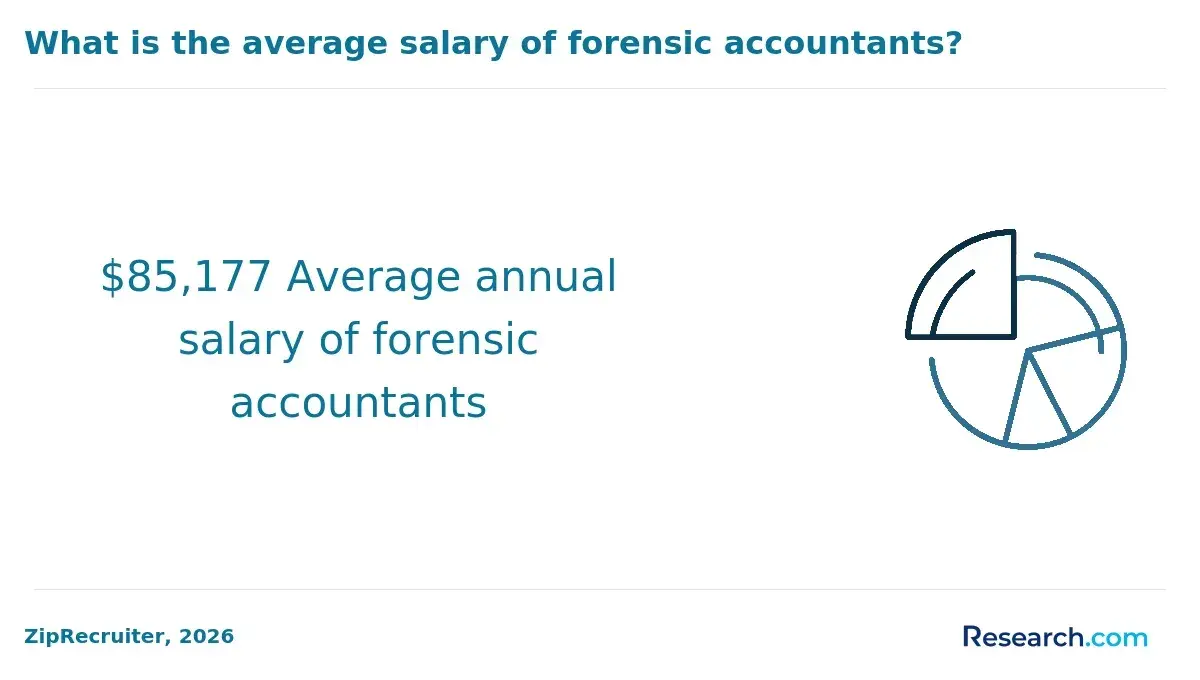
Forensic accounting salaries are influenced more by role, experience, location, employer type, credentials, and school reputation than by whether the degree was earned online or on campus. A graduate from a credible accredited online program can compete for similar roles as a campus graduate, especially when the student has relevant experience, strong technical skills, and professional certification plans.
The degree format may affect salary indirectly. For example, on-campus students may gain easier access to local internships or recruiting pipelines. Online students may continue working while studying, which can help them build experience and avoid income interruption. Both paths can support strong outcomes when students use the format strategically.
- Degree accreditation and reputation: Employers prioritize accredited institutions. Graduates from reputable online programs generally have salary prospects comparable to those from campus-based programs, while lesser-known or unaccredited schools can limit earnings in both formats.
- Professional certification: Credentials such as Certified Fraud Examiner (CFE) or Certified Public Accountant (CPA) can significantly enhance salary potential. Certification often matters more than delivery format because it demonstrates professional knowledge beyond the degree.
- Experience and internships: Early career earnings can be shaped by internship access, accounting experience, audit exposure, compliance work, or investigative projects. On-campus programs may offer easier in-person recruiting, while online students may need to pursue local or remote opportunities more proactively.
- Geographic location: Salaries for forensic accountants are higher in metropolitan areas like New York or Chicago regardless of degree format. Local labor markets, employer size, and industry concentration all affect pay.
- Cost and flexibility: Online programs typically cost up to 43% less and may allow students to work while enrolled. Students asking can you use FAFSA for online school should verify aid eligibility because lower borrowing can improve the long-term financial value of the degree.
- Employer perception: The stigma around accredited online forensic accounting degrees has diminished considerably. Employers are more likely to focus on whether the program is reputable and whether the candidate can perform the work.
When comparing salary potential, do not rely on format alone. Compare curriculum depth, internship support, alumni outcomes, certification preparation, faculty expertise, and employer connections. Those factors are more likely to influence your career trajectory than whether you attended class in person or online.
How do you decide whether an online vs on-campus forensic accounting program is right for you?
The right forensic accounting program format depends on how you learn best, how much structure you need, how much flexibility your life requires, and what kind of career support will help you reach your goals. Online and on-campus degrees can both be effective, but they serve different student profiles.
Use the decision points below to narrow your choice.
- Choose online if you need flexibility: Online programs are often better for students balancing work, family, military service, travel, or geographic limitations. They are also a strong fit for disciplined learners who can manage deadlines without regular in-person reminders.
- Choose on campus if you want structure: On-campus programs may be better for students who value face-to-face discussion, scheduled class meetings, immediate feedback, and a clear weekly routine. The campus environment can also help students stay engaged and accountable.
- Compare total cost, not just tuition: Online forensic accounting degrees can often reduce housing and commuting costs. Some programs charge between $330 and $900 per credit, with average annual tuition around $9,900, though fees vary. Campus programs may cost more overall but may offer assistantships, local recruiting, or stronger in-person services.
- Evaluate networking needs: On-campus programs usually provide more natural opportunities to meet classmates, faculty, recruiters, and alumni. Online students can still build networks, but they must be more intentional through virtual events, professional associations, internships, and alumni outreach.
- Check support services: Ask whether online students receive the same career advising, tutoring, library access, software support, and internship help as campus students. If the answer is vague, keep looking.
- Review certification alignment: If you plan to pursue CPA, CFE, or another credential, confirm whether the program's credits and courses support that goal. Also review state-specific requirements where applicable.
- Inspect the curriculum: A strong forensic accounting program should include fraud examination, auditing, internal controls, accounting information systems or analytics, ethics, legal issues, and applied casework. Delivery format cannot compensate for a thin curriculum.
When selecting among the best online forensic accounting programs in the US, prioritize accreditation, curriculum quality, faculty expertise, student support, and career alignment. Certifications can also strengthen your path, including options discussed in certifications that pay the most.
The best choice is the program you can complete successfully while building the skills, relationships, and credentials needed for the type of forensic accounting work you want to do.
Here's What Graduates of Online vs On-Campus Forensic Accounting Programs Have to Say About Their Degree
- Abel : "Completing my forensic accounting degree online gave me the flexibility to keep working full time and support my family while moving through the program. The virtual labs and real-world case studies helped me practice skills I could use immediately at work. Networking was harder at first because I was not on campus, but the alumni community helped me make useful professional connections. The format let me advance without putting the rest of my life on hold."
- Jarvis: "Attending an on-campus forensic accounting program gave me the structure and collaboration I wanted. I benefited from face-to-face discussions, direct access to faculty, and relationships with classmates who were just as interested in fraud examination and financial investigation as I was. The campus experience helped me build confidence and prepared me for a role at a top firm."
- Octavia: "The hybrid forensic accounting degree gave me a practical balance of online flexibility and in-person learning. I could complete remote coursework around my schedule while using campus workshops to practice audit techniques and interact directly with instructors. That mix helped me stay connected academically and professionally while preparing for complex financial investigation work."
Other Things You Should Know About Online & On-Campus Forensic Accounting Degree Programs
Most online forensic accounting programs require a reliable computer, high-speed internet, webcam, microphone, and current spreadsheet software such as Microsoft Excel. Some courses also require proctored-exam software, secure browsers, and access to case-study databases used in fraud examination and digital evidence work.
On-campus programs allow direct interaction with professors and peers, fostering collaboration and immediate feedback. They often include hands-on experiences through labs or internships, which can be critical in forensic accounting. This environment supports networking that may help with career placement and professional growth.
References
- Master of Business Administration with a Concentration in Forensic Accounting https://online.uncp.edu/degrees/business/mba/forensic-accounting/
- Forensic Accounting Degree Online https://www.snhu.edu/online-degrees/bachelors/bs-in-accounting/forensic-accounting-and-fraud-examination
- Forensic Accounting: How to Become a Forensic Accountant | NU https://www.nu.edu/blog/how-to-become-a-forensic-accountant/
- Should You Get a Master's in Accounting Online or In Person? https://learn.neumann.edu/neuperspectives/should-you-get-a-masters-in-accounting-online-or-in-person
- Executive Master of Accounting (EMAC) Forensic Accounting Concentration https://business.fau.edu/masters-phd/master-of-accounting/online/concentrations-and-curricula/forensic-accounting/
- Forensic Accounting Careers: Complete Guide | YSU https://online.ysu.edu/degrees/undergraduate/bsba/accounting/forensic-career-guide/
- Walker, A., Jarvis, S., Bao, K., & White, S. (2025). Corporate Recruiters Survey – 2025 report. Graduate Management Admission Council. https://www.gmac.com/market-intelligence-and-research/research-library/employment-outlook/2025-corporate-recruiters-survey-report
- Simunich, B., Garrett, R., Fredericksen, E. E., Gay, K. (2025). CHLOE 10 Meeting the Moment: Navigating Growth, Competition, and AI in Online Higher Education, 2025. Quality Matters. https://qualitymatters.org/qa-resources/resource-center/articles-resources/CHLOE-10-report-2025
- Zippia. (2025, January 8). Forensic accountant demographics and statistics in the US. https://www.zippia.com/forensic-accountant-jobs/demographics/#degree-level-types
- ZipRecruiter. (2026). Forensic Accountant salary. https://www.ziprecruiter.com/Salaries/Forensic-Accountant-Salary
- National Student Clearinghouse Research Center. (2025). Clearinghouse Enrollment Insights Series: Final Fall Enrollment Trends. https://nscresearchcenter.org/final-fall-enrollment-trends/