2027 Is a 2-Year Forensic Accounting Degree Worth It: Accelerated Bachelor's ROI & Time Trade-Offs

Co-Founder and Chief Data Scientist
A 2-year accelerated forensic accounting degree is built for students who want to move into fraud investigation, auditing, compliance, or financial analysis faster than a traditional four-year path allows. The trade-off is intensity: shorter terms, heavier weekly workloads, fewer breaks, and less time to build experience through internships or part-time accounting roles.
The decision is not simply whether the degree is “faster.” It is whether the faster timeline improves your return on investment after accounting for tuition, financial aid, lost wages, salary expectations, employer preferences, and your ability to handle compressed coursework. With the Bureau of Labor Statistics projecting a 10% growth in accounting-related jobs through 2032, the field has demand, but employers still look closely at credentials, technical skills, software fluency, and practical experience.
This guide explains how 2-year forensic accounting programs work, what they cost, what a typical week may feel like, which jobs graduates can pursue, and how the ROI compares with a traditional bachelor’s route. It is designed for transfer students, working adults, career changers, and motivated first-time students who need a realistic view before committing to an accelerated program.
Key Benefits of a 2-Year Forensic Accounting Degree
- An accelerated 2-year forensic accounting degree can lead to faster entry into the workforce, potentially increasing lifetime earnings by minimizing opportunity costs.
- Graduates often benefit from a strong ROI due to forensic accounting's high demand and median salaries exceeding $70,000 annually.
- Condensed programs emphasize practical skills, allowing students to focus on specialized expertise without sacrificing quality for speed.
How Do 2-Year Forensic Accounting Programs Work?
A 2-year forensic accounting program compresses degree requirements into a shorter academic calendar. Instead of taking a standard 15-week semester load with long breaks between terms, students usually move through shorter course sessions, continuous enrollment, and a heavier sequence of accounting, auditing, fraud examination, business law, and analytics courses.
The goal is not to remove core content. A credible accelerated program should still teach the accounting foundation and investigative methods needed for forensic work. The difference is pace: students must absorb, apply, and be assessed on the material more quickly.
- Accelerated pacing: Courses are often shortened to 8 to 12 weeks instead of a traditional 15-week semester. This allows students to complete more classes each year but leaves less time to recover if they fall behind.
- Year-round enrollment: Many accelerated programs use fall, spring, and summer terms. This can shorten time to graduation, but it also means fewer academic breaks and less flexibility for travel, family obligations, or extended work hours.
- Condensed course terms: A shorter course does not necessarily mean less work. Students may cover the same learning outcomes in fewer weeks, with weekly deadlines for readings, problem sets, case reviews, and exams.
- Credit load expectations: Students typically carry more credits per term or move from one short term directly into the next. Before enrolling, ask the program how many hours per week students should expect to spend on class and independent study.
- Instructional format: Programs may be online, hybrid, or campus-based. Online delivery can improve access for working adults, while hybrid or in-person components may help with networking, faculty interaction, and applied investigation exercises.
- Assessment methods: Strong programs use exams, financial statement analysis, fraud case simulations, written reports, group projects, and data-based assignments to mirror the work forensic accounting professionals perform.
- Curriculum progression: Students usually begin with accounting fundamentals, taxation or business law, and auditing concepts before moving into fraud detection, forensic analytics, internal controls, investigative reporting, and ethics.
Because accelerated accounting programs vary widely, compare curriculum depth before choosing a school. Students who are still deciding between accounting pathways may also review a best online accounting degree list to understand how affordability, format, and accounting specialization options differ across programs.
If you are comparing accelerated formats outside accounting, guides to options such as RN to BSN no clinicals programs can also show how shortened degree structures handle scheduling, flexibility, and workload.
What Are the Admission Requirements for a 2-Year Forensic Accounting Degree?
Admission requirements for a 2-year forensic accounting degree are designed to identify students who can handle an accelerated academic schedule. Some programs admit first-year students directly, while others are built for transfer students who already have general education credits or prior college coursework.
Before applying, confirm whether the program is a full bachelor’s degree completed in two years, a degree-completion pathway for students with transfer credits, or an accelerated schedule that assumes year-round attendance. These distinctions affect eligibility, cost, and graduation timing.
- Prior Education: Applicants generally need a high school diploma or equivalent GED certification. Degree-completion programs may also require completed college credits before entry.
- GPA Expectations: Many programs require a minimum GPA, often between 2.5 and 3.0 on a 4.0 scale. A higher GPA may help if the program is selective or if you are applying for scholarships.
- Standardized Tests: SAT or ACT scores may be optional, particularly for nontraditional students or applicants with prior college credits. If scores are optional, submit them only if they strengthen your application.
- Prerequisite Coursework: Programs may expect prior coursework in accounting, mathematics, business, economics, or statistics. Missing prerequisites can delay graduation, even in an accelerated program.
- Relevant Work Experience: Experience in bookkeeping, payroll, auditing support, banking, insurance, finance, compliance, or administrative accounting can help demonstrate readiness, although it may not replace academic requirements.
- Additional Application Components: Some schools request a personal statement, resume, recommendation letters, or interview. Use these materials to explain why forensic accounting fits your career goals and how you plan to manage the compressed schedule.
Questions to ask admissions before applying
- How many transfer credits are required or accepted?
- Can prerequisites be completed during the program, or must they be finished before enrollment?
- Is the two-year timeline realistic for students who work full time?
- Are summer terms mandatory?
- Does the program prepare students for accounting certifications or only for entry-level employment?
Students comparing career-focused accelerated programs may also look at how other fields structure admissions and aid, including medical billing and coding online schools.
What Does a Typical Week Look Like in a 2-Year Forensic Accounting Program?
A typical week in a 2-year forensic accounting program is more structured and deadline-heavy than many students expect. Because courses move quickly, students often study accounting concepts, complete applied assignments, participate in discussions, and prepare for assessments in the same week.
The exact workload depends on credit load, course length, delivery format, and whether the student works while enrolled. However, accelerated students should expect limited downtime during active terms.
| Weekly activity | What it may involve | Why it matters |
| Class sessions and lectures | Online modules, live virtual meetings, campus classes, recorded lectures, or case discussions lasting one to three hours | Introduces technical accounting concepts and investigation methods quickly |
| Assignments and assessments | Quizzes, financial statement reviews, written analyses, fraud scenarios, research papers, and problem sets | Tests whether students can apply concepts rather than only memorize terms |
| Group work | Team projects, fraud case presentations, audit simulations, or collaborative data reviews | Builds communication skills needed for investigative reports and client-facing work |
| Independent study | Reading, spreadsheet practice, research, exam preparation, and reviewing instructor feedback | Often determines whether students can keep pace in a condensed term |
| Instructor interaction | Office hours, discussion boards, email feedback, tutoring, and review sessions | Helps students resolve problems before deadlines stack up |
| Time management | Weekly planning, deadline tracking, study blocks, and workload prioritization | Reduces the risk of falling behind in multiple accelerated courses at once |
One professional who completed a forensic accounting bachelor's in two years described the experience as "relentlessly demanding but deeply rewarding." He said the most difficult periods came when several assignments were due back to back and there was little time to reset between terms.
"There were moments I questioned whether I could maintain the pace," he shared, "but breaking tasks into smaller goals and setting strict daily schedules made all the difference." He also noted that group projects helped him stay engaged because classmates became an informal support system during demanding weeks.
His experience highlights a key point: accelerated study can build resilience and efficient learning habits, but it works best for students who are willing to plan their weeks carefully and ask for help early.
Are 2-Year Forensic Accounting Programs Available Online?
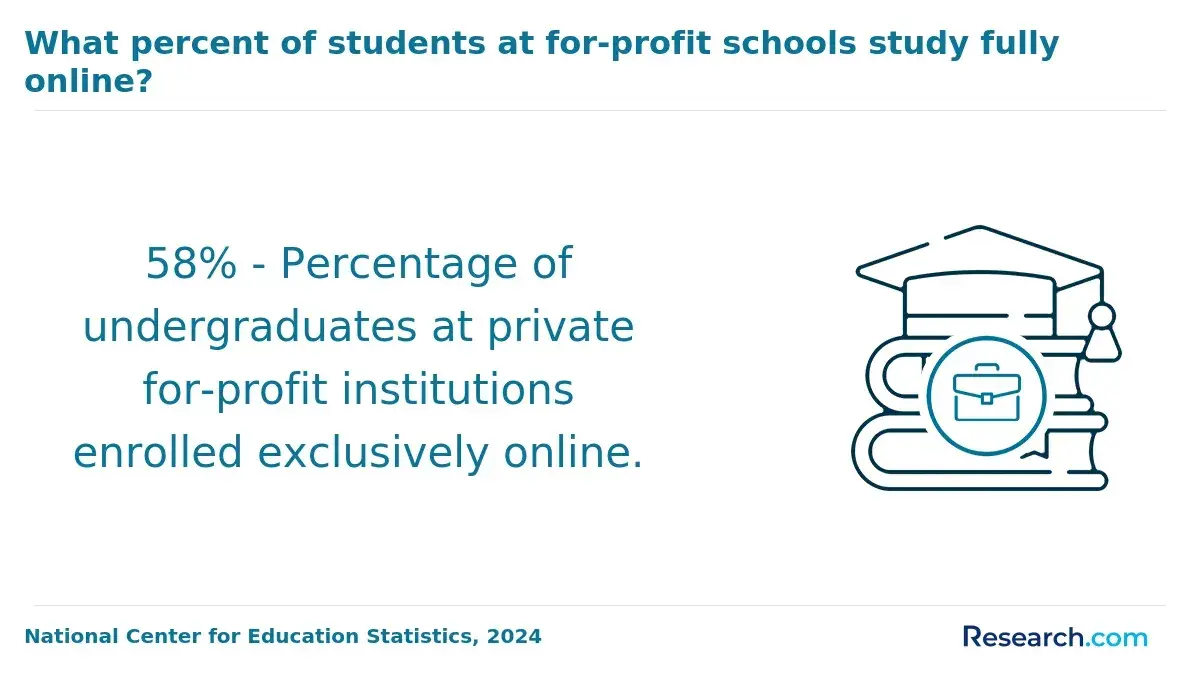
Yes, many 2-year forensic accounting programs are available online or in hybrid formats. Online delivery is especially common for accelerated degrees because it allows students to continue working, avoid relocation, and complete coursework on a tighter schedule.
Format matters. A fully online program may offer maximum flexibility, while a hybrid program may provide more direct faculty interaction, networking, and structured support. The right choice depends on your schedule, learning style, location, and need for accountability.
- Fully online vs. hybrid formats: Fully online programs deliver coursework remotely. Hybrid programs combine online classes with occasional in-person meetings, labs, exams, orientations, or intensive sessions. Hybrid programs can strengthen engagement but may create travel or scheduling barriers.
- Asynchronous and synchronous learning: Asynchronous courses allow students to view lectures and complete assignments on their own schedule, within set deadlines. Synchronous courses require live participation, which can improve discussion and accountability but may be harder for students with irregular work hours.
- Technology requirements: Students generally need a reliable internet connection, a computer, a webcam, and access to spreadsheet, accounting, or data analysis tools. Some courses may require specialized software for fraud detection exercises or forensic accounting simulations.
- Student support services: Strong online programs provide academic advising, tutoring, library access, technical support, career counseling, and faculty availability. Do not assume online means self-service only; support quality can affect completion.
- Pacing and engagement: Online two-year forensic accounting tracks can reduce degree completion time compared to traditional paths, saving one to two years. The benefit is greatest for students who can manage deadlines independently and stay active in discussions, projects, and faculty communication.
How to evaluate an online program
- Confirm the school’s accreditation and whether the accounting program meets your professional goals.
- Ask whether classes are fully asynchronous, live, or mixed.
- Review the weekly workload for a typical accelerated term.
- Check whether online students can access internships, career services, and faculty advising.
- Ask what accounting software, analytics tools, or forensic case platforms are used.
How Much Does a 2-year Forensic Accounting Degree Cost?
The cost of a 2-year forensic accounting degree depends on tuition, fees, transfer credits, delivery format, software requirements, and how long you remain enrolled. The advertised tuition rate rarely tells the full story, especially in accelerated programs where students may take more credits per term and enroll year-round.
To estimate ROI, calculate the total cost to graduate, not just the cost per credit. Then compare that figure with expected earnings, financial aid, employer tuition support, and the income you may gain by entering the workforce sooner.
- Tuition structure: Accelerated programs typically charge per credit hour. A denser semester schedule or summer enrollment can increase short-term bills while reducing the number of semesters needed to graduate.
- Fees: Registration, technology, graduation, activity, online learning, and course-specific fees can add to the total price. Ask for a full cost sheet before enrolling.
- Textbooks and learning materials: Some programs rely on digital materials, open educational resources, or bundled course platforms. Others still require textbooks, access codes, or paid databases.
- Technology and lab costs: Forensic accounting courses may use spreadsheet tools, accounting software, analytics platforms, or virtual labs. These costs can vary by institution.
- Cost comparison to traditional programs: Completing a forensic accounting degree in two years can save nearly half the tuition and associated living costs compared to a standard four-year program, especially when students avoid extra housing or commuting expenses.
With median forensic accountant salaries near $65,000 annually, lowering education costs can improve ROI. However, the lowest-cost option is not always the best value. A cheaper program may be less useful if it lacks accreditation, employer recognition, career services, accounting depth, or opportunities to build practical experience.
Students comparing short, career-focused training options in other fields may also review a medical billing and coding certification to see how tuition, completion time, and career outcomes can differ by profession.
Can You Get Financial Aid for 2-Year Forensic Accounting Programs?
Yes, students in eligible 2-year forensic accounting programs may qualify for financial aid, but the details depend on the school’s accreditation, federal aid participation, enrollment status, academic calendar, and program structure. Accelerated schedules can affect when aid is disbursed, so students should work closely with the financial aid office before classes begin.
- Federal Student Aid Eligibility: Most accelerated forensic accounting programs can qualify for federal aid such as Pell Grants and Direct Loans if the school is accredited and participates in federal programs. Because accelerated terms may not follow a standard semester calendar, disbursement timing can be different.
- Scholarships and Grants: Scholarships and grants from schools, professional organizations, nonprofits, or industry groups can reduce borrowing. These awards may be based on merit, financial need, major, career goals, or academic performance.
- Employer Tuition Assistance: Working adults should ask whether their employer offers tuition reimbursement, tuition assistance, professional development funds, or paid training benefits. Accounting, insurance, finance, compliance, and government employers may support job-related education.
- Payment Plans: Monthly or term-based payment plans can spread out tuition costs. Review fees, due dates, and refund policies before relying on a payment plan.
- Impact of Acceleration on Aid: A fast-paced program may compress billing cycles and aid deadlines. Missing a document, verification step, or satisfactory academic progress requirement can create serious cash-flow problems.
Financial aid steps before enrolling
- Confirm that the school is accredited and participates in federal aid programs.
- Ask for the total program cost, including fees and required materials.
- Request the financial aid disbursement schedule for accelerated terms.
- Compare grant, scholarship, loan, employer, and payment plan options.
- Build a backup plan in case aid is delayed between terms.
One professional who completed an accelerated bachelor's degree in forensic accounting in two years said financial aid made the degree possible. She entered the program unsure whether she could manage upfront tuition, then combined federal loans with a merit-based scholarship.
"Balancing work and study was intense, and the accelerated format meant I had to be vigilant about aid deadlines and payments," she explained. She also pointed to employer tuition assistance as an important source of relief. Her main advice was to treat financial aid deadlines like course deadlines: track them early, confirm receipt, and follow up before a problem affects enrollment.
What Jobs Can You Get With a 2-Year Forensic Accounting Degree?
A 2-year forensic accounting degree can support entry into accounting, auditing, fraud review, compliance, and investigative finance roles. The exact job title available after graduation depends on whether the credential is a bachelor’s degree, how much experience the student has, whether internships are included, and what employers in the region require.
Forensic accounting roles often require strong accounting fundamentals, attention to detail, documentation skills, ethics, and the ability to explain financial findings clearly. Some positions may also prefer or require additional certifications, experience, or eligibility for accounting licensure.
- Forensic accounting assistant: Supports senior accountants or investigators by organizing financial records, reviewing transactions, preparing schedules, and identifying possible inconsistencies.
- Junior auditor: Reviews financial statements, internal controls, documentation, and compliance procedures. This role can build experience relevant to forensic accounting and fraud investigation.
- Fraud examiner: Assists with investigations into suspected financial fraud, insurance fraud, employee misconduct, or irregular transactions. Early-career roles may focus on data gathering and documentation.
- Investigative accountant: Analyzes accounting records, payments, invoices, bank activity, and financial reports to help identify evidence of financial misconduct or regulatory violations.
- Industry opportunities: Graduates may seek roles in public accounting firms, insurance companies, financial services, corporate compliance departments, and government bodies such as the Securities and Exchange Commission or Internal Revenue Service.
Skills employers may look for
- Financial statement analysis
- Auditing and internal controls
- Fraud detection methods
- Spreadsheet and data analysis skills
- Clear investigative writing
- Knowledge of business law and ethics
- Professional judgment and confidentiality
The accelerated format can help graduates enter the job market sooner, but it does not automatically replace experience. To strengthen employability, students should look for programs that include case-based assignments, internship access, accounting software exposure, career advising, and faculty with relevant professional backgrounds.
Students comparing affordable accelerated education in other career fields may also review the cheapest ADN online programs to understand how compressed study timelines can affect cost and workforce entry.
How Do Salaries Compare for 2-year Forensic Accounting Degree vs. Traditional Bachelor's Degrees?
Salary comparisons between a 2-year forensic accounting pathway and a traditional bachelor’s degree depend on the actual credential earned, the school’s reputation, prior work experience, internships, location, and employer requirements. A faster program may improve ROI by reducing time in school, but a traditional route may offer more time for internships, networking, electives, and career preparation.
| Factor | 2-year forensic accounting degree path | Traditional bachelor’s degree path |
| Early-career earnings | Graduates typically start with salaries ranging from $40,000 to $55,000 annually. | Graduates often begin between $55,000 and $70,000. |
| Long-term earning potential | Progression may be slower without additional experience, credentials, or specialization. | Median incomes may rise toward $80,000 to $100,000 after several years in forensic accounting or related roles such as auditing. |
| Employer perception | Employers may value the speed and focus of the program, especially when paired with relevant experience. | Employers often associate the traditional bachelor’s route with broader preparation and more time for applied learning. |
| Career progression | Graduates may need additional experience or certification to compete for specialist or leadership roles. | Graduates may have earlier access to internships, campus recruiting, and advanced coursework. |
| Time advantage | Students can enter the workforce up to two years sooner, potentially reducing debt and starting income earlier. | Students spend more time in school but may build a stronger professional foundation before graduation. |
The salary trade-off is not one-dimensional. A student who already has accounting experience may benefit significantly from finishing faster. A first-time student with no accounting background may benefit from the extra time a traditional program provides for internships, faculty mentoring, and career exploration.
When comparing 2-year forensic accounting vs traditional bachelor salaries, focus on total ROI: tuition, aid, time to completion, lost wages, experience gained, job placement support, and the type of roles you want after graduation. Students who are comparing accelerated degree models in other fields can also review affordable RN to BSN online programs for another example of how speed, cost, and career advancement interact.
Which Factors Most Affect ROI for Accelerated Forensic Accounting Degrees?
The ROI of an accelerated forensic accounting degree depends on whether the program helps you earn a credible credential faster without weakening your job prospects. The best financial outcome usually comes from a program that is affordable, properly accredited, career-aligned, and realistic for your schedule.
- Time-to-completion: Accelerated programs often allow students to graduate in around two years, compared with a traditional four-year path. Finishing sooner can reduce time in school and allow earlier entry into paid work.
- Tuition and total cost: Per-credit costs may be higher in some accelerated formats, but fewer semesters and reduced living or commuting expenses can lower total cost. Always compare the full cost to graduate.
- Opportunity cost savings: Spending less time in school can reduce lost wages, especially for students who would otherwise delay full-time employment. This is a major ROI advantage for working adults and transfer students.
- Employment outcomes and salary growth: Demand for forensic accountants remains strong with projected job growth exceeding average rates. Entry-level salaries typically start above $70,000 and tend to increase with experience and credentials.
- Industry demand: Financial investigations, compliance expectations, fraud risk, and regulatory scrutiny support ongoing demand for professionals who can analyze financial records and explain findings clearly.
- Transferability of skills: Skills such as fraud detection, audit support, data analysis, internal controls, and investigative reporting can apply across auditing, compliance, insurance, government, and corporate finance roles.
ROI factors that students often overlook
- Accreditation: Accreditation can affect financial aid, credit transfer, graduate study, and employer confidence.
- Internship access: A faster program may leave less time for internships, which can affect hiring competitiveness.
- Certification planning: Some forensic accounting and accounting roles may value or require additional credentials. Confirm whether the curriculum supports your next step.
- Workload risk: Dropping or repeating courses in an accelerated program can reduce or erase the time advantage.
- Career services: Resume help, employer connections, mock interviews, and internship support can influence job outcomes as much as course content.
How Do You Decide If a 2-year Forensic Accounting Degree Is Right for You?
A 2-year forensic accounting degree may be a good fit if you are motivated, organized, comfortable with quantitative coursework, and clear about why you want to enter accounting or fraud investigation. It is less suitable for students who need a slower academic pace, extensive campus involvement, or several semesters to explore majors.
It may be a strong option if you:
- Want to enter the workforce faster than a traditional four-year schedule allows.
- Already have transfer credits or relevant work experience.
- Can study consistently during evenings, weekends, or compressed terms.
- Are comfortable with accounting, math, spreadsheets, and analytical reading.
- Have a clear career target in auditing, compliance, fraud examination, or investigative accounting.
- Can manage deadlines without long breaks between courses.
It may not be the best fit if you:
- Need a lighter course load because of work, caregiving, health, or other obligations.
- Want extensive internship time before graduating.
- Are unsure whether accounting is the right field.
- Need significant academic support in math, writing, or business fundamentals.
- Prefer traditional campus life, clubs, and longer faculty interaction.
Financially, an accelerated forensic accounting degree often costs less overall because it uses fewer semesters, which may improve return on investment. The median salary for forensic accounting specialists is around $74,000 annually, with job growth expected to be slightly above average. Still, salary outcomes vary by location, employer, experience, and credentials.
The best decision comes from comparing three scenarios: enrolling in a 2-year accelerated program, choosing a traditional bachelor’s degree, or starting with a lower-cost transfer pathway before completing the bachelor’s. If the accelerated program is accredited, affordable, manageable, and aligned with your target roles, it can be a practical route. If it limits internships, strains your schedule, or requires heavy borrowing, a slower path may produce better long-term results.
What Graduates Say About Their 2-Year Forensic Accounting Degree
- Hudson: "As a professional aiming to upskill efficiently, the accelerated 2-year forensic accounting degree aligned perfectly with my career goals and busy lifestyle. The structure was demanding but well-designed, allowing me to maintain work commitments alongside studies. Earning the degree not only enhanced my technical expertise but also expanded my professional network, positively impacting my advancement opportunities in financial investigations."
- Morgan: "The decision to enroll in a two-year forensic accounting program came from my desire to quickly pivot careers without sacrificing quality education. Balancing work and classes was challenging, yet achievable with careful planning and support from instructors. Reflecting on the journey, the degree has opened doors I hadn't considered before, proving that the investment-both in time and tuition-was worth every bit."
- Joey: "Choosing a 2-year accelerated forensic accounting degree was the best decision for me because it significantly cut down the usual time and cost of college. Managing the intense schedule required strong discipline, but the compact format kept me motivated and focused. Now, with the average cost of attendance being lower than traditional programs, I have rapidly advanced my career as a forensic accountant, landing a role in a top firm within months of graduation."
Other Things You Should Know About Forensic Accounting Degrees
In 2027, employers increasingly recognize the value of a 2-year forensic accounting degree due to growing demand for specialized skills in fraud detection and financial investigations. While traditional bachelor's degrees often remain the benchmark, a 2-year degree can provide an expedited entry into the field with a focus on practical, applicable skills.
Earning a 2-year forensic accounting degree provides foundational knowledge but often falls short of meeting the educational requirements for certifications like the Certified Fraud Examiner (CFE) or Certified Public Accountant (CPA). These credentials typically require a bachelor's degree or higher, so a 2-year degree is often just the first step before pursuing certifications and career advancement.
No. CPA licensure in most U.S. states requires 150 semester hours, so a 2-year associate-level forensic accounting degree by itself does not qualify. Students usually need an accredited bachelor’s degree plus additional upper-division accounting credits and then must pass the Uniform CPA Examination.
References
- How Studying Accounting Can Begin A Career in Forensic Accounting https://training-link.co.uk/articles/how-studying-accounting-can-begin-a-career-in-forensic-accounting/
- Two-year Degree Courses in the UK | GoStudyIn https://gostudyin.com/study-in-uk/study-options/two-year-degree/
- Our Ranking Methodology | Accounting.com https://www.accounting.com/methodology/
- What path would I follow to end up with a career in forensic accounting? https://www.careervillage.org/questions/1087203/what-path-would-i-follow-to-end-up-with-a-career-in-forensic-accounting
- Master of Business Administration with a Concentration in Forensic Accounting https://online.uncp.edu/degrees/business/mba/forensic-accounting/
- Forensic accounting jobs https://www.dice.com/jobs/q-Forensic+accounting-jobs
- Accounting Forensics, MSAF https://catalog.roosevelt.edu/graduate/business/accounting-forensics-msaf/
- Is Forensic Accounting a Good Career? How to Join This Lucrative Field https://learn.neumann.edu/neuperspectives/is-forensic-accounting-a-good-career-how-to-join-this-lucrative-field