2027 Online vs On-Campus Applied Psychology Doctorate Programs: Cost, Flexibility, and Employer Perception

Co-Founder and Chief Data Scientist
The hardest part of comparing online and on-campus Applied Psychology doctorate programs is knowing which trade-offs actually affect your career. NCES data released in 2024 shows that roughly half of U.S. graduate students take at least one distance education course, making format a mainstream decision rather than a niche option.
This guide is for working adults, career changers, and psychology graduates weighing cost, flexibility, and employer perception. You will learn how tuition, scheduling, fieldwork, dissertation support, and hiring signals differ so you can choose the doctorate format that fits your goals.
Key Things to Know About Online vs On-Campus Applied Psychology Doctorate Programs
- Online Applied Psychology doctorates usually offer more schedule control, but they are not automatically easier, reputable programs still require advanced statistics, research design, doctoral writing, applied practice, and a dissertation or capstone.
- There is no official federal average tuition by delivery format for Applied Psychology doctorates, so compare total cost using published per-credit rates, fees, residency travel, lost income, and available assistantships rather than tuition alone.
- Employer perception depends less on "online vs on-campus" and more on accreditation, institutional reputation, fieldwork quality, research fit, licensure alignment, and whether your transcript or diploma signals a credible doctoral program.
What are the key differences between online vs on-campus Applied Psychology doctorate programs?
An Applied Psychology doctorate is a doctoral degree focused on using psychological science to solve practical problems in settings such as workplaces, schools, health systems, community agencies, legal environments, behavioral services, human factors, and research organizations. Depending on the university, the credential may be a PhD, PsyD, EdD, or another applied doctorate, and the curriculum may emphasize research, professional practice, consultation, program evaluation, or leadership.
The biggest difference between online and on-campus formats is not the subject matter. It is how you access faculty, classmates, research training, field experiences, and institutional support. Online programs shift much of the coursework to learning platforms and video meetings, while on-campus programs concentrate learning, mentoring, labs, and networking in a physical academic environment.
The table below summarizes the practical differences that usually matter most when comparing formats. Use it to identify which trade-offs are likely to affect your schedule, budget, and career preparation.
| Comparison factor | Online Applied Psychology doctorate | On-campus Applied Psychology doctorate | Why it matters |
| Course delivery | Often asynchronous, synchronous, or hybrid | Usually scheduled in-person seminars, labs, and meetings | Affects your weekly calendar and ability to work while enrolled |
| Faculty access | Virtual advising, video office hours, online research meetings | More spontaneous access through labs, offices, and campus events | Important for dissertation mentoring and professional recommendations |
| Peer networking | Built through cohorts, discussion boards, residencies, and group projects | Built through daily campus interaction, research teams, and department events | Can influence collaboration, referrals, and professional identity |
| Fieldwork | Often completed near the student's location with school approval | Often tied to campus partnerships, clinics, labs, or local agencies | Determines whether the program can support your target practice setting |
| Cost profile | May reduce relocation and commuting costs but may include technology and residency travel | May offer assistantships but can require relocation and campus-based living expenses | Total cost can differ even when tuition looks similar |
| Best fit | Working professionals, caregivers, military students, and students outside major university areas | Students seeking intensive research immersion, assistantships, labs, and campus networking | Format should match both learning style and career goal |
Students exploring psychology pathways often compare doctoral options after reviewing master's-level specializations. For example, someone interested in legal and correctional applications may first look at forensic psychology master's programs before deciding whether an applied doctorate is necessary for research, leadership, or advanced practice goals.
A common mistake is choosing the most convenient format without checking whether the program's concentration, faculty expertise, and fieldwork model match the job you want. A convenient online doctorate with weak applied placements may be less useful than an on-campus program with strong employer pipelines; the reverse can also be true if an online program has excellent faculty and fieldwork support in your region.
Are online Applied Psychology doctorate programs as rigorous as on-campus programs?
Online Applied Psychology doctorate programs can be as rigorous as on-campus programs when they use the same academic standards, faculty qualifications, research expectations, and assessment methods. Format alone does not determine quality. The more important question is whether the program requires doctoral-level research competence, ethical applied practice, sustained faculty mentoring, and defensible original scholarship.
Accreditation is the first quality filter. Regional institutional accreditation applies to the university as a whole, while programmatic accreditation or professional recognition may matter for certain psychology pathways, especially if your goal involves clinical, counseling, school psychology, behavior analysis, or licensure-linked practice. Applied Psychology is a broad label, so you should confirm whether the program is designed for licensure, non-licensure applied research, organizational consulting, policy work, or academic roles.
Use the following quality checks before assuming an online doctorate is equal to an on-campus option. These criteria help separate academically serious doctoral programs from programs that rely mostly on convenience marketing.
- Confirm that the online and on-campus versions, if both exist, use comparable admissions standards, faculty, course outcomes, and dissertation requirements.
- Review whether doctoral statistics, methodology, measurement, ethics, and applied research courses require original analysis rather than only discussion-based assignments.
- Ask how often students meet individually with dissertation chairs and whether committee members have expertise in the student's topic.
- Check whether students present at conferences, publish, complete applied consulting projects, or participate in faculty research.
- Request recent completion, attrition, internship, practicum, and placement information directly from the department, since national public data rarely breaks these outcomes down by delivery mode.
For students comparing psychology graduate routes before pursuing doctoral study, an online clinical psychology masters can provide useful context on how online psychology coursework handles assessment, ethics, research methods, and supervised learning. However, master's-level online readiness does not automatically mean a doctoral program has strong dissertation infrastructure.
The main red flag is a program that advertises speed and flexibility but says little about faculty qualifications, research expectations, practicum oversight, dissertation milestones, or graduate outcomes. Rigorous online programs should be able to explain exactly how they evaluate doctoral-level competence.
How does scheduling flexibility differ between online and on-campus Applied Psychology doctorate programs?
Scheduling flexibility is usually the clearest advantage of online Applied Psychology doctorate programs. Many online programs let students complete readings, lectures, discussion posts, and some assignments outside standard work hours. On-campus programs usually require attendance during set seminar times, research meetings, labs, and department events, which can be difficult for students with full-time jobs or caregiving responsibilities.
That flexibility has limits. Doctoral study is not only coursework; it also includes advising, research design, data collection, fieldwork coordination, comprehensive exams, and dissertation writing. Even in asynchronous programs, students should expect regular deadlines and scheduled meetings with faculty or supervisors.
The table below compares the scheduling pressures students typically face. It can help you decide whether your current life structure supports online independence or whether you would benefit from a campus-based routine.
| Scheduling issue | Online format | On-campus format | Decision point |
| Weekly coursework | Often more flexible, especially in asynchronous classes | Usually tied to fixed class meeting times | Online may fit full-time employment better |
| Faculty meetings | Scheduled by video, phone, or virtual office hours | Scheduled in person, sometimes with more informal access | Campus may benefit students who need frequent mentoring |
| Research participation | May be remote, data-based, community-based, or concentrated during residencies | Often connected to campus labs or faculty-led projects | Research-heavy students should compare faculty access carefully |
| Cohort interaction | Discussion boards, video sessions, group projects, and residencies | Seminars, department events, lab meetings, and informal peer contact | Students who need community may prefer campus or hybrid formats |
| Pacing | May offer part-time or extended pacing | More often follows a fixed full-time sequence | Part-time pacing can reduce weekly pressure but extend total time |
NCES data released in 2024 shows distance education is now a normal part of U.S. graduate education, not an exception. For Applied Psychology students, that means online scheduling is increasingly accepted academically, but it still requires strong time management because doctoral milestones are long-term and self-directed.
A common mistake is assuming "asynchronous" means "self-paced." In many doctoral programs, asynchronous courses still have weekly deadlines, group work, faculty feedback cycles, and sequential dissertation milestones. If your work schedule changes unpredictably, ask whether the program allows leave terms, reduced course loads, or delayed dissertation registration without financial penalties.
Fieldwork requirements vary widely because Applied Psychology includes several practice areas. Some programs require practica, internships, consulting projects, supervised behavior analysis experience, school-based placements, assessment training, organizational projects, or community research partnerships. Others are research-oriented and may not prepare graduates for licensure or supervised clinical practice.
Online programs often allow students to complete fieldwork near where they live, but this is not automatic. The school may need to approve the site, supervisor credentials, documentation process, liability coverage, and state authorization rules. On-campus programs may have established local placement networks, but those networks can be geographically limiting if you do not want to relocate.
The table below shows how fieldwork logistics often differ by format. It is especially important for students pursuing licensure-linked or supervised practice roles.
| Fieldwork element | Online format | On-campus format | What to verify |
| Placement location | Often near the student's residence if approved | Often near the university or through campus partners | Whether the school helps secure placements or expects students to find them |
| Supervision | May combine local site supervision with remote faculty oversight | May involve university clinics, labs, or affiliated agencies | Supervisor credentials and documentation standards |
| Residency requirements | May require short in-person intensives for skills, exams, or cohort work | Regular in-person attendance is already built in | Travel dates, costs, and whether residencies are mandatory |
| Licensure alignment | Must be checked by state and specialization | Must still be checked by state and specialization | Whether the program meets requirements where you plan to work |
| Applied project access | Depends on local partnerships and student initiative | May be stronger if the campus has clinics, labs, or employer partnerships | Availability of sites in your target practice area |
Students interested in behavior-focused applied work should be especially careful about supervised experience requirements. If your long-term plan includes behavior analysis, reviewing a fastest BCBA program can help you understand how supervised fieldwork, verified coursework, and credential timelines interact before you commit to a doctoral pathway.
The biggest red flag is an online program that tells students to "find a placement locally" without explaining approval standards, supervisor qualifications, or what happens if a student cannot secure a site. Before enrolling, ask for a written fieldwork handbook and confirm that your state, employer type, and target credential are compatible with the program.
The dissertation process is often the point where format differences become most visible. Coursework can be delivered effectively online, but dissertation progress depends heavily on consistent advising, access to research tools, feedback speed, committee availability, data collection support, and student persistence.
In on-campus programs, dissertation work may benefit from lab meetings, research seminars, in-person peer accountability, and easier access to faculty. In online programs, strong dissertation support usually comes through structured milestone courses, virtual writing groups, online library access, research software support, and scheduled chair meetings. Either format can work, but weak advising can delay students in both.
Before choosing a format, ask detailed questions about dissertation structure. The following steps help you evaluate whether the program has enough support for doctoral completion.
- Ask when students are matched with dissertation chairs and whether the match is based on topic expertise.
- Request the required sequence for proposal development, institutional review board approval, data collection, analysis, defense, and final submission.
- Find out whether the program offers doctoral writing support, statistics consultation, qualitative methods support, and library research help.
- Ask how often students are expected to meet with chairs and how quickly faculty typically return draft feedback.
- Review recent dissertation titles to see whether students are completing applied projects related to your career interests.
No reliable national public dataset reports dissertation completion rates for online versus on-campus Applied Psychology doctorates specifically. That limitation matters: you should not accept broad claims that one format has better completion outcomes unless the department can provide program-level evidence. Ask each school for time-to-degree, attrition, and dissertation completion information for the specific program and format you are considering.
A common mistake is focusing on admissions and tuition while ignoring dissertation fit. If no faculty member has expertise in your research area, or if the program has unclear dissertation milestones, the format may not matter; your risk of delay can rise in either online or on-campus study.
Tuition comparisons are harder than they look because universities price doctoral programs in different ways. Some charge per credit, some charge per semester, some use separate online tuition rates, and some add doctoral dissertation, residency, technology, or practicum fees. Public universities may also charge different rates for in-state and out-of-state students, while some online programs use one flat rate for all students.
There is no official federal dataset that publishes an average tuition specifically for online versus on-campus Applied Psychology doctorate programs. The best current benchmark comes from NCES graduate tuition and required-fee data released in 2024, which shows that institution type still strongly affects graduate price levels. Use that as a broad context, not as a program-specific estimate.
The table below explains how to read tuition differences without over-relying on a single advertised number. It separates federal benchmark context from the format-specific charges you must confirm directly with each school.
| Cost item | Online format | On-campus format | How to compare it |
| Published tuition | Often per credit and sometimes flat regardless of state residency | May be per credit, per semester, or in-state/out-of-state | Multiply tuition by total required credits, not by one term |
| Required fees | May include technology, online learning, dissertation, and residency fees | May include campus, health, transportation, activity, and lab fees | Ask for all mandatory fees through graduation |
| Residency or intensive costs | May require travel, lodging, meals, and time away from work | Usually embedded in normal campus attendance | Add travel costs to online program totals |
| Assistantships | Less common in many professional online doctorates, though some schools offer limited support | More common in research-heavy campus PhD programs | Compare net price after funding, not sticker price |
| Federal benchmark context | Not separated nationally by online doctorate format | Captured more clearly in institutional graduate tuition averages | Use NCES data for context and school disclosures for actual estimates |
The practical takeaway is that online is not always cheaper and on-campus is not always more expensive. An online program may save relocation costs but charge higher per-credit tuition. A campus PhD may look expensive at sticker price but become more affordable if it includes tuition remission, stipends, or research assistantships.
To compare programs fairly, calculate the cost to finish the degree, not the cost to start it. That means including the total number of credits, expected dissertation registration terms, fees, travel, software, books, supervision expenses, and any income you may lose by reducing work hours.
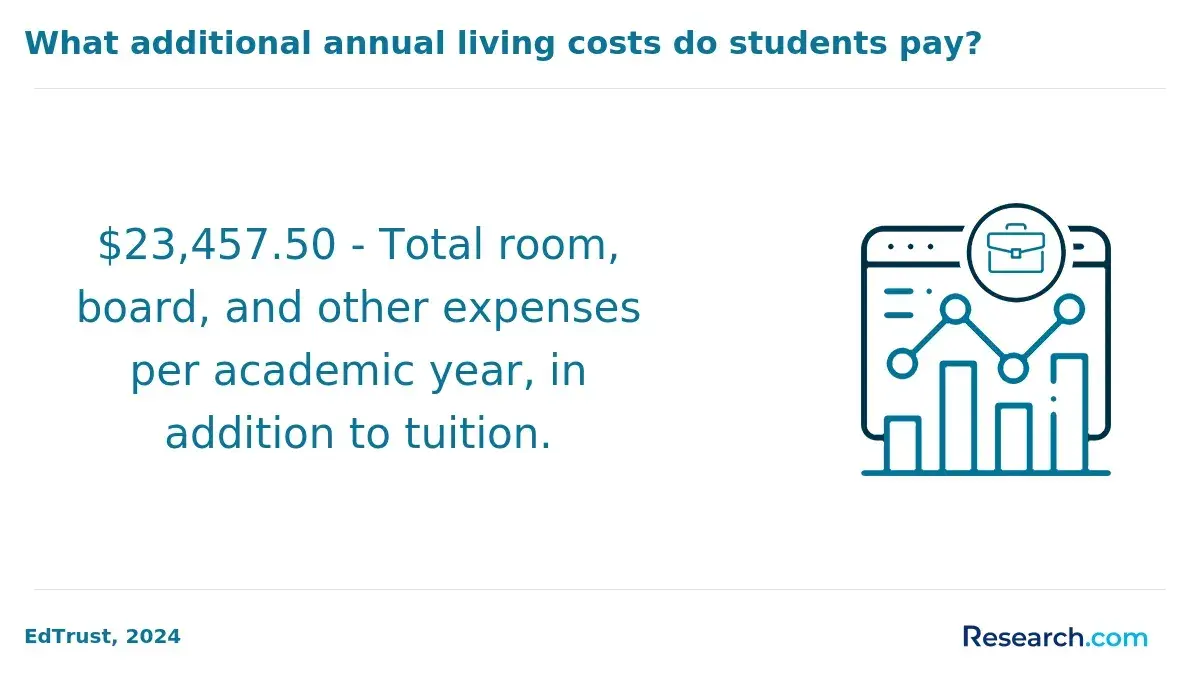
Cost of attendance includes more than tuition. It can include fees, books, technology, housing, food, transportation, childcare, health insurance, professional memberships, conference travel, dissertation expenses, and lost wages. For doctoral students, the biggest hidden costs often come from longer-than-expected dissertation timelines or fieldwork schedules that reduce paid work capacity.
Federal Student Aid loan terms also affect affordability. For the 2024-25 academic year, federal Direct Unsubsidized Loans for graduate students carried an 8.08% fixed interest rate, while Grad PLUS Loans carried a 9.08% fixed interest rate. That matters because doctoral borrowing can compound during multi-year enrollment, especially when students rely on loans for both tuition and living expenses.
The table below compares common cost-of-attendance categories by format. Use it to build a realistic budget before applying.
| Cost category | Online Applied Psychology doctorate | On-campus Applied Psychology doctorate | Budget risk |
| Relocation | Usually avoidable unless residencies are lengthy | Often required if you do not live near campus | Campus relocation can raise total cost significantly |
| Commuting | Usually low, except for fieldwork or residencies | Recurring transportation or parking costs | Campus commuting can add predictable monthly expenses |
| Housing and living costs | Based on your current location | Based on the university's local market | High-cost metro areas can change affordability |
| Work income | Often easier to maintain part-time or full-time employment | May be harder if classes, labs, or assistantships require daytime availability | Lost income can exceed tuition differences |
| Technology | May require reliable broadband, webcam, software, and secure testing tools | May rely more on campus computer labs and software access | Online students should budget for equipment |
| Professional development | May require travel to conferences or in-person networking | Campus events may be easier to access locally | Networking costs can be higher for remote students |
One of the most common budgeting mistakes is comparing only tuition per credit. A student who keeps a full-time job in an online program may have a lower opportunity cost, even if tuition is similar. A student who receives a funded assistantship on campus may pay less overall, even after relocating. The right comparison is net cost plus time cost.
Before enrolling, ask the financial aid office for a full program budget through expected completion. Also ask the department whether students commonly need extra dissertation terms, because additional registration terms can increase both tuition and borrowing.
Employer perception is changing as online graduate education becomes more common, but employers do not evaluate all online doctorates the same way. In Applied Psychology, the strongest signals are usually accreditation, program reputation, supervised experience, research competence, writing ability, ethical judgment, and evidence that you can apply psychological science in real settings.
Many employers will not see "online" on a diploma, and some transcripts do not label delivery format. However, that does not mean format is irrelevant. Employers may ask about your dissertation, practicum experience, assessment training, research methods, consulting projects, publications, presentations, or licensure eligibility. If an online program lacks strong applied experiences, the credential may be harder to explain in competitive settings.
Employer expectations vary by specialization. The table below shows which signals tend to matter most in common Applied Psychology career directions.
| Career direction | What employers usually evaluate | Online format concern | On-campus format concern |
| Organizational psychology and consulting | Research methods, analytics, intervention design, communication, consulting portfolio | Whether projects involved real organizations | Whether research translates to applied business problems |
| Behavioral services and ABA-adjacent roles | Supervision documentation, credential alignment, applied case experience | Whether fieldwork meets credential requirements | Whether campus placements match the student's target population |
| Educational or child-focused applied roles | Assessment familiarity, school or community experience, developmental expertise | Whether local placements are well supervised | Whether campus partnerships cover the student's desired setting |
| Research and evaluation roles | Dissertation quality, methods training, publications, data analysis skills | Whether remote research produced strong evidence of competence | Whether campus research is too narrow for applied jobs |
| Higher education | Teaching experience, research agenda, publications, references | Whether the program offers teaching or mentoring opportunities | Whether the candidate has enough applied experience outside campus |
Students interested in developmental, school, or youth-serving pathways may compare doctoral options after exploring child psychology master's programs. That comparison can clarify whether employers in your target setting value doctoral-level research, supervised practice, or a master's-level credential with specialized experience.
A useful employer test is simple: look at job postings for the roles you want and note what they require. If postings emphasize licensure, supervised hours, APA accreditation, BCBA certification, statistical software, program evaluation, or publications, choose the format that best helps you produce those credentials and proof points.
Program format can affect job prospects indirectly, but it is rarely the only factor. Online and on-campus graduates compete on the same basic evidence: degree credibility, specialization fit, supervised experience, research skill, professional network, references, and ability to explain their applied impact. A strong online graduate with relevant fieldwork may be more competitive than an on-campus graduate with little applied experience, and the reverse can also be true.
Labor market context is generally favorable for many psychology-related roles, but outcomes vary by specialization. The U.S. Bureau of Labor Statistics reported a median annual wage of $94,310 for psychologists in 2024. This figure is not specific to Applied Psychology doctorate graduates or to online versus on-campus programs, so use it as occupational context rather than a salary promise.
Format can shape job prospects through the opportunities it makes easier or harder to access. Consider the following career factors before assuming one format is automatically better.
- Choose online if you can keep building experience while enrolled, especially if your current employer can support applied projects, data collection, supervision, or promotion into a psychology-related role.
- Choose on-campus if your target career depends on research assistantships, teaching experience, lab immersion, faculty networks, or competitive academic references.
- Choose hybrid if you need online flexibility but also want in-person residencies, skills intensives, cohort bonding, or campus-based dissertation support.
- Be cautious with any format that does not publish faculty profiles, fieldwork policies, dissertation expectations, licensure disclosures, or graduate outcome information.
Admissions requirements may be similar across formats, but competitive on-campus PhD programs often place more emphasis on research fit, faculty lab availability, writing samples, and quantitative preparation. Professional online doctorates may place more emphasis on work experience, applied goals, prior graduate coursework, and readiness for independent study. Always compare the actual admissions rubric rather than assuming format tells the whole story.
The main career mistake is treating the degree title as the entire value of the doctorate. Employers and hiring committees want evidence of what you can do with the degree. Your format should help you produce that evidence through fieldwork, research, publications, applied projects, licensure preparation, or leadership experience.
How do you choose between online and on-campus Applied Psychology doctorate programs?
The best format is the one that fits your career goal, learning style, budget, fieldwork needs, and support requirements. Online programs tend to work best for disciplined students who need flexibility and can access relevant applied settings where they live. On-campus programs tend to work best for students who want intensive faculty contact, lab involvement, assistantships, and a stronger campus network.
Use a structured decision process instead of relying on convenience or prestige alone. The steps below will help you build a shortlist and compare programs on the factors that actually affect completion and career value.
- Define your target role first, including whether it requires licensure, certification, supervised hours, research experience, or a specific accreditation status.
- Eliminate programs that do not match your goal, even if they are affordable or flexible.
- Compare total cost to completion, including tuition, fees, travel, technology, lost income, assistantships, and extra dissertation terms.
- Ask how fieldwork is arranged, who approves sites, what happens if a placement falls through, and whether requirements work in your state.
- Evaluate dissertation support by reviewing faculty expertise, recent dissertation topics, advising structure, and completion expectations.
- Check employer signals by reviewing job postings, talking with hiring managers, and asking alumni how the credential is perceived in your target field.
- Confirm accreditation, state authorization, licensure disclosures, transfer credit policies, and whether the diploma or transcript differs by format.
The table below can help you translate your priorities into a format decision. It is not a ranking; it is a fit tool.
| If your priority is... | Online may fit better when... | On-campus may fit better when... |
| Keeping your job | Courses are asynchronous or evening-based and fieldwork can happen locally | Your employer offers flexibility or the program includes funded assistantship support |
| Research career preparation | Faculty support remote research teams and publish with doctoral students | You want lab immersion, grant work, and frequent research seminars |
| Lower total cost | You avoid relocation and maintain income | You receive tuition remission, stipend funding, or subsidized campus support |
| Licensure-linked practice | The program is authorized in your state and supports approved local placements | The campus has established clinics, practica, and licensure-aligned supervision |
| Networking | The program offers residencies, active cohorts, alumni groups, and faculty access | You benefit from daily contact with peers, faculty, labs, and campus events |
Before you apply, speak with admissions, financial aid, a faculty member, and at least one current student or alumnus. Ask direct questions about workload, dissertation delays, fieldwork support, hidden fees, and employer response. If a program avoids specifics, treats accreditation vaguely, or cannot explain how online students receive doctoral-level mentoring, consider it a warning sign.
For many students, the right investment is not the cheapest or most prestigious option. It is the program that you can finish, afford, defend to employers, and use to reach a clearly defined applied psychology goal.
Other Things You Should Know About Applied Psychology
Often they do not, but policies vary by university. Ask the registrar whether the diploma or transcript lists delivery mode, campus location, or program format before enrolling.
Sometimes. Many universities limit doctoral transfer credits and may require transferred courses to match content, level, grade, age, and accreditation standards. Dissertation credits usually do not transfer easily.
Requirements vary. Some programs are test-optional or no-GRE, while research-intensive PhD programs may still consider GRE scores, writing samples, statistics preparation, and faculty research fit.
It can be. Hybrid programs may combine online coursework with in-person residencies, skills intensives, or research meetings. They work best when the required travel is predictable, affordable, and clearly tied to learning outcomes.
- Employers' Perceptions of Online University Degrees and ... https://journals.um.si/index.php/oe/article/view/2425/2054
- Psychology Accreditation: What you need to know https://www.onlinepsychologydegrees.com/articles/accreditation/
- 13 Best Online Doctorate in Psychology Programs for 2026 - Online Psychology Programs https://onlinepsychologyprograms.org/doctoral/
- How Much Does a PhD Cost https://aituedu.org/how-much-does-a-phd-cost/
- How Employers View Online Degrees: Interviews with Nine Hiring Executives https://www.onlineeducation.com/features/how-employers-view-online-degrees
- Online Psychology Master's: APA, BPS and Approbation https://www.fernstudi.net/en/magazine/online-psychology-master-germany
- What to Look For with Accreditation https://mastersinpsychologyguide.com/articles/masters-in-psychology-accreditation-what-to-look-for/
- Understanding the Differences Between Graduate Degrees in Clinical Psychology – IECA https://www.iecaonline.com/journal-article/understanding-the-differences-between-graduate-degrees-in-clinical-psychology/
- Raising the Bar: The Impact of Accreditation on Psychology Training | SoMAP - The Society of Modern Applied Psychology https://thesomap.org/raising-the-bar-the-impact-of-accreditation-on-psychology-training/
- Psychology Ph.D. & Psy.D.: Costs, Requirements, And Careers https://www.psychology.org/degrees/phd/