2027 How to Choose an Online Applied Psychology Doctorate Program: Accreditation, Cost, Format, and Career Fit

Co-Founder and Chief Data Scientist
The hard part is not finding an online applied psychology doctorate; it is knowing which one is credible, affordable, and useful for your career. The Bureau of Labor Statistics reported a $94,310 median annual wage for psychologists in May 2024, but roles, licensure rules, and employer expectations vary widely.
This guide is for working professionals, master's graduates, and career changers comparing doctoral options. You will learn how to evaluate accreditation, total cost, delivery format, curriculum, pacing, and career alignment before committing time and money.
Key Things to Know About Choosing Applied Psychology Doctorate Programs
- Start with accreditation: your baseline should be 100% institutional accreditation, while APA, NASP, or BACB-related recognition only matters when the program's goal matches licensure, school psychology, or behavior analysis.
- Use total program cost, not tuition alone: 2024-2025 online applied psychology doctorates commonly fall around $600 to $1,500+ per credit, and many programs require about 60 to 90 credits beyond the master's level.
- Match format to your life and career goal: fully asynchronous programs are often best for working adults, while hybrid or residency-based formats may be better for students needing supervised practice, intensive research mentoring, or clinical preparation.
What criteria should you use to assess an online Applied Psychology doctorate program?
An online applied psychology doctorate should be judged as an investment, not just as a credential. Applied psychology means using psychological science in practical settings such as organizations, education, health behavior, human services, forensic contexts, coaching, consulting, program evaluation, or behavior change. The right program depends on whether you want research, leadership, consulting, teaching, clinical preparation, or a specialized practice path.
A strong first screen should separate must-have criteria from nice-to-have features. Use the following checklist when comparing programs so you do not overvalue branding, rankings, or convenience at the expense of credibility and career fit.
- Accreditation status: confirm institutional accreditation first, then check whether programmatic accreditation is required for your intended role or state license.
- Degree type: compare PhD, PsyD, EdD, and professional doctorate models because each can emphasize research, practice, leadership, or education differently.
- Career pathway: identify whether the program prepares students for licensure, non-licensure applied practice, consulting, research, teaching, or organizational leadership.
- Curriculum depth: look for advanced statistics, research methods, ethics, assessment, intervention design, program evaluation, and specialization courses that match your goal.
- Faculty fit: review faculty publications, applied experience, supervision capacity, and whether they work in the areas you want to study.
- Online format: determine whether courses are asynchronous, synchronous, hybrid, cohort-based, self-paced, or residency-supported.
- Residency and field requirements: check whether you must travel, complete practicum hours, conduct research on site, or arrange local supervision.
- Total cost and aid: calculate tuition, fees, travel, books, technology, dissertation costs, and the realistic amount of loans or employer funding you may need.
- Student support: assess advising, library access, statistical support, dissertation coaching, career services, and writing support for online doctoral students.
- Outcomes transparency: ask for completion rates, average time to completion, licensure pass data where relevant, dissertation completion support, and alumni career examples.
The most common mistake is treating all online doctorates as interchangeable. A non-licensure applied psychology doctorate can be a strong fit for leadership, consulting, research translation, or teaching, but it may not meet psychologist licensure requirements. If your goal is clinical practice, compare the doctorate against state board requirements and consider how earlier preparation, such as online clinical psychology masters, fits into your long-term plan.
The table below summarizes the major criteria and why each one matters when you are narrowing a list of programs. It is designed to help you quickly distinguish a credible match from a program that may be convenient but poorly aligned.
| Criterion | What it tells you | Why it affects your decision |
| Institutional accreditation | The school has been reviewed by a recognized accreditor | It affects aid eligibility, transfer credibility, and employer recognition |
| Programmatic accreditation | The program meets standards in a specific professional area | It may be essential for licensure or specialized practice |
| Degree model | Whether the doctorate is research-, practice-, or leadership-focused | It shapes dissertation expectations, courses, and career outcomes |
| Format | How and when courses are delivered | It determines whether the program can realistically fit your schedule |
| Total cost | The full financial commitment beyond advertised tuition | It determines affordability and debt risk |
| Curriculum alignment | How closely courses match your intended field | It affects whether the degree builds the expertise employers or boards expect |
| Student support | How the school supports doctoral progress online | It can influence persistence, dissertation completion, and time to degree |
How do you check if an online Applied Psychology doctorate program is accredited?
Accreditation is the first credibility test. For an online applied psychology doctorate, institutional accreditation means the college or university has been reviewed by an accreditor recognized by the U.S. Department of Education or the Council for Higher Education Accreditation. Programmatic accreditation is separate and applies to certain professional psychology pathways.
Do not rely only on a school's marketing page. Accreditation can change, and some programs use vague wording that sounds official without clearly identifying the accreditor. Follow this process before you apply or pay an application fee.
- Find the institution's official accreditation page and write down the accrediting agency name exactly as listed.
- Search the U.S. Department of Education's Database of Accredited Postsecondary Institutions and Programs or CHEA's database to verify that the accreditor and institution are currently recognized.
- Check whether accreditation applies to the institution as a whole, the specific school or college, or the specific doctoral program.
- If licensure is your goal, review your state psychology board's education requirements and confirm whether online, hybrid, internship, residency, and practicum components are accepted.
- Ask admissions for written confirmation of accreditation status, programmatic accreditation status, and whether graduates meet educational requirements in your state.
- Save screenshots or PDF documentation before enrolling so you have a dated record of what the school represented.
The key benchmark is simple: eliminate any program offered by an institution without recognized institutional accreditation. In 2024-2025, federal student aid eligibility still depends heavily on attending an eligible institution, and graduate students may use Direct Unsubsidized Loans up to $20,500 per academic year if they qualify. That does not make a program affordable by itself, but it is one reason accreditation has financial as well as academic consequences.
The table below explains the accreditation layers you are likely to see. It helps separate required credibility checks from optional or career-specific credentials.
| Accreditation type | What it usually signals | How to interpret it |
| Institutional accreditation | The university meets recognized academic and administrative standards | Required baseline for serious consideration |
| APA accreditation | A professional psychology program meets American Psychological Association standards | Most relevant for health service psychology pathways such as clinical, counseling, or school psychology |
| NASP approval or recognition | A school psychology program aligns with National Association of School Psychologists standards | Most relevant for school psychology preparation, especially specialist-level and certain doctoral pathways |
| BACB-related coursework or ABAI accreditation | Coursework or program standards align with behavior analysis preparation | Most relevant if your goal involves behavior analysis credentials |
| State authorization | The institution is allowed to enroll online students in particular states | Important if you live outside the school's home state |
A credible admissions team should answer accreditation questions directly. Be cautious if representatives redirect you to general reputation claims, avoid naming the accreditor, or say accreditation is "in progress" without explaining what that means for your cohort.
What programmatic accreditations matter most for an online Applied Psychology doctorate?
Programmatic accreditation matters most when your doctorate is tied to a regulated profession. In applied psychology, the importance of programmatic accreditation depends on whether you are seeking psychologist licensure, school psychology practice, behavior analysis certification, or a non-licensure applied role.
For clinical, counseling, or health service psychology careers, APA accreditation is often the most important programmatic signal. However, many online applied psychology doctorates are non-licensure programs and may not be APA-accredited because they are designed for research translation, consulting, leadership, education, or organizational settings rather than independent clinical practice.
Use the following distinctions when deciding how much weight to give programmatic accreditation.
- APA accreditation matters most if you intend to become a licensed psychologist, pursue internship pathways that expect APA-accredited doctoral preparation, or work in settings that strongly prefer APA-accredited degrees.
- NASP-related recognition matters most if your goal is school psychology and your state or employer uses NASP standards in credentialing decisions.
- BACB-related preparation matters if you plan to become a behavior analyst, although certification rules include coursework, supervised fieldwork, examination, and degree-level requirements that may change over time.
- No programmatic accreditation may be acceptable if the doctorate is clearly non-licensure and your goal is research, teaching, consulting, organizational development, policy, or leadership.
If you are considering behavior analysis as an applied psychology path, compare doctoral options with master's-level ABA preparation because certification pathways often begin before the doctorate. Readers focused on speed and sequencing may want to review a fastest BCBA program comparison before deciding whether a doctorate is necessary now.
The table below shows how programmatic accreditation connects to career intent. This is especially important because choosing the wrong accreditation path can create expensive delays if you later decide to pursue licensure or certification.
| Career goal | Programmatic signal to investigate | Why it matters |
| Licensed psychologist | APA accreditation and state board acceptance | May affect internship eligibility, licensure review, and employer expectations |
| School psychology | NASP alignment and state education agency rules | May affect school credentialing and district hiring requirements |
| Behavior analysis | ABAI accreditation or BACB-aligned coursework where applicable | May support certification planning when paired with supervised fieldwork and exam requirements |
| Organizational consulting | Institutional accreditation and relevant curriculum | Employers may care more about skills, research ability, and applied projects than programmatic accreditation |
| Higher education teaching | Institutional accreditation, dissertation quality, and research fit | Faculty roles often depend on research output, teaching experience, and institutional reputation |
The safest approach is to work backward from the job title you want. If that job is licensed, regulated, or certification-based, verify the education rules before choosing the program. If the job is not regulated, programmatic accreditation may be less important than curriculum, faculty expertise, and evidence of doctoral-level research training.
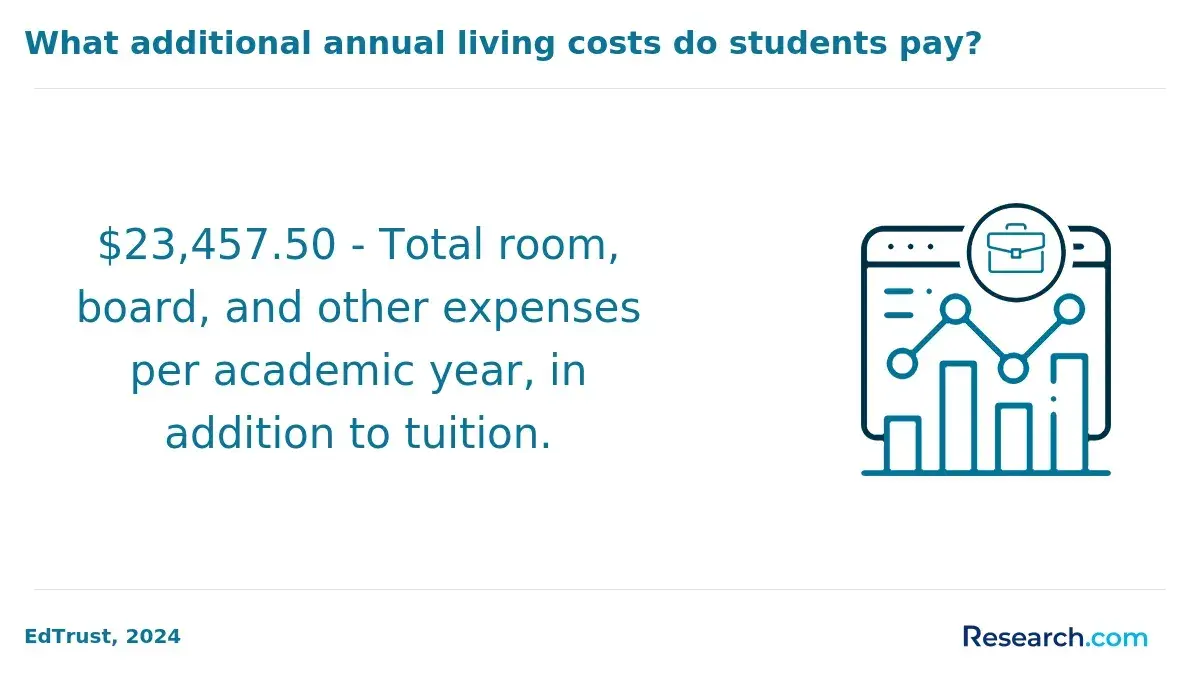
Assess cost by calculating the total cost to finish, not the cost per credit alone. Online applied psychology doctorate programs often advertise a per-credit tuition rate, but the real price depends on required credits, transfer credit policy, residency travel, dissertation enrollment, technology fees, and how long you remain enrolled.
For 2024-2025 catalogs, many online applied psychology doctoral programs list tuition roughly from $600 to $1,500+ per credit. Because doctoral programs commonly require about 60 to 90 credits beyond the master's level, even a modest difference in per-credit tuition can change the final cost by tens of thousands of dollars.
Use this cost-building sequence before you compare offers. It will help you avoid the common mistake of ranking programs by tuition rate alone.
- Multiply tuition per credit by the exact number of required credits after any approved transfer credits.
- Add mandatory university fees, program fees, technology fees, and online learning fees listed in the catalog.
- Add travel, lodging, meals, and missed-work costs for residencies, intensives, interviews, or dissertation defenses.
- Estimate books, software, assessment tools, statistical packages, transcription, and research costs.
- Ask how dissertation continuation credits are billed if you need extra terms to finish.
- Subtract confirmed grants, scholarships, assistantships, tuition remission, employer reimbursement, and military benefits.
- Estimate loan interest and repayment impact if you expect to borrow.
Graduate financial aid can help with cash flow, but it does not automatically make a doctorate a good investment. In 2024-2025, eligible graduate students could borrow through federal Direct Unsubsidized Loans and may also use Grad PLUS loans up to the school-certified cost of attendance, subject to eligibility. Use loans cautiously and compare expected career value against total debt.
The table below summarizes the major cost components that can affect online applied psychology doctoral budgets. Use it as a worksheet when admissions offices provide tuition estimates.
| Cost component | Where it appears | Why it matters |
| Tuition per credit | Catalog, bursar page, enrollment agreement | Usually the largest cost driver |
| Required credits | Degree plan and transfer evaluation | Determines how much tuition you actually pay |
| Mandatory fees | Student account or fee schedule | Can add recurring costs every term |
| Residency costs | Program handbook and academic calendar | Can make an online program more expensive than expected |
| Dissertation costs | Doctoral handbook and registrar policies | Can grow if completion takes extra terms |
| Research expenses | Dissertation proposal and methods requirements | May include software, participant recruitment, transcription, or data access |
| Financing costs | Loan disclosures and aid offer | Interest and fees affect the long-term cost of the degree |
A practical affordability test is to compare three numbers: total estimated program cost, the amount you would need to borrow, and the realistic career benefit for your target role. If the program does not improve your qualifications for a specific path, a lower-cost master's, certificate, or supervised training route may be a better next step.
Online applied psychology doctorate formats vary more than many applicants expect. Some programs are almost fully asynchronous, while others include live seminars, weekend intensives, campus residencies, fieldwork, or cohort milestones. The best format is the one you can sustain while meeting the academic and professional standards of your target field.
Across current online doctoral catalogs, asynchronous and hybrid-with-residency formats are among the most common for applied psychology-related programs. This reflects a broader trend in graduate education: schools are expanding flexible delivery for working adults while keeping live interaction or residency elements for research mentoring, assessment practice, ethics training, and doctoral community building.
The table below compares common formats by schedule style and fit. Use it to decide whether a program's design matches your work hours, family responsibilities, and learning preferences.
| Format | How it usually works | Best fit | Main trade-off |
| Fully asynchronous | Students complete weekly modules without required live class times | Working adults with unpredictable schedules | Requires strong self-direction and proactive communication |
| Synchronous online | Students attend scheduled live classes by video | Learners who want structure and real-time discussion | Less flexible across time zones or shift work |
| Hybrid online | Most coursework is online, with some campus or field components | Students needing applied skill practice or faculty interaction | Travel and scheduling can raise costs |
| Cohort-based | Students move through courses with the same peer group | Learners who value accountability and community | Less room to slow down or accelerate |
| Self-paced or competency-based | Progress depends on demonstrating mastery within school rules | Experienced professionals with strong independent study skills | May offer less peer interaction or predictable sequencing |
| Residency-supported | Online coursework is paired with required doctoral residencies | Students who want mentoring, research development, or professional networking | Requires travel planning and added expense |
Do not assume "online" means "anytime." A program with weekly live seminars may be excellent, but it can be a poor fit if your work schedule changes often. A fully asynchronous program may be convenient, but it can feel isolating if you need frequent discussion, faculty contact, or structured deadlines.
Pacing determines whether you can realistically finish. Most online applied psychology doctorates are designed for working adults, but "flexible" can mean very different things: part-time enrollment, multiple start dates, adjustable course loads, dissertation extensions, or self-paced competency work.
Many applied psychology doctorates take about three to seven years depending on transfer credits, enrollment intensity, dissertation progress, and any practicum or residency requirements. The lower end usually requires steady year-round enrollment and a well-defined research plan; the higher end often reflects part-time study, professional obligations, or dissertation delays.
Before choosing a pace, compare your weekly capacity with the program's expectations. These questions will help you avoid overcommitting.
- How many hours per week do faculty expect for each doctoral course?
- Can you take one course at a time, or must you follow a fixed course sequence?
- Does the school allow part-time enrollment without losing aid eligibility or academic standing?
- Are there maximum time-to-degree limits that could affect students who pause enrollment?
- Can dissertation work begin early, or does it start only after coursework is finished?
- How are leaves of absence handled for work, health, military, or family reasons?
- Does slowing down change tuition, fees, financial aid, or dissertation continuation costs?
The table below summarizes pacing models and their practical implications. It can help you choose a program that supports completion rather than simply offering a convenient start date.
| Pacing model | Typical structure | Who it may suit | Risk to consider |
| Full-time | Heavier course load with faster progression | Students with protected study time | Can be difficult with demanding employment |
| Part-time | Reduced course load over a longer timeline | Working professionals and caregivers | May increase total terms and fees |
| Cohort lockstep | Fixed sequence with limited schedule changes | Students who want structure | Less forgiving if life circumstances change |
| Rolling starts | Multiple entry points during the year | Applicants who want to begin quickly | Course availability may still be sequenced |
| Dissertation-flexible | Coursework is structured, but research timeline varies | Students with complex research projects | Extra terms can increase cost |
The best pacing choice is the one you can maintain during a difficult semester, not just an ideal one. If you work full time, care for family, or travel for work, a slightly slower pace can be more cost-effective than enrolling aggressively and needing repeated extensions.
The core curriculum should show that the program is truly doctoral-level and applied. A strong applied psychology doctorate should move beyond survey courses and train you to evaluate evidence, design interventions, analyze data, lead ethically, and solve real problems in human behavior and systems.
Look for depth in both research and application. A curriculum that is too theoretical may not support applied career goals, while a curriculum that is too skills-based without research depth may not feel rigorous enough for doctoral-level leadership, teaching, or evaluation work.
Review the degree plan for these curriculum elements because they signal whether the program can support advanced professional roles.
- Advanced research methods, including quantitative, qualitative, or mixed-methods design.
- Statistics and data interpretation courses that prepare students to evaluate interventions and outcomes.
- Ethics, multicultural competence, and legal issues in applied psychological work.
- Assessment, measurement, or program evaluation courses relevant to the specialization.
- Evidence-based intervention, consultation, coaching, or behavior-change coursework.
- Specialization courses in areas such as organizational psychology, health psychology, forensic psychology, educational psychology, child and adolescent psychology, or behavior analysis.
- Doctoral writing, proposal development, dissertation, capstone, or applied research project support.
- Opportunities to connect coursework with workplace projects, field settings, or publishable research.
Specialization fit matters because applied psychology is broad. For example, students interested in justice settings may compare doctoral options with earlier training in forensic psychology master's programs, while those focused on youth development may need child and adolescent coursework, assessment, or school-related experience.
The table below connects common curriculum areas with the skills they are meant to build. Use it to see whether a program's course list supports your intended professional identity.
| Curriculum area | Skill developed | Why it matters |
| Research methods | Designing and evaluating studies | Supports dissertation work and evidence-based decision-making |
| Statistics | Interpreting data and outcomes | Useful in consulting, evaluation, research, and leadership roles |
| Ethics | Managing professional boundaries and responsibilities | Essential in all applied psychology settings |
| Assessment and measurement | Evaluating people, programs, or organizational outcomes | Important for applied decision-making and intervention planning |
| Intervention design | Creating behavior, learning, or organizational change strategies | Connects psychological theory to practical results |
| Specialization courses | Building expertise in a focused area | Helps align the doctorate with a specific career path |
| Dissertation or capstone | Producing original or applied scholarly work | Demonstrates doctoral-level competence |
Be skeptical of programs with vague course titles and little explanation of learning outcomes. A credible curriculum should make it clear what you will be able to do, how you will be assessed, and how the doctoral project connects to applied psychology practice.
A program matches your career goals when its accreditation, curriculum, faculty expertise, field requirements, research model, and alumni outcomes all point toward the same destination. If those signals conflict, the program may still be legitimate but not right for you.
Start by naming the role you want after graduation. "I want a doctorate in psychology" is too broad. A better goal is specific: organizational consultant, college instructor, licensed psychologist, school psychology leader, behavioral health program evaluator, forensic consultant, child development specialist, or human services executive.
Use this career-fit sequence before you submit applications. It will help you compare programs based on outcomes rather than assumptions.
- Write down your target job title, work setting, and whether the role requires licensure, certification, or only a doctoral credential.
- Review job postings in your state or target market and note required degree type, accreditation language, experience, and preferred skills.
- Compare those requirements with each program's degree plan, specialization, practicum options, dissertation model, and faculty expertise.
- Ask the program for examples of recent dissertation topics, employer settings, and alumni roles without expecting guaranteed outcomes.
- Check whether the program helps online students build a professional portfolio, publish, present, consult, teach, or complete supervised experience.
- Remove programs that do not clearly support your target role, even if they are cheaper, faster, or more convenient.
Career value also depends on whether a doctorate is necessary for your next step. Some goals may be better served by a master's, license-eligible program, certificate, supervised experience, or specialized training. For example, students focused on youth services may compare doctoral options with child psychology master's programs if they need a lower-cost or more targeted credential first.
The table below shows how different career goals should shape your program criteria. It is meant to help you avoid choosing a program that is academically interesting but professionally misaligned.
| Career goal | Program features to prioritize | Fit warning |
| Licensed psychologist | State board alignment, APA accreditation where required, supervised training, internship preparation | A non-licensure applied doctorate may not qualify |
| Organizational consultant | Organizational psychology, assessment, analytics, leadership, applied projects | A clinical-heavy curriculum may not match employer needs |
| Higher education instructor | Research methods, dissertation quality, teaching opportunities, publications | A practice-only program may offer limited research development |
| Program evaluator | Statistics, measurement, evaluation design, mixed methods, applied research | Weak methods training can limit credibility |
| Forensic or justice-related consultant | Forensic coursework, ethics, assessment, legal context, relevant faculty | General psychology courses may not provide enough specialization |
| Child and family services leader | Developmental psychology, intervention, systems leadership, ethics, evaluation | Adult-focused coursework may not support the intended population |
A good program should make your next professional move more plausible, not merely add "doctor" to your name. If you cannot explain how the curriculum, faculty, and requirements support your target role, keep comparing.
What red flags should I watch out for in an online Applied Psychology doctorate program?
Red flags do not always mean a program is fraudulent, but they do mean you should slow down and verify details before enrolling. The biggest risks are weak accreditation, unclear licensure claims, unrealistic completion promises, poor cost transparency, and limited doctoral support.
Watch for these warning signs during your search. They can help you avoid programs that are unlikely to support your academic, financial, or professional goals.
- The institution lacks recognized institutional accreditation or refuses to identify the accreditor clearly.
- The program suggests that graduates can become licensed psychologists without explaining state-specific requirements.
- Admissions representatives promise unusually fast completion without discussing dissertation, practicum, residency, or research expectations.
- The published cost estimate excludes fees, travel, dissertation continuation credits, or tuition increases.
- The curriculum has few advanced research, statistics, ethics, or specialization courses.
- Faculty profiles are missing, outdated, or unrelated to applied psychology areas the program advertises.
- Student outcomes are vague, unavailable, or framed as guaranteed career results.
- The school pressures you to enroll quickly before you can compare accreditation, cost, and state rules.
- The program uses accreditation language such as "recognized," "approved," or "internationally accredited" without naming a U.S.-recognized accreditor.
- Residency, practicum, internship, or dissertation requirements are hard to find before admission.
The table below contrasts red flags with positive signs of a credible online applied psychology doctorate. Use it during admissions calls and document reviews.
| Red flag | Credible sign |
| Vague accreditation language | Clear institutional accreditor listed and verifiable in recognized databases |
| Guaranteed licensure or career claims | State-specific guidance and careful outcome language |
| Advertised tuition only | Full cost estimate including fees, travel, and dissertation terms |
| No faculty detail | Faculty credentials, research areas, and advising roles are transparent |
| Minimal research training | Strong methods, statistics, ethics, and doctoral project sequence |
| Pressure to enroll immediately | Time to review catalog, handbook, aid offer, and accreditation documents |
| Unclear online requirements | Published schedule for live classes, residencies, fieldwork, and milestones |
One practical rule can prevent many mistakes: do not enroll until you have the catalog, tuition and fee schedule, accreditation confirmation, degree plan, residency requirements, transfer credit evaluation, and written answers to licensure or career-path questions. If a school cannot provide those materials, it is not ready for your commitment.
Other Things You Should Know About Applied Psychology
Many online applied psychology doctorates prefer or require a master's degree in psychology, counseling, education, behavior analysis, social science, or a related field. Some programs admit bachelor's-prepared students into longer doctoral tracks, but the total credits, time, and cost are usually higher.
Not always. PhD programs usually require a dissertation, while some professional doctorates may use an applied dissertation, doctoral project, or capstone. You should compare the final project format because it affects research intensity, timeline, faculty mentoring, and career usefulness.
Many students do, especially in part-time or asynchronous programs. The challenge is sustaining doctoral reading, writing, research, and dissertation work over several years. Ask the program for expected weekly study hours and average time to completion for working students.
Gather unofficial transcripts, a résumé, career goals, state licensure or certification requirements if relevant, employer tuition benefit rules, and a budget. Having these ready makes it easier to compare transfer credit, admissions fit, cost, and whether the program supports your intended path.
- 5 Terrific Ways to Finance your Masters in Psychology Degree https://mastersinpsychologyguide.com/articles/5-terrific-ways-to-finance-your-masters-in-psychology-degree/
- 404 - NotFound https://lagardelaw.com/MX/issuu/QRVMCZlVWdUZrFTYU5Gco1UVrlnVrNWNWFjUYdFbaVFVyI1VWRlVzJ2RK9kVtBnVlZFbWllMsNVYxIFeWtmWXJFMKllVzAndWxGbYZ1aaxWTrZFWV1GdwYVMsd0YEJ0VWdFaGlFboFmVrFzMW1GcWNGWCJnVR1TP
- Psychology Accreditation: What you need to know https://www.onlinepsychologydegrees.com/articles/accreditation/
- How Much Does a PhD Cost https://aituedu.org/how-much-does-a-phd-cost/
- Course Delivery Formats 101: Synchronous, Asynchronous, and Blended/Hybrid Learning Explained https://www.iacet.org/events/iacet-blog/blog-articles/course-delivery-formats-101-synchronous-asynchronous-and-blended-hybrid-learning-explained/
- Society for the Teaching of Psychology https://teachpsych.org/E-xcellence-in-Teaching-Blog/12197763
- What Can You Do With A Ph.D. In Psychology? | Psychology.org https://www.psychology.org/resources/jobs-with-a-doctorate-in-psychology/
- CAREER WITH A PSYCHOLOGY DEGREE https://ftp.rudraksham.com/view/7TW/305/fc7ngU/WithAPsychologyDegree
- 13 Best Online Doctorate in Psychology Programs for 2026 - Online Psychology Programs https://onlinepsychologyprograms.org/doctoral/
- Frequently Asked Questions about Accreditation - Canadian Psychological Association https://cpa.ca/accreditation/faq/