2027 Online Applied Psychology Doctorate Programs with Quantitative, Qualitative, and Mixed-Methods Research Options

Co-Founder and Chief Data Scientist
Choosing an online applied psychology doctorate often comes down to one overlooked issue: whether the program can support the kind of research you want to conduct. The stakes are practical, not just academic. The U.S. Bureau of Labor Statistics reported a $94,310 median annual wage for psychologists in May 2024, but roles, pay, and credentials vary widely by specialty.
This guide is for prospective doctoral students comparing quantitative, qualitative, and mixed-methods options so they can judge program fit, dissertation feasibility, faculty support, cost, and career value before enrolling.
Key Things You Should Know
- Quantitative research is strongest for students who want to test measurable relationships, analyze large datasets, or pursue evaluation, analytics, industrial-organizational, behavioral, or policy-focused roles; BLS projects 6% employment growth for psychologists from 2024 to 2034.
- Qualitative research is often a better fit when the doctoral question focuses on lived experience, organizational culture, practitioner decision-making, program implementation, trauma narratives, leadership, or community-based applied psychology problems.
- Mixed methods can produce a stronger applied study when numbers and participant perspectives are both necessary, but it usually adds design, data-collection, analysis, and dissertation-integration workload.
Which Online Applied Psychology Doctorate Programs Offer Quantitative, Qualitative, or Mixed-Methods Research?
Online applied psychology doctorates may appear similar on program pages, but their research flexibility can differ substantially. Some explicitly support quantitative, qualitative, and mixed-methods dissertations, while others allow multiple approaches only if the student has an appropriate chair, committee, data source, and approved research question.
The table below gives examples of online or primarily online doctoral programs commonly considered by applied psychology students. Use it as a starting point, not a substitute for checking the current catalog, dissertation handbook, and faculty roster.
| Program or school type | Common online applied psychology doctorate examples | Research methods typically supported | Best-fit students | Important limitation to verify |
| General psychology PhD programs with applied specializations | Online PhD in Psychology programs with emphases such as industrial-organizational psychology, health psychology, performance psychology, cognition, or educational psychology | Often quantitative, qualitative, and mixed methods, subject to dissertation approval | Students who want flexibility across applied workplace, learning, behavior, or health-related research questions | Confirm whether each specialization has faculty who chair the method you want to use |
| Industrial-organizational or business psychology doctorates | Online PhD or PsyD-style programs in business psychology, organizational psychology, or I-O psychology | Frequently quantitative and mixed methods; qualitative work may be used for leadership, culture, and organizational-change studies | Students targeting consulting, people analytics, organizational development, assessment, or leadership research | Check whether advanced statistics, survey design, psychometrics, or analytics support is available online |
| Behavior analysis and behavioral health doctorates | Online doctoral programs in applied behavior analysis, behavioral health leadership, or behaviorally focused psychology | Often quantitative or single-case design; qualitative or mixed methods may appear in leadership, implementation, or service-delivery studies | Students focused on intervention outcomes, behavior-change systems, supervision, or service quality | Confirm whether the program is designed for licensure, board certification advancement, leadership, or research rather than assuming all outcomes are covered |
| Educational, developmental, or child-focused applied psychology doctorates | Online doctorates in educational psychology, developmental psychology, school-related psychology, or learning sciences | Quantitative, qualitative, and mixed methods may all be appropriate depending on the dissertation question | Students interested in learning outcomes, child development, family systems, educational interventions, or program evaluation | Review whether research with minors requires additional site permissions, IRB documentation, and school-district access |
| Counseling, forensic, or clinical-adjacent applied psychology doctorates | Online doctorates in forensic psychology, counseling psychology-related studies, trauma, or clinical-adjacent applied psychology fields | Qualitative and mixed methods are common for professional practice questions; quantitative methods fit assessment, outcomes, and risk-related topics | Students pursuing applied research, administration, teaching, policy, or consulting rather than assuming direct clinical licensure | Verify licensure status carefully because many online applied psychology doctorates are not clinical psychology licensure programs |
Programs that truly support multiple methodologies usually show that support in more than one place: research course sequences, dissertation examples, faculty publications, approved dissertation designs, software access, and student research services. If the only evidence is one sentence saying "students may use qualitative or quantitative methods," ask for specifics before applying.
How Do Quantitative, Qualitative, and Mixed-Methods Research Differ in Online Applied Psychology Doctorates?
Quantitative, qualitative, and mixed-methods research are not simply three labels for dissertation formatting. They represent different ways of asking questions, collecting evidence, analyzing data, and defending conclusions in applied psychology.
The comparison below explains how each method works in doctoral study and how it should influence your program choice.
| Research approach | What it asks | Common data sources | Typical analysis | Best doctoral fit | Main risk |
| Quantitative | How strongly are variables related, and does an intervention or condition predict measurable outcomes? | Surveys, assessments, administrative records, experiments, archival datasets, standardized scales | Descriptive statistics, regression, ANOVA, structural modeling, psychometrics, single-case analysis, or other statistical tests | Students comfortable with measurement, statistical reasoning, and structured research designs | Choosing a statistical design without enough data, measurement quality, or analytic preparation |
| Qualitative | How do people experience, interpret, describe, or make meaning of an applied psychology issue? | Interviews, focus groups, observations, case documents, reflective journals, open-ended responses | Thematic analysis, phenomenology, grounded theory, case study analysis, narrative analysis, coding, memoing | Students interested in depth, context, professional practice, culture, identity, implementation, or lived experience | Underestimating the time needed for recruitment, transcription, coding, and trustworthiness checks |
| Mixed methods | What can numerical results and participant perspectives explain better together than either could alone? | A combination of surveys, scores, records, interviews, focus groups, observations, or documents | Statistical analysis plus qualitative coding, followed by formal integration of findings | Students whose applied question requires both outcome evidence and explanatory context | Adding a second method without a clear integration plan, which can delay dissertation approval |
A useful way to choose is to start with the problem, not the method. If your question asks "how much," "how strongly," or "whether X predicts Y," quantitative research may fit. If it asks "how do participants experience this," "what meaning do professionals make of this," or "why does implementation break down," qualitative research may be better.
If the question needs both outcome patterns and human explanation, mixed methods may be worth the added complexity.
How Does Research Methodology Affect the Dissertation or Capstone in an Online Applied Psychology Doctorate?
Your methodology affects nearly every part of the dissertation or doctoral capstone: the literature review, research questions, sampling plan, ethics review, data collection, analysis timeline, committee expertise, and final defense. In online programs, it also affects whether you can realistically access participants, software, databases, and faculty support from a distance.
Dissertation expectations vary by school, but most applied psychology projects follow a sequence similar to this:
- Define an applied psychology problem that is narrow enough to study and important enough to matter to practice, policy, education, organizations, or behavioral services.
- Match the research question to a methodology rather than selecting a method because it sounds impressive or familiar.
- Secure a chair or mentor whose expertise fits both the topic and the method.
- Write a proposal that explains the design, participants or data source, instruments or interview protocol, ethics protections, and analysis plan.
- Obtain institutional review board approval before collecting data from people or using protected records.
- Collect, analyze, interpret, and defend the data using standards appropriate to the method.
Quantitative dissertations often move faster when students already have access to a clean dataset or a realistic recruitment pool. Qualitative dissertations can be efficient when the sample is focused and reachable, but they require disciplined coding and documentation.
Mixed-methods dissertations may be persuasive for applied problems, but they usually require more proposal detail because the committee must approve both strands and the integration strategy.
A common mistake is assuming that a capstone is always easier than a dissertation. Some professional doctorates use applied projects instead of traditional dissertations, but those projects can still require rigorous data collection, stakeholder access, measurable outcomes, and a defensible evaluation plan.
Strong online applied psychology doctorates build research training gradually. Students usually begin with research design and statistics, then move into advanced methods, ethics, measurement, and dissertation-specific seminars. The depth of that sequence matters because doctoral research requires independent judgment, not just passing a statistics course.
Look for coursework that matches your intended methodology. A student with a practice-oriented background, for example, may need more preparation before pursuing advanced statistical modeling, while a student planning interview-based research needs training in sampling logic, protocol development, coding reliability, and qualitative trustworthiness.
Typical research preparation may include the following components:
- Research design courses covering experimental, quasi-experimental, correlational, survey, case study, phenomenological, grounded theory, and program-evaluation designs.
- Quantitative courses in statistics, measurement, psychometrics, data screening, hypothesis testing, and interpretation of applied psychological data.
- Qualitative courses in interviewing, focus groups, coding, thematic analysis, reflexivity, audit trails, credibility, and ethical handling of participant narratives.
- Mixed-methods training that explains sequential, convergent, and embedded designs and teaches students how to integrate findings rather than reporting two separate studies.
- Responsible conduct of research, including human-subjects protection, informed consent, privacy, data security, and institutional review board procedures.
- Dissertation seminars that help students move from a broad interest area to a feasible problem statement, research question, proposal, and defense-ready study.
Applicants coming from master's programs should compare their prior preparation with the doctoral curriculum.
Students who entered psychology through applied fields such as counseling, legal systems, or assessment may also benefit from reviewing related pathways such as forensic psychology master's programs to understand how research preparation differs by specialty.
Faculty mentorship is one of the strongest indicators of whether your preferred methodology is realistic. A program may list many research options, but your dissertation depends on available faculty who can chair or serve on committees for your topic, population, method, and analysis plan.
When reviewing faculty profiles, look beyond job titles. A faculty member who studies workplace stress may use quantitative surveys, qualitative interviews, mixed-methods program evaluation, or secondary data analysis. The topic match matters, but the method match matters just as much.
Before committing to a program, ask admissions staff or the department these questions:
- Which faculty currently chair quantitative, qualitative, and mixed-methods dissertations in applied psychology?
- Are students assigned chairs, or can they request mentors based on topic and methodology?
- How many dissertation students does a typical chair supervise at one time?
- Can students work with methodologists outside the specialization if their chair is a topic expert but not a methods expert?
- Are dissertation examples or recent titles available so applicants can see what methods are actually approved?
- What happens if the only faculty member who supports a student's method leaves, retires, or becomes unavailable?
A red flag is a program that promises "full flexibility" but cannot identify faculty who support your intended design. Another red flag is a faculty roster with strong topic expertise but no clear methodological depth in your area, especially if you plan to use advanced statistics, psychometrics, longitudinal data, grounded theory, or a complex mixed-methods design.
Online doctoral students can collect high-quality research data, but feasibility must be planned early. The best method is not just the one that fits your question; it is the one you can complete ethically, securely, and within the program's dissertation timeline.
The practical requirements differ by methodology. Quantitative students may need enough participants for statistical power, permission to use validated instruments, or access to organizational records.
Qualitative students need a recruitment strategy, interview protocol, transcription plan, coding process, and confidentiality protections. Mixed-methods students need both, plus a clear plan for connecting the two forms of evidence.
Most online applied psychology projects rely on one or more of these data pathways:
- Online surveys distributed through professional networks, organizations, schools, agencies, research panels, or approved participant pools.
- Remote interviews or focus groups conducted through secure video platforms with documented consent and privacy safeguards.
- Archival or administrative datasets from employers, clinics, schools, public agencies, or national repositories when access and permissions are available.
- Program-evaluation data collected from interventions, training programs, supervision systems, or service-delivery processes.
- Document or case analysis using policies, reports, de-identified records, reflective materials, or organizational artifacts.
Technology has made remote research easier, but it has not removed the need for rigorous design. AI-assisted transcription, survey automation, and qualitative coding tools can save time, yet students remain responsible for data accuracy, participant privacy, bias awareness, and transparent documentation of analytic decisions.
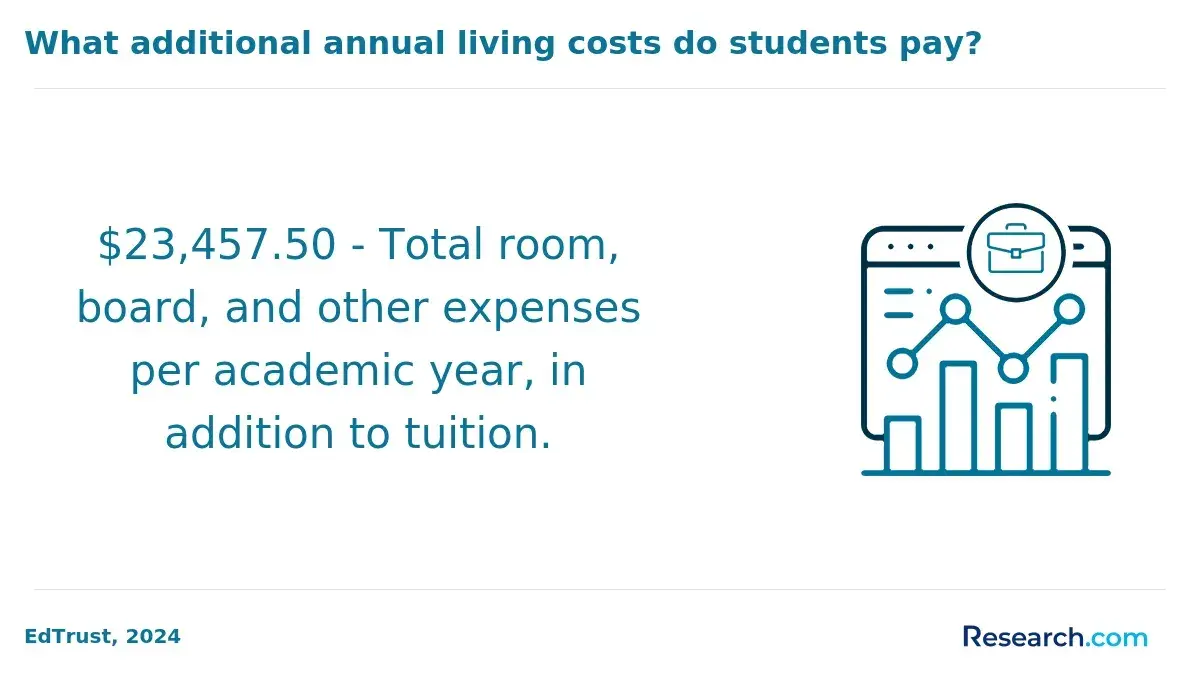
Research methodology can affect cost because it influences how long you stay enrolled, whether you need extra methods courses, how much support you need, and whether data collection requires paid tools, transcription, participant incentives, travel, or specialized software. The largest cost driver is usually time-to-completion, not a single research expense.
For the 2024-25 federal aid year, graduate and professional students could borrow up to $20,500 per year in Direct Unsubsidized Loans before considering Grad PLUS loans. That limit matters because delayed dissertation progress can push students into additional borrowing, employer-payment gaps, or out-of-pocket costs.
Here is how method choice can affect the budget:
- Quantitative research may add costs for survey platforms, assessment permissions, data-cleaning help, statistical consulting, or extended enrollment if recruitment does not produce enough usable responses.
- Qualitative research may add costs for transcription, secure recording tools, participant incentives, qualitative-analysis software, and the time required to code and verify themes.
- Mixed-methods research may combine both cost categories and can require more committee revisions if the integration plan is weak.
- Secondary-data projects may reduce recruitment costs, but only if the dataset is appropriate, accessible, ethically usable, and aligned with the dissertation question.
Students comparing doctoral routes should also consider whether a master's-level credential would meet their career goal more efficiently.
For example, applicants mainly seeking clinical preparation may want to compare doctoral options with online clinical psychology masters programs before assuming a research doctorate is the best financial step.
The best research method depends on the work you want to do after graduation. A doctoral project can become evidence of your expertise, so choose a method that strengthens your credibility in the settings where you plan to work.
The table below connects methodology choices to common applied psychology career directions. These are not rigid rules, but they can help you identify the method that best supports your professional story.
| Career goal | Method that often fits best | Why it fits | Examples of suitable dissertation questions |
| Industrial-organizational psychology, people analytics, assessment, or workforce research | Quantitative or mixed methods | Employers often value measurement, survey interpretation, performance metrics, and evidence-based recommendations | Does leadership style predict burnout scores among remote employees? What explains engagement patterns after a workplace intervention? |
| Program evaluation, nonprofit leadership, community psychology, or public-sector consulting | Mixed methods | Decision-makers often need both outcome data and stakeholder explanation | Did a training program improve service outcomes, and how did participants describe barriers to implementation? |
| Teaching, academic research, or future publication-focused work | Quantitative, qualitative, or mixed methods depending on discipline norms | Method fit depends on the research agenda, target journals, and faculty mentorship | Which factors predict doctoral persistence? How do adult learners experience online research mentoring? |
| Behavior analysis, intervention systems, or service-quality improvement | Quantitative, single-case, or mixed methods | Outcome measurement is central, but implementation context can also matter | How does a supervision model affect treatment fidelity, and what barriers do practitioners report? |
| Trauma-informed services, counseling-adjacent leadership, forensic settings, or professional practice improvement | Qualitative or mixed methods | Participant perspectives, professional judgment, organizational context, and ethical complexity are often central | How do practitioners describe decision-making in high-stress forensic evaluations? |
| Child, adolescent, school, or family-focused applied psychology | Qualitative, quantitative, or mixed methods | The method depends on whether the study measures outcomes, explores experience, or evaluates a program | What predicts parent engagement in school-based interventions? How do caregivers describe barriers to accessing services? |
Students interested in behavioral intervention careers should compare doctoral methodology with credential-focused options such as the fastest BCBA program, because board certification pathways and doctoral research goals are not the same thing.
Research resources determine whether methodology flexibility is real. A program that supports online doctoral research should provide more than library access; it should offer structured support for design, analysis, ethics, writing, and dissertation progress.
Use the following checklist when comparing programs. The goal is to verify whether the program can support your specific method, not whether it generally values research.
- Confirm that the curriculum includes advanced coursework in your intended methodology, not just one introductory research course.
- Ask whether students receive access to statistical software, qualitative-analysis software, survey tools, secure data storage, and research databases.
- Review dissertation handbooks for restrictions on sample size, recruitment sources, mixed-methods designs, secondary data, or workplace-based research.
- Ask whether the school offers statistics tutoring, qualitative coding support, research-design consultation, IRB advising, and dissertation writing support online.
- Look for recent dissertation titles that use your preferred method, population, and applied setting.
- Verify whether residencies, intensives, synchronous seminars, or proposal-defense milestones are required and whether they affect your work schedule.
- Check accreditation at the institutional level and, when relevant, programmatic accreditation or state authorization requirements.
Be especially careful with software and data support. Access to a tool is not the same as training in how to use it, and a general help desk is not the same as doctoral-level methods consultation.
How Should Students Choose an Online Applied Psychology Doctorate Based on Research Methodology?
The right program is the one where your research question, faculty support, methodology training, dissertation structure, and career goal all align. A prestigious-sounding specialization will not help if the program cannot support your design or if the method does not fit the problem you want to solve.
A practical decision process can prevent expensive misalignment:
- Write a one-sentence applied psychology problem you want to study, then identify whether it asks for measurement, meaning, or both.
- Choose a tentative method only after clarifying the question, population, data source, and intended use of the findings.
- Compare at least three programs using the same criteria: research courses, faculty expertise, dissertation examples, online support, software access, cost, and timeline.
- Contact programs with specific methodology questions instead of asking broadly whether they support dissertations.
- Ask to speak with a faculty member, current student, or dissertation advisor if your design requires advanced statistics, qualitative depth, protected populations, organizational access, or mixed-methods integration.
- Estimate total cost using tuition, fees, enrollment pace, likely dissertation time, travel or residency costs, software, transcription, and possible additional terms.
- Choose the program that can support the research you can actually complete, not the one that lists the most methods on its website.
Common mistakes include choosing mixed methods because it sounds more comprehensive, selecting quantitative research without enough statistical preparation, assuming qualitative research is easier because it uses smaller samples, and overlooking faculty availability.
Another frequent mistake is confusing methodology flexibility with approval certainty; every dissertation still has to pass committee review and institutional ethics requirements.
The strongest applicants approach methodology as part of an investment decision. They ask whether the doctorate will develop a credible research identity, whether the dissertation can be completed with available resources, and whether the method supports the roles they want after graduation.
Students focused on developmental or family systems work may want to review child psychology master's programs before deciding whether a doctorate is necessary for their target role.
Other Things You Should Know About Applied Psychology Programs
No. Applied psychology is a broad category that can include organizational, educational, forensic, health, developmental, behavioral, or community-focused study. Clinical psychology doctorates are specifically designed around clinical training and may have licensure-related requirements that many applied psychology doctorates do not meet.
Sometimes, but students should not assume it. Licensure depends on the degree type, accreditation, supervised experience, exams, practicum or internship structure, and state board rules. Always check the licensing board in the state where you plan to practice before enrolling.
Some do. Even programs marketed as online may require residencies, research intensives, dissertation seminars, clinical or applied experiences, or in-person defenses. Applicants should ask about travel frequency, location, cost, and whether attendance is mandatory.
Requirements vary by school. Many online doctoral programs have test-optional or no-GRE policies, while others may request scores, writing samples, interviews, professional experience, prerequisite coursework, or a research statement. Strong research fit can matter as much as test scores where they are optional.
- Quantitative and Qualitative Methods Doctoral Programs https://www.apadivisions.org/division-5/resources/doctoral
- Doctor of Psychology (PsyD) Online Degree Program https://www.calsouthern.edu/online-degree-programs/behavioral-sciences/doctor-psychology-psyd/
- Psychology Ph.D. & Psy.D.: Costs, Requirements, And Careers https://www.psychology.org/degrees/phd/
- Mixed-Methods Research: Combining Qualitative and Quantitative Data https://www.nngroup.com/articles/mixed-methods-research/
- Capstone Options in Master's in Communication Programs (Thesis vs Project) https://www.mastersincommunications.com/features/guide-to-graduate-communication-capstone-options
- The Top 3 Types of Dissertation Research Explained https://www.snu.edu/blog/the-top-3-types-of-dissertation-research-explained