2027 Online Applied Psychology Doctorate Programs with Practicum, Internship, Clinical, or Fieldwork Requirements

Co-Founder and Chief Data Scientist
Choosing an online applied psychology doctorate is not just a coursework decision; it is also a placement decision. Many practice-oriented doctorates require supervised in-person experience, even when classes are online. The stakes are high because the U.S. Bureau of Labor Statistics reported a $94,310 median annual wage for psychologists in May 2024, but licensure-ready roles often require carefully documented supervised hours.
This guide helps working adults, career changers, and master's-prepared psychology professionals compare program formats, placement rules, cost trade-offs, and career outcomes before enrolling.
Key Things You Should Know
- Online applied psychology doctorates that prepare students for clinical, counseling, school, forensic, or behavior-analysis practice usually include supervised in-person requirements. Fully online coursework does not mean the degree can be completed entirely from home.
- Field experience can add indirect costs through travel, unpaid hours, background checks, liability insurance, and delayed graduation. Federal graduate Direct Unsubsidized Loans for 2024-25 carried an 8.08% interest rate, making extra semesters financially important.
- Students should verify required hours, site approval rules, supervisor credentials, state restrictions, and whether the school or student is responsible for placement before accepting admission.
Which Online Applied Psychology Doctorate Programs Require Practicum, Internship, Clinical, or Fieldwork Experience?
The programs most likely to require hands-on experience are doctorates that lead to applied practice with clients, students, organizations, courts, or clinical populations. Online delivery usually applies to didactic courses, research seminars, supervision meetings, and some advising; the supervised practice component often takes place at an approved site.
Applied psychology is an umbrella category rather than one single license. It can include clinical psychology, counseling psychology, school psychology, forensic psychology, applied behavior analysis, industrial-organizational psychology, health psychology, and developmental or child-focused psychology.
Students comparing doctoral options should therefore look at the degree's purpose, not only its title. For example, applicants still exploring justice-related practice may want to compare doctoral pathways with forensic psychology master's programs before committing to a longer doctorate.
The table below summarizes common online or hybrid applied psychology doctorate categories and the experiential requirements students should expect to investigate. Exact requirements vary by institution, accreditation status, state rules, and intended credential.
| Doctorate category | Common degree titles | Typical experiential requirement | Best fit | Important caution |
| Clinical or counseling psychology | PsyD, PhD in Clinical Psychology, PhD in Counseling Psychology | Practicum, clinical training, internship, and often postdoctoral supervised hours for licensure | Students seeking psychologist licensure or clinical assessment and therapy roles | Many licensure boards and employers expect APA-accredited doctoral training for clinical practice |
| School psychology | PhD, PsyD, EdD in School Psychology | School-based practicum and internship in K-12 or related educational settings | Students aiming for school psychologist, educational assessment, or district leadership roles | State education agency requirements can differ from psychology board requirements |
| Applied behavior analysis | PhD, EdD, PsyD in ABA or Behavior Analysis | Supervised fieldwork or practicum aligned with behavior-analytic competencies | Students pursuing advanced behavior analysis, autism services leadership, research, or supervision roles | BCBA certification rules and state licensure requirements are separate from the doctorate itself |
| Forensic psychology | PhD or PsyD in Forensic Psychology | May require practicum, fieldwork, externship, or applied capstone depending on whether the program is clinical or nonclinical | Students interested in courts, correctional systems, victim services, threat assessment, or consultation | A nonclinical forensic doctorate may not qualify graduates for independent clinical practice |
| Industrial-organizational or organizational psychology | PhD, PsyD, DBA, or EdD with I-O or organizational psychology focus | Often applied consulting projects, organizational fieldwork, internship, or dissertation-in-practice rather than clinical practicum | Professionals targeting leadership assessment, workforce analytics, consulting, or talent development | Experiential work may build career evidence but usually does not lead to health-service licensure |
| Developmental, child, health, or community psychology | PhD, PsyD, or EdD in Applied Psychology or related concentration | May include fieldwork, community placement, research practicum, or agency-based project | Students interested in program design, research translation, prevention, policy, or service leadership | Licensure eligibility depends on clinical training structure, not the word "psychology" in the degree name |
The safest assumption is that any doctorate involving direct service, assessment, intervention, or professional credentialing will require supervised experience. Programs centered on research, consulting, data analysis, or leadership may offer applied projects instead of formal clinical placements.
What Are the Practicum, Internship, Clinical, and Fieldwork Requirements for Online Applied Psychology Doctorates?
The terms practicum, internship, clinical placement, and fieldwork are often used loosely, but they are not interchangeable. Misunderstanding them can lead students to underestimate the time, supervision, and documentation required for graduation or licensure.
A practicum is usually an earlier supervised learning experience where students begin applying assessment, intervention, consultation, or research-to-practice skills. An internship is typically more intensive and often occurs later in the program.
Clinical placement usually refers to supervised work with clients or patients. Fieldwork is the broadest term and may include school, community, organizational, forensic, behavioral, or clinical settings.
The table below compares the most common experiential terms so students can ask schools more precise questions. It is especially useful when comparing clinical, school, forensic, and behavior-analysis programs that may use different terminology for similar expectations.
| Requirement type | What it usually means | When it usually occurs | Common setting | What students should verify |
| Practicum | Supervised skill development tied to coursework | Middle stage of the doctorate | Clinic, school, agency, hospital, private practice, community site, or behavior-analysis provider | Minimum hours, supervisor credentials, client contact expectations, and documentation process |
| Internship | Advanced supervised professional practice with greater responsibility | Late stage, often after core coursework and practicum | APA-accredited internship site, school district, agency, hospital, or approved professional setting | Whether it must be full time, whether matching is required, and whether relocation may be necessary |
| Clinical placement | Direct or indirect service experience involving assessment, diagnosis, treatment, consultation, or case documentation | Varies by program | Mental health clinic, health system, counseling center, school, correctional facility, or telehealth-supported site | Licensure alignment, liability coverage, supervision ratio, and state authorization limits |
| Fieldwork | Applied experience in a professional environment, sometimes clinical and sometimes nonclinical | Any stage, depending on curriculum | School, nonprofit, employer, forensic agency, research center, behavioral health organization, or corporate setting | Whether current employment can count and whether the project meets doctoral-level outcomes |
| Residency or intensive | Short in-person academic or skills-based session | Often repeated during coursework | Campus, regional center, simulation lab, conference-style residency, or partner site | Travel dates, lodging costs, attendance rules, and consequences for missing a session |
Students with a master's degree in a related field should not assume previous supervised hours will reduce doctoral requirements. Some programs may accept transfer credits for coursework, but field experience is often tied to doctoral competencies and may need to be completed after enrollment.
If a student is still deciding whether they need doctoral clinical training, comparing the requirements of online clinical psychology masters options can clarify whether a master's-level credential is enough for the intended role.
Admissions requirements also affect when fieldwork begins. Practice-oriented doctorates commonly ask for a master's degree or strong undergraduate preparation, transcripts, recommendations, a statement of purpose, writing samples, a background check before placement, and sometimes an interview. Clinical and school psychology programs may also screen for readiness to work with vulnerable populations.
How Do Online Applied Psychology Doctorate Programs Arrange Practicum and Clinical Placements?
Placement arrangements vary more than many applicants expect. Some schools maintain formal site networks and coordinate approvals. Others require students to identify potential sites near home, then submit them for review. Both models can work, but they create different responsibilities and risks.
The table below compares common placement models. Use it to identify whether a program offers true placement support or mainly administrative approval after the student finds a site.
| Placement model | How it works | Advantages | Risks for students | Best questions to ask |
| School-arranged placement | The program assigns or strongly coordinates approved sites | Less site-search burden and clearer supervision standards | May require commuting or relocation if approved sites are limited | How far might I need to travel, and what happens if my assigned site falls through? |
| Student-identified, school-approved placement | The student proposes a local site and the school approves supervisor and setting | Better chance of completing requirements near home or work | Students may struggle to find qualified supervisors or willing agencies | What percentage of students secure approved local sites on the first attempt? |
| Hybrid network model | The school provides leads, templates, affiliation agreements, and approval while the student helps with outreach | Shared responsibility and more geographic flexibility | Approval can still take months if contracts or supervisor credentials are incomplete | When should I begin site outreach, and who handles affiliation agreements? |
| Employer-based placement | The student completes fieldwork at a current workplace if the role, supervisor, and duties qualify | Can reduce travel and schedule disruption | Regular job duties may not count unless they meet learning objectives | Can paid employment count, and must fieldwork duties differ from my normal job? |
| Competitive match or external internship | Students apply to approved internship sites, sometimes through a formal match process | Can strengthen professional credibility for clinical careers | May require relocation or delay if the student does not match | Is matching required, and what is the program's support process for unmatched students? |
Placement approval usually involves documentation. Students may need a site description, supervisor résumé or license verification, affiliation agreement, proof of liability insurance, immunization records, background check, training plan, and signed evaluation forms.
Before enrolling, applicants should ask for a written placement handbook rather than relying only on admissions calls. A strong handbook explains timelines, site qualifications, supervision frequency, prohibited settings, state restrictions, telehealth rules, and appeal procedures if a placement is denied.
Many students can complete fieldwork near home, but local completion is not automatic. It depends on the program's state authorization, the student's location, site availability, supervisor qualifications, and whether the placement meets degree or licensure standards.
Location matters because online programs must comply with state rules for distance education, professional placements, and sometimes telehealth or school-based services. A program may accept online students from one state for coursework but restrict clinical placements in that same state if it lacks authorization, contracts, or approved supervisors.
Students who hope to stay local should verify these conditions before applying or paying a deposit:
- Whether the program accepts students in the state where the applicant plans to complete fieldwork
- Whether the school has existing placement sites within a reasonable commuting distance
- Whether the student may propose a new local site and how long approval usually takes
- Whether the current employer can serve as a placement site and whether normal job duties can count
- Whether supervision must be in person, live remote, group-based, or provided by a licensed psychologist, BCBA, school psychologist, or other approved professional
- Whether state licensing boards or education agencies impose additional requirements beyond the school's curriculum
Working professionals should also ask whether fieldwork can be completed during evenings, weekends, summer terms, or standard business hours only. Clinical and school placements often follow agency or school schedules, which can be difficult for students who work full time.
A major red flag is vague language such as "students are responsible for finding their own placement" without clear templates, staff contacts, affiliation agreement support, or backup procedures. That does not mean the program is poor, but it does mean the student carries more logistical risk.
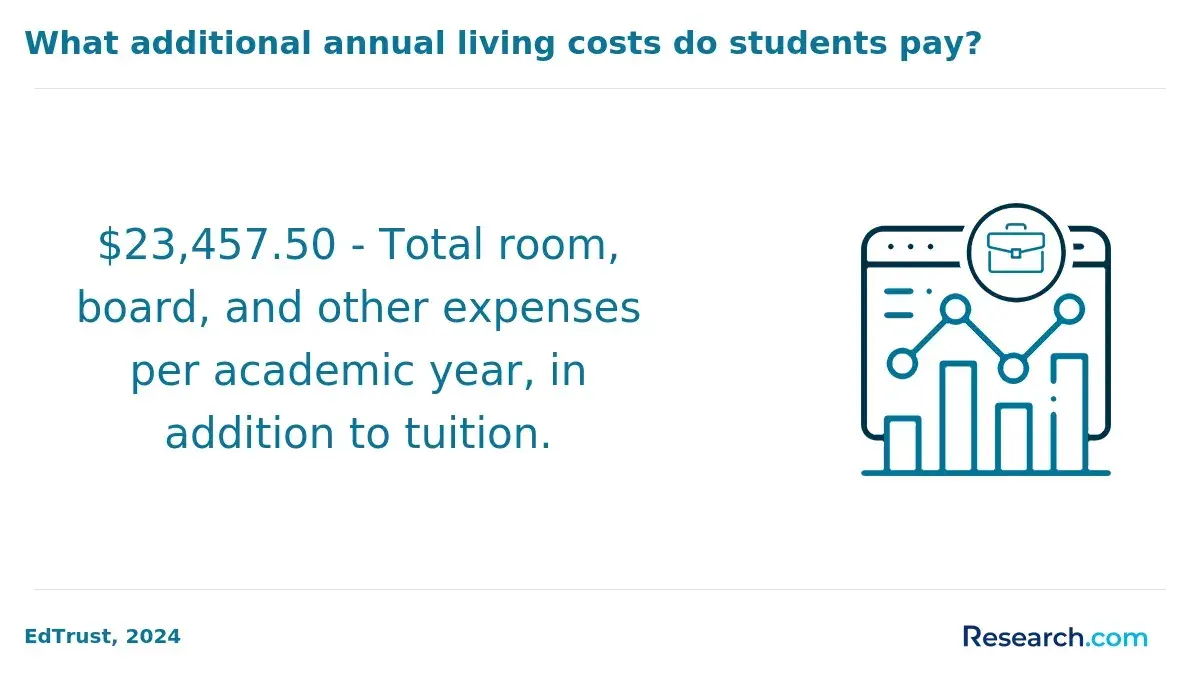
Experiential requirements can increase the true cost of an online doctorate even when tuition is transparent. The most obvious cost is extra credit hours, but the larger burden for many students is reduced paid work time, travel, relocation, site fees, and additional semesters caused by placement delays.
Federal loan costs also make timing important. Federal Student Aid set the graduate Direct Unsubsidized Loan interest rate at 8.08% for loans first disbursed during the 2024-25 award year. For students financing a doctorate, one extra semester can increase both borrowed principal and interest accumulation, so placement feasibility is part of ROI.
The table below highlights cost categories that are easy to overlook when comparing online programs. Students should request school-specific estimates because not every program charges or requires every item.
| Cost or timeline factor | How fieldwork affects it | Questions to ask before enrolling |
| Tuition and credits | Practicum, internship, dissertation, and continuation courses may carry tuition or fees | Are fieldwork credits billed at the same rate as lecture courses? |
| Travel and commuting | Local placements may still require frequent travel to schools, clinics, hospitals, agencies, or residencies | How many days per week are students typically on site? |
| Residencies | Hybrid programs may require campus visits or intensives in addition to local fieldwork | How many residencies are required, and are lodging and meals included? |
| Unpaid or reduced paid work | Clinical and school placements may operate during daytime hours | Can placements be part time, and how many hours per week are expected? |
| Background and compliance requirements | Sites may require fingerprinting, health clearance, drug screening, liability insurance, or training modules | Which compliance costs are student-paid? |
| Placement delays | Students may need to wait for site approval, internship matching, or supervisor availability | What is the typical timeline from placement application to approval? |
| Relocation | Some internships or specialized clinical sites may not be available near the student's home | Has the program required recent students in my state to relocate? |
Timeline depends heavily on degree type. Research-oriented applied psychology doctorates may take longer because of dissertation research but have fewer fixed site hours.
Practice-oriented clinical or school psychology doctorates may have a more structured sequence: coursework, practicum, comprehensive exams, internship, dissertation or doctoral project, and sometimes postdoctoral hours after graduation.
A reasonable decision rule is to evaluate total completion conditions, not advertised minimum duration. If a program says it can be completed quickly but requires external site approval, daytime hours, and a competitive internship, the practical timeline may be longer for working adults.
Online coursework can be flexible, but supervised experience is usually less flexible because it depends on client needs, school calendars, agency schedules, supervisor availability, and professional standards. The most flexible programs explain exactly where students can customize schedules and where they cannot.
Applicants should separate academic flexibility from fieldwork flexibility. A program may offer asynchronous classes while still requiring fixed weekly supervision, daytime clinical hours, or several in-person residencies.
The following flexibility factors are worth comparing across programs because they affect whether students can remain employed while completing the doctorate:
- Course delivery: asynchronous, synchronous evening sessions, weekend intensives, or fixed daytime seminars
- Fieldwork pace: part-time practicum options, full-time internship expectations, or required minimum weekly hours
- Site type: approved clinics, schools, hospitals, agencies, private practices, community organizations, employers, or organizational consulting sites
- Residency format: campus-based, regional, virtual simulation-supported, or blended formats
- Supervision format: individual, group, live remote, in-person, or a combination allowed by the program and state rules
- Sequence rules: whether students must complete certain courses, exams, or competency checks before beginning placement
Students who need maximum flexibility should be cautious with doctorates designed for psychologist licensure, school psychology credentials, or intensive clinical practice. Those programs often have more rigid training sequences because they must document competencies for public protection and professional recognition.
Students whose goals are organizational consulting, research translation, program evaluation, leadership, or nonclinical applied work may find more flexible fieldwork models. However, flexibility should not be confused with lower quality; strong nonclinical programs still require rigorous projects, measurable outcomes, faculty supervision, and ethical practice standards.
Experiential requirements are central to accreditation and licensure in many applied psychology fields. A program's online format does not remove the need to meet professional standards for supervised practice, assessment competence, ethics, documentation, and client safety.
For health-service psychology careers, students should pay close attention to accreditation by the American Psychological Association when applicable. APA accreditation is not just a prestige marker; it can affect internship eligibility, licensure portability, federal employment, hospital credentialing, and competitiveness for postdoctoral training.
Some online or hybrid programs may be regionally accredited but not APA-accredited, which can be acceptable for certain goals but risky for students seeking psychologist licensure.
Licensure also varies by state. A doctoral program may meet educational requirements in one jurisdiction but not another, especially if it lacks required practicum hours, internship structure, accreditation status, or specific coursework. Students should verify requirements with the licensing board in the state where they plan to practice, not only with the school.
The table below summarizes the credentialing issues students should confirm before enrolling. It is intended as a decision checklist, not a substitute for state board review.
| Career goal | Experiential requirement to verify | Accreditation or approval issue | Why it matters |
| Licensed psychologist | Doctoral practicum, qualifying internship, and postdoctoral supervised experience if required by the state | APA accreditation may be required or strongly preferred depending on state and employer | Can affect licensure eligibility, internship access, and mobility |
| School psychologist | School-based practicum and internship under approved supervision | State education agency approval, NASP alignment, or psychology board rules may apply | School employment requirements differ by state and district |
| Behavior analyst | Supervised fieldwork aligned with behavior-analysis practice standards | Certification board and state licensure rules may apply separately from doctoral accreditation | Doctoral study alone may not satisfy certification or license requirements |
| Forensic consultant or evaluator | Forensic placement, clinical practicum, or assessment training depending on role | Clinical licensure may be needed for mental health evaluation or treatment roles | Nonclinical forensic training may not authorize diagnosis or therapy |
| Organizational psychologist or consultant | Consulting practicum, applied research project, or organizational fieldwork | Regional institutional accreditation and program reputation are usually more relevant than clinical accreditation | Employer expectations focus on analytics, assessment, leadership, and consulting evidence |
Students choosing between master's and doctoral routes should also consider whether licensure starts earlier at the master's level in their field. For example, some counseling, social work, school psychology, and behavior-analysis pathways allow professional practice before a doctorate, while psychologist licensure generally requires doctoral training.
Applicants interested in behavior analysis may compare a doctoral path with the fastest BCBA program options to determine the most efficient credential route.
Strong online doctorate programs do not leave students alone once fieldwork begins. They provide structured advising, site approval support, supervision monitoring, competency evaluations, and problem-solving when placements become difficult.
Support is especially important because fieldwork involves multiple stakeholders: the student, faculty supervisor, site supervisor, placement office, licensing board, and sometimes an employer or school district. Clear communication prevents delays and protects students from completing hours that later do not count.
Students should look for these support features in program handbooks, not only in marketing pages:
- A dedicated placement coordinator or clinical training office with named contacts
- Written site approval criteria, supervisor qualification standards, and affiliation agreement procedures
- Early placement planning meetings before the student reaches the practicum stage
- Templates for outreach emails, site proposals, training plans, logs, and evaluation forms
- Faculty supervision or seminar courses that connect field experience with ethical and professional competencies
- Clear procedures for resolving site problems, supervisor changes, safety concerns, or placement termination
- Technology systems for logging hours, documenting supervision, and tracking competency milestones
Students should also ask to speak with current students or recent graduates in the same state or region. Their experience can reveal practical realities that admissions materials may not show, such as how long approvals take, whether sites accept online doctoral students, and whether students can maintain employment during placement.
A program that requires students to find their own site is not automatically a bad choice. The red flag is a lack of documentation, staff support, or contingency planning. If the program cannot explain what happens when a site withdraws, a supervisor leaves, or a state restriction changes, the student should proceed carefully.
Experiential requirements can improve career readiness when they align with the student's intended role. They help students convert doctoral coursework into supervised evidence of assessment, intervention, consultation, program evaluation, research translation, leadership, or ethical decision-making.
Labor market data supports the value of advanced applied skills, but outcomes differ by specialization. The U.S. Bureau of Labor Statistics reported a May 2024 median annual wage of $147,420 for industrial-organizational psychologists, a field where doctoral-level research, analytics, and consulting skills may be especially relevant.
This figure should not be read as a guaranteed outcome; it reflects a national median for a specialized occupation with limited positions and often competitive entry.
Practice-based fieldwork can strengthen career outcomes in several ways:
- It provides supervised experience that can be documented for licensure, certification, internships, postdoctoral training, or employer review.
- It helps students build a professional network beyond the online classroom, including supervisors, referral sources, agencies, schools, and consulting clients.
- It creates concrete examples for interviews, portfolios, dissertations-in-practice, case presentations, and leadership roles.
- It lets students test whether they actually want direct client service, school-based work, forensic settings, behavioral intervention, or organizational consulting before graduation.
- It can reveal specialization opportunities, such as assessment, trauma-informed care, autism services, correctional mental health, program evaluation, or workforce analytics.
The value of experiential training depends on fit. For instance, a student seeking licensure should prioritize accredited clinical training and qualifying supervised hours.
A student targeting organizational leadership may benefit more from employer-based consulting projects, analytics experience, and applied research. A student focused on children and families may compare doctoral options with child psychology master's programs to decide whether the doctorate is necessary for the desired role.
Hands-on requirements are most worth the commitment when they are required for the student's target credential or provide direct career evidence. They are less compelling when they add cost and time without improving eligibility, specialization, or advancement prospects.
How Should Students Choose an Online Applied Psychology Doctorate With Experiential Requirements?
The best program is not simply the one with the fewest field hours or the most flexible online schedule. It is the program whose supervised experience fits the student's career goal, state requirements, location, finances, and capacity to complete in-person work.
Use the following steps to evaluate programs before enrolling. This process helps prevent the most common mistake: assuming "online" means every requirement can be completed at home.
- Define the target role first, such as licensed psychologist, school psychologist, behavior analyst, forensic consultant, organizational psychologist, researcher, program director, or faculty member.
- Identify the credential needed for that role in the state where you plan to work, including accreditation, internship, supervised hours, exams, and postdoctoral requirements.
- Ask each program for its practicum, internship, clinical, or fieldwork handbook before applying or accepting admission.
- Confirm the exact number of required hours, whether hours are direct or indirect, and when they occur in the curriculum.
- Determine who finds the placement, who approves it, who signs contracts, and what happens if the first site is rejected.
- Verify whether your state is eligible for enrollment, placement, supervision, telehealth activities, and licensure preparation.
- Ask whether your current workplace can qualify and whether paid duties, new duties, or separate supervised hours are required.
- Estimate the total cost, including tuition, fees, travel, residencies, unpaid time, compliance costs, and possible extra semesters.
- Speak with current students or alumni from your region about placement access, scheduling, and support.
- Compare the program's experiential requirements with career outcomes, not just convenience; fewer hours may be appealing but less useful if they do not meet professional standards.
Several red flags deserve special attention. Be cautious if a program cannot provide state-specific licensure disclosures, gives only verbal placement assurances, has unclear supervisor requirements, does not explain site contract timelines, or markets itself as fully online while requiring substantial undisclosed travel.
Also avoid choosing based only on institution type, tuition rate, or speed. A lower-cost program may become expensive if placement delays add semesters.
A faster program may not serve the student well if it lacks the field experience needed for the intended credential. A more intensive program may be worth it if it provides strong supervision, recognized accreditation, and access to appropriate placements.
For most students, the final decision should come down to one practical question: can I realistically complete this program's supervised requirements in my location, on my schedule, with acceptable financial risk, while meeting the standards for the career I want?
Other Things You Should Know About Applied Psychology Programs
No. Clinical psychology is one applied psychology specialty focused on assessment, diagnosis, treatment, and mental health services. Applied psychology is broader and can include school, forensic, organizational, health, developmental, and behavior-analysis work.
Possibly. Faculty hiring depends on the institution, specialization, research record, dissertation quality, publications, teaching experience, accreditation of the degree, and whether the role is tenure-track, clinical, adjunct, or practitioner-focused.
Many do, but not all use a traditional dissertation. Some professional doctorates require an applied doctoral project, capstone, or dissertation-in-practice. Students should ask whether the final project is research-based, practice-based, or tied to fieldwork.
It depends on the goal. A PsyD is often more practice-focused, while a PhD usually emphasizes research and scholarship, though both can include applied training. Students should compare accreditation, placement structure, licensure alignment, faculty expertise, and career outcomes rather than choosing by degree label alone.
- PhD in Clinical Psychology https://www.fielding.edu/school-of-psychology/phd-in-clinical-psychology/
- Online and Hybrid PhD & PsyD Programs in Psychology https://www.psychologist-license.com/phd/
- Five Steps for a Successful Doctoral Internship and Beyond! - National Register https://www.nationalregister.org/five-steps-for-a-successful-doctoral-internship-and-beyond/
- Best Accredited Online Psy.D. Programs | Psychology.org https://www.psychology.org/rankings/best-online-psyd-degree-programs/
- Online Psychology Degree Guide: Programs, Costs and Careers https://www.all-about-psychology.com/online-psychology-degree.html
- Doctor of Psychology (PsyD) Online Degree Program https://www.calsouthern.edu/online-degree-programs/behavioral-sciences/doctor-psychology-psyd/