2027 Online Applied Psychology Doctorate vs Master's Degree: Cost, Salary, Career Outcomes, and ROI

Co-Founder and Chief Data Scientist
Choosing between an online applied psychology doctorate and a master's degree is really a question of value: how much more time, tuition, and debt are justified by the career you want? The stakes are real because federal graduate loan rates reached 8.08% for Direct Unsubsidized Loans in 2024-25.
This guide is for working adults, psychology graduates, educators, behavioral specialists, and career changers comparing degree levels. You'll learn how costs, salaries, job options, licensure limits, funding, and opportunity cost affect the return on each path.
Key Things You Should Know
- A master's in applied psychology is usually the faster and lower-cost route, often taking about 1 to 3 years, while an online doctorate commonly takes about 3 to 7 years depending on dissertation, practicum, and transfer-credit rules.
- The doctorate can open higher-level roles in research, consulting, teaching, organizational leadership, or licensed psychology where applicable, but it does not automatically produce better ROI if the target job only requires a master's degree.
- BLS data reported a $94,310 median annual wage for psychologists in May 2024, but applied psychology graduates may work in many roles outside the psychologist category, so salary comparisons should be based on the specific occupation, state, licensure path, and employer.
What Are the Key Differences Between an Online Applied Psychology Doctorate and Master's Degree?
An online applied psychology master's degree is a graduate program focused on using psychological science to solve practical problems in workplaces, schools, community organizations, health settings, justice systems, or behavioral programs.
An online applied psychology doctorate goes further by emphasizing advanced assessment, research design, leadership, supervision, consulting, program evaluation, and, in some cases, preparation for licensure-related pathways.
The biggest difference is not simply "more education." It is the type of career authority the credential may support. A master's degree can be enough for many applied roles, while a doctorate is more useful when the job requires independent research, high-level consulting, college teaching, clinical authority, or a credentialed psychologist title.
Readers comparing adjacent pathways may also want to review online clinical psychology masters options if their goal is more clinically oriented than applied, organizational, or behavioral.
This table summarizes the practical differences most likely to affect your decision. Use it to identify whether the doctorate adds meaningful value for your specific career goal or mainly adds cost and time:
| Comparison factor | Online applied psychology master's degree | Online applied psychology doctorate |
| Primary purpose | Builds applied knowledge for practice-oriented roles, program support, behavioral services, research assistance, or advancement in related fields | Builds advanced expertise for leadership, research, consulting, teaching, supervision, or specialized professional authority |
| Typical academic depth | Graduate-level theory, applied methods, statistics, ethics, and specialization courses | Advanced theory, doctoral research methods, dissertation or capstone, leadership, and deeper specialization |
| Common admissions profile | Bachelor's degree, transcripts, statement of purpose, recommendations, and sometimes psychology prerequisites | Master's degree or strong bachelor's preparation, research fit, writing sample, recommendations, interview, and evidence of readiness for doctoral work |
| Licensure relevance | May support some counseling, behavior analysis, school, or human services credentials depending on program and state, but usually not psychologist licensure by itself | May support psychologist licensure only if the program type, accreditation, supervised hours, internship, and state rules align |
| Best fit | Students who want faster entry, lower cost, and applied roles that do not require a doctorate | Students whose target roles clearly require or strongly reward doctoral-level credentials |
A common mistake is assuming that every psychology-related leadership role requires a doctorate. Before enrolling, compare job postings in your target market and separate "preferred doctorate" language from "required doctorate" language. If employers regularly hire master's graduates for the roles you want, the master's may produce a better return.
How Much Does an Online Applied Psychology Doctorate Cost Compared With a Master's Degree?
The master's degree is usually less expensive because it requires fewer credits and fewer years of enrollment. A doctorate can cost substantially more when tuition is charged per credit, because doctoral programs often include advanced coursework, residency requirements, dissertation credits, practicum courses, internship preparation, and additional fees.
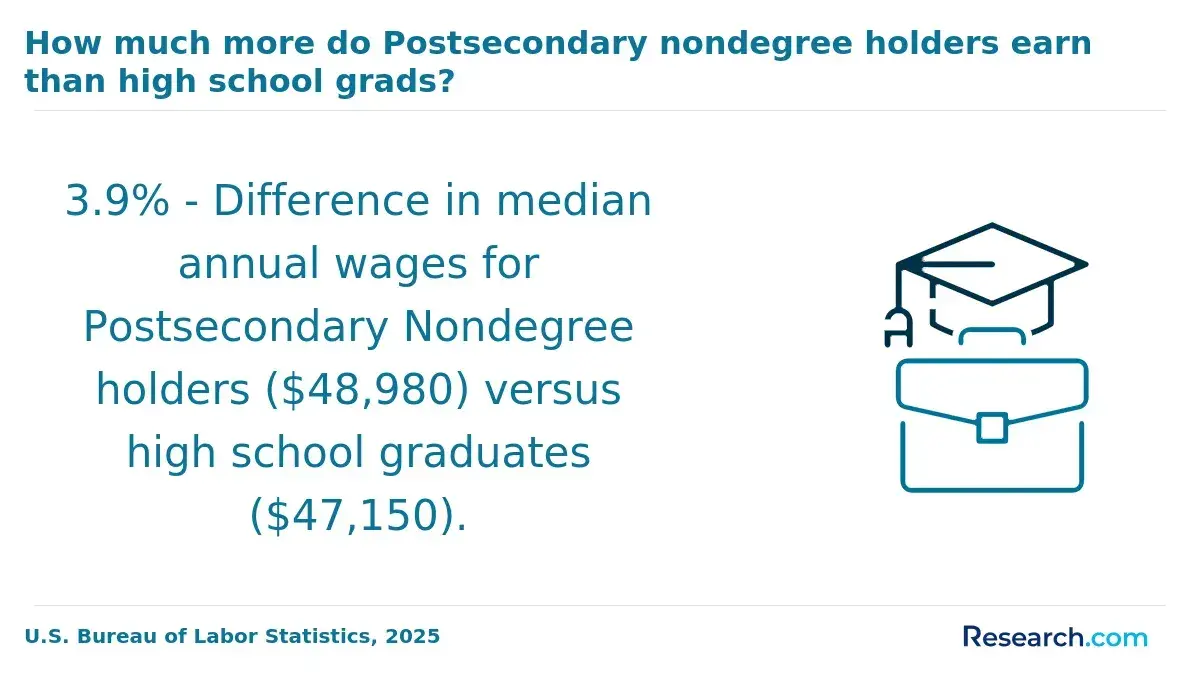
National pricing data also shows why school type matters. NCES graduate tuition figures released in 2024 show that average annual graduate tuition and required fees were roughly $12,600 at public institutions and about $30,000 at private nonprofit institutions in the most recent reported academic year, before living expenses and loan interest.
That gap matters because online applied psychology programs are frequently offered by private universities, and the sticker price can change the ROI calculation quickly.
This table shows the main cost drivers to compare. It is more useful than looking only at tuition because the total cost of attendance can differ even when two programs advertise similar per-credit prices:
| Cost factor | Master's degree impact | Doctorate impact |
| Credits required | Usually fewer total credits, which lowers tuition exposure | Usually more credits, especially when dissertation or practicum credits are required |
| Time enrolled | Shorter enrollment period can reduce fees and interest accumulation | Longer enrollment period can increase fees, interest, and delayed earnings |
| Residencies | Some online programs have no campus residency; others require short visits | Doctoral programs are more likely to require residencies, intensives, or in-person research and supervision components |
| Fieldwork or supervision | May be required for counseling, behavior analysis, school, or human services pathways | May be extensive if the program is tied to professional practice or licensure |
| Technology and student fees | Usually lower because of shorter program length | Can add up over multiple years |
| Financing cost | Lower borrowing may reduce total repayment cost | Higher borrowing can become expensive, especially with graduate loan rates above undergraduate rates |
To compare programs accurately, calculate total degree cost rather than annual tuition. A practical comparison should include:
- Published tuition per credit multiplied by the exact number of required credits.
- Mandatory fees, technology fees, residency travel, books, testing costs, and graduation fees.
- Any credits accepted from prior graduate work and whether transfer credits reduce tuition.
- Estimated loan interest during school and repayment.
- Lost income or reduced work hours if the program affects employment.
The red flag is a school that emphasizes monthly payment size but does not clearly disclose total tuition, fees, and credit requirements. Ask for a written cost-of-completion estimate before committing.
How Long Does a Applied Psychology Doctorate Take Compared With a Master's Degree?
An online applied psychology master's degree typically takes less time because it is designed as a terminal graduate credential or a stepping stone to doctoral study. A doctorate takes longer because it requires advanced research, comprehensive milestones, and a dissertation, capstone, internship, or doctoral project.
Time matters for ROI because every extra year in school can delay promotions, reduce work capacity, or postpone entry into higher-paying roles. The table below compares the usual timeline differences and the decision issues behind them:
| Timeline factor | Master's degree | Doctorate |
| Typical completion range | About 1 to 3 years depending on full-time or part-time enrollment | About 3 to 7 years depending on program type, dissertation pace, and transfer credits |
| Full-time fit | Works well for students who can handle a concentrated academic load | Can be demanding because doctoral writing, research, and fieldwork often extend beyond coursework |
| Part-time fit | Common for working adults and may still be completed within a manageable period | Common, but part-time study can lengthen the time before the degree produces career value |
| Prior graduate credit | May reduce repeated coursework if accepted by the institution | Can shorten the path, but doctoral programs often limit how many credits transfer |
| Final requirement | Capstone, thesis, practicum, portfolio, or comprehensive exam | Dissertation, doctoral project, internship, residency, or defense depending on the program |
The timeline is especially important for students interested in behavioral analysis, because a master's-level route may reach the labor market faster than a doctorate. If speed is central to your decision, comparing a fastest BCBA program pathway may be more practical than beginning a doctoral program first.
Before choosing the longer route, ask schools these timing questions:
- What is the median time to completion for students in this exact online program?
- How many students finish the dissertation, capstone, or doctoral project without extending enrollment?
- Are required placements available near my location?
- Can I stay full time at work while meeting residency, practicum, or internship requirements?
- What happens financially if I need an extra term or year?
Salary comparisons are complicated because "applied psychology" is not one job. Graduates may work in behavioral services, research, human resources, organizational development, education, program evaluation, user research, forensic settings, social services, or clinical-adjacent roles.
The degree level matters most when it changes eligibility for a specific occupation, license, faculty appointment, leadership role, or consulting market.
BLS reported a $94,310 median annual wage for psychologists in May 2024, but that figure is not a universal estimate for applied psychology graduates. Many master's graduates work in roles that are not classified as psychologists, while some doctoral graduates work in research, academia, organizational consulting, or licensed practice where wages vary widely by setting and state.
The table below shows how salary potential usually differs by career direction. It does not predict individual earnings; instead, it helps you identify where a doctorate is more likely to affect compensation:
| Career direction | How a master's may affect salary | How a doctorate may affect salary |
| Behavioral services | May qualify graduates for practitioner, supervisor, or program roles when paired with required certification or supervised experience | May help with senior leadership, research, clinical oversight, or academic roles, but is not always required |
| Organizational psychology and consulting | Can support HR analytics, training, talent development, or employee experience roles | Can strengthen credibility for executive consulting, advanced assessment, and research-heavy roles |
| Research and program evaluation | Can support research coordinator, analyst, or evaluation roles | Often preferred or required for principal investigator, senior scientist, or advanced evaluation leadership roles |
| Clinical-adjacent work | May support roles under supervision or separate licensure tracks depending on the program and state | May be necessary for psychologist licensure only when the doctoral program and supervised training meet state requirements |
| Higher education | May qualify for adjunct, student support, or administrative roles | More competitive for full-time faculty, research, and doctoral-level teaching roles |
The key salary mistake is comparing "master's average salary" with "doctorate average salary" without matching the occupation. A better method is to compare actual job postings for your target title and note whether the salary range changes when a doctorate is required rather than merely preferred.
A doctorate can unlock careers where advanced research ability, independent judgment, supervision authority, or professional credibility are central to the role. However, a master's degree can still be enough for many applied psychology careers, especially when paired with experience, certification, or a related license.
Career outcomes also depend on specialization. For example, someone interested in justice-related assessment, victim services, correctional programs, or legal-system research may compare forensic psychology master's programs before assuming a broader applied psychology doctorate is necessary.
The following comparison separates roles that often fit master's-level preparation from roles where doctoral study may add more direct value. Use it as a starting point, then verify requirements in your state and industry:
| Career outcome | Often accessible with a master's | Doctorate advantage |
| Program coordinator or manager | Yes, especially in nonprofits, education, human services, or behavioral programs | May help for director-level roles requiring evaluation or research leadership |
| Behavior analyst pathway | Often master's-based when certification and fieldwork requirements are met | May help with research, university teaching, or senior clinical leadership |
| Research analyst or evaluation specialist | Yes, especially with strong statistics and methods training | Helpful for principal investigator, senior scientist, and grant-funded leadership roles |
| Organizational development consultant | Possible with experience and a strong portfolio | Can improve credibility for high-level consulting and advanced assessment work |
| Licensed psychologist | Usually no, although related master's-level licenses may exist | Potentially yes, but only if the doctoral program, supervised experience, exams, and state requirements align |
| Tenure-track or doctoral faculty | Uncommon | Often expected, especially for research universities and graduate teaching |
One current trend affecting outcomes is credential-based hiring scrutiny. Employers increasingly want proof that candidates can use data, evaluate programs, communicate findings, and apply psychological science to business or community problems.
That means a master's graduate with strong analytics, supervised experience, and a clear portfolio may outperform a doctoral graduate whose degree is not aligned with the role.
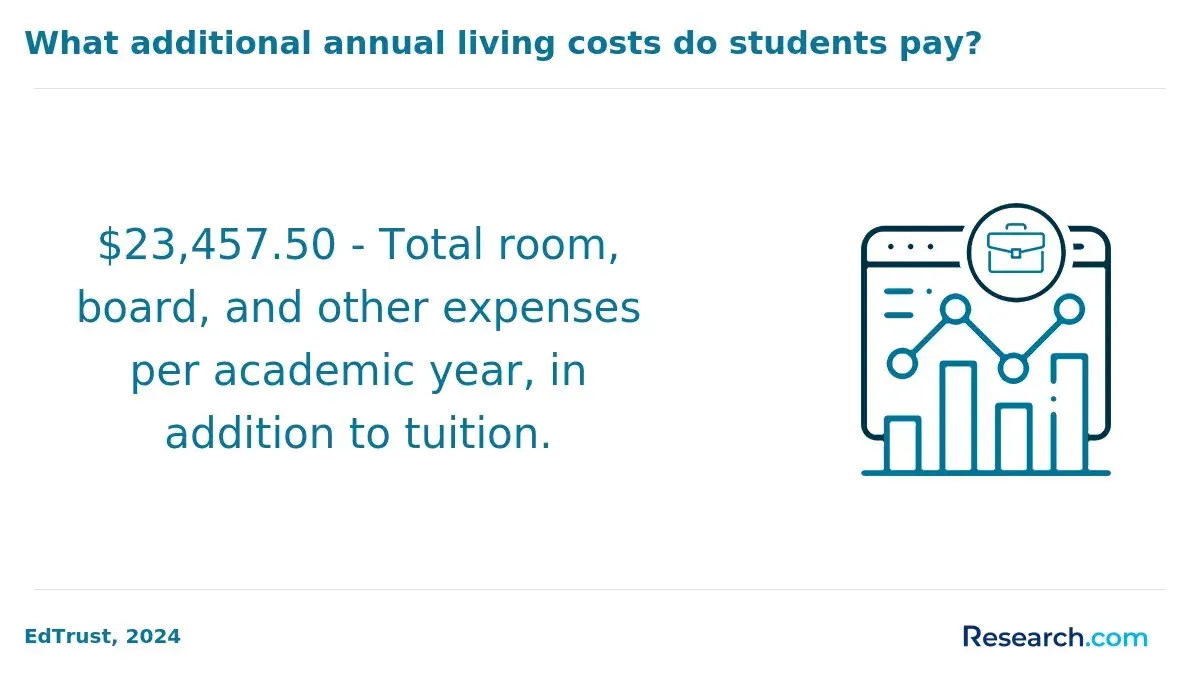
The better ROI depends on whether the doctorate creates access to jobs, salary bands, or professional authority that the master's cannot. If the master's already qualifies you for your target role, it often has stronger short- to mid-term ROI because it costs less, takes less time, and lets you return to full earning capacity sooner.
A doctorate can have better long-term ROI when it is required for the desired outcome, such as psychologist licensure, senior research leadership, high-level consulting, or full-time faculty work. The problem is that the return may take longer to appear because doctoral tuition, additional years, and loan interest raise the break-even point.
Use this simple ROI framework before deciding. It helps you avoid the common mistake of treating prestige as a financial return:
- Identify the exact job title you want, not just the field of applied psychology.
- Collect salary ranges from current job postings in your state or preferred remote market.
- Record whether each posting requires a master's, requires a doctorate, or only prefers a doctorate.
- Calculate total degree cost, including fees, loan interest, residencies, and lost work time.
- Estimate the salary difference only for roles you are realistically qualified to pursue.
- Divide the added doctoral cost by the realistic annual earnings increase to estimate a rough break-even period.
- Consider non-salary value, such as licensure eligibility, autonomy, research authority, teaching options, or career satisfaction.
The doctorate is financially stronger when the break-even period is reasonable and the career access is clearly different. The master's is financially stronger when the doctorate only adds status but not a meaningful change in eligibility, compensation, or advancement.
Opportunity cost is the value of what you give up while earning the degree. For graduate students, it can include reduced work hours, delayed promotions, postponed retirement contributions, relocation limits, family time, and years spent paying interest before the credential generates additional income.
This factor often favors the master's degree because the path is shorter. Even if a doctorate eventually leads to higher compensation, the extra years can delay the point at which the degree becomes financially positive.
The following table explains the opportunity-cost trade-offs that matter most. It is especially useful for working adults who plan to remain employed while studying online:
| Opportunity-cost issue | Master's degree effect | Doctorate effect |
| Time away from full earnings | Usually limited because completion is faster | Can be significant if dissertation, practicum, or internship demands reduce work capacity |
| Promotion timing | May support advancement sooner | May delay advancement unless the employer rewards doctoral enrollment before completion |
| Loan interest | Lower borrowing period may reduce interest accumulation | Longer borrowing period can increase total repayment cost |
| Career switching | Lower-risk option for testing a new psychology-related field | Higher-risk if the student later decides the field is not a good fit |
| Personal flexibility | Often easier to balance with family and work | May require sustained writing, research, residencies, and committee deadlines |
To reduce opportunity cost, choose the shortest credible path that meets your career requirement. That may mean earning a master's first, working in the field, and pursuing a doctorate only after confirming that the advanced credential is necessary.
Financial aid and funding can completely change the ROI comparison. A low-cost or employer-funded doctorate may be a better investment than a high-cost self-funded master's, while an expensive unfunded doctorate can be financially risky if the target career does not require it.
Graduate borrowing deserves special caution because federal graduate loan rates are high compared with many recent historical periods.
For 2024-25, Direct Unsubsidized Loans for graduate students carry an 8.08% fixed interest rate, while Grad PLUS Loans carry a 9.08% fixed rate. That means the amount borrowed is not the only issue; how long the debt accrues before repayment also matters.
Compare funding in this order before accepting an offer:
- Employer tuition assistance or professional development benefits that do not require new debt.
- Assistantships, fellowships, tuition waivers, or research funding, which are more common in some doctoral programs than in professional online programs.
- Scholarships from the university, professional associations, or community organizations.
- Federal Direct Unsubsidized Loans, used conservatively and only after calculating repayment.
- Grad PLUS or private loans, used with extra caution because higher balances can weaken ROI.
Ask each program's financial aid office for debt outcomes if available, not just tuition. Useful questions include whether online doctoral students receive assistantships, whether tuition increases are expected, whether dissertation extension credits cost extra, and how many students borrow the maximum federal amount.
A common red flag is assuming "financial aid" means free money. In graduate education, aid often means loans, so the real question is whether the degree's career value justifies repayment under realistic earnings conditions.
Not all doctorates have the same purpose. A professional doctorate is usually designed for advanced practice, leadership, consulting, supervision, or applied problem-solving.
A research doctorate is usually designed for original research, academic careers, advanced methods, and scholarly contribution. Both differ from a master's degree because they require deeper specialization and more independent work.
This distinction matters because the wrong doctorate can weaken ROI. A student who wants senior workplace consulting may not need a research-heavy PhD, while a student who wants tenure-track research work may find that a practice-focused doctorate is less competitive for some academic roles.
The table below compares the three routes in practical terms. It can help you match the credential to the outcome instead of choosing based only on degree level:
| Path | Best for | Typical strengths | Potential limitations |
| Master's in applied psychology | Applied roles, career advancement, behavioral services, research support, or specialization without doctoral study | Faster, usually lower cost, practical, flexible for working adults | May not qualify for psychologist licensure, senior research authority, or some faculty roles |
| Professional doctorate | Advanced practice, consulting, organizational leadership, program direction, or specialized applied work | Practice-oriented, leadership-focused, often designed for working professionals | May be expensive and may not carry the same research reputation as a PhD in some academic markets |
| Research doctorate | University research, faculty roles, advanced methodology, grants, and scholarly leadership | Strong research preparation and academic credibility | Longer path, demanding dissertation process, and not always necessary for applied practice roles |
Specialization also shapes the decision. For example, students interested in developmental settings, schools, family services, or youth-focused programs may find that child psychology master's programs align better with their goals than a broad doctoral route.
Before choosing a doctorate type, check accreditation, faculty expertise, dissertation expectations, residency rules, internship requirements, and whether graduates actually enter the roles you want. A doctorate is only worth the additional effort when its structure matches the market you plan to enter.
When Is a Applied Psychology Doctorate Worth It Instead of a Master's Degree?
An applied psychology doctorate is worth considering when it is the clearest route to a specific career outcome that a master's degree cannot reasonably provide. It is not automatically worth it because it is the highest credential.
The doctorate is more likely to be worth it if several of the following are true:
- Your target role requires a doctorate, such as licensed psychologist in many states, senior research scientist, or certain faculty positions.
- You have confirmed that the program's accreditation, supervised training, and curriculum match the requirements of your state or profession.
- You can access funding, employer support, assistantships, or a tuition structure that keeps borrowing manageable.
- You want a career built around research design, advanced assessment, consulting authority, teaching, or leadership rather than only entry or mid-level practice.
- You are prepared for a long timeline that includes independent writing, faculty feedback, revisions, and possible dissertation delays.
The master's degree is more likely to be the better choice if these conditions apply:
- Your desired job postings commonly require a master's degree and experience, not a doctorate.
- You need faster entry into the workforce or a lower-risk career change.
- You are still deciding which specialization within applied psychology fits you best.
- You want to avoid large graduate debt while building experience and professional references.
- Your expected salary increase from a doctorate would take too long to offset the additional tuition and opportunity cost.
A practical next step is to create a side-by-side decision sheet for three master's programs and three doctoral programs. Include total cost, time to completion, accreditation, transfer credits, licensure alignment, fieldwork requirements, graduate outcomes, and the exact jobs each degree supports. If the doctorate does not produce a clear advantage on that sheet, the master's may offer the stronger ROI.
Other Things You Should Know About Applied Psychology
Yes. Many students complete a master's first, work in the field, and then decide whether doctoral study is necessary. This can reduce risk because real work experience helps clarify whether the doctorate will improve career access or simply add cost.
Not automatically. Licensure depends on state rules, program accreditation, supervised experience, internship requirements, exams, and the specific type of doctorate. Always verify requirements with the state licensing board before enrolling.
It depends on the program. Some master's programs require a thesis, while others use a capstone, practicum, portfolio, or comprehensive exam. A thesis may be helpful if you plan to apply for research-focused doctoral programs later.
Employers are generally more concerned with accreditation, program reputation, relevant skills, supervised experience, and whether the degree matches the job. An online format can be credible when the school is properly accredited and the curriculum includes strong applied training.
- 2025 Most Affordable Online Master's Degrees in Psychology https://www.onlineu.com/most-affordable-colleges/psychology-masters-degrees
- 2025's Most Affordable Online Master’s Degrees in Psychology https://www.onlinemastersdegrees.org/most-affordable/psychology-programs/
- Return on Investment For an Online Psychology Degree https://www.onlinepsychologydegrees.com/articles/return-on-investment-for-an-online-psychology-degree/
- Should I Get a Master's Or Doctorate Degree in Sports Psychology? https://www.sportspsychology.org/articles/masters-or-doctorate-degree/
- Grad School: Should I Get a Traditional or Online I/O Master's/Ph.D.? - NeoAcademic https://neoacademic.com/2012/05/09/grad-school-online-or-brick-and-mortar-io/
- Is Grad School Worth It? A Comprehensive Return on Investment Analysis - FREOPP https://freopp.org/whitepapers/is-grad-school-worth-it-a-comprehensive-return-on-investment-analysis/
- Psychology Ph.D. & Psy.D.: Costs, Requirements, And Careers https://www.psychology.org/degrees/phd/