2027 Online Financial Technology Degree Programs With No Letters of Recommendation Required

Co-Founder and Chief Data Scientist
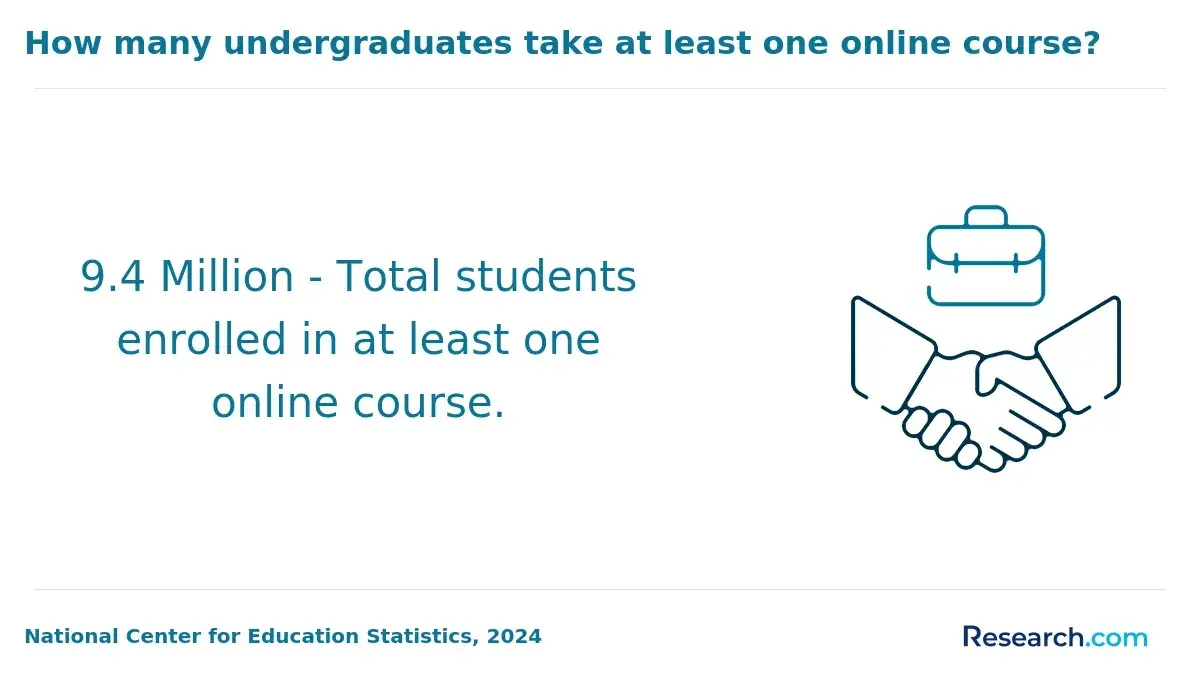
Applicants who lack recent professors or supervisors may find recommendation letters a major obstacle to enrolling in a Financial Technology degree. A no-recommendation requirement can simplify the application, but it does not remove academic review. In fall 2022, about 7.0 million U.S. postsecondary students enrolled exclusively in distance education, according to NCES data published in 2024.
This guide helps working adults, career changers, and recent graduates identify legitimate online fintech options, understand replacement requirements, compare costs and outcomes, and verify each school's current policy before applying.
Key Things You Should Know
- "No letters of recommendation required" means the stated application checklist does not require references; it does not mean letters are merely optional, waived for certain applicants, or replaced by no other documentation.
- Legitimate online fintech programs commonly review official transcripts, GPA, prerequisite coursework, a resume, and sometimes a statement of purpose instead; streamlined paperwork is not the same as automatic or less selective admission.
- Compare institutional accreditation, curriculum, total price, and career alignment before applying: the 2024-25 average published undergraduate tuition was $11,610 at public four-year in-state institutions and $43,350 at private nonprofit four-year institutions, though individual online programs can differ substantially.
Which Online Financial Technology Degree Programs Require No Letters of Recommendation?
Fully online degrees titled Financial Technology, FinTech, or a closely related finance-and-technology specialization are less common than general online business or finance degrees. Requirements are set at the program level, not by the delivery format, so an institution may omit references for one online program while requiring them for another graduate program.
The most promising places to look are career-oriented bachelor's completion programs, applied master's programs, and online finance degrees with fintech coursework. Schools may describe this policy as "no references required," "recommendations not required," or simply omit recommendations from the required-materials checklist. Students considering accelerated graduate study can also compare the structure of an online masters degree with a fintech curriculum and admissions process.
This comparison shows where no-reference policies are most likely to appear and what applicants should verify. It is not a substitute for the current application page, since universities can change requirements by term, applicant type, or concentration.
| Program type | Typical credential | Where no-letter policies may appear | Important verification point |
| Online fintech bachelor's or completion degree | BS, BBA, or applied business degree | Institutions using transcript-based undergraduate admission | Confirm whether high school records, transfer GPA, or placement testing applies |
| Online finance degree with fintech electives | Bachelor's or master's degree | Programs focused on digital finance, analytics, blockchain, payments, or financial data | Check that the fintech courses are available online and not only on campus |
| Applied online fintech master's | MS, professional master's, or graduate certificate pathway | Programs emphasizing work experience, technical preparation, or professional goals | Read the exact graduate checklist for references, essay, resume, and prerequisites |
| Graduate certificate in fintech | Post-baccalaureate certificate | Shorter, skills-focused programs with limited application materials | Determine whether credits can later apply to a degree and under what conditions |
Do not rely on search-result snippets, third-party directories, or an older catalog. Open the program's own admissions page, select the intended term and online format, and save a dated copy of the requirement list. If the language says recommendations are "encouraged," "optional," or required only for applicants below a GPA threshold, the program is not unconditionally no-recommendation.
What Are the Admission Requirements for Online Financial Technology Degree Programs With No Recommendation Letters?
Removing letters usually reduces one administrative step rather than eliminating admissions standards. Undergraduate applicants generally submit academic records and identity or residency information, while graduate applicants usually need a completed bachelor's degree and evidence that they can handle quantitative, business, or technical coursework.
Exact thresholds vary, but the following materials commonly replace recommendation letters or remain part of the review.
- Official transcripts from every college attended, and high school transcripts when required for first-year undergraduate admission.
- A minimum cumulative GPA or a review of recent coursework, particularly in algebra, statistics, economics, finance, accounting, programming, or data analytics.
- A resume documenting employment, internships, technical projects, financial-services work, or relevant certifications for many graduate applicants.
- A personal statement, goals essay, or short-response questions explaining career plans and readiness for online study.
- Prerequisite courses or foundation modules in quantitative methods, business, computer science, or programming.
- Application fees, proof of English proficiency when applicable, and occasionally an interview or portfolio of technical work.
GRE or GMAT rules vary widely. Some programs do not require standardized tests, while others make them optional, request them for applicants with weaker academic records, or retain them for particular tracks. Treat "test optional" and "no recommendations" as separate policies.
Before paying an application fee, ask admissions in writing: "For the online [degree name] beginning [term], are recommendation letters required for my applicant category?" Also ask whether a submitted reference becomes required if you apply for scholarships, assistantships, conditional admission, or a concentration.
Are Online Financial Technology Programs With No Letters of Recommendation Easier to Get Into?
Not necessarily. A program can make the application easier to complete while still requiring strong grades, prerequisites, relevant experience, or a compelling statement. Recommendation letters provide third-party context; when they are absent, the admissions team may place more weight on evidence that is easier to standardize, such as transcripts and demonstrated quantitative readiness.
A no-letter pathway can be especially practical for applicants who have been out of school for years, changed employers, work independently, or prefer not to disclose a job search. It may be less suitable for applicants whose strongest evidence is a professor's endorsement and whose transcript does not show preparation for finance, analytics, or technology.
Applicants should avoid treating simplified admissions as a quality signal in either direction. A selective university may not need references for a structured online program, while a less selective provider may still ask for them. The useful question is whether the school's published entry standards, student support, and curriculum match the learner's preparation and goals.
For career context, fintech work can lead toward financial analysis, product operations, risk, compliance technology, data analytics, cybersecurity, software development, or payments roles. The best degree choice depends on the target role: finance-heavy roles need accounting and markets knowledge, while technical roles generally require stronger programming, database, and statistics preparation.
Admissions reviewers use the available evidence to decide whether an applicant can complete the curriculum and explain a coherent reason for enrolling. A well-prepared application should make that evidence easy to find rather than assuming the absence of letters means the rest of the file receives little attention.
The table below explains how common materials can demonstrate readiness when references are not required.
| Application material | What it can show | How to strengthen it |
| Transcript | Academic performance and preparation in quantitative subjects | Highlight completed prerequisites and explain an upward grade trend briefly if relevant |
| Resume | Professional maturity, financial-services exposure, technical tools, and project experience | Use concrete responsibilities, software, outcomes, and dates rather than a general job description |
| Statement of purpose | Career direction, program fit, and ability to articulate goals | Connect specific coursework to a realistic role or skill gap |
| Technical portfolio | Applied ability in coding, dashboards, data analysis, or product work when accepted | Include concise project descriptions, your contribution, and reproducible work where permitted |
| Interview or assessment | Communication, motivation, and baseline subject knowledge | Prepare to discuss prior coursework, work examples, and time-management plans |
Do not overstate experience or submit a generic essay reused across unrelated programs. If grades or prerequisites are a concern, explain the context briefly and focus on concrete evidence of current capability, such as recent college coursework, employer training, or an applicable project. Admissions offices can tell applicants which supplements are accepted; they cannot usually pre-evaluate an incomplete file.
For most fintech degrees, institutional accreditation is the foundational check. In the United States, students should confirm that the college or university is accredited by an accreditor recognized by the U.S. Department of Education or the Council for Higher Education Accreditation. Business-school accreditation can add information about a business unit, but it does not replace institutional accreditation and is not required for every credible fintech program.
Use the school's website and federal accreditation records to confirm the institution's name, accreditor, current status, and any warnings or changed status. A comparison of the top 10 online colleges can be a useful starting point for evaluating established distance-learning providers, but applicants should still verify the specific degree themselves.
Check these details before enrolling, particularly if a program advertises unusually fast admission or unusually broad career promises.
- Match the legal institution name on the admissions page to the institution listed in accreditation records.
- Confirm that the exact degree, concentration, and online delivery option appear in the current catalog.
- Review the curriculum for finance, data, technology, risk, privacy, cybersecurity, or regulatory content that supports your stated goal.
- Identify faculty credentials, student services, technical support, assessment methods, and policies for complaints, refunds, and withdrawals.
- Ask whether the degree is eligible for federal aid and whether online students receive the same transcript and degree title as campus students.
- Be cautious of pressure to enroll immediately, vague tuition disclosures, unverified placement claims, or a school that will not provide its catalog and policies in writing.
Employers generally care more about the accredited institution, demonstrable skills, projects, work experience, and the relevance of the degree than whether references were part of the admission file. For regulated jobs, verify employer requirements and any state, federal, or industry credential rules separately; a fintech degree does not automatically qualify a graduate for a licensed role.
No-recommendation admissions policies do not determine tuition. Cost depends on credential level, public or private control, residency rules, credit requirements, technology fees, course materials, and whether the school charges a flat online rate. Use the total number of required credits - not a per-credit figure alone - to compare programs.
For broad context, College Board reported average published 2024-25 tuition and fees of $11,610 for public four-year in-state undergraduate institutions and $43,350 for private nonprofit four-year institutions. Those figures are not quotes for fintech programs and exclude many living and indirect costs, but they illustrate why applicants should request a program-specific estimate.
The table separates costs that are often visible at application time from costs that can change the real price.
| Cost category | What to compare | Why it matters |
| Tuition | Per-credit rate, required credits, and resident or nonresident pricing | Determines the core program charge |
| Mandatory fees | Technology, distance-learning, graduation, and student-service fees | Can materially increase the billed total |
| Course requirements | Software, datasets, proctoring, books, and equipment | Fintech and analytics courses may require specialized tools |
| Transfer credit | Maximum accepted credits and evaluation fee | May reduce time and tuition if credits apply to requirements |
| Lost-income and schedule effects | Full-time versus part-time course load and synchronous attendance | Flexibility can affect work hours and completion pace |
Ask for a written estimate covering every required term and distinguish tuition from the amount students pay after aid. A fintech degree can support paths connected with some of the most profitable degrees, but return on investment depends on the individual role, location, prior experience, debt, and skills developed - not the degree title alone.
Yes, admissions simplicity and aid eligibility are separate issues. Students in an eligible online program at a participating institution may be considered for federal student aid by submitting the Free Application for Federal Student Aid (FAFSA), provided they meet federal eligibility rules and the program meets applicable requirements.
Federal aid can include grants for eligible undergraduate students, Direct Loans, and work-study where available. Graduate students are generally considered for loans rather than Pell Grants. State grants, institutional scholarships, employer tuition assistance, veterans' education benefits, and private scholarships may have separate deadlines, enrollment rules, and documentation requirements.
Before accepting aid, compare these items in the financial-aid offer.
- The school's cost of attendance, including indirect estimates for housing, transportation, technology, and personal expenses.
- Gift aid versus loans, along with loan interest, origination fees, repayment terms, and annual borrowing limits.
- Whether part-time enrollment changes eligibility, disbursement timing, or expected completion time.
- Whether scholarships require a minimum GPA, a particular course load, a separate application, or recommendation letters even when admission does not.
- Whether employer reimbursement requires a grade threshold, continued employment, or out-of-pocket payment before reimbursement.
Avoid enrolling based only on a monthly payment quote. The financial-aid office can provide program-specific eligibility information, while the admissions office can confirm that no references are required for the degree application itself.
Application requirements do not determine completion time. Duration depends mainly on degree level, required credits, transfer credits, course sequencing, elective availability, and how many courses a student takes each term. Asynchronous delivery may help working students schedule coursework, but it does not eliminate deadlines, group work, exams, or prerequisite sequences.
A bachelor's degree commonly requires about 120 semester credits before transfer credit is applied. A master's degree often requires fewer credits but may include foundation courses for students without business, finance, statistics, or programming backgrounds. Certificates can be shorter, but they are not equivalent to a degree and may not provide the same career flexibility.
Students looking at a compressed schedule should compare course sequencing and student support, not only the advertised duration. For perspective on short formats in another professional field, review MFT online programs; the same caution applies: a short advertised path may exclude prerequisites, transfer evaluation time, or licensure-related requirements.
Ask whether students can start in multiple terms, take one course at a time, pause enrollment, attend summer sessions, and finish capstones online. Also ask for a sample part-time and full-time course map. These details are more useful than a single completion estimate because they show whether the plan fits work and family commitments.
Many online programs evaluate transfer credit independently from admission. A school may admit an applicant without references but accept only courses that meet its grade, equivalency, recency, residency, and accreditation rules. Transfer evaluation can significantly affect both total cost and time to completion.
Applicants with prior college credit should send official transcripts early and request a written transfer evaluation before making an enrollment decision. Courses in accounting, economics, statistics, business law, programming, databases, mathematics, and general education may be relevant, but acceptance is never automatic.
Compare the transfer policy with the same care used for other online graduate options, including an affordable masters in history program: institutional rules, credit age, minimum grades, and residency requirements can vary even when the online format looks similar.
Common mistakes include assuming that a prior certificate will satisfy degree requirements, confusing acceptance of credits with application of credits to the major, and enrolling before learning whether courses will transfer. Request clarification on these points: the maximum transferable credits, which credits fulfill core fintech requirements, whether credit-by-exam or prior learning is accepted, and the minimum number of credits that must be completed at the new institution.
How Should You Compare Online Financial Technology Degree Programs That Do Not Require Letters of Recommendation?
Start with career fit, then treat the no-recommendation policy as one convenience factor. A strong option for a payments-product role may not be the right option for quantitative risk analysis, cybersecurity, or software engineering. Review course titles, assignments, faculty expertise, and elective depth instead of relying only on marketing language such as "innovation" or "digital finance."
This framework helps applicants compare programs on factors that can affect educational value after admission.
| Comparison factor | What to look for | Decision value |
| Admission policy | A current checklist explicitly stating that recommendations are not required | Prevents avoidable application delays or surprises |
| Academic preparation | GPA expectations, prerequisites, test policy, and foundation-course rules | Shows whether the program fits your current background |
| Curriculum | Finance, analytics, programming, cybersecurity, compliance, payments, and product content | Links learning to the intended job path |
| Accreditation and oversight | Recognized institutional accreditation and transparent catalog policies | Supports legitimacy, transferability, and aid evaluation |
| Online experience | Live-session expectations, team projects, tutoring, career services, and technical support | Determines whether the format is workable and supported |
| Total cost | Required credits, tuition, fees, aid, and realistic time to completion | Supports a more accurate debt and value comparison |
| Career evidence | Internships, employer projects, alumni outcomes, and transparent outcome definitions | Helps separate supported claims from promotional claims |
Make a short list of two to four programs and contact each admissions office with the same questions. Confirm the exact online program, start term, recommendation policy, prerequisites, total required credits, expected weekly workload, and aid process in writing. This approach prevents a common mistake: selecting the easiest application rather than the program that best supports the desired career path.
A no-recommendation fintech degree may be a strong fit for applicants with clear goals and adequate academic or professional evidence. It may be a poor fit for students who need extensive foundational instruction but are considering a highly technical curriculum, or for those who have not verified affordability and accreditation.
Other Things You Should Know About Financial Technology
Usually, only submit optional materials if the program explicitly permits them. Unrequested letters may not be reviewed and can create extra work for recommenders. A stronger resume, transcript, or focused statement is often more useful when those materials are central to the application.
Programs vary, but common areas include financial markets, accounting, payments, financial data analysis, risk, regulation, privacy, cybersecurity, product thinking, and digital systems. Technical depth differs considerably: some curricula emphasize business applications, while others require programming, databases, or advanced analytics.
It can provide structured knowledge and projects relevant to a transition, but it is not a guaranteed route to employment. Career changers should prioritize internships, portfolio work, networking, relevant software skills, and coursework aligned with the roles they want, such as analyst, compliance technology, product, or data roles.
Check when you first shortlist a program, again before submitting the application, and once more if your start term changes. Save the current checklist and ask admissions to confirm any unclear requirement by email, especially if a page says requirements may vary by applicant type.
- Your Guide for College Financial Aid - Finaid https://finaid.org/
- 9 Online Schools That Accept FAFSA (and How to Get Financial Aid) https://www.studentloanplanner.com/financial-aid-online-colleges/
- Program Spotlight: FinTech, Everything You Ever Wanted to Know https://encoura.org/resources/wake-up-call/program-spotlight-fintech-everything-you-ever-wanted-to-know/
- Bachelor of Science in Finance and Technology | University of Phoenix https://www.phoenix.edu/online-business-degrees/finance-technology-bachelors-degree.html
- Financial Aid For Online Colleges https://www.affordablecollegesonline.org/financial-aid/financial-aid-for-online-colleges/
- Best Online Finance Degrees https://www.onlineu.com/degrees/finance