2027 Best Online Financial Technology Degree Programs at Nonprofit Universities

Co-Founder and Chief Data Scientist
Choosing an online financial technology degree means weighing technical training against cost, credibility, and career relevance. This matters because the U.S. Bureau of Labor Statistics projects data scientist employment to grow 36% from 2023 to 2033, reflecting strong demand for analytical skills that overlap with fintech work. This guide helps prospective students compare nonprofit programs, degree levels, online formats, aid options, and career pathways so they can build a shortlist based on fit rather than nonprofit status or marketing claims alone.
Key Things You Should Know
- Nonprofit status is not a quality guarantee: prioritize recognized institutional accreditation, a curriculum covering finance and technology, transparent total cost, and documented online student support.
- A bachelor's degree usually fits entry-level fintech, analytics, operations, or compliance goals; a specialized master's is generally better for professionals who already have quantitative, business, or technical foundations.
- Career potential is strongest when a program develops transferable data, cybersecurity, programming, finance, and regulatory skills; BLS projects 36% growth for data scientists from 2023 to 2033.
What Makes an Online Financial Technology Degree Program at a Nonprofit University Different?
An online financial technology, or fintech, degree combines financial systems knowledge with technology used in payments, lending, investing, insurance, fraud prevention, blockchain applications, and financial data analysis. Programs may be called fintech, financial innovation, financial analytics, digital finance, business analytics, or finance with a fintech concentration. Students should read the curriculum rather than rely on the program title.
Nonprofit universities include public institutions and private nonprofit institutions. Their revenues are generally reinvested in educational operations rather than distributed to owners or shareholders. That status can matter for governance and federal-aid eligibility, but it does not automatically establish affordability, academic rigor, transfer friendliness, or career outcomes.
The degree level should match the student's starting point and target role. This comparison shows common pathways and the questions each pathway answers.
| Program type | Typical fit | Common curriculum emphasis | Potential trade-off |
| Associate degree | Students exploring business, accounting, or information systems | Business fundamentals, spreadsheets, introductory programming, accounting | May require transfer to a bachelor's program for many analyst roles |
| Bachelor's degree | Career changers and students seeking entry-level professional roles | Finance, databases, analytics, information systems, risk, digital payments | Usually requires broader general-education coursework and a longer timeline |
| Specialized master's degree | Professionals with a bachelor's degree and relevant foundations | Financial modeling, Python or SQL, machine learning applications, regulation, strategy | Higher price and faster pace can be a poor fit for students new to quantitative work |
| MBA or finance master's with fintech concentration | Professionals targeting management, product, or finance leadership | Leadership, corporate finance, product strategy, analytics electives | May provide less technical depth than a dedicated fintech or analytics degree |
| Doctoral program | Students pursuing research, faculty, or highly specialized quantitative work | Research methods, theory, advanced analytics, dissertation research | Rarely necessary for typical industry fintech positions |
Public nonprofit universities may offer lower resident tuition, while private nonprofit institutions may provide more standardized online terms, smaller cohorts, or targeted support. Neither model is universally better. A strong program clearly identifies faculty, course requirements, accreditation, credit-transfer rules, and outcomes relevant to the student's goal.
Applicants seeking a general undergraduate business credential should compare whether a fintech specialization adds enough technical coursework to justify a narrower title. Students who want to build software, work with large datasets, or enter cybersecurity may be better served by a computer science, data analytics, information systems, or cybersecurity degree with finance electives.
How Can Students Verify Accreditation for an Online Financial Technology Degree at a Nonprofit University?
Accreditation verification should happen before an application or deposit. Institutional accreditation evaluates the university as a whole and is the baseline most important for federal financial aid, credit transfer, employer confidence, and graduate-school eligibility. A school should identify its institutional accreditor clearly and appear in the U.S. Department of Education's Database of Accredited Postsecondary Institutions and Programs.
Programmatic accreditation is different. Business schools may hold accreditation from organizations such as AACSB, ACBSP, or IACBE, but fintech programs are not universally required to hold specialized accreditation. These designations can be useful signals of business-school processes; they do not replace institutional accreditation, and their absence does not automatically make a program unsuitable.
Use the following verification sequence to avoid confusing a school's marketing language with its official standing.
- Confirm the university's exact legal name in the federal accreditation database and review the accreditor listed there.
- Check the accreditor's own directory to confirm the institution's status and any public notices or sanctions.
- Ask whether the online degree is issued by the accredited institution and whether online students receive the same transcript designation as campus students.
- Review whether the business school or department has programmatic accreditation and decide whether it matters for your target employer or graduate program.
- Before transferring, obtain written confirmation of how prior credits will apply to the specific fintech degree.
Red flags include vague claims such as "internationally recognized," a missing accreditor name, pressure to enroll before questions are answered, or an inability to explain transfer policies. Students planning graduate study should also contact prospective graduate admissions offices; each program, not the undergraduate institution alone, decides whether coursework meets its prerequisites.
How Rigorous Are Online Financial Technology Degree Programs at Nonprofit Universities?
A credible online fintech degree is academically demanding because it connects several disciplines: finance, statistics, computing, information security, business communication, and regulation. Rigor should be visible in prerequisites, graded projects, faculty expertise, assessment methods, and the amount of practical analysis students must perform - not in promotional claims about accelerated delivery.
At the bachelor's level, students commonly complete general education along with accounting, economics, finance, statistics, databases, and information systems. At the master's level, programs often assume prior coursework in business, calculus, statistics, programming, or quantitative methods. Students without those foundations may need prerequisite courses, which can add cost and time.
Review these curriculum signals to determine whether a program has enough depth for the role you want.
- Finance foundations, including corporate finance, investments, banking, financial markets, or risk management
- Technical skills such as SQL, Python, data visualization, database design, cloud tools, or applied analytics
- Security, privacy, ethics, consumer protection, anti-money-laundering, and regulatory-compliance content
- Applied work, such as a capstone, case competition, simulation, internship, client project, or portfolio
- Assessments that require original analysis rather than only multiple-choice quizzes
Online study can be as rigorous as campus study when the program uses clear expectations, timely faculty feedback, collaborative work, proctored or authentic assessments, and accessible technical support. It may be less suitable for students who need frequent in-person structure, lack time for independent work, or want intensive laboratory-based computer science training.
For a fast master's option, compare prerequisite requirements and course sequencing as carefully as the advertised completion time. An online masters degree can be efficient for a prepared professional, but a compressed schedule leaves less room to build foundational coding or statistics skills from scratch.
The advertised per-credit tuition rate is not the full price of an online fintech degree. Students should calculate tuition for every required credit, mandatory fees, technology charges, books, proctoring, software, transfer-credit evaluation, and any residency or immersion costs. Public institutions may charge separate in-state, out-of-state, and online rates; private nonprofit institutions commonly use one rate but may have higher published tuition.
As a broad benchmark, College Board reported average published tuition and fees of $11,610 at public four-year institutions for in-state students and $43,350 at private nonprofit four-year institutions in 2024-25. These are sector-wide undergraduate averages, not online fintech program prices, but they illustrate why students should compare net price and residency rules rather than assume one nonprofit model costs less.
This cost framework helps applicants compare offers on the same basis before deciding whether an apparently low tuition rate is actually the lower-cost choice.
| Cost item | What to confirm | Why it affects value |
| Required credits | Total credits after accepted transfer work | Determines the tuition base and completion timeline |
| Per-credit tuition | Online, resident, nonresident, and program-specific rates | Rates may differ by location, course level, or cohort |
| Mandatory fees | Technology, student services, distance-learning, and graduation fees | Fees can materially change the term-by-term bill |
| Learning expenses | Books, software licenses, hardware, proctoring, and travel | Fintech coursework may require specialized tools or a capable computer |
| Lost income and pacing | Whether full-time study reduces work hours | A shorter program is not automatically less expensive overall |
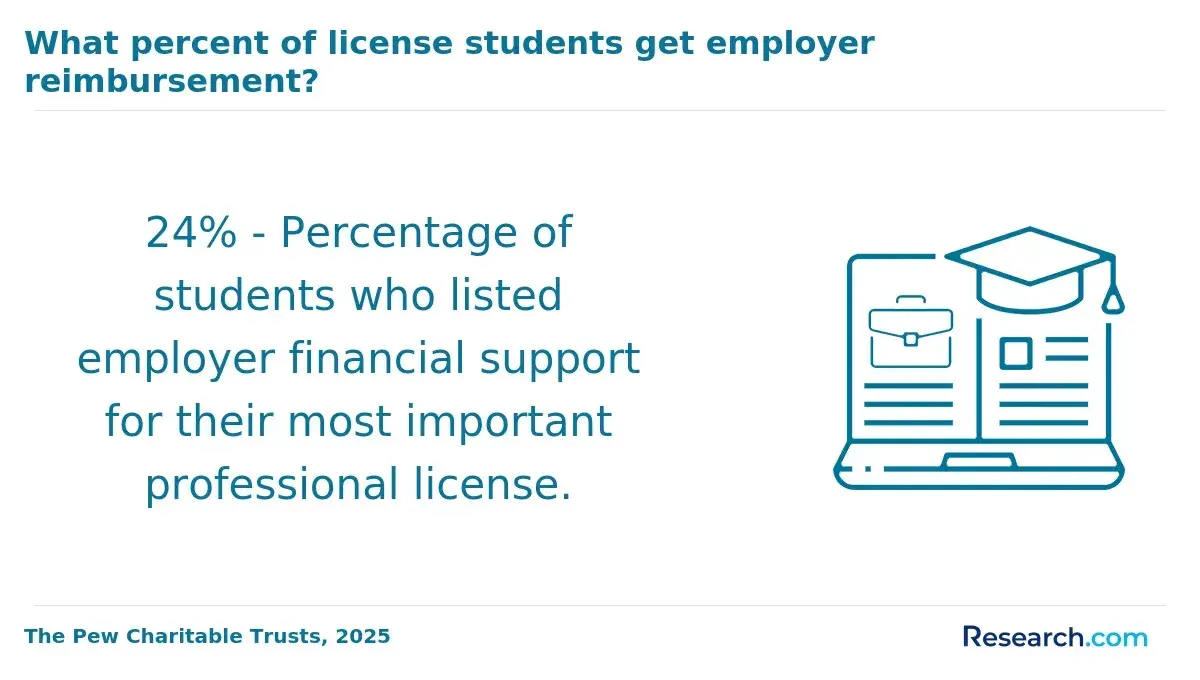
| Employer support | Reimbursement caps, grade requirements, and repayment rules | Benefits can reduce out-of-pocket cost but may carry employment conditions |
Compare each school's net price after grants and employer assistance, then divide the remaining direct cost by the number of terms needed. Do not equate a lower price with stronger return on investment if the curriculum lacks technical depth, the credits will not transfer, or career support is weak. Students assessing long-term earnings should also place fintech alongside other most profitable degrees while recognizing that major-level salary patterns do not predict an individual outcome.
Eligible students at accredited nonprofit institutions may qualify for federal aid, state aid, institutional scholarships, employer tuition assistance, military education benefits, and private scholarships. Online enrollment does not by itself prevent federal aid eligibility, but students must be enrolled in an eligible program and meet applicable federal requirements.
Start by filing the Free Application for Federal Student Aid, commonly called the FAFSA, as early as possible for the relevant aid year. The school's financial-aid office then determines eligibility and provides an offer that may include grants, work-study eligibility, and federal loans. Aid rules, deadlines, and available funding vary by institution and state.
Before accepting an offer, compare the following items across schools because the lowest tuition is not necessarily the lowest borrowing requirement.
- Grant and scholarship amounts that do not need repayment, including renewal conditions
- Federal direct loan amounts, interest terms, origination fees, and annual borrowing limits
- Whether part-time enrollment changes institutional scholarship eligibility or expected completion time
- Employer reimbursement timing, required grades, and any requirement to remain employed after reimbursement
- Whether aid applies to prerequisite courses, summer terms, repeat courses, or a required capstone
Private loans should generally be considered only after reviewing grants, federal loans, payment plans, and employer support because private terms vary by lender and borrower credit profile. Ask the financial-aid office for a year-by-year borrowing estimate, not merely the first-term bill. This is particularly important in master's programs, where federal graduate borrowing options and institutional awards may differ from undergraduate aid.
"Online" describes where much of the learning occurs, not necessarily when students must participate. The best format depends on work schedule, time zone, comfort with independent learning, and need for live interaction. Confirm whether every required course is available online and how often it is offered; a program can be online yet still require a campus visit, a live presentation, an internship, or a scheduled exam.
Asynchronous courses let students complete lectures and assignments within weekly deadlines, while synchronous courses require attendance at set times. Hybrid programs combine online work with scheduled in-person activities. Accelerated formats compress the same material into shorter terms and can be effective for experienced students, but they demand consistent weekly study time.
This format comparison clarifies the practical trade-offs students should discuss with an admissions advisor.
| Format | Best for | Primary advantage | Question to ask |
| Mostly asynchronous | Working adults with changing schedules | More control over weekly study timing | Are there live sessions, group meetings, or proctored exams? |
| Scheduled synchronous online | Students who value real-time instruction and cohort interaction | Regular structure and immediate discussion | What days, time zones, and attendance rules apply? |
| Hybrid or low-residency | Students who can travel occasionally | May include networking and hands-on experiences | How many visits are required and what do they cost? |
| Accelerated | Prepared students able to study intensively | Potentially faster completion | Can students reduce course load without losing aid or sequence access? |
| Part-time cohort | Professionals balancing ongoing employment | Predictable pace and peer network | What happens if a required course is missed? |
Students considering online education more broadly can use comparisons of the top 10 online colleges as a starting point, but should still verify the exact fintech curriculum, delivery model, and student services for the program under consideration. A university's online reputation does not confirm that every specialized degree has the same structure.
Online fintech students need more than access to a learning platform. The most useful services reduce friction in quantitative coursework, technical troubleshooting, career planning, and administrative tasks that can delay graduation. Support quality varies substantially by program, even within the same university.
Ask whether online learners have equal access to academic advising, library databases, tutoring, writing support, accessibility accommodations, mental-health referrals, technical help, and career services. For a technical curriculum, find out whether tutors can assist with statistics, programming, finance, or database courses rather than only general study skills.
Career support deserves particular scrutiny. Useful offerings include résumé review for business and technical roles, virtual employer events, internship guidance, alumni networking, interview practice, and portfolio feedback. A school should explain whether these services are delivered by dedicated career staff, faculty, or a centralized office and whether they are available outside regular business hours.
Students should also ask about faculty access: expected response times, office-hour formats, cohort advising, and support for group projects across time zones. Strong support may justify a higher cost when it helps a working student persist, but prospective students should request concrete descriptions rather than accept broad claims such as "personalized service."
An online fintech degree can prepare students for roles where financial knowledge and digital systems intersect, but the degree is not a direct license or guarantee of employment. Employers often evaluate evidence of skills through coursework, projects, internships, technical portfolios, prior experience, certifications, and interview performance. The best program for career preparation is the one that matches the student's intended function: analytics, product, compliance, risk, operations, software, or cybersecurity.
The U.S. Bureau of Labor Statistics reported a median annual wage of $112,590 for data scientists in May 2024. That occupation is not synonymous with fintech, and many data scientist jobs require strong mathematics, programming, and experience; the figure is useful as salary context for students considering a technically intensive route, not as a forecast of post-graduation earnings.
These examples show how fintech coursework can connect to different job families and where students may need preparation beyond the degree.
| Career direction | Typical responsibilities | Helpful degree preparation | Additional evidence employers may seek |
| Financial or business analyst | Interpret financial data, build reports, support planning decisions | Finance, accounting, Excel, SQL, visualization | Internship, financial modeling samples, industry knowledge |
| Fintech product analyst | Analyze user needs, metrics, workflows, and digital product performance | Analytics, product strategy, payments, customer experience | Portfolio projects and agile or product-management exposure |
| Risk or compliance analyst | Monitor controls, transactions, policies, and regulatory obligations | Risk management, data analysis, financial regulation, ethics | Knowledge of relevant compliance frameworks and practical experience |
| Fraud or financial-crime analyst | Investigate patterns, alerts, and suspicious activity | Data analytics, banking systems, security, anti-money-laundering concepts | Casework, investigative writing, employer-specific training |
| Financial data or systems analyst | Translate business needs into data and system requirements | Databases, systems analysis, programming, finance | Technical portfolio and experience with workplace tools |
Students aiming for software engineering or advanced data science should verify that the degree includes substantial programming, algorithms, data structures, and mathematical preparation; many finance-centered fintech programs do not. Those comparing career return across majors can review most profitable degrees while keeping in mind that occupational demand, local hiring, experience, and role-specific skills are more informative than a degree title alone.
Yes, an accredited online bachelor's degree can prepare a student for graduate school when it includes appropriate academic coursework, a credible transcript, and prerequisite subjects required by the receiving program. Graduate admissions offices generally focus on institutional accreditation, grades, course content, quantitative preparation, recommendations, and alignment with the proposed field - not whether coursework was completed online alone.
A bachelor's graduate may pursue a master's in fintech, finance, business analytics, information systems, cybersecurity, computer science, economics, or an MBA. The best choice depends on the desired career. A specialized fintech master's can deepen industry knowledge, while a broader analytics or computer science degree may be better for technical roles. Students interested in research or faculty careers may need a doctoral pathway and stronger mathematics and research-methods preparation.
Before enrolling in an undergraduate program, students with graduate-school plans should save syllabi and confirm that the curriculum includes relevant prerequisites. Important questions include whether statistics, calculus, programming, economics, accounting, and research methods are offered for credit and whether the program provides opportunities for substantial faculty-guided projects.
Professionals comparing a fintech master's with other accelerated pathways should consider an online masters degree only after confirming that its course sequence meets their target school's admissions expectations. Speed is useful when prior preparation is strong; it is less valuable if missing prerequisites limit later options.
How Should Students Compare the Best Online Financial Technology Degree Programs at Nonprofit Universities?
The best online financial technology degree is the program that provides the needed skills, recognized academic standing, workable schedule, and manageable net cost for a specific goal. A school may be an excellent choice for a working finance professional seeking digital-payments knowledge but a weak choice for a student who wants intensive software engineering preparation.
Create a final shortlist of three to five nonprofit programs, then compare them using the same information request. The following process helps turn broad marketing claims into a decision based on evidence.
- Define the target role and identify the finance, technical, regulatory, and communication skills that role requires.
- Choose the appropriate degree level based on existing education, work experience, and whether graduate study is planned.
- Verify institutional accreditation and confirm that online students receive a degree from the accredited institution.
- Map every required course against the target skills, paying special attention to programming, statistics, databases, security, and applied finance.
- Calculate total direct cost after likely grants, transfer credits, employer support, fees, and required technology or travel.
- Confirm course timing, synchronous attendance, residency, internship, and capstone requirements for the actual term schedule.
- Ask for information on advising, tutoring, technical support, career services, retention, graduation, and career-outcome reporting.
- Request written answers about transfer credits, withdrawal policies, and whether missed required courses delay completion.
Common mistakes include assuming a nonprofit institution is automatically affordable or high quality, choosing a program solely because it uses the word "fintech," and comparing tuition without fees or lost work time. Other red flags are a curriculum with little technical practice, unclear accreditation, no explanation of required live sessions, and broad salary claims without methodology.
Use rankings only as a discovery tool, not a final decision. For readers comparing other online academic routes, resources on MFT online programs and a masters in history illustrate why program-specific requirements, scheduling, and total cost matter across fields. The final choice should be documented in a simple scorecard weighted toward career alignment, affordability, flexibility, academic quality, and available support.
Other Things You Should Know About Financial Technology
Most fintech degrees require comfort with quantitative reasoning, statistics, and financial calculations. The level of mathematics varies: a finance-focused program may emphasize applied statistics and modeling, while a data science or software-focused path may require calculus, linear algebra, and more advanced programming.
Neither is universally better. A fintech degree may be a stronger fit for digital payments, analytics, financial platforms, or technology-enabled risk work. A traditional finance degree may be preferable for corporate finance, investment analysis, accounting-adjacent work, or students who want a broader finance foundation.
Yes. Banks, credit unions, payment companies, insurers, investment firms, consulting organizations, and startups all use financial technology. Job prospects depend on the student's skills, experience, location, and the employer's needs, not solely on the organization's size or the degree title.
Requirements vary by role. Many entry-level analyst and product roles do not require a certification. Employers may value role-specific credentials in areas such as cloud technology, data analytics, cybersecurity, project management, compliance, or financial risk, but a certification should complement rather than replace relevant coursework and practical experience.
- Financial Aid For Online College Students | LearnHowToBecome.org https://www.learnhowtobecome.org/career-resource-center/financial-aid-for-online-colleges/
- FinTech Degree (Bachelor of Science in Business Administration) https://www.creighton.edu/academics/programs/finance-technology
- What is a Finance and Technology Degree | University of Phoenix https://www.phoenix.edu/articles/finance/what-is-a-finance-and-technology-degree.html
- Best Online FinTech Bootcamps | ComputerScience.org https://www.computerscience.org/bootcamps/rankings/best-online-fintech-bootcamps/
- Beyond Financial Aid - Finaid https://finaid.org/beyond/
- 2025 Most Affordable Online Colleges & Degrees https://www.onlineu.com/most-affordable-colleges
- Program Spotlight: FinTech, Everything You Ever Wanted to Know https://encoura.org/resources/wake-up-call/program-spotlight-fintech-everything-you-ever-wanted-to-know/