2027 Cheapest Accredited Online Financial Technology Degree Programs That Accept FAFSA

Co-Founder and Chief Data Scientist
Choosing an online financial technology degree is really a cost-and-credibility decision: you need a program that teaches finance, analytics, digital payments, blockchain, risk, and data tools without creating unnecessary debt. Federal data shows the maximum Pell Grant is $7,395 for the 2025-26 award year, which can materially reduce undergraduate costs for eligible students. This guide is for students comparing FAFSA-eligible online fintech degrees and related finance technology pathways. You'll learn how to compare tuition, aid, accreditation, transfer credits, and career value before enrolling.
Key Things You Should Know
- The cheapest FAFSA-eligible online fintech bachelor's options often start around the low-to-mid $300s per credit before fees, but the lowest net price depends on grants, transfer credits, enrollment status, and school-specific aid.
- For undergraduates, the 2025-26 maximum Pell Grant is $7,395; graduate fintech students generally cannot use Pell Grants and usually rely on Direct Unsubsidized Loans, Grad PLUS Loans, employer aid, scholarships, or cash payments.
- Career ROI should be measured against total borrowing: the BLS reported a May 2024 median wage of $105,990 for computer and information technology occupations, but fintech outcomes vary by role, experience, location, and technical skill level.
Which Are the Cheapest Accredited Online Financial Technology Degree Programs That Accept FAFSA?
The cheapest accredited online financial technology degree programs that accept FAFSA are usually offered by Title IV-participating institutions with either explicit fintech degrees or finance, analytics, or business degrees that include a named fintech concentration. Standalone online fintech degrees remain less common than online finance, business analytics, accounting, or computer science programs, so students should compare both the program title and the actual curriculum.
The table below highlights affordable online options to investigate first. Tuition figures are based on commonly published per-credit pricing and should be verified with each school because fees, residency rules, course materials, and annual tuition changes can alter the final price.
| School | Online fintech-related degree pathway | Institutional accreditation status | Typical credit requirement | Approximate published tuition before aid | Why it may be affordable |
| University of Arkansas Grantham | BS in Financial Technology | Institutionally accredited; participates in federal student aid programs | 120 credits | About $295 per credit; about $35,400 tuition before fees | Low online undergraduate tuition and a dedicated fintech bachelor's curriculum |
| Franklin University | BS in Financial Technology | Institutionally accredited; participates in federal student aid programs | 120 credits | About $398 per credit; about $47,760 tuition before fees | Adult-focused online format and generous transfer-credit model |
| Creighton University | MS in Finance and Financial Technology or closely related graduate fintech pathway | Institutionally accredited; participates in federal student aid programs | Varies by program | Graduate tuition varies by credit load and program | May fit students who already have a bachelor's degree and want a finance-plus-technology credential |
| New Jersey Institute of Technology | MS in Financial Technology or fintech-focused graduate study | Institutionally accredited; participates in federal student aid programs | Often about 30 credits for master's study | Graduate tuition varies by residency and delivery format | Strong technology orientation for students targeting analytics, systems, or product roles |
| University of Denver | MS in Financial Technology or related online graduate fintech pathway | Institutionally accredited; participates in federal student aid programs | Varies by quarter-credit structure | Private graduate tuition varies by program | Can be valuable for working professionals who need flexible scheduling |
| Wake Forest University | MS in Financial Technology and Analytics | Institutionally accredited; participates in federal student aid programs | Graduate credit requirement varies by catalog | Private graduate tuition varies by cohort and program | Best evaluated on employer fit, analytics depth, and total borrowing rather than sticker price alone |
A cheaper bachelor's program may be the better choice if you are entering the field without a degree, need Pell Grant eligibility, or can transfer a large block of prior credits. A more expensive master's program can make sense if you already hold a bachelor's degree, want a faster credential, and are targeting fintech analytics, product management, compliance technology, payments, or financial systems roles where graduate-level specialization may strengthen your profile.
Do not assume that "accepts FAFSA" means a fintech program will be free or fully funded. FAFSA participation only means the school can determine your eligibility for federal student aid; your actual aid depends on dependency status, income, enrollment level, degree level, cost of attendance, satisfactory academic progress, and annual federal limits.
How Does FAFSA Eligibility Work for Online Financial Technology Degree Programs?
FAFSA eligibility for an online financial technology degree depends on both the school and the program. The institution must participate in federal student aid programs, and you generally must be admitted as a degree-seeking student in an eligible program, meet citizenship or eligible noncitizen rules, maintain satisfactory academic progress, and enroll at least half time for most federal loan options.
Online delivery by itself does not disqualify a student from federal aid. The more important questions are whether the school is Title IV-eligible, whether the specific degree program is approved for aid, and whether your enrollment pattern qualifies. If you are comparing online institutions broadly, resources that review the top 10 online colleges can help you think about accreditation, flexibility, and institutional fit, but you should still verify federal aid participation directly with the school.
Before you apply, use this process to reduce the risk of choosing a program that does not qualify for the aid you need:
- Confirm the school has a valid federal school code and participates in Title IV federal student aid.
- Ask the financial aid office whether the exact fintech degree, concentration, or graduate program is eligible for federal aid.
- Confirm the minimum enrollment level required for grants, loans, or institutional scholarships.
- Ask whether online students pay different tuition, technology fees, or course fees than campus students.
- Request a written cost-of-attendance estimate that includes tuition, fees, books, software, technology, and any required residencies.
- Check the school's satisfactory academic progress rules because losing eligibility can interrupt your funding before graduation.
A common mistake is treating FAFSA as a scholarship application. The FAFSA is an aid eligibility form; it can lead to grants, loans, work-study, or state and institutional aid, but it does not guarantee that you will receive enough aid to cover the full cost of an online fintech degree.
How Much Does an Online Financial Technology Degree Cost After Financial Aid?
The cost of an online financial technology degree after financial aid is best measured as net price, not advertised tuition. Net price is the amount left after grants and scholarships are applied; loans may help you pay the bill now, but they still count as debt and should not be treated as a discount.
The table below shows how aid can change the cost picture for different types of online fintech students. These are planning examples, not promises, because actual eligibility depends on your FAFSA results, school policy, enrollment level, and available scholarship funding.
| Student scenario | Likely degree level | Before-aid cost factor | Potential aid impact | Decision point |
| First-time undergraduate with high financial need | Bachelor's | Tuition, fees, books, software, and technology costs | May qualify for Pell Grant funding up to the federal maximum if eligible | Compare net price after grants before deciding which school is cheapest |
| Transfer student with 60 accepted credits | Bachelor's completion | Remaining credits may be the biggest cost driver | Grants and loans may apply only to remaining eligible coursework | A higher per-credit school may cost less overall if it accepts more transfer credits |
| Working adult with employer tuition assistance | Bachelor's or master's | Out-of-pocket cost depends on reimbursement timing | Employer aid may reduce borrowing but can have grade or retention requirements | Ask whether employer benefits coordinate with federal aid or reduce institutional awards |
| Graduate fintech student | Master's | Graduate tuition is often higher per credit than undergraduate tuition | Pell Grants usually do not apply; federal aid is commonly loan-based | Model monthly loan repayment before choosing a high-cost program |
For a student considering an online masters degree, speed can lower living and opportunity costs, but it does not automatically mean the program is cheaper. A one-year format may require heavier course loads, fewer work hours, or more borrowing in a shorter period.
When comparing costs, separate the bill into direct and indirect expenses. Direct costs are billed by the school, while indirect costs are real expenses you may need to cover while enrolled.
- Direct costs: tuition, mandatory fees, distance-learning fees, graduation fees, course materials, exam proctoring, and required software.
- Indirect costs: computer equipment, internet access, childcare, reduced work hours, transportation for any required residency, and loan interest after funds are disbursed.
- Debt costs: origination fees, interest, repayment term, and the risk of borrowing for classes that do not count toward graduation.
The cheapest program on a tuition chart may not be the cheapest after aid. For example, a school with higher tuition but larger scholarships, stronger transfer acceptance, or employer-aligned tuition assistance can produce a lower out-of-pocket cost than a school with the lowest posted rate.
The best-value affordable online financial technology degree is not always the program with the lowest tuition. Value comes from the combination of low net cost, credible accreditation, relevant fintech coursework, strong transfer policies, flexible scheduling, student support, and realistic career alignment.
The table below summarizes value signals to compare when two programs are close in price. Use these factors to decide whether a slightly more expensive program is worth considering.
| Value factor | Why it matters for fintech students | When a higher-cost program may be worth it |
| Curriculum depth | Fintech employers may value skills in data analytics, financial systems, cybersecurity awareness, payments, risk, compliance, and programming basics | When the program includes applied projects, analytics tools, or stronger technical electives |
| Transfer-credit generosity | Accepted credits reduce the number of courses you must pay for | When the school accepts substantially more prior credit than a lower-tuition competitor |
| Schedule flexibility | Working adults may need asynchronous courses to avoid lost income | When flexibility helps you stay employed and avoid additional borrowing |
| Career services | Fintech hiring often depends on projects, networking, internships, and demonstrable skills | When the school offers employer connections, portfolio support, or fintech-relevant career coaching |
| Credential fit | A bachelor's, master's, or certificate may serve different goals | When the degree level matches the role you want rather than simply being the cheapest option |
Students focused on career payoff should compare fintech with other high-earning fields, because the "best" program depends on the role you want and the skills you are willing to build. Research on the most profitable degrees can provide broader context, but fintech students should still evaluate specific roles rather than relying only on major-level salary patterns.
A low-cost online fintech bachelor's degree often offers strong value for students who need a first degree, want to enter banking technology or finance operations, or plan to build technical skills gradually. A master's degree may offer better value for professionals already working in finance, accounting, information systems, risk, or product operations who need a specialized credential rather than a full undergraduate restart.
Red flags include vague program descriptions, no clear fintech coursework, unclear tuition pages, very low tuition paired with poor transfer transparency, or admissions staff who cannot confirm whether the exact program is federal-aid eligible. If a school cannot provide a written total-cost estimate, keep comparing.
The cheapest online financial technology degree programs can be properly accredited, but students must verify accreditation before enrolling. In the U.S., the most important baseline is institutional accreditation from an accreditor recognized by the U.S. Department of Education or the Council for Higher Education Accreditation. Institutional accreditation is what typically supports federal student aid participation, credit transfer, and employer recognition.
Fintech degrees usually do not have a required professional licensure accreditor in the way nursing, teaching, counseling, or engineering programs sometimes do. However, business-focused fintech programs may hold optional business accreditation, and technology-focused programs may emphasize computing, analytics, or information systems quality markers.
Use this checklist before committing to a low-cost program:
- Verify the institution's accreditation through recognized accreditation databases, not only through marketing pages.
- Confirm that the school participates in federal student aid and that the specific online degree is eligible.
- Ask whether the fintech program is new, being phased out, or undergoing curriculum changes.
- Review the curriculum for finance, analytics, programming or data tools, cybersecurity, compliance, payments, and applied projects.
- Ask how credits transfer into and out of the program if you later change schools or pursue graduate study.
- Check whether the school reports outcomes such as retention, graduation, job placement support, or student loan repayment indicators.
The biggest accreditation mistake is assuming that a professional-looking website means a school is legitimate. Another mistake is assuming that national, regional, public, private nonprofit, and private for-profit labels tell the whole story. Institution type can influence cost and policy, but it does not automatically prove affordability, quality, or ROI.
FAFSA can open access to several types of federal aid for eligible students in online financial technology degree programs. The mix depends heavily on whether you are an undergraduate or graduate student, because grant access is usually much stronger at the undergraduate level.
Here are the main federal aid types fintech students should understand before they borrow:
- Federal Pell Grant: Need-based undergraduate grant aid that does not have to be repaid if you remain eligible and meet enrollment requirements.
- Federal Supplemental Educational Opportunity Grant: Campus-based grant aid for undergraduate students with exceptional financial need, available only at participating schools with limited funds.
- Federal Direct Subsidized Loan: Undergraduate loan for eligible students with financial need; the government pays interest during certain in-school and deferment periods.
- Federal Direct Unsubsidized Loan: Available to undergraduate and graduate students who meet eligibility rules; interest begins accruing after disbursement.
- Federal Work-Study: Part-time work funding for eligible students at participating schools, though online students should ask whether remote or local placements are available.
- Grad PLUS Loan or Parent PLUS Loan: Credit-based federal loan options that can cover remaining eligible costs but may increase total debt quickly.
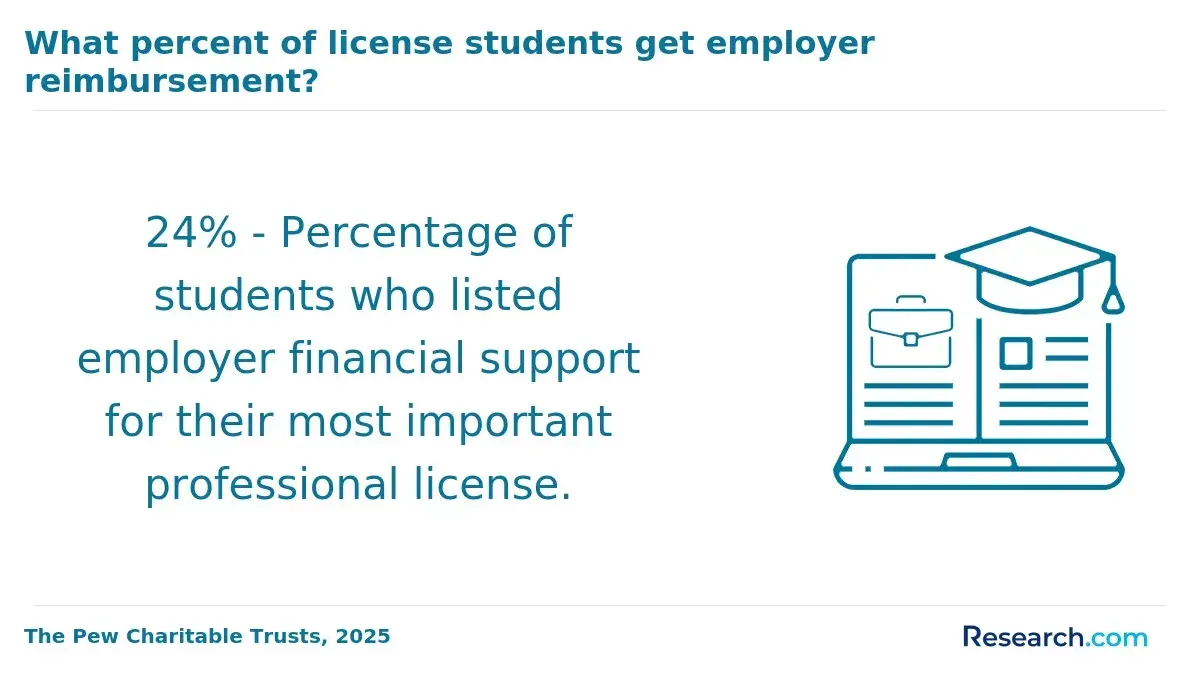
Students should also ask about institutional scholarships, state grants, military education benefits, workforce grants, and employer tuition assistance. These funding sources can be especially important for graduate fintech students because Pell Grants generally are not available for master's programs.
A practical rule is to treat grants and scholarships as price reductions, but treat loans as financing. Loans can make enrollment possible, but they do not make the degree cheaper; they shift payment into the future with interest and repayment obligations.
Transfer credits can lower the cost of an online financial technology degree more than a small tuition difference. If one school charges $295 per credit and another charges $398 per credit, the lower rate looks better at first. But if the higher-rate school accepts 75 prior credits and the lower-rate school accepts only 45, the higher-rate school may require fewer paid credits and produce a lower total cost.
The table below shows why accepted credits matter. It uses a simple tuition-only comparison to illustrate the decision; actual totals may change after fees, grants, residency requirements, and course availability.
| Scenario | Published tuition | Credits accepted | Credits remaining | Estimated remaining tuition | Main lesson |
| Lower tuition, fewer transfer credits | $295 per credit | 45 | 75 | $22,125 | Low tuition helps, but rejected credits can raise the total |
| Higher tuition, more transfer credits | $398 per credit | 75 | 45 | $17,910 | More accepted credits can outweigh a higher per-credit rate |
| No transfer credits | $295 per credit | 0 | 120 | $35,400 | First-time students should focus on grants, scholarships, and completion support |
The same net-cost discipline applies beyond fintech. Students comparing affordable online programs in other fields, such as masters in history options, should also look past tuition and examine credit requirements, transfer rules, and completion timelines.
Ask admissions for an official transfer evaluation before you enroll, not after your first term begins. A verbal estimate is not enough if your decision depends on saving thousands in tuition.
To maximize savings, take these steps before selecting a fintech program:
- Request an unofficial review before applying and an official transfer evaluation before enrolling.
- Ask how many credits can apply to the major, not just to general electives.
- Confirm whether old business, accounting, math, statistics, programming, or information systems courses still count.
- Check whether professional certifications, military training, exams, or prior learning assessment can earn credit.
- Compare the number of remaining courses, not only the number of accepted credits.
- Make sure transferred credits do not reduce your eligibility for required aid minimums or scholarships.
A low-cost online financial technology degree with FAFSA access is most useful for students who need a recognized credential, want flexible scheduling, and must keep debt manageable. It is especially relevant for working adults, transfer students, first-generation college students, military-affiliated students, and finance or tech employees trying to move into fintech without leaving the workforce.
Online fintech programs can also suit students who enjoy applied problem-solving. Typical coursework may involve financial markets, banking systems, data analytics, Python or SQL basics, digital payments, cybersecurity concepts, risk management, regulatory technology, blockchain applications, and product or platform strategy.
Students comparing fintech with unrelated online paths should think carefully about career fit, not just speed or price. For example, a student considering technology-driven finance roles will evaluate different risks and outcomes than someone comparing humanities-focused graduate study or a different online graduate route; the right choice depends on your target occupation, not only the tuition page.
This type of program is often a good fit for students who:
- Want roles in digital banking, payments, financial data analysis, compliance technology, risk operations, product operations, or financial systems support.
- Need an online format because of work, caregiving, military service, or location constraints.
- Have prior credits that can shorten a bachelor's completion timeline.
- Can combine finance knowledge with technical skills such as spreadsheets, databases, analytics tools, or basic programming.
- Plan to use grants, scholarships, employer aid, or low borrowing to keep total debt proportionate to expected earnings.
It may not be the right fit if you dislike quantitative work, want a purely theoretical finance education, expect FAFSA to cover every cost, or need a degree for a licensed profession that has separate state requirements. Students aiming for software engineering roles may be better served by computer science or software development programs, while students aiming for financial advising may need to check certification or licensing expectations.
The cost of an online financial technology degree affects career ROI because every borrowed dollar raises the earnings needed to justify the credential. Fintech can connect to strong labor markets in finance, analytics, compliance, cybersecurity, and software-enabled financial services, but outcomes depend on role, experience, location, portfolio quality, internships, and prior work history.
BLS wage data gives useful context without guaranteeing individual outcomes. The May 2024 median annual wage for computer and information technology occupations was $105,990, which shows why technical skills can matter in finance-adjacent careers. For students, the key takeaway is not that a fintech degree automatically leads to a six-figure role; it is that combining finance knowledge with marketable technology skills may broaden the set of roles you can pursue.
The table below connects common fintech-aligned roles with ROI considerations. Use it to compare the cost of your degree against the skills and experience typically needed for your target path.
| Career direction | Relevant fintech degree strengths | ROI consideration |
| Financial data analyst | Statistics, data visualization, financial modeling, SQL or Python basics | Portfolio projects and internships can matter as much as the degree title |
| Digital banking or payments operations | Banking systems, compliance, payment networks, risk controls | Lower-cost bachelor's programs may offer good value for entry or advancement roles |
| Fintech product operations | Finance workflows, customer data, platform strategy, analytics | Work experience and product exposure can strengthen ROI more than a high-cost credential alone |
| Regtech or compliance technology support | Regulation, data systems, fraud prevention, controls, reporting | Students should look for coursework tied to real compliance and risk tools |
| Financial systems analyst | Information systems, databases, business analysis, finance processes | A technology-heavy program may justify a higher cost if it builds stronger systems skills |
Students comparing fintech with broader lists of high-earning majors should remember that ROI is personal. Even among fields often associated with strong earnings, the best outcome usually comes from choosing a program you can complete, afford, and translate into demonstrable skills.
Before enrolling, estimate ROI with a conservative approach:
- Calculate total program cost after grants, scholarships, transfer credits, and employer aid.
- Estimate how much you would borrow, including fees and interest.
- Compare monthly loan payments with entry-level salaries in your target region and role.
- Review job postings to confirm the skills, tools, and degree levels employers request.
- Look for programs that include projects, case studies, internships, career support, or applied analytics work.
- Avoid borrowing heavily for a program if you cannot clearly connect it to a realistic career path.
How Should Students Choose the Cheapest FAFSA-Eligible Online Financial Technology Degree?
To choose the cheapest FAFSA-eligible online financial technology degree, start with net cost and eligibility, then move to curriculum and outcomes. The goal is not simply to find the lowest tuition; it is to find the lowest-risk program that you can complete and use.
Use this decision sequence to compare programs consistently:
- Identify your target role first, such as financial analyst, payments specialist, fintech operations associate, systems analyst, or compliance technology analyst.
- Choose the degree level that matches your background: associate or bachelor's for entry-level preparation, bachelor's completion for transfer students, or master's for professionals who already hold a degree.
- Verify institutional accreditation and Title IV federal aid participation.
- Confirm that the exact online fintech degree or concentration is FAFSA-eligible.
- Request a written total-cost estimate, including tuition, fees, books, technology, and any required in-person components.
- Get an official transfer-credit evaluation before enrolling.
- Compare grants and scholarships separately from loans so you know your real debt exposure.
- Review the curriculum for finance, data, systems, cybersecurity, regulatory, and applied project content.
- Ask about career services, employer partnerships, internship support, and alumni outcomes.
- Choose the program with the best mix of low net cost, credible accreditation, completion support, and career alignment.
If you are comparing fintech with online degrees in other fields, remember that program-selection rules change by profession. Licensure-oriented options such as MFT online programs require different checks than fintech degrees because state licensure, supervised hours, and clinical placement rules can matter more than tuition alone.
Ask each school direct questions before you commit. The most important ones are: "Is this exact program eligible for federal aid?", "What will I pay after grants and scholarships?", "How many credits will I have left after transfer evaluation?", "What happens if I enroll part time?", and "What career support is available for online fintech students?"
The smartest choice is usually the program that minimizes avoidable debt while still giving you a recognized credential, relevant technical skills, and enough flexibility to finish. Cheapest is only best when it is also accredited, fundable, transferable, and aligned with the work you want.
Other Things You Should Know About Financial Technology
Usually not for admission, especially at the bachelor's level. However, students should expect some exposure to analytics tools, spreadsheets, databases, or basic programming because fintech work often involves data and digital systems.
A bachelor's degree commonly requires about 120 credits and may take four years for full-time first-time students, while transfer students can finish faster. Master's programs are often shorter, but timelines vary by credit load, course sequence, and part-time enrollment.
A certificate can help build a specific skill, but it may not replace a degree for employers that require a bachelor's or master's. Also, not all certificates are eligible for federal student aid, so confirm funding before enrolling.
Undergraduate programs typically require a high school diploma or equivalent, transcripts, and an application. Graduate programs usually require a bachelor's degree, transcripts, a resume, and sometimes prerequisite coursework in business, math, finance, or technology.
- Best Master in FinTech Programs - Admission Info | ARINGO https://aringo.com/top-ranked-masters-programs-in-fintech/
- Paying for a Computer Science Degree | Scholarships, Grants, Loans https://www.computerscience.org/resources/how-to-pay-for-a-degree/
- Can You Get Financial Aid for Online College? Finding Out https://beal.edu/can-you-get-financial-aid-for-online-college/
- 9 Online Schools That Accept FAFSA (and How to Get Financial Aid) https://www.studentloanplanner.com/financial-aid-online-colleges/
- Do Online Colleges Accept FAFSA? | Ascent Funding https://www.ascentfunding.com/blog/do-online-colleges-accept-fafsa/
- Online Fintech Courses & Certifications - CFTE https://courses.cfte.education/
- What Is FAFSA and Why Doesn’t ACE Use It? | ACE Blog https://ace.edu/blog/what-is-fafsa-and-why-doesnt-ace-use-it/
- Guide to Financial Aid for Online Students https://www.onlineu.com/resources/financial-planning/financial-aid
- Cost of College by Country [2025]: Average Tuition Fees https://educationdata.org/average-cost-of-college-by-country