2027 Online Financial Technology Degree Programs With No Personal Statement or Admissions Essay Required

Co-Founder and Chief Data Scientist
An application essay can slow down students who are ready to begin an online financial technology degree but need a less writing-intensive admissions process. "No essay required" usually means the degree application does not request a personal statement; it does not remove transcript, GPA, prerequisite, or identity-verification requirements.
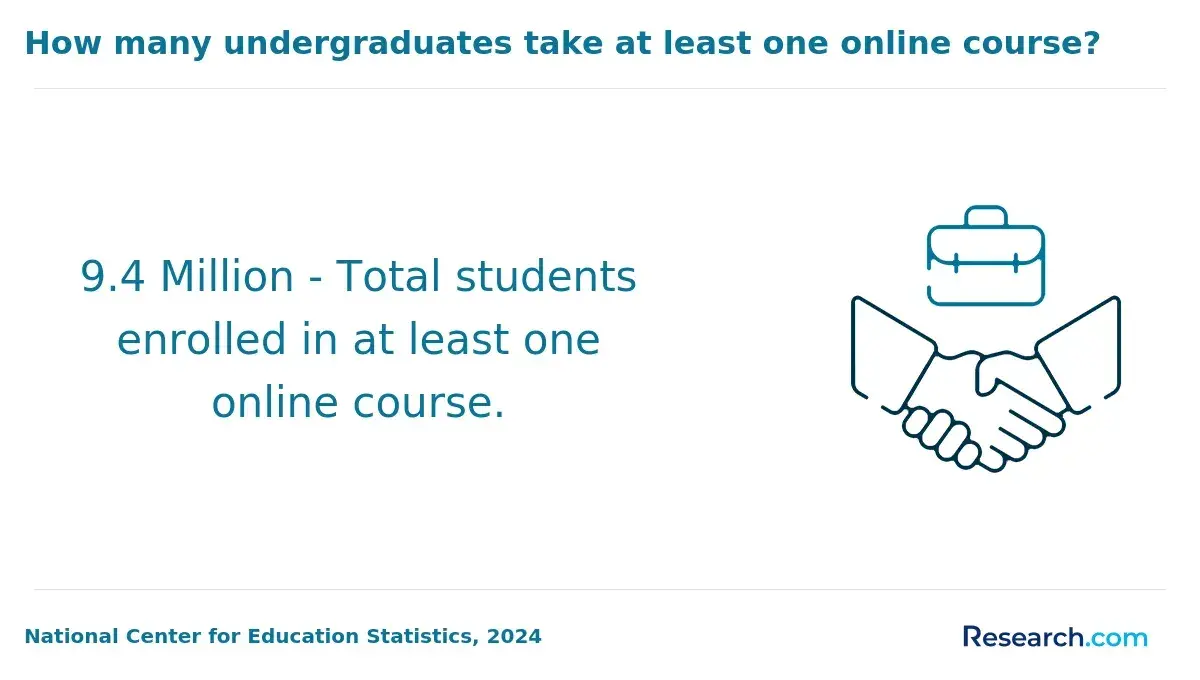
The National Center for Education Statistics reported that 7.0 million U.S. students took at least one distance education course in fall 2022, underscoring the scale of online study. This guide helps prospective and transfer students verify policies, compare quality, estimate costs, and apply strategically.
Key Things You Should Know
- A true no-essay financial technology application omits a personal statement from the standard degree application, but admission can still depend on official transcripts, a minimum GPA, quantitative prerequisites, transfer-credit review, and English-language documentation where applicable.
- No-essay is different from essay-optional and essay-waived: optional essays may strengthen borderline applications, while waived essays can return for honors tracks, conditional admission, scholarships, or certain applicant categories.
- Application simplicity is not a quality measure: compare institutional accreditation, curriculum in finance and technology, total tuition, and outcomes; for context, the U.S. Bureau of Labor Statistics lists a 2024 median pay of $101,910 for financial analysts, though fintech roles and earnings vary widely.
What Does No Personal Statement or Admissions Essay Required Mean for Online Financial Technology Degree Programs?
In an online financial technology program, a no-personal-statement or no-admissions-essay policy means that the school's standard application does not require an original narrative explaining your goals, background, or readiness for study. The admissions office instead makes its initial decision from more structured evidence, such as prior coursework and academic record.
This policy is most common in programs designed for adult learners, transfer applicants, or applicants meeting published admission thresholds. It is not the same as open admission. A school may deny admission when a student does not meet GPA, course, degree, documentation, residency, or capacity requirements.
Financial technology, often called fintech, blends finance with software, data, payments, risk management, digital banking, blockchain applications, and financial regulation. Programs may be offered as bachelor's degrees, master's degrees, concentrations within finance or information systems, or graduate certificates. Degree title alone does not establish that a program has a no-essay policy; applicants should check the requirement for their exact credential and entry term.
A policy can also be narrower than it first appears. "No essay required" may apply only to domestic applicants, applicants with a completed associate degree, or those meeting a stated GPA. It may exclude applicants seeking exceptions, readmission, graduate assistantships, or competitive scholarships.
What Admissions Requirements Do Online Financial Technology Degree Programs Use Instead of an Essay?
Without an essay, admissions teams generally rely more heavily on verifiable academic and administrative materials. Requirements differ substantially between undergraduate and graduate fintech programs, so use the program's current admissions page rather than a general university checklist.
The following comparison shows the evidence commonly used in place of an essay and what it is intended to establish.
| Requirement | Common use in undergraduate admission | Common use in graduate admission | What applicants should confirm |
| Official transcripts | High school record and prior college credit | Bachelor's degree and prior academic performance | Minimum GPA, accepted institutions, and transcript delivery method |
| Quantitative prerequisites | Algebra, statistics, or college-level math may be expected | Statistics, calculus, programming, economics, finance, or accounting may be expected | Whether missing courses can be completed before or after enrollment |
| Resume or work history | Sometimes optional | Common for professional master's programs | Whether it is required and whether experience can offset a prerequisite |
| Test scores | Often test-optional, depending on the institution | GRE or GMAT may be waived, optional, or required | Whether test-optional also means score-free for scholarship review |
| Recommendations | Less common in broad-access programs | May be required for selective or research-oriented programs | Whether professional references are acceptable |
Test-optional describes standardized testing, not essays. A school can be both test-optional and essay-required, or no-essay and test-required. Confirm each policy separately before deciding that an application is low effort.
Applicants who have uneven grades should ask whether a short optional statement, resume, interview, or prerequisite grade can provide useful context. An optional writing sample may be worth submitting when it adds clear evidence of preparation, but it should never be used to avoid addressing a stated academic deficiency with the admissions office.
Who Is a Good Fit for Online Financial Technology Degree Programs With No Admissions Essay?
No-essay admissions can fit students whose transcripts and prerequisites already show their readiness. The streamlined format may be especially practical for working adults, military-connected students, career changers with recent quantitative coursework, and transfer students applying to several schools while balancing work or family responsibilities.
It can also suit applicants who prefer an evidence-based review and do not need a personal narrative to explain their record. Students looking for an accelerated online masters degree should still confirm the pace, prerequisite expectations, and credit load; a shorter program may demand more weekly study time rather than less preparation.
A no-essay pathway may be a weaker fit for a student whose academic record needs substantial explanation, whose career pivot is not evident from coursework, or who is applying to highly selective programs. In those cases, an essay-required or essay-optional program may offer a valuable opportunity to explain motivation, technical projects, leadership, or readiness for advanced study.
Career fit matters as much as admissions fit. Fintech graduates may pursue roles in financial analysis, product operations, compliance, data analytics, payments, risk, or technology teams. The U.S. Bureau of Labor Statistics projects employment of financial analysts to grow 9% from 2023 to 2033. That outlook is for the occupation, not a guarantee for fintech graduates, but it supports evaluating programs for analytical, regulatory, and technical skill development rather than application convenience alone.
The wording on an admissions page affects what you should submit and how much control you have over your application narrative. Read the policy at the program level because university-wide language can differ from the rules for an online fintech degree.
This table distinguishes the three labels and highlights where applicants commonly make incorrect assumptions.
| Policy | What it means | Best applicant response | Important limitation |
| No essay required | No personal statement is part of the standard application. | Submit all listed records accurately and verify whether separate materials apply. | A school may request more information for an individual review. |
| Essay-optional | You may apply without an essay, but the school accepts one. | Submit a concise essay if it adds meaningful context or demonstrates fit. | Optional does not necessarily mean the essay has no effect on a holistic review. |
| Essay-waived | An essay requirement is removed for a defined group or term. | Confirm that you meet the waiver conditions in writing. | The waiver may not cover transfers, international applicants, scholarships, or later terms. |
| Essay required | A written statement is a required application component. | Follow the prompt, word limit, and deadline exactly. | Submitting other materials does not replace the essay unless the school approves an exception. |
Do not interpret an essay waiver as permanent. A temporary enrollment initiative, an articulation agreement, or an employer partnership can change eligibility. Save the policy page, note the term, and ask admissions to confirm the requirement by email if its wording is unclear.
Students weighing different graduate fields may find that admissions formats vary even among online professional degrees. For example, MFT online programs can have distinct application and field-placement expectations because clinical training follows a different professional pathway from fintech.
Not necessarily. Removing an essay reduces one application task, but it does not reveal a program's academic selectivity, available seats, or likelihood of admission. A program can use firm GPA cutoffs, prerequisite grades, degree-completion requirements, or enrollment capacity in place of narrative review.
For applicants, "easier to apply to" and "easier to get into" are separate questions. An accessible application can be useful if you already meet published standards, but it may provide fewer ways to explain low grades, a long educational gap, or a nontraditional career path.
Use these checks to assess admission difficulty without relying on marketing language.
- Find the minimum GPA and determine whether it is a minimum for consideration or a typical profile of admitted students.
- Check whether statistics, programming, accounting, economics, or finance prerequisites require a particular grade.
- Ask whether admission is rolling, cohort-based, space-limited, conditional, or contingent on a transcript evaluation.
- Confirm whether a graduate program requires a completed bachelor's degree in a related field or accepts bridge coursework.
- Compare acceptance information only when the school publishes it for the specific program and applicant group.
Conditional admission can be a reasonable option for an otherwise promising applicant, but review the conditions carefully. They may require a specified first-term GPA, completion of prerequisites, or restricted course enrollment. Consider the academic and financial consequences before accepting.
Accreditation is more important than a simplified application. Start by verifying that the institution holds recognized institutional accreditation and that the accreditor is recognized by the U.S. Department of Education or the Council for Higher Education Accreditation. Some business schools also hold specialized business accreditation, but this is not required for every credible fintech degree.
Next, review whether the curriculum reflects the work the program claims to prepare students for. A strong fintech curriculum commonly connects financial systems and regulation with data analysis, cybersecurity awareness, programming or database concepts, payments, risk, and ethical use of technology. The exact balance should match your intended role.
Compare these quality signals before applying.
- Faculty biographies should identify relevant academic, finance, technology, regulatory, or industry experience.
- Course descriptions should state concrete skills, software, projects, or applied assessments rather than only broad topic names.
- Student-support details should explain online advising, tutoring, career services, accessibility support, and technical assistance.
- Required disclosures should clearly show total credits, online residency requirements, refund rules, and whether synchronous attendance is expected.
- Outcome information should be specific about the population and measure used; avoid treating broad university employment claims as fintech-program results.
Institutional quality also helps protect transferability and eligibility for federal financial aid, although neither outcome is automatic. If you are comparing distance-learning providers, this overview of the top 10 online colleges can be a starting point for broader institutional research, not a substitute for checking the exact fintech program.
Red flags include vague accreditation claims, pressure to enroll immediately, unclear total-cost disclosures, unsupported job-placement promises, and course catalogs that do not identify instructors or learning outcomes. Ask for written clarification before paying a deposit.
A no-personal-statement process is usually faster, but it still requires careful document collection and review. Deadlines, transcript processing, and prerequisite evaluation can take longer than completing the online form itself.
Follow this sequence to avoid discovering missing requirements after the application deadline.
- Identify the exact online fintech degree, concentration, start term, and applicant category that apply to you.
- Read the program-level admissions page and record every required item, including any separate graduate-school or departmental form.
- Request official transcripts early and compare completed courses against math, programming, finance, and degree prerequisites.
- Complete the application accurately, including prior institutions, work history, residency information, and disclosure questions.
- Submit required documents and any optional resume or statement only when it adds relevant evidence.
- Monitor the applicant portal, resolve document holds, and obtain written confirmation of your admission status and any conditions.
- Before enrolling, review the financial-aid offer, transfer-credit evaluation, course schedule, technology needs, and withdrawal policies.
Ask admissions whether the "no essay" policy includes all application stages. A separate written response may appear in an honors application, scholarship form, prerequisite petition, or request to explain academic misconduct, disciplinary history, or a gap in records. These requests do not necessarily contradict a no-essay admissions policy, but they affect your workload.
Yes, many online programs extend no-essay policies to transfer and adult applicants, but their review often focuses more heavily on college transcripts and credit applicability. A transfer applicant may have no essay requirement yet still need course syllabi, placement information, or evidence that prior credits meet fintech prerequisites.
Adult learners returning after several years should ask whether older coursework satisfies current requirements, especially for statistics, programming, accounting, and technology courses. Schools may accept prior learning, professional certifications, military training, or credit-by-exam in limited circumstances, but policies vary and evaluation is not guaranteed.
Transfer decisions should be made using a written credit evaluation whenever possible. The following factors often determine whether a simpler application actually shortens time to graduation.
| Transfer factor | Why it matters | Question to ask |
| Maximum transferable credits | It can limit how much prior coursework applies to the degree. | What is the maximum number of credits accepted toward this program? |
| Course equivalencies | Titles alone may not establish equivalency. | Which of my courses meet finance, math, data, or programming requirements? |
| Grade and age limits | Programs may require minimum grades or recent completion for technical courses. | Do any prerequisites expire or require a grade above the general transfer minimum? |
| Residency requirement | A school may require a set number of credits completed through it. | How many credits must I take at your institution to earn the degree? |
| Articulation agreements | Partner-school agreements can make transfer evaluation more predictable. | Does my previous institution have an agreement for this degree? |
Applicants changing fields should not choose solely by transfer volume. A program that accepts more credits but leaves gaps in programming, analytics, or financial regulation may not be the most efficient route to a fintech career.
A no-essay admission policy does not inherently lower tuition, create additional federal aid eligibility, or make scholarships easier to receive. Tuition is generally set by the institution and program, while federal aid eligibility depends on factors such as enrollment, cost of attendance, satisfactory academic progress, and the information submitted through the Free Application for Federal Student Aid.
For a useful national cost benchmark, the College Board reported average published tuition and fees of $11,610 for in-state students at public four-year institutions and $43,350 at private nonprofit four-year institutions for 2024-25. These figures are not online fintech program prices or net prices, but they illustrate why applicants should compare a school's full program cost rather than its application requirements.
Ask each school for the total estimated cost through graduation, including per-credit tuition, required fees, course materials, proctoring, technology, and any residency or immersion expenses. Compare net cost after grants separately from loans, which must be repaid.
Scholarships are the most common exception to a no-essay expectation. Merit awards, leadership awards, donor-funded scholarships, and competitive fellowships may require written responses, recommendations, a portfolio, or an interview even if the degree application does not. Students interested in high-return academic pathways can also explore how fields are evaluated among the most profitable degrees, while remembering that major-level earning comparisons do not predict an individual result.
How Should You Compare Online Financial Technology Degree Programs With No Admissions Essay?
Start with career direction, then use admissions simplicity as one factor rather than the deciding factor. A program suited to payments product work may emphasize product management, APIs, and data, while a risk or compliance path may require deeper study of regulation, fraud, auditing, and financial controls.
Use a consistent comparison process so an easy application does not distract from the elements that affect academic fit and value.
- Match the curriculum to a target role, such as financial analyst, data analyst, risk specialist, compliance analyst, product operations professional, or technology project coordinator.
- Verify institutional accreditation and examine the exact credential, course sequence, faculty, and online learning format.
- Calculate total program cost, not only tuition per credit, and distinguish grants from borrowing.
- Compare admission requirements by applicant type, including GPA, prerequisites, transfer rules, test policy, and any conditional-admission terms.
- Check whether the no-essay policy applies to your term, degree level, residency status, and scholarship application.
- Ask about career support, employer connections, internships, project-based learning, and outcome reporting relevant to online students.
- Review scheduling, live-session expectations, group projects, exam proctoring, and technology requirements against your work and family commitments.
Make a short list of programs that meet your academic, financial, and career criteria, then apply to the ones where you can satisfy the documented requirements. Programs in unrelated disciplines can illustrate why direct comparison matters: an online masters in history may have different research, writing, and admissions expectations from a quantitative fintech program.
The best no-essay pathway is one that removes unnecessary application friction while preserving credible instruction, transparent costs, and preparation for the work you want to pursue.
Other Things You Should Know About Financial Technology
Not always. Policies may differ for first-year, transfer, graduate, international, readmission, and nondegree applicants. Confirm the requirement for your exact applicant category, program, and start term.
Yes. Admissions may request clarification about transcripts, disciplinary disclosures, prerequisite gaps, or eligibility. This is usually an individual review request rather than a standard personal-statement requirement.
They may. Many competitive, donor-funded, and leadership scholarships use separate applications with essays, recommendations, or interviews. Review scholarship requirements independently from degree admission requirements.
Not universally. Some programs teach programming from the beginning, while others expect prior coursework in statistics, programming, or data analysis. Review required courses and prerequisites to determine whether you need preparation before enrolling.
- Financial Aid For Online Colleges https://www.affordablecollegesonline.org/financial-aid/financial-aid-for-online-colleges/
- A Guide to GMAT-Free Online MBA Degree Programs https://www.coloradotech.edu/articles/studies/business-and-management/online-mba-options-working-professionals
- What is an MBA? https://www.collegeessayguy.com/blog/what-is-an-mba
- Bachelor of Science in Finance and Technology | University of Phoenix https://www.phoenix.edu/online-business-degrees/finance-technology-bachelors-degree.html
- Best Finance Degrees Online | Accounting.com https://www.accounting.com/degrees/finance/bachelors/best-online-programs/
- 10 College Application Essay Dos and Don'ts https://www.ivywise.com/ivywise-knowledgebase/10-college-application-essay-dos-and-donts/
- Student Loan Guide https://www.salliemae.com/resources/student-loans/student-loan-guide/
- 23 Ways to Improve Your UT-Austin Common App Essay - And Avoid Common Mistakes - Tex Admissions https://www.texadmissions.com/blog/best-practices-tips-ut-austin-common-app-essay
- Do Online Colleges Accept FAFSA? | Ascent Funding https://www.ascentfunding.com/blog/do-online-colleges-accept-fafsa/
- ChatGPT, Law School Application Personal Statements, and the LSAT Writing Sample https://www.lsac.org/blog/chatgpt-law-school-application-personal-statements-and-lsat-writing-sample