2027 Fastest Accredited Online Financial Technology Programs: Accelerated Degrees and Completion Times

Co-Founder and Chief Data Scientist
Choosing the fastest accredited online Financial Technology program is really a timing, cost, and credibility decision. Fintech blends finance, data, software, payments, risk, and regulation, and demand is tied to roles such as financial analysts, whose BLS median pay was $101,910 in 2024. This guide is for students comparing accelerated online fintech degrees, bachelor's-completion pathways, and master's programs. You will learn what "fast" realistically means, how transfer credits and prerequisites affect timelines, and how to compare speed without overlooking accreditation, workload, internships, or total cost.
Key Things You Should Know
- The fastest realistic accredited online fintech paths are usually 12-month master's programs for qualified applicants or bachelor's-completion programs for students transferring about 60 to 90 credits into a 120-credit degree.
- Accelerated online terms commonly run 5 to 8 weeks, but shorter terms compress the same credit workload; they are faster only if you can handle year-round enrollment and multiple courses per term.
- Transfer policy is often the biggest time-saver: many online bachelor's programs accept up to 90 credits, while some adult-completion models may accept more, but residency, major, and upper-division credit rules still apply.
Which Colleges Offer the Fastest Accredited Online Financial Technology Programs?
The fastest accredited online Financial Technology programs are typically found in three categories: fintech-specific master's degrees, online bachelor's degrees or bachelor's-completion programs in financial technology, and finance degrees with fintech concentrations. A program is "fast" only if its calendar, credit requirements, transfer policy, and prerequisite structure match your academic background.
The table below compares examples of accredited U.S. online programs that are commonly relevant to fintech students. Use it as a shortlist-building tool, then confirm current catalog requirements directly with each school before applying.
| College or University | Online fintech-related option | Credential level | Fastest realistic path | Why it may be fast | Timeline caveat |
| Franklin University | BS in Financial Technology | Bachelor's | About 1 to 2 years for high-transfer students | Online adult-focused format and generous transfer-credit policy | Students starting with few credits should expect closer to a traditional four-year bachelor's timeline |
| Southern New Hampshire University | BS in Finance with Financial Technology concentration | Bachelor's | About 1 to 2 years with substantial transfer credit | Online 8-week terms and transfer-friendly structure | Fintech concentration courses may have sequencing rules |
| New Jersey Institute of Technology | MS in Financial Technology | Master's | About 12 to 24 months depending on course load | Graduate-level fintech curriculum designed for working professionals | Applicants without quantitative, computing, or finance preparation may need prerequisites |
| University of Connecticut | MS in Financial Technology | Master's | About 20 months for the structured online pathway | Cohort-style online graduate program with fintech-specific coursework | A fixed sequence may be less flexible than self-paced or open-enrollment formats |
| Creighton University | MS in Financial Technology and Analytics | Master's | About 1 to 2 years depending on pace | Online graduate format combining analytics, finance, and technology | Students balancing full-time work may choose a slower part-time load |
| Stevens Institute of Technology | Financial Technology and Analytics graduate study | Master's or graduate coursework | Often 1 to 2 years depending on enrollment intensity | Technology-focused curriculum aligned with quantitative finance and analytics | Technical prerequisites can affect the start date and course sequence |
When comparing these options, remember that "fastest" depends heavily on whether you are starting from zero credits, finishing a bachelor's degree, or entering a graduate program with the right background. If you are still deciding whether online education is the right format, a broader comparison of the top 10 online colleges can help you evaluate accreditation, flexibility, and student support before narrowing your fintech shortlist.
How Long Does It Take to Complete an Accredited Online Financial Technology Degree?
An accredited online Financial Technology degree can take less than one year, one to two years, or four years depending on the credential. The most important distinction is whether you are completing an unfinished bachelor's degree, earning a full bachelor's from the beginning, or pursuing a graduate program after already earning a bachelor's degree.
The table below summarizes realistic completion ranges. These are planning ranges, not guarantees, because schools can change course schedules, prerequisite policies, and transfer evaluations.
| Program type | Typical credits | Fastest realistic completion time | Typical completion time | Best fit |
| Graduate certificate in fintech or financial analytics | 9 to 18 credits | 3 to 9 months | 6 to 12 months | Professionals who already have a degree and want targeted fintech skills |
| Fintech master's degree | 30 to 36 credits | 12 months | 18 to 24 months | Students with a bachelor's degree and strong quantitative, business, or technology preparation |
| Bachelor's-completion program | Usually 120 total credits, with many transferred in | 12 to 24 months | 2 to 3 years | Students with an associate degree or significant prior college credit |
| Full online bachelor's degree | About 120 credits | 3 years with heavy year-round study | 4 years | First-time college students or students with limited transfer credit |
The fastest path for many adults is not a four-year program compressed into one year; it is a completion pathway that recognizes prior credits. Similarly, an online masters degree can be faster than a second bachelor's if you already meet graduate admission requirements and need advanced fintech, analytics, or finance training.
Several factors can extend the advertised timeline even in an accelerated program. These are the issues to clarify before enrolling because they directly affect your graduation date.
- Prerequisites: Calculus, statistics, accounting, economics, programming, or database coursework may be required before advanced fintech classes.
- Course sequencing: Some classes are offered only once or twice per year, so missing one course can delay later requirements.
- Transfer evaluation: Credits may transfer as electives but not satisfy major, upper-division, or residency requirements.
- Internships or capstones: Some programs require project-based or experiential work that cannot always be accelerated.
- Workload limits: Schools may restrict how many credits students can take per term without advisor approval.
How Do Accelerated and Competency-Based Online Financial Technology Programs Work?
Accelerated online fintech programs use shorter terms, year-round scheduling, heavier course loads, or credit for prior learning to reduce calendar time. Competency-based education can be even more flexible, but fintech-specific competency-based degrees are less common than competency-based business, IT, or data analytics programs with fintech-relevant electives.
The table below compares the main accelerated formats. It helps you see whether a "fast" format actually matches the way you learn and the number of hours you can study each week.
| Format | How it works | Why it can shorten completion time | Main trade-off |
| 5- to 8-week terms | Courses run in shorter blocks instead of a 15- or 16-week semester | Students can complete more course cycles per year | Assignments, exams, and projects arrive quickly |
| Year-round enrollment | Students take fall, spring, and summer courses | Summer study reduces idle time between terms | Fewer breaks can increase burnout risk |
| Bachelor's completion | Prior credits are applied toward a 120-credit degree | Students finish only remaining general education, major, and residency credits | Not all transfer credits may apply to the fintech major |
| Competency-based pacing | Students move after demonstrating mastery | Experienced students may progress quickly through familiar material | Requires strong self-direction and may not fit students who need weekly structure |
| Graduate accelerated plan | Students take multiple graduate courses each term | A 30-credit master's can sometimes be completed in about 12 months | Quantitative and technical courses can be demanding when stacked together |
In fintech, compressed courses often cover data visualization, Python or other programming foundations, blockchain concepts, payment systems, risk analytics, cybersecurity, financial modeling, and regulatory technology. Shorter terms do not usually mean less work; they mean the same credit expectations are delivered in fewer weeks.
If you are considering a competency-based or highly accelerated path, take these steps before applying. They can help you avoid choosing a format that looks fast but becomes difficult to sustain.
- Ask whether fintech courses are self-paced, term-based, or cohort-based.
- Confirm the maximum number of courses allowed per term for new students and continuing students.
- Request a degree plan that shows exact course order, not just total credits.
- Ask how often required fintech, analytics, finance, and programming courses are offered.
- Estimate weekly study time based on your planned course load and work schedule.
An online Financial Technology program should have institutional accreditation from an agency recognized by the U.S. Department of Education or the Council for Higher Education Accreditation. This is the baseline credential that supports federal financial aid eligibility, credit transfer, graduate admission, and employer confidence.
Programmatic accreditation is also worth checking, especially when the fintech program sits inside a business school. Business-related accreditation does not automatically make a program faster, but it can signal that the curriculum, faculty qualifications, assessment practices, and student outcomes have undergone additional review.
The table below explains the accreditation layers fintech students are most likely to encounter. Use it to separate essential accreditation from optional signals of quality.
| Accreditation type | What it applies to | Why it matters for fintech students | What to verify |
| Institutional accreditation | The college or university as a whole | Usually required for federal financial aid, transfer credit, and graduate school recognition | Confirm the institution appears in the U.S. Department of Education accreditation database |
| AACSB, ACBSP, or IACBE business accreditation | Business school or business programs | May strengthen confidence in finance, accounting, analytics, and management coursework | Check whether the specific school or program is included, not just the university |
| Computing-related accreditation | Selected computing, IT, or information systems programs | May matter if the fintech degree is housed in a technology school or includes extensive computing coursework | Confirm whether accreditation applies to the exact degree, not a related campus program |
| State authorization | Permission to serve online students by state | Determines whether the school can enroll you where you live | Ask admissions whether your state is approved for the online program |
A major red flag is a school that advertises extremely fast completion but is vague about accreditation. Another is a program that says it is "recognized," "approved," or "certified" without naming a legitimate accrediting agency. For fintech, accreditation is especially important because graduates may use the degree for finance, analytics, compliance, banking, technology, or graduate study opportunities.
Transfer credits and prior learning can shorten an online Financial Technology degree more than any course format. A student who transfers 90 applicable credits into a 120-credit bachelor's program may need only 30 credits, while a first-time student must complete the full degree sequence.
The table below shows how transfer credit can change the calendar. It assumes a 120-credit bachelor's degree and illustrates why two students in the same program may graduate years apart.
| Starting point | Credits still needed | Possible full-time timeline | Planning note |
| No prior college credit | About 120 credits | 3 to 4 years | Acceleration requires heavy year-round enrollment |
| 30 transferable credits | About 90 credits | 2.5 to 3 years | Some credits may satisfy electives rather than major requirements |
| 60 transferable credits | About 60 credits | 18 to 24 months | Associate-degree holders may still need upper-division fintech coursework |
| 90 transferable credits | About 30 credits | 12 to 18 months | Residency rules may require a minimum number of credits at the graduating institution |
| Prior learning plus transfer credit | Varies by school | Potentially shorter if approved | Credit is not automatic and often requires documentation, exams, portfolios, or certifications |
Prior learning credit may come from military training, professional certifications, employer training, standardized exams, portfolio assessment, or industry credentials. In fintech, relevant experience might include banking operations, data analysis, accounting systems, cybersecurity, programming, financial modeling, or payment technology work.
To maximize credit without losing time, follow a transfer-first strategy before choosing a program. The goal is to find out how many credits apply to the degree, not just how many credits the school accepts in theory.
- Request an unofficial transfer review before committing to enrollment.
- Ask which credits satisfy general education, major, upper-division, elective, and residency requirements.
- Confirm whether old math, statistics, accounting, or programming courses expire or need refreshing.
- Ask whether industry certifications can count toward fintech, IT, cybersecurity, data analytics, or elective credits.
- Get the remaining course sequence in writing, including term availability and projected graduation date.
Admission requirements vary by degree level. Bachelor's programs usually require a high school diploma or equivalent, prior transcripts, and sometimes placement information. Bachelor's-completion programs focus more heavily on college transcripts and transferable credit. Master's programs usually require a bachelor's degree and may expect prior coursework or experience in finance, business, mathematics, statistics, computer science, engineering, economics, or data analytics.
Start dates matter because accelerated programs often have more entry points than traditional semesters. Some online programs use six, eight, or multiple annual start dates, while cohort-based master's programs may begin only a few times per year.
The table below summarizes admissions and start-date patterns. It can help you identify whether an advertised fast timeline is available immediately or only after the next cohort begins.
| Program level | Common admission requirements | Typical start-date pattern | How this affects speed |
| Online bachelor's in fintech | High school completion, transcripts, application, possible placement or advising | Multiple starts per year in many online programs | Frequent starts reduce waiting time, but foundational courses still take time |
| Bachelor's-completion fintech pathway | Prior college credits, transcript evaluation, minimum GPA, possible associate degree preference | Multiple starts or rolling admission at some schools | Transfer evaluation can be the real bottleneck |
| Online fintech master's | Bachelor's degree, transcripts, resume, statement, recommendations, quantitative preparation | Cohort or term-based starts | Prerequisites or delayed cohort entry can add months |
| Graduate certificate | Bachelor's degree or professional background, depending on school policy | Often more flexible than full master's programs | Can be a faster way to gain fintech coursework before deciding on a full degree |
Before applying, ask admissions whether your intended start date supports the fastest published plan. A program may advertise completion in 12 months, but that timeline may assume a specific start term, continuous enrollment, no prerequisite gaps, and a full-time graduate load.
The cost of a fast online fintech degree depends on tuition per credit, total credits required after transfer, technology fees, textbooks or software, and how long you remain enrolled. Faster completion can reduce time-related costs, but it does not automatically lower tuition if the program charges by credit.
For planning purposes, separate federal aid limits and tuition charges. The maximum Federal Pell Grant for the 2025-2026 award year is $7,395, which can help eligible undergraduate students but usually will not cover the full cost of a bachelor's degree by itself.
Common cost items include the following. These are the charges and savings opportunities most likely to affect the total price of an accelerated online fintech program.
- Tuition charged per credit or per term
- Online learning, technology, graduation, transcript, or assessment fees
- Software, cloud-computing, statistics, database, or financial modeling tools
- Textbooks, digital materials, and exam proctoring charges
- Transfer-credit savings from reducing the number of credits taken at the new school
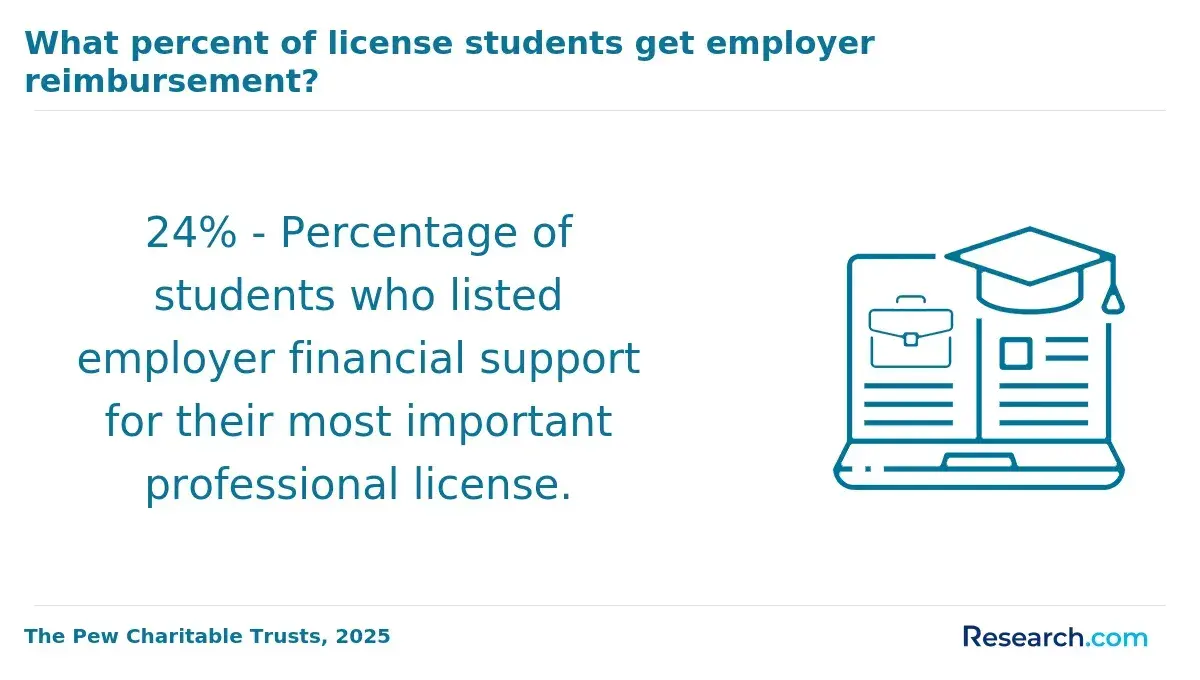
- Employer tuition assistance, military education benefits, scholarships, grants, and federal student loans
The table below shows how cost logic changes by student type. It is useful because the "cheapest" program on a per-credit basis may not be the cheapest after transfer credits, fees, and time to completion are included.
| Student situation | Main cost driver | Cost question to ask | Why it matters |
| First-time bachelor's student | Total tuition for about 120 credits | What is the full program cost if I complete all credits here? | A low per-credit rate still adds up over a full degree |
| Transfer student | Remaining credits after evaluation | How many credits apply directly to the fintech degree plan? | Applicable transfer credit can reduce both time and tuition |
| Graduate student | Cost of 30 to 36 graduate credits | Are prerequisite courses billed separately? | Prerequisites can increase both cost and time |
| Working adult | Schedule fit and opportunity cost | Can I use employer tuition assistance without slowing down? | Employer reimbursement may require minimum grades or annual caps |
Fintech can lead to roles in finance, analytics, compliance, risk, product operations, and technology, but return on investment depends on your prior experience, local job market, portfolio, and technical skills. If earning potential is a major factor in your decision, compare fintech with other most profitable degrees while also considering whether the curriculum builds marketable skills such as data analysis, programming, financial modeling, and regulatory knowledge.
You can work full time while completing an accelerated online Financial Technology degree, but the most aggressive timelines may not be realistic for every working adult. A single 8-week course can feel manageable; two technical or quantitative courses in the same short term can feel like a part-time job on top of your job.
The table below compares common workload choices. It helps you decide whether speed or sustainability should drive your enrollment plan.
| Enrollment pace | Typical course load | Likely fit | Time-to-completion impact |
| Part time | 1 course per accelerated term | Full-time workers, caregivers, students new to online learning | Slower but more sustainable |
| Moderate full time | 2 courses per accelerated term | Students with predictable schedules and strong study habits | Can significantly shorten completion time |
| Heavy accelerated load | 3 or more courses in a short term, if allowed | Students with flexible work, prior knowledge, or temporary reduced obligations | Fastest, but highest burnout and grade-risk potential |
| Year-round plan | Continuous fall, spring, and summer enrollment | Students prioritizing the earliest graduation date | Reduces breaks and can cut months from the timeline |
The best pace depends on course difficulty. Fintech programs may include programming, statistics, databases, cybersecurity, accounting, finance, and analytics projects, and those courses often require consistent weekly practice rather than last-minute reading.
Students in other accelerated online fields face similar trade-offs; for example, comparisons of fast MFT online programs often show that calendar speed must be balanced against fieldwork, course sequencing, and professional readiness. Fintech generally has fewer licensure-style fieldwork barriers, but capstones, group projects, technical labs, and employer-facing portfolios still require time.
Before committing to a fast plan, build a weekly schedule that includes study blocks, project work, exams, and recovery time. If your schedule is unpredictable, a slightly slower path may protect your GPA and help you retain technical skills.
Accelerated online Financial Technology degrees can be respected by employers and graduate schools when they come from accredited institutions and include rigorous, relevant coursework. Employers typically care less about whether a program was online and more about whether the school is legitimate, the curriculum matches the role, and the student can demonstrate finance, analytics, technology, and problem-solving skills.
Labor-market data supports the value of combining finance and technology skills, although no degree guarantees a specific job or salary. The BLS reported a 2024 median pay of $101,910 for financial analysts, while technology-oriented roles such as software developers and information security analysts also show strong demand in the U.S. market. For fintech students, this means a degree is most useful when paired with demonstrable skills in data, systems, risk, compliance, or product analysis.
The table below connects fintech education to common career directions. It is not a promise of employment; it is a way to match program content with likely job functions.
| Career direction | Relevant fintech coursework | Typical responsibilities | What employers may look for |
| Financial analyst or fintech analyst | Financial modeling, data analytics, economics, accounting, statistics | Analyze financial data, market trends, risk, and business performance | Excel, SQL, visualization tools, financial reasoning, communication |
| Payments or banking operations analyst | Payment systems, compliance, risk, information systems | Support digital banking, transaction workflows, fraud controls, and process improvement | Knowledge of banking systems, documentation, controls, and analytics |
| Risk, compliance, or regtech associate | Regulation, cybersecurity, auditing, data governance | Monitor risk, support regulatory reporting, test controls, and analyze exceptions | Attention to detail, regulatory awareness, data handling, ethical judgment |
| Product or business analyst in fintech | Systems analysis, project management, finance, user analytics | Translate business needs into product requirements and performance metrics | Agile tools, stakeholder communication, data interpretation, technical fluency |
| Quantitative or technical finance pathway | Programming, databases, machine learning, advanced statistics, finance | Build models, automate workflows, analyze large datasets, support trading or risk systems | Python, SQL, statistics, coding portfolio, advanced math preparation |
Graduate schools also tend to focus on accreditation, transcripts, grades, prerequisites, and academic fit. This is true across online fields, whether a student is applying with a fintech degree, a business analytics credential, or a masters in history from an accredited institution.
To strengthen employer confidence, choose programs that include applied projects, case studies, analytics tools, data visualization, programming exposure, compliance topics, and a capstone or portfolio. A fast degree is more credible when you can show what you learned, not just how quickly you finished.
How Should You Compare the Fastest Accredited Online Financial Technology Programs?
To compare the fastest accredited online Financial Technology programs, start with the graduation timeline you can realistically maintain, then test each program against accreditation, transfer credit, curriculum relevance, cost, and support services. The best option is not always the shortest advertised timeline; it is the fastest credible path that fits your background and goals.
The table below provides a practical comparison framework. Use it to evaluate programs side by side before speaking with admissions advisors.
| Comparison factor | What to look for | Why it affects completion time | Red flag |
| Accreditation | Recognized institutional accreditation and relevant business or computing accreditation if available | Unaccredited credits may not transfer and may limit aid or graduate options | The school avoids naming its accreditor |
| Advertised timeline | A sample degree plan showing exact courses by term | Marketing timelines may assume maximum transfer credit or full-time enrollment | "Finish fast" claims without a course sequence |
| Transfer policy | Maximum accepted credits and how they apply to the major | Applicable credits can remove semesters from the plan | Only a verbal estimate before enrollment |
| Course format | 5-, 6-, 7-, or 8-week terms, self-paced options, or cohort structure | Short terms can accelerate progress if courses are available when needed | Required courses offered infrequently |
| Curriculum | Finance, analytics, programming, cybersecurity, payments, risk, and regulation | Relevant coursework reduces the need for extra certificates later | A fintech label with little technology or analytics content |
| Cost | Total remaining cost after transfer credits, fees, and aid | Fast programs can still be expensive if tuition is high or prerequisites add credits | Only per-credit tuition is disclosed |
| Student support | Advising, tutoring, career services, technical support, and portfolio guidance | Good support can prevent dropped courses and delayed graduation | No dedicated online advising or unclear response times |
After narrowing your list, use direct questions to test whether the fastest plan is realistic. These questions are especially important for transfer students, working adults, and applicants changing fields.
- How many of my credits will apply to the fintech degree, and which requirements will they satisfy?
- What is the fastest written degree plan available for my exact transfer-credit evaluation?
- Are any required courses offered only once per year?
- What prerequisites could delay my start in major or graduate-level fintech courses?
- How many courses can I take per term without special approval?
- Are there required internships, capstones, group projects, labs, or proctored exams?
- What happens to my timeline if I fail, withdraw from, or skip one accelerated term?
- What career services, portfolio support, or employer connections are available to online students?
The most common mistake is assuming that "accelerated" means the same timeline for everyone. A better approach is to ask each school for a personalized plan that includes accepted credits, remaining requirements, term dates, course availability, total cost, and a realistic graduation estimate.
Other Things You Should Know About Financial Technology
It depends on your target role. Choose a finance-centered fintech program if you want analysis, banking, payments, risk, or compliance roles. Choose a technology-heavy path if you want software, data engineering, cybersecurity, or quantitative systems work. The strongest fintech programs usually combine both areas.
Not always. Bachelor's programs often introduce programming and analytics gradually, while master's programs may expect more preparation in statistics, data, or computing. If you have no coding background, ask whether the program offers bridge courses, tutoring, or beginner-friendly programming classes.
Yes. A graduate or undergraduate certificate can often be completed in a few months to one year because it requires fewer credits. It may be a good option if you already have a degree and need targeted skills, but it will not replace a bachelor's or master's degree when an employer requires one.
Many strong programs include applied projects, case studies, simulations, analytics assignments, or capstones. Before enrolling, ask whether you will build a portfolio using tools such as spreadsheets, SQL, Python, visualization software, financial models, or risk-analysis projects.
- Financial Technology https://www.sharjah.ac.ae/en/academics/degree/graduate/master-financial-technology
- Finance and FinTech https://aut-edu.uz/bachelors/finance-and-fintech
- Online Fintech Courses & Certifications - CFTE https://courses.cfte.education/
- FinTech Course in Malaysia - Pathway & Requirements https://eduadvisor.my/course-guide/fintech
- What is fintech? A guide to graduate careers in financial technology https://targetjobs.co.uk/careers-advice/accountancy-banking-and-finance/what-fintech-guide-graduate-careers-financial-technology