2027 Online Ed.D. in Leadership and Learning in Organizations: Comparing Coursework in Impact Evaluation
Audited and Verified:
Our Editorial and Data Verification Process
Research.com uses government datasets, official education statistics and primary institutional information to support its career and degree guides. Our review process checks factual accuracy, occupational definitions, source dates and the requirements associated with the credentials discussed.
How This Article Was Fact-Checked
Our editorial team verifies salary estimates, employment projections, education requirements and program information against original data providers and official organizations. Salary figures are checked against the relevant occupational definitions and reporting periods. Information about licensure, accreditation and required in-person training is reviewed separately.
Fact-checked and verified on:

Co-Founder and Chief Data Scientist
A leadership program can look successful because participants liked it, yet still fail to change workplace practice. If you want an online Ed.D. that prepares you to assess organizational impact, course titles alone will not tell you enough.
This guide compares the coursework, methods training, and applied-project opportunities that matter to learning and development professionals and organizational leaders. It also explains the practical constraints - data access, study format, cost, and career fit - so you can identify a program that supports the evaluation work you actually want to do.
Key Things You Should Know
- Compare methods, not just course names: Strong impact-evaluation preparation connects organizational diagnosis, credible outcome measures, research design, analysis, and decisions about implementation.
- Check the applied project: Ask whether you can evaluate a real initiative with faculty guidance and authorized data access; a general leadership capstone may not provide that opportunity.
- Keep career claims in perspective: The U.S. median annual pay for training and development managers was $133,000 in May 2025, but that occupational figure is not an expected Ed.D. graduate salary.
What is an online Ed.D. in Leadership and Learning in Organizations?
An online Doctor of Education in leadership and learning is a practice-oriented doctorate concerned with how organizations develop people, make decisions, and improve performance. Programs with similar names can differ substantially: one may emphasize adult learning and organizational change, while another concentrates on education administration or research methods. Online describes delivery, not a standardized curriculum or a promise of self-paced study.
For a reader interested in impact evaluation, the important distinction is whether the degree teaches you to investigate what changed because of an initiative, rather than simply document that training occurred. Impact might mean improved job performance, more consistent service delivery, or another outcome the organization values. Establishing that an initiative caused the change is harder than observing improvement: staffing, incentives, and other changes may also matter.
Look beyond the degree label when reviewing types of Ed.D. programs and concentrations. A concentration should be formally identified by the institution; an evaluation elective alone does not establish specialized preparation.
How does impact evaluation shape Leadership and Learning coursework?
Impact evaluation asks whether an intervention contributed to an outcome, for whom, under what conditions, and with what degree of confidence. In leadership and learning coursework, that question changes how students approach needs assessments, program design, measurement, and applied research. It also makes a crucial distinction: participant satisfaction, knowledge gained, behavior at work, and organizational results are different outcomes.
Consider a hypothetical supervisor-development program. Attendance records show reach; a skills assessment may show learning; observations or work records may indicate changes in supervisory practice. If retention improves afterward, that timing alone does not show the program caused it. A useful curriculum teaches students to define the outcome and baseline first, examine other plausible explanations, and report uncertainty honestly.
The following comparison shows what to look for in syllabi. The course labels are examples, not claims about a particular university's offerings.
| Coursework emphasis | What it contributes to impact evaluation | What may still be missing |
| Adult learning and instructional design | Explains how an initiative is intended to produce learning and transfer to work | Evidence that workplace outcomes changed |
| Organizational diagnosis and change | Identifies implementation barriers, stakeholders, and competing explanations | A defensible measurement and comparison strategy |
| Measurement and quantitative methods | Develops indicators, examines data quality, and estimates change | Context for why results occurred or who was excluded |
| Qualitative or mixed methods | Explores implementation, experiences, and unexpected effects | Proof of a causal effect from interviews alone |
| Program evaluation or applied research | Integrates questions, evidence, limitations, and recommendations | Real-world practice if no suitable project or data access is available |
A before-and-after comparison can be useful for local improvement, but it is weak evidence of causation when other conditions change. Courses that introduce comparison groups, selection bias, missing data, and measurement validity offer deeper preparation. Not every workplace project can support a credible causal estimate; a well-scoped evaluation should state what its evidence can and cannot establish.
What courses are included in an online Ed.D. leadership curriculum?
Curricula commonly combine leadership theory, organizational learning, change, research methods, and a culminating project or dissertation. The sequence matters for impact evaluation: students need to define a performance problem and theory of change before selecting measures, then learn enough methods to interpret evidence before making recommendations. An introductory statistics course is not, by itself, advanced evaluation training.
When comparing actual catalogs and syllabi, look for a path from needs assessment through quantitative and qualitative inquiry to program evaluation and applied work. Check whether relevant courses are required, offered as electives, or unavailable during your expected enrollment period. Ask what students produce - an evaluation plan, a dataset analysis, an implementation study, or a broader leadership proposal - and how faculty assess the strength of their conclusions.
Culminating requirements deserve particular attention. Ed.D. study without a conventional research dissertation may still involve a rigorous capstone or dissertation in practice. Confirm the actual deliverable, whether projects are individual or team-based, and whether an evaluation question is permitted. A shorter-looking project is not necessarily easier if it depends on workplace cooperation and restricted data.
Delivery format affects access to classmates, faculty, and project partners, but it does not determine evaluation-methods depth. An online cohort with live seminars and substantive feedback on research designs may serve a working evaluator better than a nearby campus program with few relevant courses. The reverse may be true if local research facilities or in-person partnerships are essential to your project.
For working professionals, compare scheduled live sessions, group meetings, campus convenings, and faculty consultation - not just whether lectures are online. A program advertised as flexible may still require attendance at fixed times. Employer-approved project time and secure access to organizational records can be more consequential than commuting time saved.
If location is the principal reason for choosing online study, review affordable doctoral education in organizational leadership alongside each program's actual evaluation curriculum. A lower advertised price offers little value for this goal if essential methods courses or suitable project supervision are missing.
Verify that the university holds recognized institutional accreditation and that it applies to the institution awarding the doctorate. The U.S. Department of Education's accreditation database and the accreditor's own directory can help confirm status and scope. Accreditation supports an institution's legitimacy; it does not certify that an Ed.D. teaches impact evaluation to a particular depth.
Ask the program whether any specialized accreditation applies to the specific degree, rather than assuming that recognition held by a school or another program covers it. For this article's decision, pair the accreditation check with evidence from required courses, faculty expertise, project rules, and examples of the evaluation work students are allowed to undertake.
Requirements vary by institution. Programs may ask for a master's degree or other graduate preparation, transcripts, professional experience, recommendations, a statement of purpose, and evidence of readiness for doctoral research. Some may require an interview or additional materials. Do not assume that a particular major, test score, or number of leadership years is universal.
For an impact-evaluation focus, describe a real organizational decision you have encountered, the evidence you could reasonably access, and what you do not yet know. Prior experience with training, operations, nonprofit programs, or organizational improvement can be relevant even without an education degree. Be candid about your role: interest in evaluating an employer initiative is not the same as permission to use its data for doctoral work.
Education specialist graduates considering a doctorate should request a written review of admission eligibility separately from any transfer-credit decision. Prior graduate work may demonstrate readiness without reducing the Ed.D.'s required courses, tuition, or completion time.
Time and total cost depend on required credits, course availability, enrollment pace, fees, and the culminating project. An evaluation project can also slow progress if approvals, baseline data, a suitable comparison, or access to records are delayed. Request the program's published sequence and completion rules rather than treating an advertised minimum timeline as your personal forecast.
To compare offers, calculate required credits multiplied by the applicable tuition rate, then add mandatory fees, any campus travel, and likely project-related expenses. Ask whether the rate can change and whether employer reimbursement requires continued employment or a minimum grade. For a wider price comparison, affordable distance learning education doctorates are a starting point, not a substitute for a written, program-specific cost estimate.
If your goal is a single evaluation assignment, compare that full commitment with a targeted methods course, a graduate certificate, or supervised evaluation work. The doctorate is easier to justify when you also need sustained development in organizational leadership, learning, and applied inquiry.
Relevant work includes leading learning and development, evaluating workforce initiatives, advising organizations on change, and managing programs in nonprofit, public, healthcare, or education settings. The degree may strengthen an experienced professional's ability to frame questions, work across stakeholders, and use evidence. It does not replace a record of managing projects, earning organizational trust, or understanding a target sector.
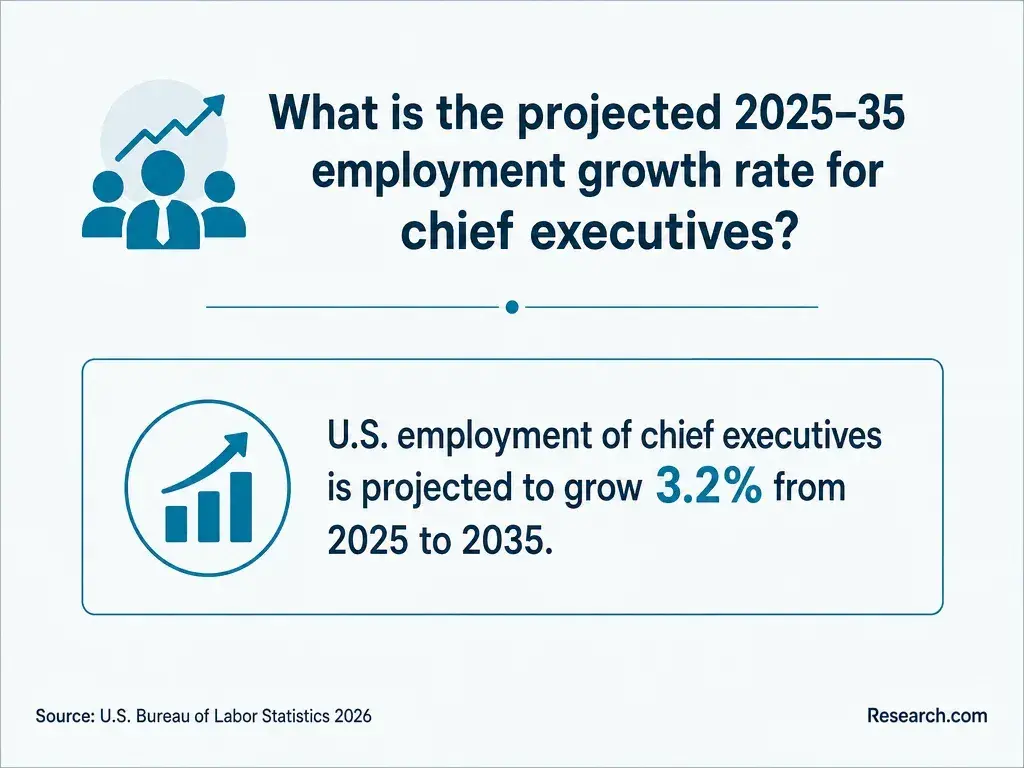
For example, a learning and development specialist seeking a management role needs experience with budgets, teams, and implementation as well as evaluation skills. A management analyst may need consulting and client-facing experience. The Bureau of Labor Statistics projects 10.8% U.S. employment growth for training and development specialists from 2025 to 2035; that occupational projection signals possible demand for the work, not demand specifically for Ed.D. holders.
Choose an applied project that produces a shareable, appropriately redacted explanation of your question, design, limitations, and recommendations. That evidence can be more informative to an employer than the degree title alone.
There is no single reliable salary for graduates of leadership and learning Ed.D. programs. Pay depends on the occupation, sector, location, responsibility, and prior experience. The Bureau of Labor Statistics reports a May 2025 U.S. median annual salary of $133,000 for training and development managers. That figure describes workers in the occupation - not new doctorate graduates or the salary increase attributable to an Ed.D.
Use compensation for the specific roles you could realistically pursue when weighing tuition and time away from other development opportunities. An internal promotion, public-sector pay scale, consulting transition, and first management appointment have different financial prospects.
Does an online Ed.D. require a license or professional certification?
General organizational leadership and learning roles typically do not require a license simply because someone holds an Ed.D. Employers may value relevant professional certifications, but those are separate credentials with their own requirements. The doctorate itself does not confer a certification.
School leadership and other regulated education roles are different. A broadly focused organizational leadership Ed.D. should not be assumed to satisfy teacher, principal, or superintendent licensure requirements. If a regulated role is your goal, obtain the program's licensure disclosure and confirm eligibility with the relevant state authority before enrolling.
Other Things You Should Know About EdD Leadership
No. It can document participants' reactions, but not whether they applied new skills or whether organizational outcomes changed. Match measures to the claim you intend to make.
Report the response rate and consider how respondents may differ from nonrespondents. Use other authorized evidence where appropriate, and avoid presenting the results as representative without support.
Only if the organization and program permit the tool and the data handling. Check consent, confidentiality, retention, and accuracy requirements; review any summary against the source material.
Ownership and sharing rights depend on university rules and any employer or partner agreement. Clarify access, publication, and portfolio permissions before using organizational information.
- Core Intervention Components: Identifying and... - HHS ASPE https://aspe.hhs.gov/reports/core-intervention-components-identifying-operationalizing-what-makes-programs-work-0
- Section 1. Developing a Logic Model or Theory of Change | ku.edu https://ctb.ku.edu/en/table-of-contents/overview/models-for-community-health-and-development/logic-model-development/main
- Course Catalog - TEI - The Evaluators' Institute https://tei.cgu.edu/program-at-a-glance/tei-curriculum/course-catalog/
- Advanced Online Ed.D. Programs at Illinois https://education.illinois.edu/online/eddonline
- UNC EdD Online: Organizational Learning and Leadership https://online.unc.edu/online-doctoral-programs/online-edd-organizational-learning-and-leadership/
- Walden University's Guide to Doctoral Capstone Projects https://www.waldenu.edu/online-doctoral-programs/resource/guide-to-doctoral-capstone-projects
- The Graduate Field Program and Capstone Evaluation Project | Applied Learning in Social Work Education Journal https://alswe.simmons.edu/article/the-graduate-field-program-and-capstone-evaluation-project/
- Mixed Methods Research | harvard.edu https://catalyst.harvard.edu/community-engagement/mmr/
- Impact Evaluation of Policies and Programmes | United Nations University https://unu.edu/merit/course/impact-evaluation-policies-and-programmes-estimation-and-analysis-causal-impacts
- Vanderbilt Doctor of Education (Ed.D.) in Leadership and Learning - Tuition.io https://partnerships.edx.org/tuitionio/course/vanderbilt-doctor-of-education-ed-d-in-leadership-and-learning/