2027 Online BA in Psychology - Mental Health: How to Evaluate an Oral Defense Requirement
Audited and Verified:
Our Editorial and Data Verification Process
Research.com uses government datasets, official education statistics and primary institutional information to support its career and degree guides. Our review process checks factual accuracy, occupational definitions, source dates and the requirements associated with the credentials discussed.
How This Article Was Fact-Checked
Our editorial team verifies salary estimates, employment projections, education requirements and program information against original data providers and official organizations. Salary figures are checked against the relevant occupational definitions and reporting periods. Information about licensure, accreditation and required in-person training is reviewed separately.
Fact-checked and verified on:

Co-Founder and Chief Data Scientist
An oral defense can turn an otherwise flexible online psychology degree into a program with a fixed, high-stakes meeting. If you are considering a BA with a mental health focus, you need to know what you would defend, who would assess you, and what happens if your schedule or technology fails.
This guide explains how to evaluate that requirement alongside the curriculum, cost, and career outcomes - so you can decide whether the defense is a useful learning experience or an avoidable obstacle.
Key Things You Should Know
- An oral defense is a program-specific assessment, not a standard requirement of an accredited psychology bachelor's degree; request the policy and grading rubric before enrolling.
- Check the actual live-session commitment: presentation length, scheduling windows, panel membership, recording rules, accommodations, and retake options can matter more than the word "online."
- A well-designed defense can demonstrate research reasoning and ethical judgment, but neither the defense nor a mental health focus qualifies a BA graduate to diagnose or provide therapy.
What Is an Online BA in Psychology With a Mental Health Focus?
An online BA in psychology is an undergraduate degree built around the scientific study of behavior and mental processes. A mental health focus may be an officially named concentration, a group of electives, or a description of the program's emphasis; those are not interchangeable. Ask which designation, if any, will appear on your transcript and whether the focus changes graduation requirements.
Coursework may examine psychological disorders, development, research methods, and mental health service systems. It is academic preparation, not clinical training or a license. When psychology program admissions and curriculum comparisons help you narrow your choices, compare the actual degree plans rather than relying on concentration names. In particular, identify whether the oral defense belongs to a required capstone, an optional honors project, or a separate graduation assessment.
Why Might an Oral Defense Be Required in an Online Psychology BA?
A program might require an oral defense so students can explain a capstone, respond to questions about their evidence, and show that they - not just a polished written submission - understand the work. For a mental health topic, an appropriate defense might test whether a student can distinguish research findings from clinical recommendations, recognize a study's limitations, and protect confidential information.
Its value depends on what is assessed. A structured defense with advance criteria, faculty feedback, and a feasible project can build communication skills. An improvised presentation with unclear standards adds stress without demonstrating much. Undergraduate requirements should also be checked on their own terms: inexpensive psychology master's degree pathways may involve different research expectations, so a graduate program's thesis or defense model does not establish what a BA should require.
How Does an Oral Defense Work in an Online Psychology Program?
There is no universal online psychology oral-defense format. A student may submit a paper or other approved project first, present it live by video, answer faculty questions, and receive a pass, revision request, or other result defined by the school. Some programs may not require a defense at all. Obtain the current capstone syllabus and assessment policy for your intended entry term rather than assuming a sample video or admissions description is binding.
Ask the program to confirm these operational details in writing before you commit:
- What must be submitted beforehand, and how far in advance?
- Who attends, what criteria appear on the rubric, and may a support person or other student attend?
- When are sessions offered, in which time zone, and is a campus visit ever required?
- What happens after a missed session, connection failure, unsuccessful attempt, or required revision?
For a student balancing work or caregiving, a single daytime appointment may be a larger constraint than several asynchronous courses. Live requirements also differ across degree types; comparing fast-track mental health counseling master's formats is useful only if you are weighing a later professional degree, not as a substitute for checking this BA's schedule.
No undergraduate psychology accreditor imposes a universal oral-defense requirement on accredited bachelor's programs. Institutional accreditation concerns the institution's recognized quality-review process; it does not prescribe one capstone format. The American Psychological Association does not accredit general psychology BA programs. A school can therefore be institutionally accredited whether its psychology major uses a defense, a written capstone, another assessment, or no capstone.
Do not read a defense requirement as proof that a program is more rigorous - or its absence as proof that it is weaker. Compare the research instruction, feedback, grading criteria, and access to faculty behind the assessment. Even articles about faster online forensic psychology master's completion address a different degree level; their milestones cannot tell you whether an undergraduate defense is typical or worthwhile.
To judge whether the defense is worth doing, first examine the learning it is supposed to demonstrate. A mental health-focused BA should provide a foundation in psychological science, statistics and research methods, development, and the study of psychological disorders. Relevant electives can add knowledge of substance use, prevention, community services, and cultural context. The defense should ask students to use that knowledge responsibly, not perform diagnosis or pretend to deliver treatment.
Look for an achievable, supervised project: for example, an evidence review of a prevention approach or a proposal to evaluate a nonclinical outreach program. Ask who approves the topic and what rules govern participant contact, agency information, and any presentation of data. Coursework, volunteering, or an internship does not automatically grant access to client records. If your goal is specifically substance-use services, compare the BA's coursework with online colleges offering addiction counseling study and then check the credential rules for the state and role you want.
Verify the institution's accreditation status and the dates covering your enrollment through the accreditor and the U.S. Department of Education's accreditation records. Then ask the university to confirm the exact BA title, whether the mental health focus is formally designated, and which catalog governs your requirements. Accreditation alone does not guarantee that another college or a future graduate program will accept particular credits.
If you are transferring, request a written degree audit showing where each accepted course applies: general education, psychology major, electives, or prerequisites. Ask whether the capstone and oral defense must be completed at the graduating institution, whether transferred research-methods work is equivalent, and how an appeal works. College credit evaluation for psychology majors can help you frame questions, but only the receiving institution can approve your credits and remaining requirements.
Online psychology bachelor's programs commonly ask applicants for prior school transcripts and evidence that they meet the institution's undergraduate admission rules. Transfer applicants may face additional major-entry or prerequisite conditions. Requirements for GPA, prior college credit, and admission to the psychology major vary, so confirm both university admission and access to the courses needed to reach the capstone.
If you are comparing a broad psychology BA with a more occupation-focused option, do not let the defense determine the choice by itself. Substance abuse counseling bachelor's program value comparisons can help identify a different curricular route, but admission and eventual credential eligibility still require separate checks. Ask each school whether transfer students receive the same capstone preparation and faculty advising as students who entered earlier.
Completion time depends on the credits you still need, course availability, enrollment pace, and whether the capstone has prerequisites or runs only in certain terms. A defense can delay graduation if it must be scheduled after a paper is approved or if revisions move completion into another term. Ask for a personalized degree plan showing the earliest and a more conservative defense date.
Compare total expected cost, not tuition alone: include mandatory fees, any extra enrollment term caused by capstone sequencing, required software or equipment, and travel if an in-person obligation exists. Request written information about charges for repeating the capstone or completing revisions after a term ends. If your goal ultimately requires a qualifying graduate degree, clinical counseling master's fees and graduation timelines are a separate financial decision; paying for an undergraduate defense does not reduce professional-degree requirements.
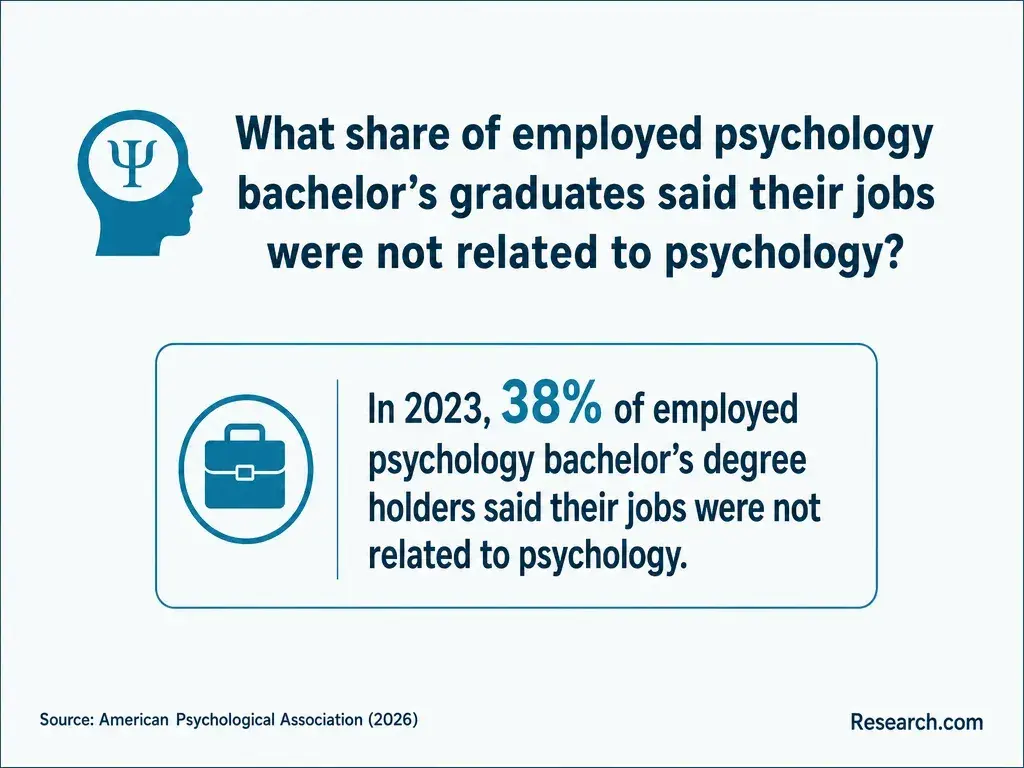
A psychology BA may support applications for nonclinical roles such as behavioral-health support worker, intake or referral coordinator, community outreach assistant, or research support staff. Duties can include documenting contacts, helping people navigate services, or assisting with approved data collection. Employers may also require experience, training, background checks, or a state-recognized credential.
A defense can give you a concrete example of explaining evidence to an audience, especially if you can share a nonconfidential project summary. It is less valuable than relevant supervised experience when a job chiefly requires direct service coordination. For substance-use settings, comparing recovery support occupations can clarify why peer support, coordination, and counseling are different jobs. Never present a student project or mental health concentration as authorization to assess, diagnose, or treat clients.
Does a Psychology BA Lead to Licensure, Higher Salaries, or Strong Job Growth?
No: a psychology BA, mental health focus, or oral defense alone leads to clinical licensure. Licensed counseling, social work, and psychology are distinct pathways with jurisdiction-specific education, supervised experience, and other requirements. If therapy is your goal, verify the relevant state board's rules before choosing an undergraduate program; clinical mental health counseling accreditation and pacing matter when evaluating a later counseling degree, not the BA's defense.
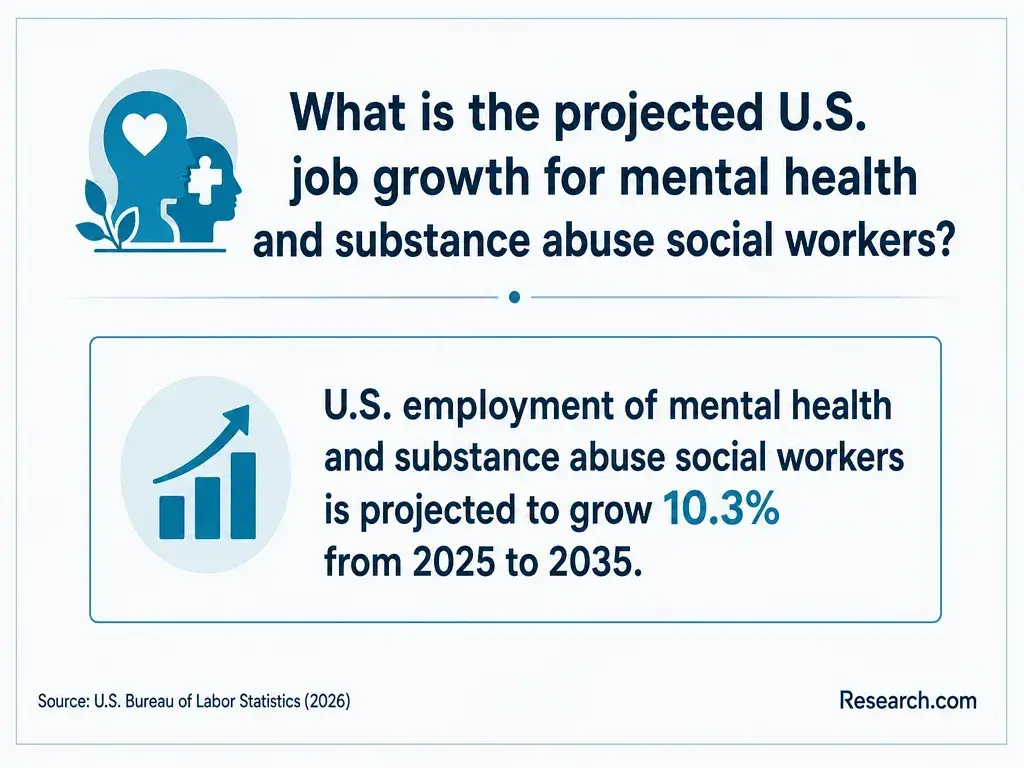
Neither a higher salary nor strong job growth can be inferred from completing the defense. U.S. Bureau of Labor Statistics wages and projections describe occupations, not outcomes for graduates of a particular concentration. To assess return on investment, identify a target job, review local postings for its degree and experience requirements, and compare those requirements with the program's cost and opportunities for supervised work. If you already qualify for the role, targeted training or experience may be more direct than another degree.
Other Things You Should Know About Psychology
Contact the school's disability services office early. Ask how approved accommodations apply to presentation format, timing, technology, and questions; faculty should follow the institution's process rather than make informal promises.
Recording policies vary. Request the policy on consent, access, storage, and deletion, particularly if your presentation discusses sensitive material.
Often you can share an approved, nonconfidential version. Obtain any required faculty or site permission, remove protected information, and describe proposed work as proposed - not as completed research or proven impact.
Ask whether practice presentations and feedback are built into the capstone. Compare that support with the assessment rubric; a clear preparation process is more useful than an assurance that the defense is "easy."
- TCPS 2 (2022) - Chapter 2: Scope and Approach https://ethics.gc.ca/eng/tcps2-eptc2_2022_chapter2-chapitre2.html
- Reference Guide on Mental Health Evidence - NCBI - NIH https://www.ncbi.nlm.nih.gov/books/NBK621585/
- Psychological assessment in school contexts: ethical issues and practical guidelines - PMC https://pmc.ncbi.nlm.nih.gov/articles/PMC11335701/
- The Rights of Students with Disabilities Under the IDEA, Section 504, and the ADA | Congress.gov | Library of Congress https://www.congress.gov/crs-product/R48068
- Americans with Disabilities Act Title II Regulations | ADA.gov https://www.ada.gov/law-and-regs/regulations/title-ii-2010-regulations/
- What Degree Do I Need to Become a Counselor? | University of Bridgeport https://www.bridgeport.edu/news/degree-needed-to-be-a-counselor/
- Capstone Project vs. Thesis: What's the Difference? | UAGC https://www.uagc.edu/blog/capstone-project-vs-thesis-whats-difference
- Dissertation Defense Guide: How to Present Your Research | National University https://www.nu.edu/blog/dissertation-defense/
- What Degree Do I Need to Become a Counselor or Therapist? | Palo Alto University https://paloaltou.edu/resources/blog/what-degree-do-i-need-become-counselor-or-therapist
- Bachelor of Arts in Psychology | CUNY SPS https://sps.cuny.edu/academics/undergraduate/bachelor-arts-psychology-ba