2027 Housing Price Modeling Capstones: What to Look for in a Data Science Master's

Co-Founder and Chief Data Scientist
A housing price modeling capstone can show whether a data science master's program teaches students to solve a real analytical problem - not just fit an algorithm to a clean dataset.
For prospective students interested in real estate, urban analytics, or applied machine learning, the key decision is whether a program offers the data access, technical preparation, and project support needed to produce credible work. This guide explains what to look for in the project and in the program before you enroll.
Key Things You Should Know
- A strong project predicts a clearly defined housing outcome and tests performance across time and locations, not only on a random holdout of nearby sales.
- Compare programs on capstone flexibility, accessible data, spatial and statistical coursework, faculty or sponsor feedback, and permission to present the work in a portfolio.
- The U.S. Bureau of Labor Statistics projects 35% growth in data scientist employment from 2025 to 2035, but that occupation-wide forecast does not predict a capstone graduate's job prospects.
What is a housing price modeling capstone in a data science master's program?
It is a culminating project that uses property and market data to estimate an outcome such as residential sale price, then explains how well the estimate works and where it fails.
Depending on the program, a capstone may be an individual project, a team assignment, a sponsored project, or an alternative to a thesis. Do not assume that a program offering capstones will approve this particular topic.
The useful distinction is between a classroom prediction exercise and an applied capstone. An applied project must define who would use the estimate and why: for example, identifying broad market patterns for a planning team is different from estimating the value of a particular home. That intended use determines the appropriate data, error measures, geographic detail, and cautions attached to the result.
What should a housing price modeling capstone project include?
A credible capstone connects the prediction task to decisions a stakeholder could make while being honest about the limits of transaction data. The following components are worth looking for in sample student projects or discussing with a potential supervisor:
- A precise target: Specify whether the model predicts recorded sale price, price per square foot, or another measure, the market covered, and the point in time at which the prediction would be made.
- Defensible data: Document the source and coverage of sales, property characteristics, and location features; explain missing records, duplicate transactions, and variables that would not have been known when a prediction was needed.
- Meaningful comparisons: Compare a simple baseline with more complex approaches, such as a regression model and a tree-based model, rather than treating complexity as proof of quality.
- Realistic evaluation: Report error on later sales and, where relevant, on different neighborhoods. Examine whether errors are concentrated among expensive homes, unusual properties, or areas with few sales.
- Reproducible and responsible delivery: Provide documented code, data-processing decisions, limitations, and a stakeholder-ready explanation. Publish property-level data or addresses only when permissions and privacy considerations allow it.
A common mistake is randomly splitting records from the same place and period, reporting one attractive accuracy score, and declaring the model ready for use. A time-based test is often more informative for future sales.
Geographic tests can reveal whether a model learned patterns that fail outside familiar neighborhoods. If the proposed use could affect people's access to housing or financial decisions, ask how the project will examine potential proxy variables, uneven errors, and appropriate human oversight.
How do you evaluate data science master's programs with strong capstone opportunities?
Start with the capstone's actual rules, not its prominence on a marketing page. A program is a stronger fit when it lets you propose a housing question, secure usable data early, receive relevant feedback, and show an appropriately redacted result to employers.
These are questions to put to a program director or capstone adviser:
- Can students propose their own topic, and who decides whether a housing project is feasible?
- Is a sponsor required? If so, can a student use public data when no real estate sponsor is available?
- Who advises projects involving spatial data, valuation, or housing policy, and how often is feedback available?
- What must the final deliverable contain: code, written analysis, presentation, implementation, or all of these?
- Can graduates display their work publicly, and what restrictions apply to sponsor data and team contributions?
Ask to see a project rubric and, if available, examples of completed work. A named industry partner is less useful than reliable data access and supervision if the partner cannot authorize you to analyze or discuss its data.
Likewise, an active professional community can help students find feedback or contacts, but it does not replace technical advising; that distinction also matters when comparing graduate AI programs with active alumni communities.
What coursework prepares students for housing price prediction projects?
Look beyond a course titled "machine learning." Housing sales vary by place and time, and recorded transactions do not necessarily represent every property in a market. A suitable curriculum gives students ways to reason about those conditions, not merely train models.
The most directly useful preparation combines statistical modeling and uncertainty, database work and data cleaning, machine learning evaluation, and geospatial analysis. Coursework in housing economics or public policy can add context when the project's intended use calls for it.
Course descriptions should show whether students practice preventing data leakage, designing validation sets, interpreting errors, and communicating limitations.
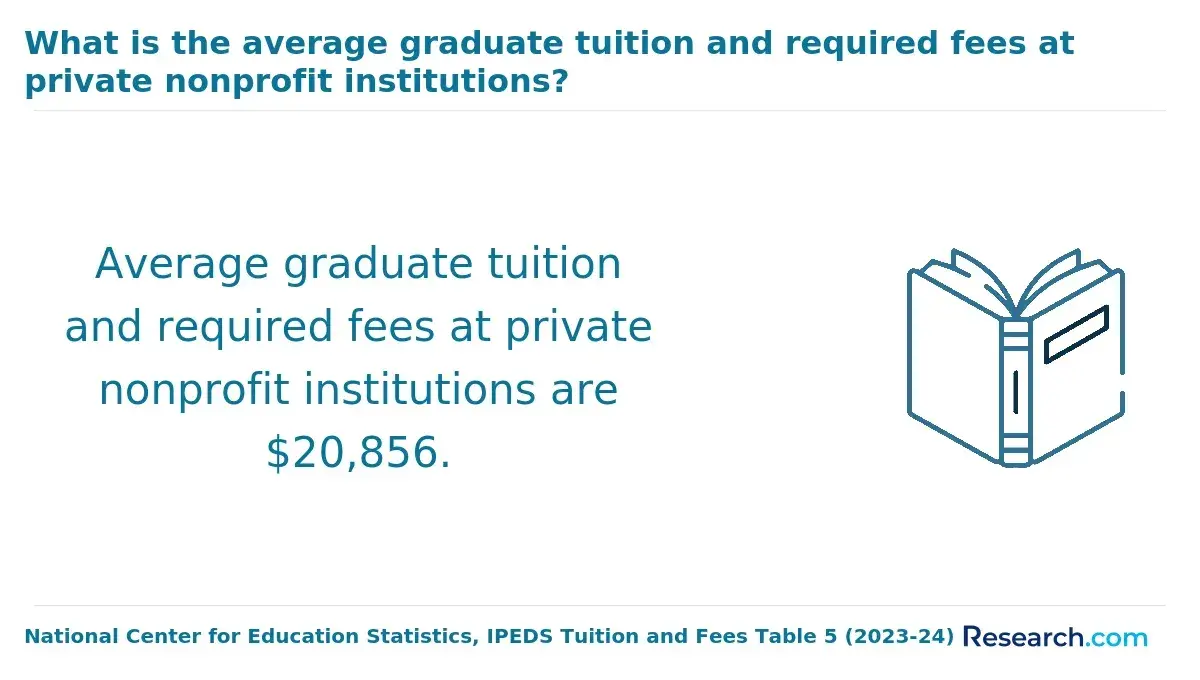
A catalog mention of spatial data is weaker evidence than a substantial assignment or elective using geographic features. If you are comparing a broader data science degree with a more specialized machine learning degree, weigh that project preparation against machine learning master's tuition plus mandatory fees; a lower-cost or more technical program is not automatically the better setting for a housing capstone.
Are online or campus-based data science master's programs better for capstone projects?
Neither format is inherently better. Choose based on how you will obtain feedback, work with collaborators, access approved data, and complete the project within your schedule.
An online program may suit a working professional who can investigate a local housing question while studying. A campus-based program may be preferable if its relevant faculty, research group, or sponsor access is difficult to use remotely.
For online options, confirm whether capstone meetings are live, whether team members must coordinate across time zones, and whether any presentation or sponsor visit requires travel. Check the same operational details in campus programs rather than assuming in-person access means frequent individual supervision.
Readers balancing employment and study can use online data science master's programs for working professionals as a starting point, then verify each program's current capstone arrangements directly.
What are the admission requirements for a data science master's program?
Requirements vary by institution. Programs may ask for a bachelor's degree, transcripts, programming and quantitative preparation, recommendations, a statement of purpose, or other application materials.
Some specify prerequisite courses; others assess comparable preparation more flexibly. A proposed housing project can strengthen an explanation of your goals, but it does not substitute for a formal prerequisite or guarantee admission.
Before applying, compare your background with the published requirements. If you have real estate or planning experience but limited programming or statistics, ask whether preparatory coursework is required or simply recommended.
If you have strong technical skills but little housing knowledge, identify how you would learn the domain and obtain appropriate data. Confirm directly whether the program will accept any planned prerequisite course before paying for it.
How long does a data science master's take and how much does it cost?
Completion time and price depend on the program's credit requirements, enrollment pace, tuition rules, and fees; there is no reliable single figure for a housing-capstone-focused master's.
Ask when students may begin the capstone and whether a required sequence or sponsor approval can delay completion. A faster schedule may also leave less time to secure and clean property data.
Compare a written estimate of total tuition and mandatory fees for your expected enrollment pattern, then account separately for materials, travel, and any cost of reducing work hours.
When reviewing lower-cost graduate programs in data science, check whether the quoted price covers the full degree and whether the capstone support you need is included. A lower sticker price is valuable only if the program still supports a feasible, rigorous project.
What careers can a housing price modeling capstone help launch?
A well-explained project can serve as evidence for applications to data scientist, data analyst, real estate analytics, property-technology, or urban analytics roles.
Its value depends on the job: an employer building forecasting systems may care most about validation and reproducibility, while a planning team may value geographic interpretation and communication with nontechnical stakeholders. Describe your individual contribution and the decisions the analysis could, and could not, support.
A housing capstone does not qualify someone to perform regulated appraisal work where a license or credential is required. Nor does it limit graduates to real estate: the underlying skills can transfer to other domains, although domain-specific preparation may matter.
For someone primarily seeking clinical or health-data applications, AI study options for health data careers may be a more relevant comparison than choosing a program around housing projects.
What salary and job outlook can data science master's graduates expect?
The U.S. Bureau of Labor Statistics reports a $120,230 median annual wage for data scientists in May 2025. That is an occupation-wide figure, not an expected starting salary for master's graduates or a measure of what a housing capstone adds to pay. Experience, role, employer, and location all affect an individual offer.
BLS also projects 35% employment growth for data scientists from 2025 to 2035. The projection suggests a growing occupation, but it does not measure demand specifically for real estate modeling or promise a job to any graduate.
Use it as broad context; use a program's documented placement methods, relevant employer contacts, and your likely target roles for the more personal decision.
Do data science master's graduates need certifications or licenses?
Data scientist roles generally do not have a universal professional license. Employers may value demonstrated skills or particular software experience, but an optional certificate is not a substitute for a defensible modeling project.
If your goal involves providing real property appraisals rather than building or analyzing predictive models, check the applicable state licensing rules and job duties before assuming a data science degree meets them.
Prioritize credentials according to the work you intend to perform. For most modeling roles, a capstone that makes its data provenance, testing, and limitations clear is more directly relevant than collecting unrelated certificates.
Other Things You Should Know About Data Science
Possibly, if the program approves it. Rent and sale price are different outcomes with different data and users, so state the question clearly rather than presenting one model as a substitute for the other.
It can be a starting point, but ask whether the program expects original data preparation, a distinct research question, or a stakeholder deliverable. A leaderboard score alone may not demonstrate those skills.
Discuss feasibility with an adviser early. You may need a wider area, a longer observation period, or a narrower claim about where the model works; adding records from other places or years does not automatically make predictions locally reliable.
Usually you can describe work you personally completed, subject to program, sponsor, and teammate permissions. Identify your contribution precisely and avoid sharing restricted data or code.
References
- MPH Capstone experiences: promising practices and lessons learned | nih.gov https://pmc.ncbi.nlm.nih.gov/articles/PMC10213715/
- Capstone Projects | Data Science Program https://datasci.columbian.gwu.edu/student-projects
- Master's in Data Science: Capstone Project | NYU CDS https://cds.nyu.edu/masters-in-data-science-capstone/
- Demonstrate Your Degree with Capstones and Culminating Projects | Columbia University School of Professional Studies https://sps.columbia.edu/school/sps-student-experience/demonstrate-your-degree-capstones-and-culminating-projects
- Your Graduate Capstone: An Opportunity to Make an Impact | Online https://cps.unh.edu/blog/2021/10/your-graduate-capstone-opportunity-make-impact
- The Learning Factory Current Projects | psu.edu https://apps.lf.psu.edu/projects/project-selector.aspx
- Capstone and Thesis Research Guide: Limitations of the Study | uwsuper.edu https://library.uwsuper.edu/Capstone/Discussion_Limits
- Innovative Property Development- Master's in Real Estate Graduate Capstone Projects | Georgetown SCS https://scs.georgetown.edu/news-and-events/article/9857/innovative-property-development-capstone-projects/
- Price Per Square Foot Is Not the Holy Grail of Property Value | Appraisal Buzz https://appraisalbuzz.com/price-per-square-foot-not-holy-grail-property-value/