2027 Energy Demand Forecasting Capstones: What to Look for in a Data Science Master's

Co-Founder and Chief Data Scientist
An energy demand forecasting capstone can be strong evidence of data science ability - but only if the program gives you the methods, data access, and supervision to build a credible forecast. For prospective master's students interested in utilities, grid operations, or energy analytics, the key decision is not whether a school mentions energy. It is whether you can complete a well-evaluated, reproducible project that answers a real forecasting question.
This guide shows what to look for in both the capstone and the program behind it.
Key Things You Should Know
- A strong capstone specifies the demand being predicted, the forecast horizon, and the decision it supports; it evaluates models against simple baselines using time-ordered tests.
- Prioritize programs that permit an energy-focused project and provide substantive time-series training, accessible data, appropriate supervision, and a portfolio-ready deliverable.
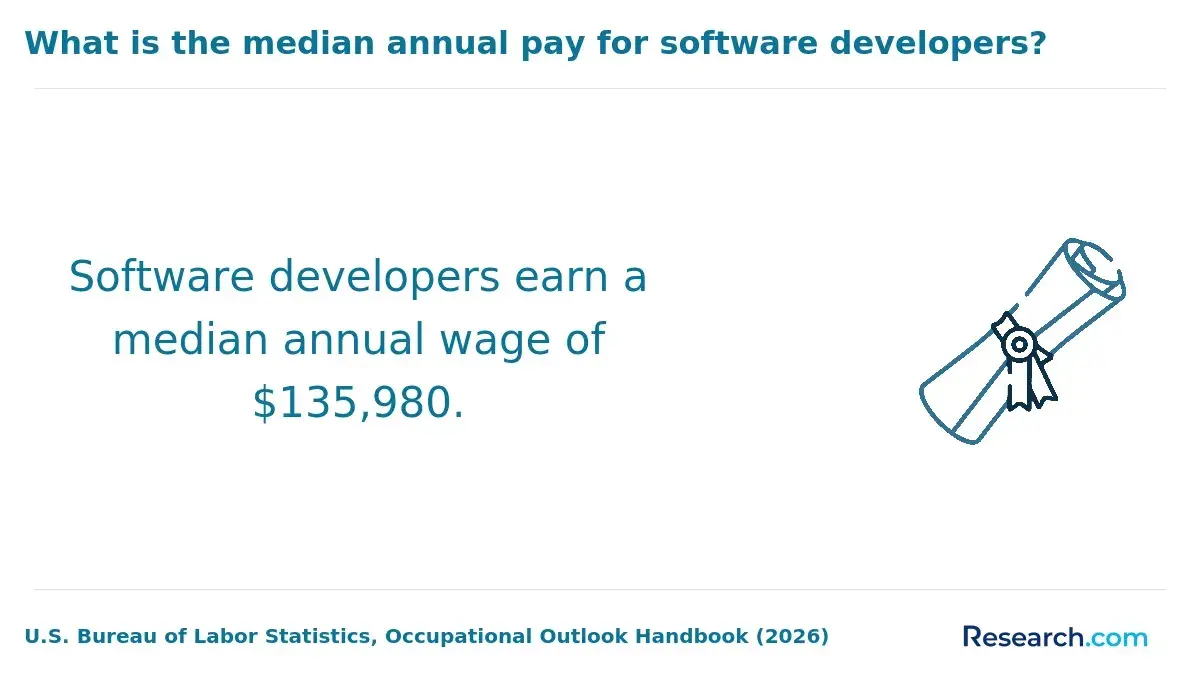
- Career figures are context, not a promise: the U.S. Bureau of Labor Statistics reports a $120,230 median annual wage for data scientists in May 2025, across industries and experience levels.
What are energy demand forecasting capstones in data science master's programs?
These capstones apply data science to predicting future energy use, such as hourly electricity load in a service area or daily demand for a building portfolio. The forecast might inform staffing, capacity planning, purchasing, or operational decisions. A project should state what is predicted, when the prediction is made, and how far ahead it must reach. A day-ahead grid forecast and a long-range planning forecast require different data and evaluation.
Capstone formats vary: some programs use an independent research project, while others require a team project or external sponsor. Do not assume an energy topic is available because a school offers machine learning courses. Ask whether students can propose their own topic, whether a sponsor is required, and whether faculty can supervise forecasting work.
What should an energy forecasting capstone include to demonstrate data science skills?
The most persuasive projects connect technical choices to a defined user decision. The table distinguishes a basic exercise from evidence that a prospective employer or faculty reviewer can assess.
| Project element | What credible evidence looks like | Why it matters |
| Problem definition | A specified location or asset, demand measure, forecast horizon, and intended user | Prevents a technically accurate answer to the wrong question |
| Data | Documented load, calendar, and relevant weather inputs, including missing-data treatment and access restrictions | Makes limitations visible |
| Methods | A simple seasonal baseline alongside justified statistical or machine-learning models | Shows whether complexity improves the forecast |
| Evaluation | Time-ordered backtests, clearly defined error measures, and results for difficult periods such as peaks | Better approximates future use than a random train-test split |
| Deliverable | Reproducible code, a concise decision-focused report, and a feasible update or handoff plan | Shows that someone else could inspect and use the work |
Watch for leakage. A model predicting tomorrow's demand should not rely on tomorrow's observed weather when only a weather forecast would have been available at prediction time. Calendar alignment, holidays, and daylight saving time also deserve explicit treatment. Where peak demand drives the decision, an average error score alone may conceal costly misses; a strong report explains performance during high-demand periods and acknowledges uncertainty.
Public data can support a worthwhile capstone if its coverage and permitted uses fit the question. Restricted utility or customer data may make a project more realistic, but only when the program has a workable access, privacy, and publication plan. A polished dashboard cannot compensate for unclear data provenance or weak evaluation.
How do you choose a data science master's program for energy forecasting?
Choose for the project you can actually complete, not the project suggested by a course title. Compare programs using the same criteria: capstone rules, forecasting depth, energy-domain support, data access, and the final work you are allowed to show employers.
Before applying, ask the program these questions and request recent course descriptions or anonymized project examples where available:
- Can I propose an energy demand forecasting topic, and who approves its scope?
- Which faculty or industry mentors have experience with time-series, energy systems, or operational forecasting?
- Are suitable datasets supplied, or must I secure and clear my own data?
- Does the capstone require out-of-sample evaluation and a reproducible final deliverable?
- What may I publish if the project uses sponsor or customer data?
Choose a program with sponsor access if real operational constraints are your priority and its data terms still let you demonstrate your contribution. A program that supports self-directed public-data projects may be better if you need a shareable portfolio. If your interest is primarily AI development rather than energy forecasting, compare lower-cost artificial intelligence master's options against the data science curriculum before paying for a specialization you may not use.
What courses prepare students for energy demand forecasting projects?
Look for probability and statistical inference, regression, programming and data engineering, machine learning, and substantive time-series forecasting. Useful advanced coverage includes hierarchical or spatial forecasting, uncertainty estimates, and model monitoring. Energy systems coursework can help students interpret load patterns and operational constraints, but it does not replace sound statistical evaluation.
Depth matters more than labels. A passing lecture on time series is not equivalent to a course where students handle autocorrelation, seasonal structure, rolling backtests, and forecast uncertainty - or to a capstone that applies those skills under supervision. Review syllabi and assignments where possible. Students who need to strengthen programming or mathematics before graduate work can also compare AI graduate programs with foundation study; foundation coursework is preparation, not automatically a substitute for a particular program's admissions prerequisites.
Are online data science master's programs suitable for energy forecasting capstones?
Yes, if an online program offers the same essential project conditions: accessible data and computing tools, reliable faculty feedback, appropriate collaboration arrangements, and clear rules for proposing and presenting a capstone. Forecasting itself does not require a campus lab, but a sponsor-dependent project may require scheduled meetings or restricted systems that are difficult to access remotely.
Ask about synchronous meetings, team coordination across time zones, access to licensed software or secure data, and whether a presentation or campus visit is required. An online program is especially suitable for a working professional who can define a feasible question using approved workplace data; it is less suitable if the only available capstones depend on sponsor access the student cannot obtain.
What are the admission requirements for a data science master's degree?
Requirements vary by school. Programs may review an accredited bachelor's degree, academic record, programming ability, quantitative preparation, recommendations, and a statement of purpose; some specify particular prerequisite courses. An energy background can strengthen a forecasting proposal, but it does not by itself establish readiness for graduate statistics or coding.
Match your transcript and experience against each program's published prerequisites. If a requirement is unclear, ask admissions whether prior coursework or professional work satisfies it before enrolling in a replacement course. In your application, a small, well-documented time-series project can illustrate your interests, but it should complement - not be presented as a waiver of - formal requirements.
How long and how much does a data science master's program take?
Time and total cost depend on the school's credit requirements, tuition schedule, enrollment pace, fees, and any additional preparation you need. A capstone can also affect scheduling: check whether it runs in a fixed term, requires prerequisite courses, or depends on finding an approved advisor or sponsor. Schools may not publish a separate price or completion timeline for an energy-focused project.
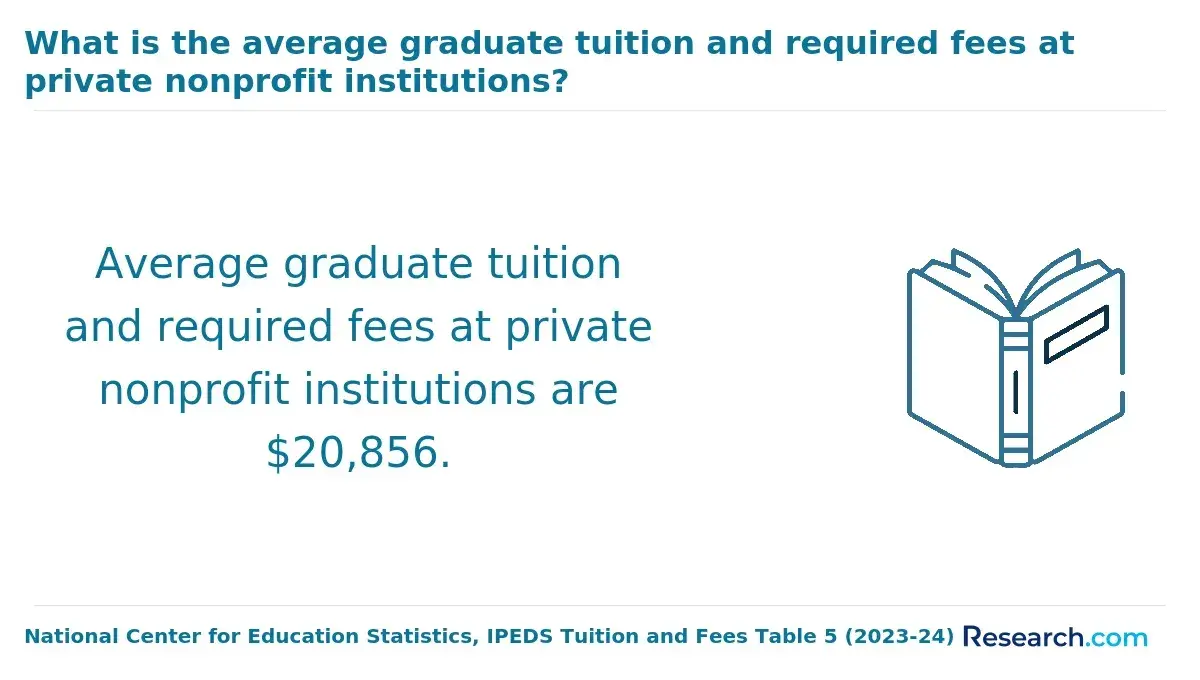
Compare the cost to finish, not just an advertised per-credit rate. Include mandatory fees, required software or materials, possible travel, and the effect of taking fewer courses per term. Then compare affordable data science master's programs using each school's current official tuition and fee schedule. Verify employer assistance and financial-aid eligibility directly; neither should be assumed when estimating your net cost.
What careers can energy forecasting capstones prepare graduates for?
A strong project can provide relevant evidence for energy analyst, load forecasting analyst, data scientist, and analytics roles serving utilities, grid organizations, building operators, or energy technology companies. Job titles and qualifications differ by employer. Some roles emphasize forecast accuracy and production pipelines; others require deeper power-systems knowledge or stakeholder communication.
Translate the capstone into the skills a posting requests: define the operational problem, explain your baseline and backtests, and show how a stakeholder would use the result. For a broader view of adjacent opportunities, explore data science study options for emerging data roles. A master's degree may help you develop these skills, but a capstone alone does not qualify you for every energy-sector position.
What salary and job outlook can data science graduates expect?
The U.S. Bureau of Labor Statistics reports that the median annual wage for data scientists was $120,230 in May 2025. That is an occupation-wide figure, not an energy-sector starting salary or a predicted outcome for master's graduates. Prior experience, location, employer, and the precise role all affect individual offers; data science salaries across different business sectors provide additional context when comparing career paths.
BLS projects 35% employment growth for data scientists from 2025 to 2035. This signals broad occupational demand, not a forecast of energy-specific vacancies or guaranteed employment. Use local job postings to test whether the roles you want call for forecasting, energy-domain knowledge, a graduate degree, or a different combination of qualifications.
Do data scientists need certification or professional licensure for energy forecasting?
Data science forecasting roles generally do not have a universal professional license or certification requirement. Do not confuse an analyst forecasting energy demand with a position that independently performs regulated engineering work; requirements for the latter can vary by role and state. Check the actual job description and, where relevant, the applicable state licensing authority.
A certificate may help document training in a particular tool, but it is not a replacement for evidence that you can design, test, and explain a forecast. When choosing a master's program, prioritize the project and curriculum first; pursue an additional credential when target employers explicitly value it.
Other Things You Should Know About Data Science
Only if the data owner and your program permit it. Ask about publication terms before starting; you may be able to share a methods summary, approved aggregate results, or a separate public-data demonstration without revealing restricted information.
It can demonstrate code and testing, but it cannot establish performance on real demand patterns. Label it clearly and explain which conclusions would need validation on real data.
Describe the decisions, code, analysis, and writing you personally completed. Credit teammates and distinguish shared results from your individual work.
Choose the measure that matches the intended decision and available data. Net load accounts for generation that offsets demand, so it is not interchangeable with total electricity consumption; define your target before selecting features or evaluating error.
References
- Forecasting next-hour electricity demand in small-scale... - PMC https://pmc.ncbi.nlm.nih.gov/articles/PMC10559110/
- Statistical Standards Program - Restricted Use Data Licenses https://nces.ed.gov/statprog/instruct.asp
- Data License for Access to Restricted Data | HUD USER https://www.huduser.gov/portal/research/pdr_data-license.html
- MSDS Capstone Projects - College of Information Science https://infosci.arizona.edu/ms-data-science/capstone-projects
- Data Science Capstone Experience - Purdue Online https://www.purdue.edu/online/data-science/data-science-capstone-experience/
- Energy consumption forecasting using machine learning | rit.edu https://repository.rit.edu/cgi/viewcontent.cgi
- Capstone Project | UW Online https://www.infrastructure-management.uw.edu/academic-experience/capstone-project
- Applied Data Science (MS) Student Capstone Projects | Bay Path University https://www.baypath.edu/academics/graduate-programs/applied-data-science-ms/student-capstone-projects/
- Forecasting Electricity Demand: An Aid for Practitioners | worldbank.org https://openknowledge.worldbank.org/entities/publication/f4e47b82-8e5f-5d17-b395-75e5c4a1832f
- Peak demand forecasting literature review (WP1) | neso.energy https://www.neso.energy/document/354451/download