2027 Choosing an Online Data Science Master's for a Career in Outpatient Healthcare

Co-Founder and Chief Data Scientist
An online data science master's can prepare you to analyze outpatient care, but a program's technical reputation alone does not show whether it fits that goal. If you work in healthcare or hope to enter it, the decision hinges on both analytical depth and opportunities to work with clinical questions, sensitive data, and operational constraints.
This guide shows you how to compare programs for roles in clinics, health systems, and population health, and when a broader or less expensive path may be sufficient.
Key Things You Should Know
- Prioritize statistics, SQL, reproducible programming, and healthcare-relevant projects over a program name that merely includes "health."
- Check whether you can complete a credible outpatient project using appropriately governed data; access to patient records should never be assumed.
- The Bureau of Labor Statistics projects 35% growth in data scientist employment from 2025 to 2035, but that national projection does not measure outpatient-specific demand.
What Is Data Science in Outpatient Healthcare?
Outpatient healthcare covers care delivered without an inpatient admission, including primary care, specialty visits, ambulatory procedures, and follow-up services. Data scientists may help organizations understand missed appointments, referral delays, chronic-disease follow-up, staffing demand, or variation in access to care. Their work can draw on appointment records, electronic health records, claims, patient-reported information, and operational data.
The setting changes how a model must be judged. A prediction of missed visits is useful only if staff can act on it without unfairly disadvantaging patients who face transportation, language, or scheduling barriers.
Likewise, a model built from billing codes may reflect documentation practices as well as clinical need. Look for programs that teach students to define an actionable question, assess data quality and bias, validate results over time, and communicate limitations to clinical and operational teams.
What Careers Can an Online Data Science Master's Prepare You For?
The degree may support several roles, depending on your prior experience and the work you can demonstrate. These roles overlap, but they place different demands on modeling, data infrastructure, and knowledge of care delivery.
| Potential role | Typical outpatient focus | Relevant evidence of preparation |
| Healthcare data scientist | Predictive analysis of access, utilization, or follow-up | Validated models and clear evaluation of clinical and operational risks |
| Population health analyst | Care gaps and outcomes across patient groups | Strong SQL, cohort definitions, and careful interpretation of measures |
| Clinical informatics analyst | How data and workflows function in care settings | Experience translating between technical staff and care teams |
| Healthcare analytics engineer | Reliable data pipelines and reporting inputs | Data modeling, testing, documentation, and privacy-aware practices |
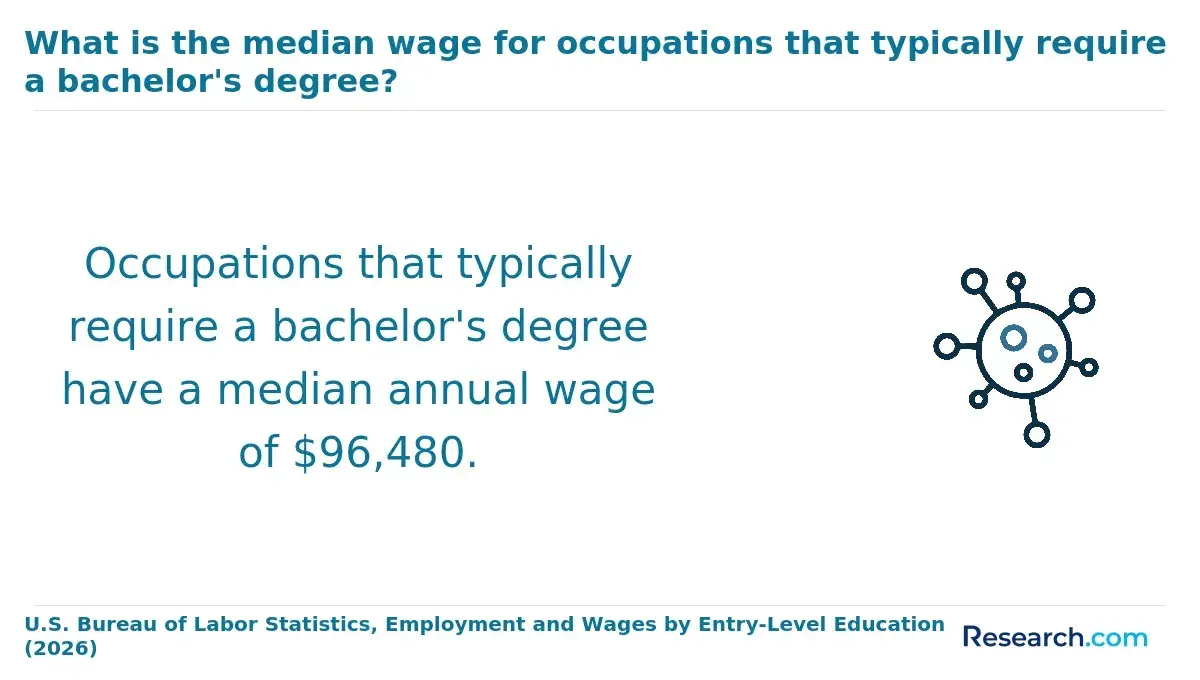
A master's is not automatically required for every analyst position. If you already have healthcare experience, a program with substantial statistics and programming may help you move into more technical work.
If you already have those technical skills, healthcare coursework and a relevant project may do more to establish your industry fit. Compare the skills in actual vacancies you would pursue rather than relying on a degree title.
How Do You Choose an Accredited Online Data Science Master's?
Start with institutional accreditation, then examine whether the program can deliver the education you need where you live. Verify the institution's current accreditation through the accreditor or an official government listing, and ask the school to confirm that you may enroll from your state. Institutional accreditation does not, by itself, establish that a program teaches outpatient analytics well.
For each finalist, request a current course plan and ask to see course descriptions, available electives, and examples of completed projects. A strong fit combines statistical inference, data engineering, and model evaluation with opportunities to study health data, privacy, fairness, and implementation.
Confirm whether healthcare electives run often enough to fit your schedule and whether a capstone can address an outpatient question. A course title alone does not establish the depth of instruction.
Be wary of programs that advertise healthcare applications but cannot explain how students obtain suitable project data or evaluate models in a care context. If your main goal is developing AI systems rather than improving outpatient decisions, compare economical online AI graduate study as a different educational path, not a substitute for checking healthcare relevance.
What Do You Learn in an Online Healthcare Data Science Master's?
The most useful curriculum connects methods to the realities of outpatient data. Statistics and causal reasoning help distinguish an association from evidence that an intervention worked.
SQL, programming, and data engineering help students assemble reliable cohorts from records created for care or billing rather than research. Machine learning adds forecasting and classification methods, while evaluation should address missing data, changes over time, and whether results hold across patient groups.
Project depth matters more than a passing mention of healthcare. A substantial project might define a referral-delay measure, document exclusions and missingness, compare a simple baseline with a more complex model, and explain how a clinic could use the result. Programs should also address privacy, access controls, and governance.
Students interested in deploying AI-supported tools can compare AI governance curriculum options for master's students, while checking whether those options include healthcare-specific applications.
What Are the Admission Requirements for Online Data Science Master's Programs?
Requirements vary by institution. Programs may ask for a bachelor's degree, transcripts, recommendations, a résumé, or a statement, and they may differ in how much calculus, statistics, and programming preparation they expect. Healthcare experience can strengthen an application's relevance, but it should not be treated as a substitute for a stated technical prerequisite.
Before applying, compare your transcript and work samples with each program's published requirements. If a prerequisite is unclear, ask admissions whether a credit-bearing course, documented professional work, or another form of preparation meets it; self-study may improve readiness without formally satisfying a requirement.
Applicants trying to reduce application-writing time can review machine learning master's options with no admissions statement, but should verify current requirements and healthcare fit directly with each program.
How Long Does an Online Data Science Master's Take and Cost?
Completion time depends on required credits, course availability, and whether you study full time or part time. Ask for a sample schedule at the pace you can sustain, including when required healthcare electives and any capstone are offered. An advertised shortest completion time may not reflect the schedule of a working professional.
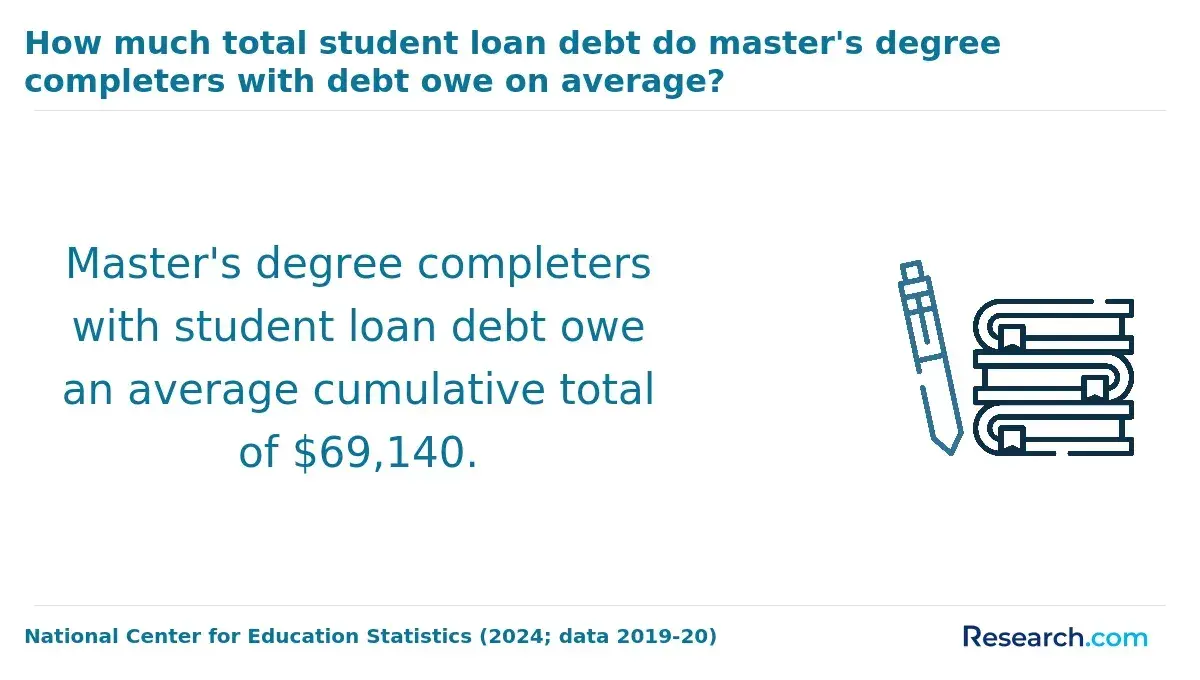
For cost, request an estimate covering all required credits and mandatory fees, not just a per-credit tuition figure. Add likely technology or materials costs, any required travel, and financing costs if you plan to borrow. Employer tuition assistance can change the comparison, but eligibility and reimbursement rules vary.
To compare tuition for data science master's degrees, use the same credit load and fee assumptions for every school. A lower sticker price is not a better value if the curriculum cannot support your target role.
How Do Online and Campus Data Science Master's Programs Compare?
Online delivery can make graduate study possible while you keep a job in a clinic or health system. Campus study may make in-person collaboration or access to local research teams easier.
Neither format inherently provides better healthcare preparation: the consequential differences are project supervision, access to relevant electives and collaborators, scheduling, and any required in-person work.
Ask online programs whether classes meet live, when group work occurs, how project mentors are assigned, and whether an internship or campus visit is required. Ask campus programs the same questions about access to healthcare partners.
Choose the format that lets you complete rigorous work consistently; do not assume "online" means entirely self-paced or "campus" means guaranteed access to patient data.
What Salaries Can Outpatient Healthcare Data Scientists Earn?
The U.S. Bureau of Labor Statistics reports a $120,230 median annual wage for data scientists in May 2025. This is a national figure for the occupation across industries, not a starting salary or an outpatient-healthcare pay estimate.
The role you enter, your prior experience, employer, and location all affect an offer; an analyst role should not be budgeted as though it necessarily pays a data scientist's median wage.
For a more grounded comparison, look at compensation in postings for the specific roles and locations you would target, alongside data science compensation across industries. Do not attribute a future salary to the degree alone when assessing whether tuition is affordable.
What Is the Job Outlook for Healthcare Data Science Careers?
The Bureau of Labor Statistics projects 35% employment growth for U.S. data scientists from 2025 to 2035. That signals broad demand for the occupation, but it does not forecast openings specifically in outpatient clinics or guarantee that a new graduate will secure one.
Healthcare employers may label related work as population health, informatics, quality improvement, or analytics rather than data science. When evaluating a program, search vacancies under several relevant titles and note the recurring tools, domain knowledge, and experience requirements. This is more useful for planning a transition than applying a national growth figure to one preferred job title.
Do Outpatient Healthcare Data Scientists Need Licenses or Certifications?
A data science master's does not confer a clinical license, and analytical roles generally should not be confused with licensed patient-care practice. If a position includes clinical duties, the applicable professional and state licensing requirements depend on those duties. Employers may prefer certifications for particular tools or systems, but requirements vary by position.
Access to health information is a separate issue from licensure. An employer's privacy and security rules govern what data you may use and how you may use it. Before choosing a program based on a proposed clinical project, confirm what data access and approvals would actually be available; never assume employment at a healthcare organization permits unrestricted use of its records for coursework.
Other Things You Should Know About Data Science Programs
Yes. A carefully scoped project can use appropriately licensed public or synthetic data. State its limitations clearly, particularly when synthetic data cannot reproduce real clinic workflows or patient populations.
No. A well-documented analysis with sound validation, reproducible code, and a realistic implementation plan can show substantial skill without putting a model into clinical use.
That depends on the organization and the decision involved. Clinical leaders, operations staff, privacy and security personnel, and affected patient groups may all have relevant perspectives; a data scientist should not treat model accuracy as approval to change care.
No. Compare actual coursework, project access, and instruction quality. A technically strong general program with a credible healthcare project may fit better than a specialized program with limited statistical depth.
References
- Healthcare data scientist qualifications, skills, and job focus | nih.gov https://pmc.ncbi.nlm.nih.gov/articles/PMC7787353/
- Cost of Attendance (Budget) | 2025-2026 Federal Student Aid Handbook https://fsapartners.ed.gov/knowledge-center/fsa-handbook/2025-2026/vol3/ch2-cost-attendance-budget
- Summary of the HIPAA Security Rule | hhs.gov https://www.hhs.gov/hipaa/for-professionals/security/laws-regulations/index.html
- NCATS Health AI & Real-World Data Training Hub | nih.gov https://opendata.ncats.nih.gov/rwd
- Admissions Information | vt.edu https://data.science.vt.edu/programs/ms-ds/admissions.html
- Capstone Projects | Master's in Health Informatics & Data Science https://healthinformatics.georgetown.edu/capstone/
- Online MS in Health Data Analytics | Northeastern Online https://online.northeastern.edu/health-sciences/health-data-analytics/
- Master's in Health Informatics and Data Analytics | Texas State https://online.txst.edu/degrees/graduate/masters-health-information-management/data-analytics/
- Capstone Project | University of Chicago https://bmi.bsd.uchicago.edu/capstone/