2027 Online Data Science Master's Programs for Connecticut Residents: In-State and National Options

Co-Founder and Chief Data Scientist
Connecticut residents can consider both nearby universities and national online data science master's programs. The strongest choice depends less on a school's location than on its curriculum, total cost, schedule, and access to projects or professional connections that fit your goals.
This guide identifies programs worth investigating and shows what to confirm before applying, especially where residency rules or online delivery could change the decision.
Key Things You Should Know
- Start with the University of Connecticut for an in-state option, but compare it with national online programs. Connecticut residency does not automatically make a nearby program less expensive.
- Compare the full degree cost, Connecticut enrollment eligibility, live-session times, and project opportunities before treating any program as a finalist.
- Federal projections show data scientist employment growing 35% from 2025 to 2035, but that outlook does not predict an individual graduate's job prospects.
What are the best online data science master's programs for Connecticut residents?
There is no universal best program. For a Connecticut resident, a useful shortlist includes an in-state university and national programs with different academic emphases. The table identifies options to investigate, not a ranking or a guarantee that a particular delivery format, tuition rate, or enrollment arrangement will apply to you.
| University and degree to investigate | Why it belongs on the shortlist | Most important detail to confirm |
| University of Connecticut - MS in Data Science | An in-state university to compare against national options, particularly if access to Connecticut-based faculty or activities matters. | Whether your intended start date, courses, and completion path are available fully online; applicable tuition and fees. |
| Georgia Institute of Technology - Online MS in Analytics | A national alternative for students open to an analytics degree rather than one titled data science. | Whether its course choices provide the machine-learning and computing depth you want. |
| University of Texas at Austin - Online MS in Data Science | A national option for comparing a data-science-titled degree with an in-state choice. | Current prerequisites, course availability, and the schedule for required assessments. |
| University of Colorado Boulder - Online MS in Data Science | Another national option for comparing curriculum and enrollment structure. | Current admission pathway, total cost, and whether its pacing suits your work schedule. |
Use the same criteria for every finalist: required courses, electives, applied project access, total charges, live attendance, and support available to a student in Connecticut.
Ask each university to confirm current online delivery and your eligibility to enroll from Connecticut before paying an application fee. If your goal is specifically AI rather than broader data science, planning an AI degree around professional objectives may help you decide whether to widen the shortlist.
Location can still matter. Someone seeking projects or connections in Connecticut's insurance, financial-services, or healthcare sectors may value nearby professional access.
Someone who needs a particular technical specialty may find a stronger fit nationally. Neither advantage follows from geography alone; ask what students can actually use remotely or in person.
How much do online data science master's programs cost in Connecticut?
There is no single Connecticut price for an online data science master's. Published rates may differ by university, term, residency classification, and whether the program charges a separate online rate. An in-state address is not proof that an online graduate program uses in-state tuition.
Request a written estimate for your expected start term. A comparable estimate should separate these charges:
- Tuition for all required credits, using the rate that applies to you.
- Mandatory program, university, and technology fees.
- Required software or materials, plus any travel for assessments or optional campus activities.
- Possible added costs if you need prerequisite courses, repeat a course, or take longer than planned.
Subtract confirmed employer assistance or scholarships only after establishing eligibility. Borrowing costs and time away from paid work also affect affordability, even when they do not appear on a university bill.
Avoid comparing one school's tuition-only figure with another school's all-in estimate. If you are weighing a different specialty, you can also compare tuition for online AI degrees, but apply the same total-cost method.
What are the admission requirements for an online data science master's?
Requirements vary by program. Expect universities to review your prior degree and academic record, but do not assume that every school requires a computer science major, or that professional experience replaces a stated prerequisite. Check each program's current policy for mathematics, statistics, programming, application materials, testing, and deadlines.
If your background is outside computing, identify the specific gap before applying: perhaps calculus, linear algebra, probability, or programming. Ask admissions whether a proposed course would formally satisfy its requirement.
Self-study may improve readiness without fulfilling a prerequisite. Applicants also considering AI-focused study can explore graduate AI pathways for interdisciplinary backgrounds.
How do online and campus-based data science master's programs compare?
An online program can let a Connecticut resident keep working while considering universities across the country. A campus program may offer easier access to face-to-face research, classmates, and local events. Neither format necessarily offers better instruction or career results.
The operational differences matter more than the label. Ask whether online courses have mandatory live meetings, group work, scheduled exams, campus visits, or restricted project opportunities. For a national program, check whether live sessions suit Eastern Time. Choose campus-based study if regular in-person collaboration is central to your plans; choose online study if its actual schedule and resources support the way you will learn.
What courses are included in an online data science master's curriculum?
Look beyond degree titles. A useful curriculum comparison covers statistical inference, programming, data management, machine learning, responsible use of data, and a substantial applied project. The balance differs: one program may emphasize statistical modeling, while another gives more room to software or business applications.
For each finalist, read required-course descriptions and recent elective schedules. Confirm whether you will build and evaluate models, work with real datasets, and communicate results, not merely encounter those topics in a survey course.
If building data pipelines is a career priority, compare the degree's requirements with master's-level AI programs that teach data engineering. A single course title does not establish how much hands-on work it contains.
How long does it take to complete an online data science master's?
Completion time depends on required credits, how many courses you take at once, when required courses run, and any project sequence. A university's advertised timeline may assume a pace that is difficult alongside full-time work.
Ask for a sample schedule at the pace you can sustain, including prerequisites and the next available start for each required course. Also check the maximum time allowed to finish. This exposes a common planning mistake: selecting a program based on its shortest advertised timeline rather than the schedule available to you.
Is accreditation important for an online data science master's program?
Confirm that the university holds recognized institutional accreditation, then check whether any separately advertised program accreditation actually applies to the degree you are considering. Do not assume that a related computer science or business program's accreditation extends to a data science master's.
Accreditation is not the same as permission to enroll a student residing in Connecticut. Ask the university to confirm both its accreditation status and its authorization to serve you where you live. These checks are especially important when a national program is your leading choice.
What careers can you pursue with a data science master's degree?
Depending on your skills and prior experience, the degree may support applications for data scientist, analytics scientist, machine-learning, or data-focused analytics roles. Job titles vary substantially by employer: some positions emphasize experiments and statistics; others require production software or data engineering.
Choose electives and projects against actual postings for roles you want in Connecticut or elsewhere. For example, a professional with insurance-domain experience might use a project to demonstrate modeling and clear communication in that domain. A degree can strengthen an application, but it does not replace the technical evidence or experience an employer requests.
How much do data scientists earn, and what is the job outlook?
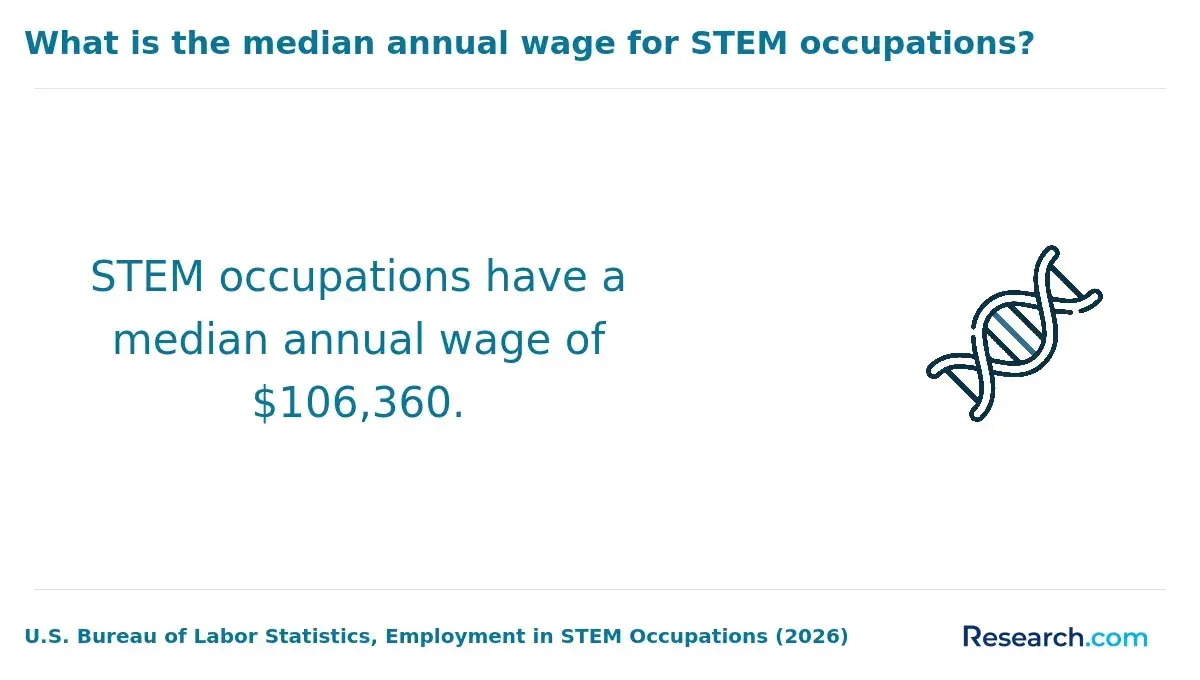
The U.S. Bureau of Labor Statistics reports a $120,230 median annual wage for data scientists in May 2025 and projects employment growth much faster than the average for all occupations through 2035. These are national occupation figures, not starting salaries, Connecticut-specific pay, or outcomes for graduates of any program.
Use salary data as context, not a promised return on tuition. Your existing experience, target role, employer, and location all affect the result. If you are comparing data science with an AI-focused degree, cost comparisons for artificial intelligence master's degrees offer another perspective; do not treat an occupation's median pay as an increase caused by either credential.
Do data science professionals need licenses or certifications?
Data scientist roles generally do not require a state professional license. Employers may value particular software or cloud certifications, but those are not substitutes for checking a job's stated skills and experience requirements. Work involving regulated data can impose employer-specific training and privacy obligations.
For program selection, prioritize demonstrable skills and projects over a certification list. If you are targeting a specialized position, read current job postings before paying for an optional credential.
Other Things You Should Know About Data Science Programs
Possibly, but obtain employer and university approval first. Confidentiality, privacy rules, and publication requirements may prevent you from uploading or sharing workplace data; a de-identified or public dataset may be safer.
Diploma wording is set by the university. Ask the registrar for the exact credential wording rather than assuming it matches or differs from the campus version.
Not necessarily. A capstone may focus on an applied problem, while a thesis typically involves a defined research process. If doctoral study interests you, ask whether faculty-supervised research and a thesis option are available.
Tell the university before the move. Your new state of residence can affect enrollment authorization, tuition classification, or access to certain activities, even if your courses remain online.
References
- A Guide to Teaching Data Science - PMC - NIH https://pmc.ncbi.nlm.nih.gov/articles/PMC6519964/
- Authorization for out-of-state colleges and universities | CT.gov https://portal.ct.gov/ohe/knowledge-base/articles/for-institutions/authorization-for-out-of-colleges-and-universities
- Student Guide to Transfer | Maryland Higher Education Commission https://mhec.maryland.gov/preparing/pages/stuguide.aspx
- How Online & Virtual Courses Work | Ivy Tech Community College https://www.ivytech.edu/classes/how-online-virtual-courses-work/
- Data Science - B.S. - UGA School of Computing https://computing.uga.edu/majors-degrees/content/data-science-bs
- What Is Data Science? Definition, Skills, Applications & More | Harvard SEAS https://seas.harvard.edu/news/what-data-science-definition-skills-applications-more
- Affordable Online Master's in Data Science | Eastern Connecticut State University https://www.easternct.edu/graduate-division/online/articles/affordable-online-masters-in-data-science-how-eastern-connecticut-delivers-roi-without-relocating/
- MS in Data Science | UConn | Online & On-Campus Programs | Master of Science in Data Science | University of Connecticut https://masters.datascience.uconn.edu/