2027 Online Data Science Master's After a Bachelor's in Oceanography: Prerequisites and Program Fit

Co-Founder and Chief Data Scientist
An oceanography bachelor's can be a strong starting point for an online data science master's, but the degree title alone will not establish eligibility. Your preparation in statistics, mathematics, programming, and data analysis matters more - and it can differ substantially from another oceanography graduate's. This guide helps you identify gaps on your transcript, shortlist programs without assuming they accept every science major, and decide whether a general data science degree supports the marine or nonmarine work you want to do.
Key Things You Should Know
- Oceanography graduates may bring valuable experience with complex environmental data, but programs assess specific quantitative and computing preparation rather than the major alone.
- Check whether missing courses are formal admission prerequisites or skills you can build before enrollment; a short course does not necessarily satisfy a credit-bearing requirement.
- Compare programs by prerequisite flexibility, technical depth, project options, and full cost—not just the degree name. The U.S. Bureau of Labor Statistics reports a $120,230 median annual wage for data scientists in May 2025, not a salary an individual graduate can expect.
What is a data science master's after a bachelor's in oceanography?
It is graduate training in extracting reliable conclusions from data through statistics, computing, and applied modeling. For an oceanography graduate, the transition can build on work with observations, simulations, spatial datasets, or physical systems. Those experiences vary by concentration and coursework: a student who has coded numerical models may need different preparation from one whose degree emphasized field sampling and laboratory methods.
The best-fitting degree depends on the intended work. A data science program is useful when you want substantial modeling and computing training across industries. If your goal is primarily to interpret findings and support decisions rather than develop models or data pipelines, compare master's degree programs in data analytics as well. Keep the oceanography degree visible in either path: domain expertise helps you recognize questionable measurements and choose scientifically meaningful questions.
Can oceanography graduates meet data science master's prerequisites?
Yes, potentially. Programs may welcome applicants from scientific disciplines, but an oceanography major is neither automatic qualification nor automatic disqualification. Read each school's requirements against your actual transcript, including course content and grades—not just course titles.
The table separates preparation an oceanography graduate might already have from gaps that warrant a closer look. It is a self-audit, not a substitute for a program's prerequisite policy.
| Preparation area | Possible evidence from oceanography | Gap to check |
| Mathematics | Calculus, differential equations, or numerical methods | Whether the program specifically requires linear algebra or multivariable calculus |
| Statistics | Analysis of observations, uncertainty, or experimental data | Probability, statistical inference, and the required depth of prior coursework |
| Programming | Code for models, geospatial analysis, or research workflows | Python proficiency, algorithms, or software development expectations |
| Data handling | Cleaning instrument, satellite, or climate records | SQL, databases, and reproducible data pipelines |
If a gap is formal, ask admissions whether an accredited, credit-bearing course completed before entry would satisfy it. If it is only recommended preparation, a documented project or noncredit course may help you build skill, but do not assume it waives a stated requirement. Applicants also considering master's-level AI study after another major should check its mathematics and programming expectations separately; the labels "AI" and "data science" do not imply identical entry standards.
Which online data science master's programs accept oceanography majors?
No program should be treated as admitting every oceanography graduate. A more useful shortlist starts with online programs that an applicant can investigate individually: the University of Texas at Austin's Master of Science in Data Science, the University of Colorado Boulder's Master of Science in Data Science, and the University of Michigan's Master of Applied Data Science. Inclusion here identifies programs to examine, not a verified promise of current eligibility, format for your location, or admission.
For each candidate, compare the current admissions page with your transcript and ask the program to resolve ambiguous requirements in writing. In particular, ask whether oceanography coursework satisfies named math or statistics prerequisites, whether programming experience can be demonstrated through projects, and whether any missing course must be completed before applying or before starting. This avoids the common mistake of interpreting "all majors welcome" as "no technical preparation needed."
What coursework is included in an online data science master's?
Relevant coursework commonly spans statistical inference, machine learning, programming, databases, data visualization, and responsible use of data. Course titles alone do not establish depth: compare syllabi, prerequisites, and whether students implement and evaluate methods rather than only discuss them.
For an oceanography graduate, a strong project path might involve irregular sensor readings, missing observations, spatial dependence, and changes over time. Look for opportunities to validate a model against data it has not seen and to explain uncertainty; a superficially accurate result can be misleading if nearby measurements leak into both training and test sets.
If your goal is to build production data pipelines or machine-learning infrastructure, compare that coverage with artificial intelligence master's degrees with data systems training rather than assuming every data science curriculum offers it.
What are the admission requirements for online data science master's programs?
Requirements vary by institution. Applicants may need transcripts, evidence of technical preparation, a résumé, a statement of purpose, recommendations, or assessments specified by the program. Do not assume a standardized test is required—or waived—without checking the current policy for the exact online degree.
An effective application makes oceanography experience legible to reviewers outside the field. Describe the question you investigated, the data and tools you used, what you personally contributed, and how you checked the result. If your transcript has an apparent gap, explain a relevant course or substantial project without presenting self-study as equivalent to a formal prerequisite. Before paying an application fee, confirm the current requirements, deadlines, and whether the program will evaluate prerequisite equivalencies in advance.
How long and how much does an online data science master's take?
There is no reliable single timeline or price for the programs in this guide. Completion depends on required credits, course availability, permitted pace, and whether you must take preparatory courses first. The same degree can take longer for a working student who enrolls part time.
How do online and campus data science master's programs compare?
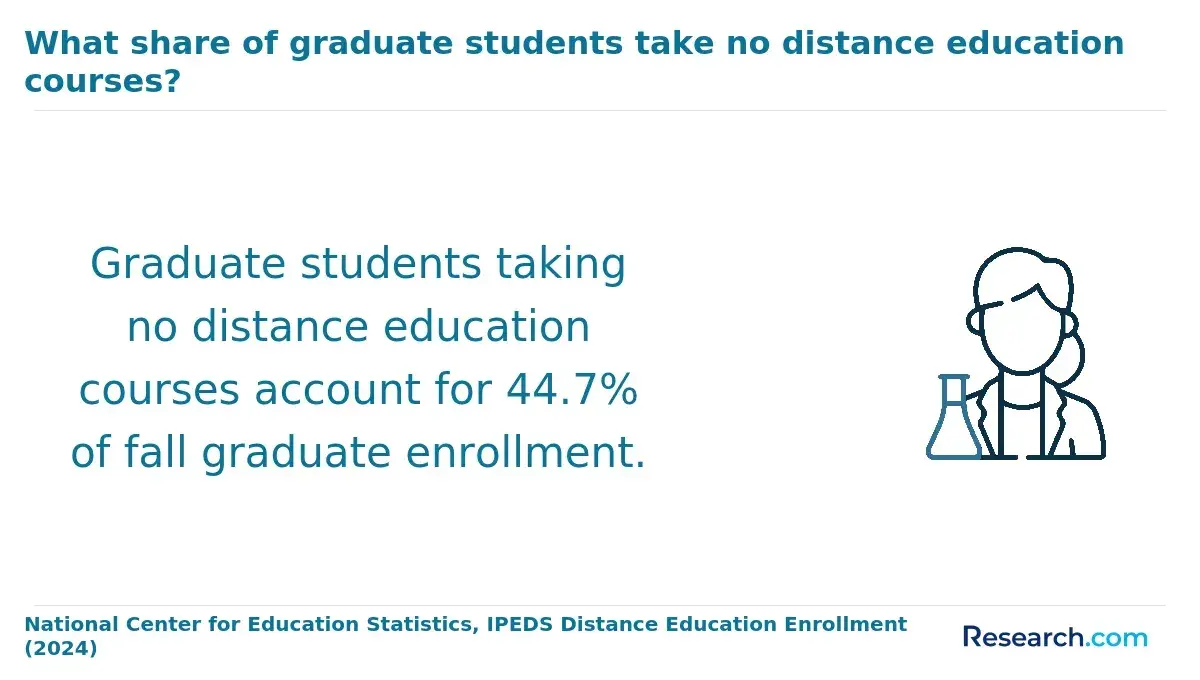
The curriculum label does not tell you how a program operates. An online degree may fit someone keeping a job or living far from a university, while a campus program may offer easier access to in-person research groups or facilities. Neither format is inherently stronger for an oceanography graduate.
Choose based on the experience you need. If you hope to continue field- or laboratory-based research, ask whether remote students can work with relevant faculty and access suitable projects. If you mainly need advanced computing skills while employed, examine live-session requirements, time zones, group-work expectations, and the availability of technical help. A flexible schedule matters less if the electives or project supervision you need are unavailable online.
What careers can oceanography graduates pursue with a data science master's?
Potential directions include environmental data scientist, geospatial analyst, climate-data specialist, scientific software practitioner, and data scientist in another industry. The degree alone does not qualify someone for every role: employers may seek particular programming tools, research experience, engineering skills, or domain knowledge.
Oceanography is especially useful where interpreting measurements requires understanding instruments, physical processes, or uncertainty. A graduate seeking broader industry roles should also demonstrate transferable work, such as building a reproducible pipeline or communicating a model's limitations to nontechnical users.
If your target is specifically an AI role, use selecting an AI program based on target roles to test whether a specialized curriculum serves that goal better than a general data science degree.
How much can data science graduates earn after an oceanography degree?
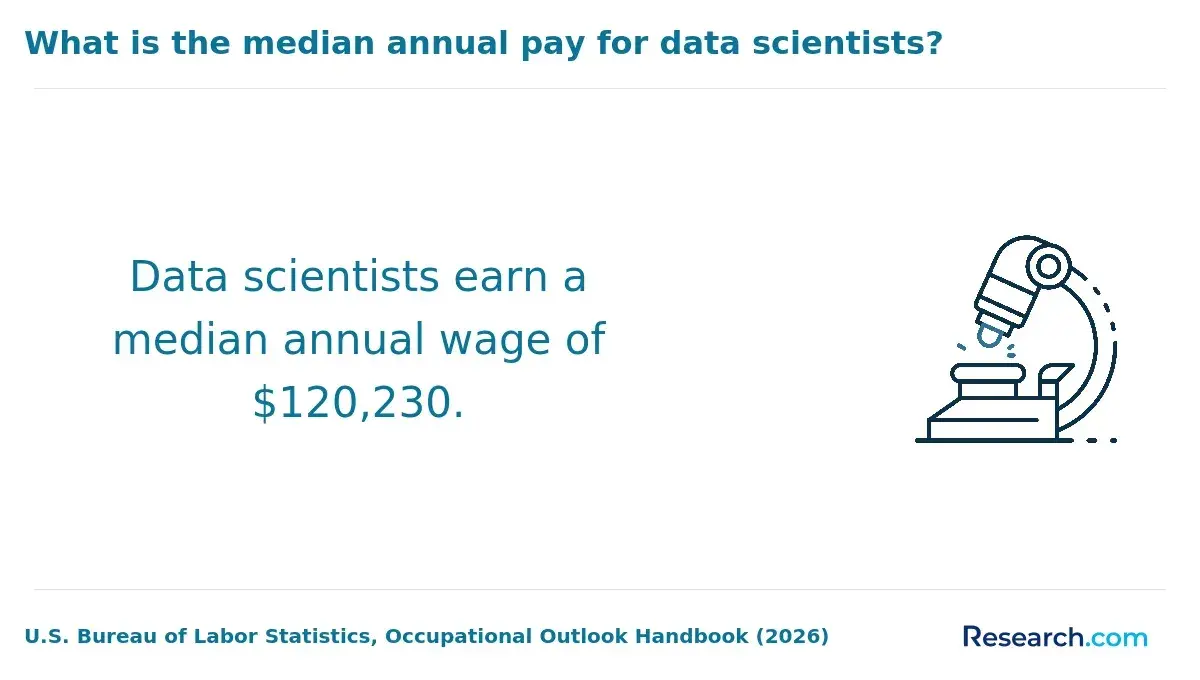
The U.S. Bureau of Labor Statistics reports that the median annual wage for data scientists was $120,230 in May 2025. That is an occupation-wide figure, not an outcome for graduates of a particular master's program or for people with oceanography backgrounds. Pay depends on role, experience, employer, location, and other factors; an environmental analyst position may not pay like a data scientist position.
For career planning, the BLS projects 35% employment growth for data scientists from 2025 to 2035. Growth signals potential demand, not an individual job offer. Evaluate the degree against jobs you would realistically pursue and the skills those postings request, rather than treating the occupation's median wage as your expected return on tuition.
How do you choose an accredited online data science master's program?
First, verify that the university holds recognized institutional accreditation; do not assume that an online platform or a program's marketing language establishes it. Confirm the institution's current accreditation status through its stated accreditor and check whether the program can enroll students where you live. Separate those checks from academic fit: accreditation does not establish that the degree teaches the methods you need.
A final comparison should resolve the questions most likely to change your decision:
- Entry: Which prerequisites are mandatory, and will the program review your oceanography courses for equivalence?
- Learning: Can you take substantial statistics, computing, and project work relevant to your target role?
- Delivery: Are live meetings, campus visits, and project supervision compatible with your schedule and location?
- Cost: What is the estimated total for your enrollment plan, including required preparation?
Choose a program only after those answers align. A flexible admissions pathway is valuable if you have a narrow prerequisite gap; deeper computing coursework matters more if your goal is to move beyond scientific analysis into data engineering or model development.
Other Things You Should Know About Data Science
Usually, if the dataset's terms permit your intended use. Credit the source, document your cleaning decisions, and avoid claiming that an analysis establishes more than the data supports.
Not generally. Many computational projects use existing datasets. Confirm any fieldwork requirement with the specific program rather than assuming your previous discipline determines it.
Not necessarily. Some research positions value advanced training in a particular ocean science specialty. Compare actual job requirements before choosing a data science degree over further disciplinary study.
It may help you test graduate-level work or fill a skills gap. Ask whether its credits can count toward the master's you want; transfer or stackability is a program policy, not an automatic benefit.
References
- MIMS Admissions: Programming Proficiency | UC Berkeley School of Information https://www.ischool.berkeley.edu/programs/mims/admissions/programming
- Prerequisite Key Topics - UVA School of Data Science https://datascience.virginia.edu/pages/prerequisite-key-topics
- Online Master of Data Science Admission Requirements at Rice https://csweb.rice.edu/academics/graduate-programs/online-mds/admissions
- 4.1.21 Instructional Modalities and Distance Education | Illinois State https://policy.illinoisstate.edu/academic/4-1-21
- Master's in Data Science | utexas.edu https://cdso.utexas.edu/msds
- Data Engineer vs. Data Scientist: Key Differences Explained | Syracuse University https://ischool.syracuse.edu/data-engineer-vs-data-scientist/
- Master of Science in Applied Data Science | USC Online https://online.usc.edu/programs/master-of-science-in-applied-data-science/
- Data Science - School of Professional Studies - CUNY https://sps.catalog.cuny.edu/programs/DATSC-MS
- Comparing Cornell Master's Degrees: The MPS in Info Science vs. Data Science https://infosci.cornell.edu/news-stories/comparing-cornell-masters-degrees-mps-info-science-vs-data-science
- Choosing a learning format that works for you | Gary W. Rollins College of Business https://blog.utc.edu/business/2025/06/09/choosing-a-learning-format-that-works-for-you/