2027 Simulation in an Online Data Science Master's: Courses, Projects, and Program Selection

Co-Founder and Chief Data Scientist
Simulation can mean anything from a brief classroom exercise to a substantial project that tests decisions under uncertainty. For prospective online data science master's students, that distinction matters: a program may teach modeling without offering much experience building, testing, and explaining simulations.
This guide shows where simulation fits in the curriculum, what strong projects involve, and how to compare programs before committing time and money.
Key Things You Should Know
- Look beyond the word "simulation" in a course title: check whether students define assumptions, generate scenarios, validate results, and communicate decisions in substantial projects.
- Statistics, programming, and domain courses provide the foundation; a capstone or applied elective may offer more simulation practice, but project requirements vary by program.
- Compare the full cost and schedule alongside project access and accreditation. The Bureau of Labor Statistics reports a $120,230 median annual wage for data scientists in May 2025, not an expected salary for new graduates.
What is a simulation in an online data science master's program?
A simulation is a computational representation of a process or system used to explore what might happen under different assumptions. In data science coursework, students might simulate customer arrivals, disease spread, supply-chain disruptions, or the performance of a decision rule when conditions change. Unlike a prediction based only on a fixed dataset, a simulation lets students vary inputs and examine a range of possible outcomes.
The term covers different levels of work. A statistics class might use a short Monte Carlo exercise to illustrate uncertainty. A dedicated course might examine discrete-event or agent-based simulation in depth. An applied project might require students to define a real decision, justify a model, test its assumptions, and explain its limits to a stakeholder. For program selection, the important question is not whether simulation appears in a description, but what students actually produce.
What courses are included in an online data science master's degree?
Course names and requirements differ, but simulation work commonly draws on probability and statistics, programming, data management, and machine learning. Optimization, operations research, causal inference, or domain-specific electives may add methods for comparing decisions - not just forecasting outcomes. A curriculum focused mainly on dashboards and descriptive reporting may offer less preparation for building simulation models.
Read course descriptions for evidence of depth. A passing mention of Monte Carlo methods is different from a unit with assessed exercises, a dedicated modeling course, or an advanced project that requires sensitivity analysis. Check prerequisites and the sequence of courses, too: students need enough statistical and programming preparation to evaluate a simulation rather than simply run supplied code.
If your goal is primarily reporting and business insight rather than modeling systems under uncertainty, a guide to data analytics master's programs offers a useful comparison point. Degree titles alone do not establish which curriculum best fits your goal.
How do online data science programs use simulations and projects?
Online programs can deliver simulation exercises through coding assignments, remote computing environments, team projects, and capstones. Delivery format does not determine rigor; the assignment and feedback do. The table distinguishes common kinds of work so prospective students can interpret project descriptions more precisely.
| Project format | Typical work | What it demonstrates | Key limitation |
| Guided exercise | Run or modify a provided model | Understanding of a specified method | May leave problem framing and assumptions to the instructor |
| Open-ended simulation | Build scenarios and compare outcomes | Model design and treatment of uncertainty | May use simplified or synthetic data |
| Applied capstone | Address a stakeholder problem and present findings | Technical work alongside communication and decision context | Topic choice and access to suitable data may be restricted |
A strong simulation project states the decision being studied, explains how inputs were obtained, tests sensitivity to uncertain assumptions, and documents where the model could fail. Reproducible code and a clear explanation of results make the work more useful as portfolio evidence. Before enrolling, request a syllabus or recent project brief; do not assume every student can choose a simulation topic for the capstone.
What are the admission requirements for an online data science master's?
Requirements vary by institution. Programs may ask for a bachelor's degree, transcripts, evidence of quantitative preparation, programming experience, recommendations, or a statement of purpose. Some accept applicants from varied academic backgrounds; others specify prerequisite coursework. A suggested skill is not necessarily a formal admissions requirement.
For simulation-heavy study, assess your readiness in probability, statistics, and programming before applying. If you have a gap, ask admissions whether a prior course is required for eligibility or whether preparatory study would simply help you succeed. Professional experience and self-study may demonstrate readiness, but neither should be assumed to replace a stated prerequisite without confirmation from the program.
How long does an online data science master's take and cost?
Time to completion depends on credit requirements, course availability, and how many courses you can take while meeting work and family obligations. Compare each school's published full-time and part-time pathways, course rotation, maximum completion period, and capstone schedule. A flexible enrollment policy is less useful if a required course is offered infrequently.
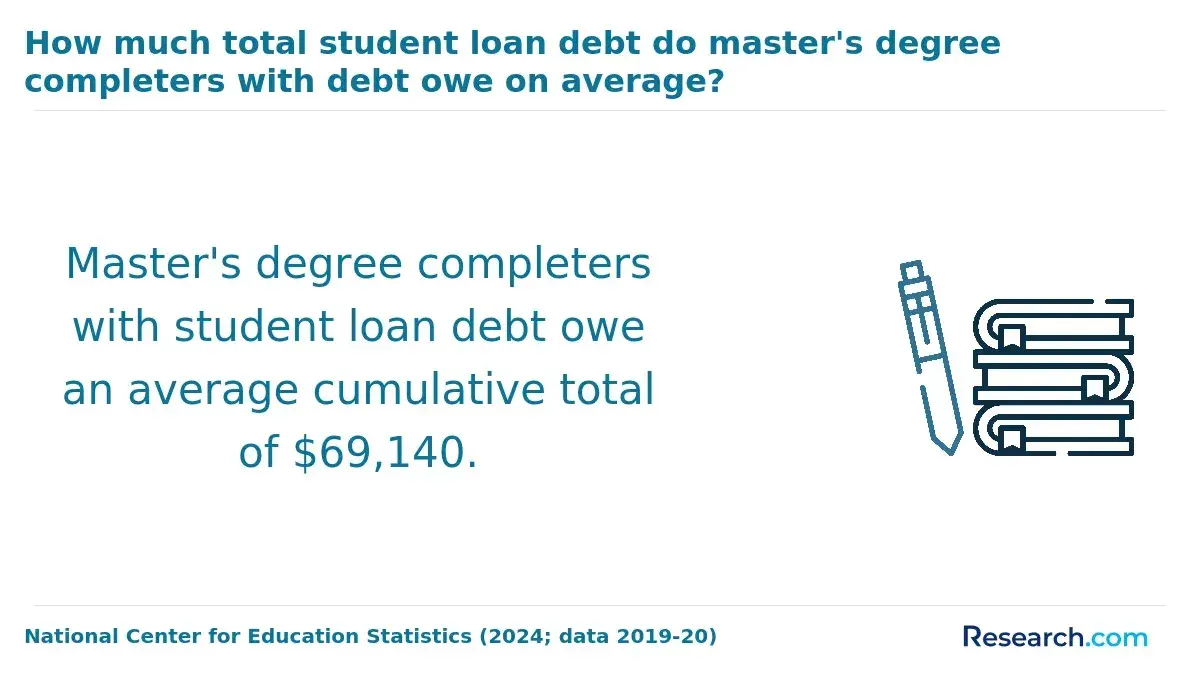
For cost, compare the same components across schools: tuition for all required credits, mandatory fees, any residency or travel expense, and required technology or materials. Then account for financing costs and income you might forgo if the schedule affects your work. Published tuition alone is not a reliable total-cost comparison, and prices should be confirmed for your enrollment term.
If machine learning is your main interest, this guide to machine learning master's tuition plus mandatory fees illustrates why defining the included charges matters when comparing alternatives. Ask each data science program for a written cost breakdown before deciding what you can afford.
How is an online data science master's different from a campus program?
The academic distinction is not necessarily the degree content: institutions may set comparable learning goals for online and campus students. The practical difference is how students access instruction, collaborators, computing resources, faculty, and career support. An online simulation project can be rigorous, but group coordination and feedback may work differently at a distance.
Choose an online format if its meeting times, project tools, and support fit your schedule and location. A campus program may be preferable if you rely on in-person collaboration or access to particular facilities. Neither format should be treated as automatically more flexible: online courses can still require live sessions, timed assessments, or substantial team meetings. For scheduling considerations, see online data science master's programs for working professionals.
How can you verify an online data science program's accreditation?
Accreditation is a check on the institution, not proof that its simulation coursework is strong. Verify the university's current institutional accreditation through the accreditor and the U.S. Department of Education or Council for Higher Education Accreditation recognition listings. Confirm that the online degree is awarded by that institution, and ask the school about authorization to enroll students where you live.
Do not assume a data science master's needs a separate programmatic accreditation to be legitimate. Conversely, a school's accreditation does not establish that a particular curriculum, project option, or career service meets your needs. Check those features independently.
What careers can an online data science master's prepare you for?
Simulation skills can support data science roles involving forecasting, experimentation, operations, risk, or planning. The relevant job title may be data scientist, operations research analyst, or another domain-specific role, depending on the employer. Projects that explain assumptions and decision consequences may be especially useful when the work calls for recommendations rather than predictions alone.
A degree does not qualify every graduate for every role. Compare target job descriptions with the program's required coursework, then look for opportunities to produce evidence of the missing skills. If you are still weighing occupations, online degree preparation for data-focused occupations can help frame that comparison.
What salary and job outlook can data science graduates expect?
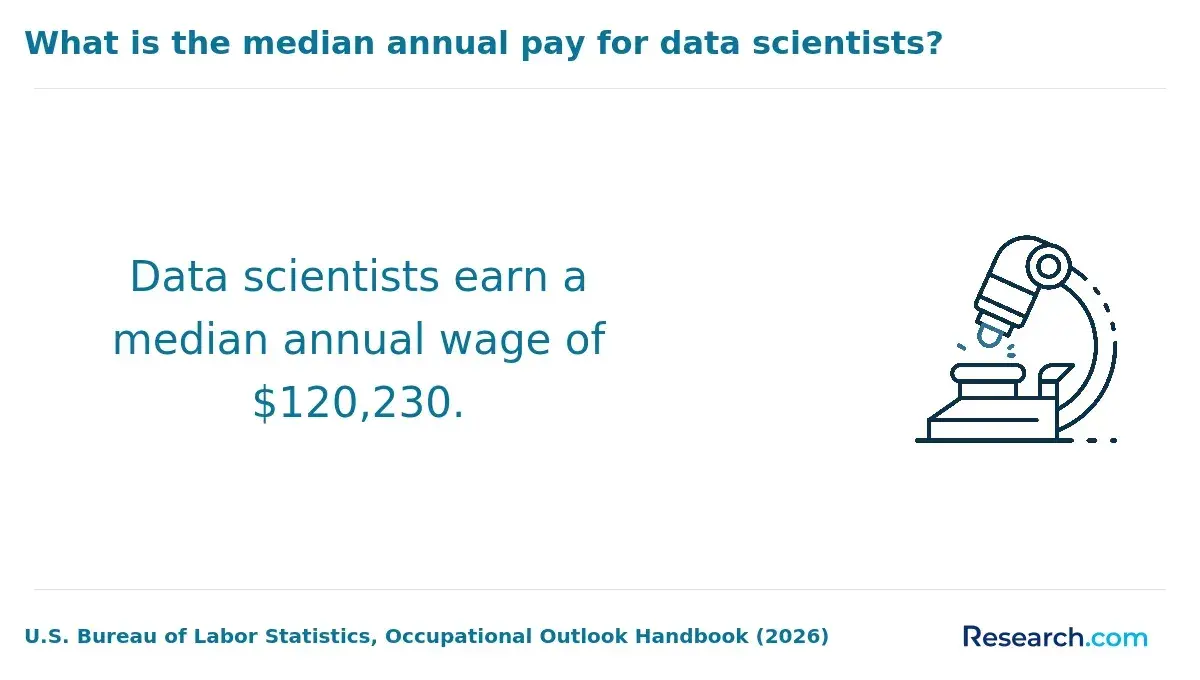
According to the Bureau of Labor Statistics, the median annual wage for U.S. data scientists was $120,230 in May 2025. That figure describes workers in the occupation - not new master's graduates, the value of a degree, or the salary a particular applicant can expect. Experience, location, industry, and role all affect an individual offer.
The BLS projects data scientist employment to grow 35% from 2025 to 2035. That outlook indicates demand across the occupation, but it does not establish that any program's graduates will find jobs. When a school publishes employment or salary outcomes, check who was surveyed, how many responded, when outcomes were measured, and whether respondents already worked in data science.
How do you choose a reputable online data science master's program?
Start with the work you want to do. A simulation-focused applicant needs evidence of modeling depth and project support; someone aiming mainly at AI development may need a different mix of courses. Use the following checks to narrow programs rather than relying on a ranking or degree title alone.
- Inspect assessed work: Request syllabi or project briefs showing whether students formulate problems, test assumptions, evaluate models, and explain results.
- Check project access: Ask whether simulation topics are permitted in the capstone, how advisers are assigned, and whether usable datasets or computing resources are available.
- Test operational fit: Confirm live-session requirements, team-work expectations, course rotation, and the time available to finish.
- Verify the commitment: Confirm institutional accreditation, authorization for your location, admissions prerequisites, and a complete cost estimate directly with the school.
A common mistake is choosing a program because "simulation" or "AI" appears in promotional material without checking how much assessed work follows. If building AI systems is the primary goal, compare the curriculum against career-focused artificial intelligence degree selection before committing. Choose the program whose required work - not just its electives or marketing - best supports your intended role.
Other Things You Should Know About Data Science
Not necessarily. Requirements depend on the software, dataset size, and whether the program provides remote computing. Ask for its current hardware and software specifications before buying equipment.
Only with appropriate permission. Employer policies, confidentiality obligations, and university rules may limit what you can access, upload, or publish. Ask about approved alternatives before proposing the project.
Usually only if sharing is permitted and you identify your own contribution accurately. Check course and data-use rules, and do not publish teammates' work or restricted data without authorization.
An unexpected result can still demonstrate sound work if you investigate assumptions, validate the implementation, and explain uncertainty. A defensible analysis matters more than producing a preferred outcome.
References
- Simulation Experience and Clinical Education in Nursing Education Programs | Office of the Professions https://www.op.nysed.gov/nursing-education/simulation-experience-and-clinical-education-nursing-education-programs
- Online group projects in higher education - PMC https://pmc.ncbi.nlm.nih.gov/articles/PMC10038701/
- Simulation-based science | turing.ac.uk https://www.turing.ac.uk/research/interest-groups/simulation-based-science
- Capstone Project | uchicago.edu https://threatresponse.bsd.uchicago.edu/capstone/
- When is a simulation a digital twin? A systematic literature review - ScienceDirect https://www.sciencedirect.com/science/article/pii/S2213846323000718
- Master's in Data Science | utexas.edu https://cdso.utexas.edu/msds
- MS in Data Science Curriculum & Course Descriptions | Eastern University https://www.eastern.edu/academics/colleges-seminary/college-health-and-sciences/departments/department-mathematical-5
- M.S. in Data Science, Online | virginia.edu https://datascience.virginia.edu/degrees/msds-online
- Degree Requirements for the M.S. in Applied Data Science | Luddy School of Informatics, Computing, and Engineering https://luddy.indianapolis.iu.edu/academics/masters/data-science/requirements.html
- Best Online Master's in Data Science Programs for 2024 | Fortune Education https://fortune.com/education/information-technology/best-online-masters-in-data-science/