
2027 Human-Centered AI in an Online Data Science Master's: Courses, Projects, and Program Selection

Co-Founder and Chief Data Scientist
An online data science master's can teach you to build accurate models without teaching you whether people can understand, contest, or safely use their outputs. For prospective students interested in human-centered AI, the decision is whether a program combines technical depth with meaningful work in usability, fairness, privacy, and evaluation with users. This guide shows what to look for in courses and projects, what to verify with schools, and how to judge whether the investment fits your career goals.
Key Things You Should Know
- Look for technical AI coursework and assessed work involving people: user research, accessibility, fairness evaluation, privacy, or human oversight. A course title alone does not establish depth.
- Prioritize a project you can explain from problem definition through model evaluation and human impact; a working model without evidence that it serves its intended users is weaker preparation.
- Compare accredited institutions using the same total-cost and scheduling assumptions. The U.S. Bureau of Labor Statistics reports a $120,230 median annual wage for data scientists in May 2025, but that occupation-wide figure is not a graduate salary forecast.
What Is Human-Centered AI in Data Science?
Human-centered AI is the design and evaluation of AI systems around the people affected by them. In data science, that means asking not only whether a model predicts well, but also who defined the problem, whose data it represents, how errors affect different users, and when a person should be able to review or override an output.
Consider a model that prioritizes requests for assistance. Aggregate accuracy might look strong while errors disproportionately delay help for a particular group. A human-centered project would examine those errors, test whether staff can interpret the recommendations, and establish a way to challenge or correct them. This work still requires statistics, programming, and machine learning; it adds design and evaluation questions that model performance alone cannot answer.
Human-centered AI may appear in a data science, computer science, information science, or AI curriculum. If the broader field is your main interest, compare options for studying artificial intelligence online; the degree name matters less than the courses and project opportunities available to you.
What Courses Should an Online Data Science Master's Include?
Start with a technical foundation: graduate-level statistics, data management, programming, and machine learning. Then check whether students apply that foundation to decisions involving real users. The table distinguishes useful curriculum components from evidence of substantive coverage; programs may use different course names.
| Curriculum component | Why it matters for human-centered AI | Evidence of depth to look for |
| Statistics and machine learning | Supports valid comparisons, uncertainty estimates, and error analysis | Assignments that justify metrics, test assumptions, and examine performance across groups |
| Human-computer interaction or user research | Connects system design to how people understand and use outputs | User studies, interface evaluation, or usability testing with documented findings |
| Responsible AI, fairness, privacy, or governance | Examines foreseeable harms and constraints on data use | Cases or projects requiring documented trade-offs, not just an ethics lecture |
| Applied project or capstone | Brings technical and human considerations together | Access to an appropriate project topic, feedback, and evaluation criteria beyond model accuracy |
Read syllabi and sample assignments where available. A topic mentioned in one class session is different from a dedicated course; an elective is different from a requirement; and neither guarantees substantial project experience. Ask whether relevant electives are offered often enough for online students to take them before graduation.
If you need preparation before graduate-level AI coursework, distinguish a school's formal prerequisites from optional preparation. Foundation pathways into artificial intelligence graduate programs can help you frame questions about how a program handles gaps in programming, mathematics, or statistics.
How Do You Choose an Accredited Online Data Science Master's?
First, verify the institution's current accreditation through the accreditor and the U.S. Department of Education or Council for Higher Education Accreditation directories. Accreditation establishes an institutional quality-assurance baseline; it does not establish that a program teaches human-centered AI well. Confirm that the school can enroll students in your state and ask whether any in-person activities are required.
For a shortlist, compare programs against the same questions. These checks reveal more than a ranking or an appealing elective name:
- Curriculum: Which relevant courses are required, which are electives, and when can online students take them?
- Project access: Can students pursue a user-centered AI topic, and who approves and supervises it?
- Feedback: Who evaluates work on usability, fairness, privacy, or deployment decisions alongside technical performance?
- Practical fit: Are live sessions, group work, travel, and completion limits compatible with your schedule?
- Evidence: Can the program share recent syllabi, project examples, and clearly defined career-outcome data?
Choose a technically rigorous program with accessible human-centered electives if you want flexibility across data science roles. Choose one with required user-centered coursework and project supervision if that focus is nonnegotiable. For working professionals, opportunities for alumni relationship building in AI graduate education may also matter - but ask what online students can actually access rather than assuming a large alumni network is personally reachable.
What Human-Centered AI Projects Build Job-Ready Skills?
A strong project defines a consequential user problem, uses data you are permitted to use, establishes a technical baseline, and evaluates both model performance and effects on people. It should end with reproducible methods and an honest account of limitations - not just a polished dashboard.
The following project types can produce useful portfolio evidence when their scope and data access are realistic:
- Decision-support audit: Compare model errors across relevant groups, test how reviewers interpret recommendations, and document an escalation or override process.
- Accessible AI interface: Prototype an explanation or feedback feature, then evaluate whether intended users can complete key tasks and understand uncertainty.
- Human-in-the-loop workflow: Define when a model should defer to a person, measure the resulting trade-off in workload and errors, and record how decisions are corrected.
Healthcare is one possible setting, but it raises especially important questions about sensitive data, workflow, and who is authorized to act on an output. Students pursuing that path can compare guidance on choosing an AI master's for healthcare applications. Do not assume a program can provide clinical data or a healthcare partner; verify project access before enrolling.
A common portfolio mistake is reporting one accuracy score and calling the system fair or usable. State whose outcomes you assessed, which measures you used, what you could not test, and how a human would respond when the system fails.
What Are the Admission Requirements for Online Data Science Master's Programs?
Requirements vary by institution. Programs may review an accredited bachelor's degree, transcripts, quantitative preparation, programming experience, recommendations, a statement of purpose, or other application materials. Do not assume a particular undergraduate major qualifies or disqualifies you without checking the program's published policy.
For a human-centered AI focus, demonstrate both technical readiness and a credible reason to work on problems affecting people. An applicant with strong user research experience but limited mathematics may need more quantitative preparation; an experienced programmer may need to show interest in research, design, or responsible deployment. Coursework and independent projects can demonstrate preparation, but they do not automatically fulfill a formal prerequisite. Ask admissions which prior courses or documented experience satisfy each requirement.
How Long Does an Online Data Science Master's Take and Cost?
Completion time depends on required credits, course availability, enrollment pace, and whether the program requires a thesis or capstone. Published minimum timelines may assume a full course load or a particular starting term. If speed matters, compare those assumptions with your working hours and the sequence of courses you need; AI master's degrees with shorter completion times offer a related comparison, but a faster schedule is less useful if it limits access to the electives or project supervision you want.
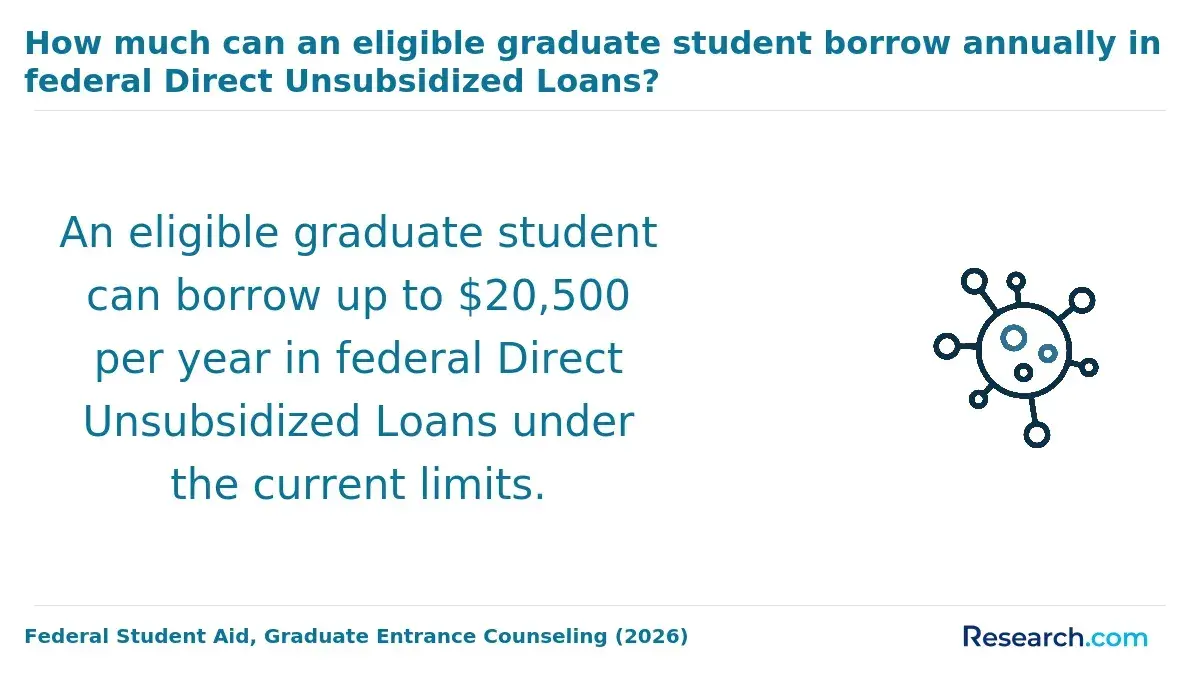
No single cost figure applies across online data science master's programs. Calculate each school's expected total from its current per-credit or term tuition, required credits, mandatory fees, materials or technology charges, and any travel. Account separately for financing costs and time away from paid work. Ask whether tuition changes with residency, enrollment pace, or future academic years, and whether employer assistance or institutional aid can reduce your cost. Comparing one school's tuition-only quote with another's all-in estimate is a common and avoidable mistake.
How Do Online and Campus Data Science Master's Programs Compare?
Neither format inherently provides stronger human-centered AI training. Compare the actual courses, instructors, project rules, and access to users or partner organizations. An online program may suit a working professional who can conduct approved research in an existing workplace; a campus program may better suit someone who needs scheduled access to a lab or in-person collaborators. Neither advantage should be assumed for a particular school.
Online delivery also varies. Recorded lectures offer scheduling flexibility, while live discussions and team projects may still require attendance at fixed times. Ask whether online students receive the same project supervision and can participate in relevant research opportunities. If a campus option costs more because it requires relocation or reduced employment, weigh that additional cost against specific opportunities you would actually use.
What Careers Can a Human-Centered AI Data Science Master's Lead To?
Potential paths include data scientist, machine learning practitioner, AI product analyst, responsible-AI specialist, and research or evaluation roles involving people's interactions with technology. Titles and hiring requirements vary by employer. A human-centered focus is most valuable where teams must connect model behavior to user needs, operational decisions, and potential harm.
Match your target role to evidence you can produce. For data science roles, show sound modeling and statistical judgment. For user-centered AI work, add research methods, interface evaluation, stakeholder communication, and documented trade-offs. A specialized job title may require experience beyond a master's degree; a project that shows how you worked across technical and nontechnical concerns can be more persuasive than a course list alone.
What Salary Can Data Science and Human-Centered AI Graduates Earn?
The U.S. Bureau of Labor Statistics reports that the median annual wage for data scientists was $120,230 in May 2025. That is an occupation-wide median, not an entry-level offer, a human-centered AI pay rate, or an outcome attributable to a master's degree. Prior experience, location, employer, responsibilities, and role all affect an individual offer.
BLS also projects 35% employment growth for data scientists from 2025 to 2035. This indicates substantial projected demand for the occupation, not that every graduate will secure a data science job. When a school publishes graduate salaries, check the survey year, response rate, prior experience, and whether it reports salary levels or actual increases before using the figures in a return-on-investment decision.
What Certifications Support a Career in Human-Centered AI?
A certification can help document a specific skill - such as cloud-based machine learning, data engineering, accessibility testing, or privacy practices - but it does not replace evidence that you can define, build, and evaluate a system responsibly. Select one only when its assessed skills match the tools or responsibilities in your target job postings.
If you already have technical experience, a focused credential may address a narrower gap more efficiently than another broad course. If you are entering data science, prioritize statistical and programming competence and a substantial project first. Check a certification's current exam objectives, renewal requirements, and cost before paying; employer preferences and vendor tools can change.
Other Things You Should Know About Data Science
That depends on the institution. Ask for the exact degree title shown on the diploma and transcript; do not infer it from the program's marketing name.
Only with appropriate employer permission and under the school's rules. Confirm data-use, storage, publication, and intellectual-property requirements before proposing the project.
Yes. Public, simulated, or properly de-identified data can support strong methods and a clear evaluation. Explain where that data differs from the intended setting and avoid claiming the system is ready for deployment.
Requirements depend on the activity and institution. Ask your instructor or institutional review board before recruiting participants or collecting their information, particularly if you intend to publish the findings.
References
- Fact Sheet: Credit Hours Under a Flexible Work Schedule | U.S. Office of Personnel Management https://www.opm.gov/policy-data-oversight/pay-leave/work-schedules/fact-sheets/credit-hours-under-a-flexible-work-schedule/
- Artificial Intelligence and Privacy - Issues and Challenges | Office of the Victorian Information Commissioner https://ovic.vic.gov.au/privacy/resources-for-organisations/artificial-intelligence-and-privacy-issues-and-challenges/
- Artificial intelligence and adolescent well-being | apa.org https://www.apa.org/topics/artificial-intelligence-machine-learning/health-advisory-ai-adolescent-well-being
- Master of Science in Artificial Intelligence and Data Science | Tseng College (CSUN) https://tsengcollege.csun.edu/programs/MDS
- About - Stanford HAI https://hai.stanford.edu/about
- User Research Methods and Recommendations | harvard.edu https://enterprisearchitecture.harvard.edu/user-research-methods-and-recommendations
- How to Become a Data Scientist | Harvard SEAS https://seas.harvard.edu/news/how-become-data-scientist
- Data Science: Policy, Governance & Society (Online) | Brown University https://graduateprograms.brown.edu/graduate-program/data-science-policy-governance-society-online-scm
- What Prerequisite Skills Are Required For Admission to the UW Data Science Programs? | UW Online Collaboratives https://uwex.wisconsin.edu/stories-news/skills-required-for-data-science-programs/
- What You Can Do with a Master's in Data Science and Artificial Intelligence | Harvard Extension School https://extension.harvard.edu/blog/what-you-can-do-with-a-masters-in-data-science-and-artificial-intelligence/


