
2027 Multilevel Modeling in an Online Data Science Master's: Courses, Projects, and Program Selection

Co-Founder and Chief Data Scientist
Multilevel modeling can be easy to miss when comparing online data science master's programs: it may appear in a statistics elective rather than a course with that name. For applicants who want to analyze patients within hospitals, students within schools, or repeated observations from the same person, that distinction matters. This guide explains the preparation, coursework, and projects that demonstrate substantive training - and how to weigh those features against cost, format, and career goals.
Key Things You Should Know
- Look for instruction in mixed-effects or hierarchical models, model diagnostics, and interpretation - not just a reference to "nested data" in a course description.
- A strong project uses identifiable groups or repeated observations, explains partial pooling, and evaluates whether the model answers the underlying question.
- The U.S. Bureau of Labor Statistics projects 35% growth in data scientist employment from 2025 to 2035, but that broad forecast does not establish demand for multilevel modeling specialists or guarantee a graduate a job.
What is multilevel modeling in an online data science master's program?
Multilevel modeling, also called hierarchical modeling, analyzes data in which observations belong to groups or are measured repeatedly. A model might estimate a relationship across all schools while allowing each school's baseline outcome to differ. This partial pooling shares information across groups without assuming they are identical or estimating every group entirely in isolation.
Graduate-level study should go beyond fitting a model. Students should learn when grouping changes the statistical question, how random intercepts and slopes work, what assumptions the model makes, and how to assess uncertainty and fit. The subject is especially useful when group-level differences matter to a decision. It is less compelling when the data have no meaningful grouping structure or the available groups cannot support the proposed analysis.
Which courses teach multilevel modeling in an online data science master's?
Relevant instruction may sit in applied regression, longitudinal data analysis, mixed-effects models, Bayesian statistics, biostatistics, or an advanced statistical modeling elective. Course titles are clues, not proof of depth. Students generally need working knowledge of regression, probability, statistical inference, and programming before tackling model specification and diagnostics.
The distinctions below help separate brief exposure from coursework likely to support an independent project. Check syllabi, assignments, and elective availability rather than relying on catalog keywords alone.
| Evidence in the curriculum | What it suggests | What remains uncertain |
| "Hierarchical models" appear among many topics | Possible introduction | Whether students fit or interpret one |
| Assignments fit mixed-effects models to grouped data | Hands-on practice | Whether diagnostics and model comparison are covered |
| A dedicated course covers varying effects and uncertainty | Greater methodological depth | Whether it runs regularly and is open to online students |
| A supervised project applies the method | Opportunity to integrate theory and practice | Whether a suitable adviser and dataset will be available |
Ask for a recent syllabus and whether the course is required, an elective, or merely planned. Also check prerequisite sequencing: an advanced elective has little value if it is unlikely to run before you graduate.
What projects can students complete using multilevel modeling?
A useful project starts with a question whose grouping structure matters. Examples include comparing patient outcomes across clinics, studying repeated measurements from individuals, or examining how an intervention's association with outcomes varies across schools. Public or properly authorized data are preferable to a project that depends on access the student cannot obtain.
For a portfolio-ready analysis, the work should connect the statistical choices to a decision rather than display a model fit alone. A strong project can include the following elements:
- Question and data structure: Define the outcome, grouping variable, and reason observations within a group may be related.
- Model and comparison: Explain the choice of varying intercepts or slopes and compare results with a simpler, defensible approach.
- Evaluation: Examine assumptions, uncertainty, influential groups, and performance appropriate to the question.
- Communication: Translate group-level variation into a cautious conclusion, without presenting associations as causal effects.
- Reproducibility and privacy: Document code and data permissions; avoid exposing identifiable people or small groups.
Before enrolling, verify whether online students can propose their own capstone topic, use an employer dataset with permission, and receive supervision from someone familiar with hierarchical methods. A program need not offer a multilevel-modeling capstone by name to support this work.
What are the admission requirements for an online data science master's?
Requirements vary by program, so a relevant course catalog cannot substitute for an admissions policy. Applicants should check the required degree background, transcripts, quantitative preparation, programming expectations, recommendations, and any statement or test requirements directly with each school. For this subject, prior exposure to calculus, linear algebra, probability, and regression is useful preparation, but it is not automatically a formal admissions requirement.
If your quantitative background is uneven, ask whether prior coursework, professional analysis, or additional classes can demonstrate readiness - and which evidence the admissions office accepts. Applicants comparing graduate ML study without a required personal statement should still verify each data science program's current application rules; requirements can differ even within the same institution.
How long does an online data science master's take and cost?
There is no reliable single duration or price for online data science master's programs. Completion depends on required credits, course availability, enrollment pace, and capstone sequencing. Compare a realistic schedule that includes the statistics prerequisites and advanced elective you actually want - not just the advertised fastest path.
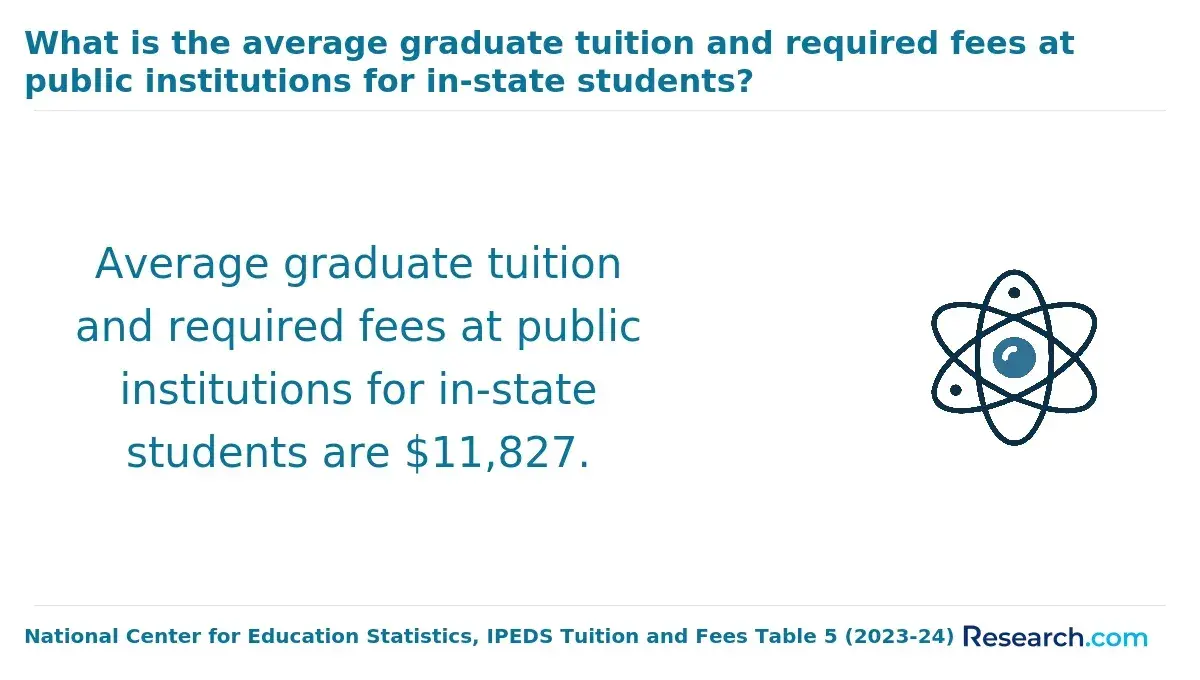
For cost, calculate required credits multiplied by the applicable tuition rate, then add mandatory fees and any program-specific technology or materials charges. Check whether tuition differs by residency or enrollment status, and whether taking fewer courses changes fees or aid eligibility. An affordable online master's in data science is only a good value for this goal if the relevant modeling coursework is accessible within its published requirements and price.
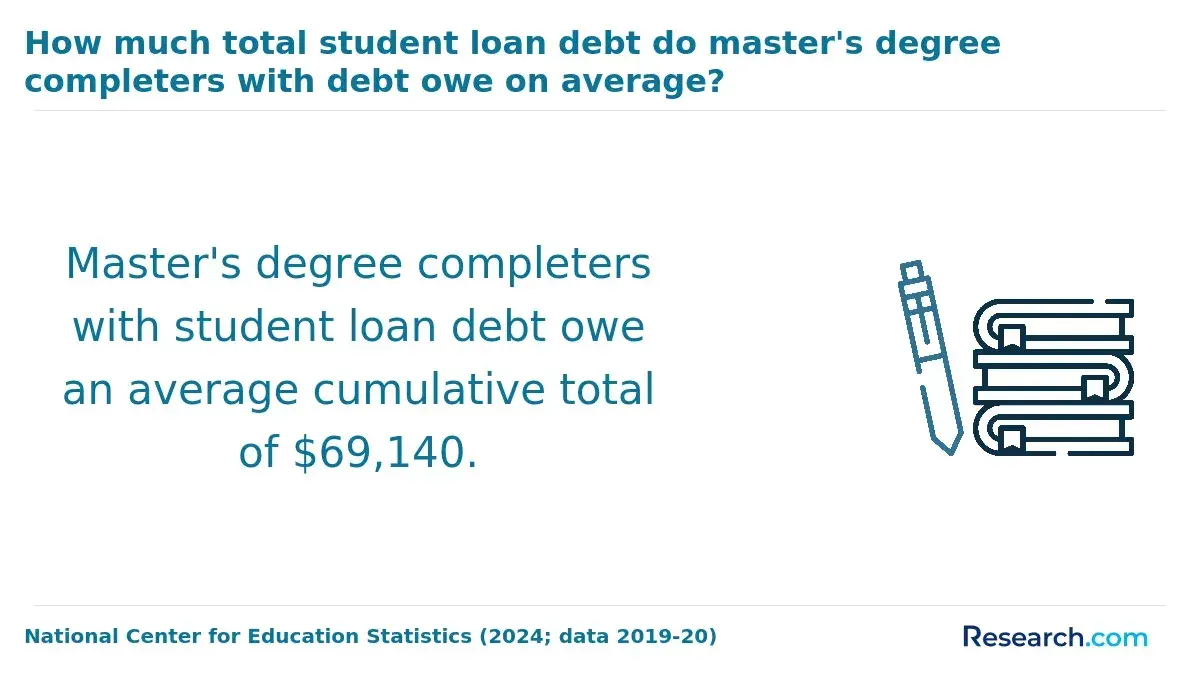
Do not treat a quoted tuition figure as the complete cost or assume future earnings will repay it. Request the current tuition schedule and confirm how often the courses you need run before committing.
How does online study compare with campus-based data science programs?
The decisive difference is usually access and interaction, not whether multilevel modeling can be taught online. An online program may suit a working student who needs to keep a job or apply methods to workplace data. Campus study may better suit someone who needs in-person research collaboration or access to particular faculty and seminars. Neither format establishes course depth by itself.
Check whether lectures are live or recorded, when office hours occur, how students receive feedback on code and statistical reasoning, and whether group projects accommodate your time zone. For online data science degrees at master's level for professionals, those operational details may determine whether an advanced modeling elective is practical alongside work.
Which accreditation should an online data science master's program have?
Verify that the degree-granting U.S. institution holds recognized institutional accreditation, and confirm the program and online delivery are authorized for students in your state where required. Do not assume that a course's technical rigor or a school's reputation substitutes for these checks.
Program-specific accreditation is not a universal requirement for a data science master's. If an employer or future doctoral program has a particular credential policy, ask it directly. Accreditation establishes an important institutional baseline; syllabi and student work are better evidence that the degree teaches multilevel modeling substantively.
What careers can multilevel modeling skills support after graduation?
These skills can be useful in data scientist, biostatistics, health analytics, education research, policy evaluation, and product experimentation roles when observations are clustered or measured over time. Job titles alone are poor guides: a posting may instead ask for mixed-effects models, longitudinal analysis, hierarchical Bayesian models, or experimental analysis.
Match the method to the work you want. A research-heavy role may value careful inference and uncertainty estimates; a product role may place more weight on experimentation, coding, and communicating results. Browse data science degrees linked to in-demand skills with that wider skill mix in mind. Multilevel modeling is a specialization, not a replacement for data preparation, programming, and sound statistical judgment.
What salary and job outlook can data science graduates expect?
The U.S. Bureau of Labor Statistics reports a median annual wage of $120,230 for data scientists in May 2025. That is an occupation-wide median, not an entry-level salary, a figure for master's graduates, or a premium attributable to multilevel modeling.
BLS projects 35% employment growth for data scientists from 2025 to 2035, with about 24,800 openings per year on average over that period. This indicates broad occupational opportunity, but individual prospects depend on experience, location, industry, and the match between an applicant's skills and a role. Evaluate a program against the jobs you intend to pursue rather than treating the forecast as a return-on-investment promise.
How can you choose a reputable online data science master's program?
Shortlist programs by evidence of statistical depth first, then test whether each option works financially and operationally. A program with an impressive course list can still be a poor fit if the relevant elective rarely runs or students cannot obtain project supervision.
Use the same questions with every school so that the answers are comparable:
- Request current syllabi showing model fitting, diagnostics, uncertainty, and interpretation - not just a mention of hierarchical models.
- Confirm which courses are available online, their prerequisites, and when they are expected to run.
- Ask whether a capstone or independent project can use multilevel methods and who could supervise it.
- Calculate the cost and likely completion schedule using your intended pace, required fees, and any employer support.
- Verify institutional accreditation, applicable state authorization, and the career support available to online students.
Compare funding only after establishing that the curriculum fits. A data science master's tuition funding guide can help frame questions about aid, employer benefits, and out-of-pocket costs, but confirm eligibility and terms with each school. Choose the program whose documented coursework, project access, schedule, and total cost best support your intended use of multilevel modeling.
Other Things You Should Know About Data Science
No. Multilevel models can be estimated using Bayesian or frequentist methods. "Multilevel" describes the model's structure; "Bayesian" describes an approach to inference.
No. Groups can be clinics, companies, classrooms, devices, or individuals measured repeatedly. What matters is whether the grouping represents meaningful dependence or variation.
Not for a grouping structure you cannot identify. Check the data documentation before selecting a method; inventing group labels does not recover missing information.
No. It can account for grouped observations, but causal claims also depend on study design, measurement, and potential confounding.
References
- Multilevel Modeling of a Clustered Continuous Outcome - PMC https://pmc.ncbi.nlm.nih.gov/articles/PMC1540459/
- What are multilevel models and why should I use them? | University of Bristol https://www.bristol.ac.uk/cmm/learning/multilevel-models/what-why.html
- Courses | Master of Science in Data Science | University of Connecticut https://masters.datascience.uconn.edu/courses/
- M.S. in Data Science, Online | virginia.edu https://datascience.virginia.edu/degrees/msds-online
- Statistics MS Required Courses | stanford.edu https://statistics.stanford.edu/graduate-programs/statistics-ms/statistics-ms-required-courses
- Online Master's in Data Science and Analytics | OU Online https://online.ou.edu/program/ms-in-data-science-and-analytics/


