2027 Healthcare Administration BS With a Public Policy Minor

Co-Founder and Chief Data Scientist
A healthcare administration bachelor's degree can prepare you to help run health organizations, while a public policy minor adds insight into the laws, budgets, and decisions that shape care. The pairing is worth considering if you want work that connects organizational operations with public-sector priorities - but the minor is not a shortcut to a policy leadership job. This guide explains what you would study, which early-career paths are realistic, and how to compare programs, costs, and practical experience before enrolling.
Key Things You Should Know
- The BS develops healthcare operations and management knowledge; the public policy minor adds policy analysis, government, and implementation perspectives.
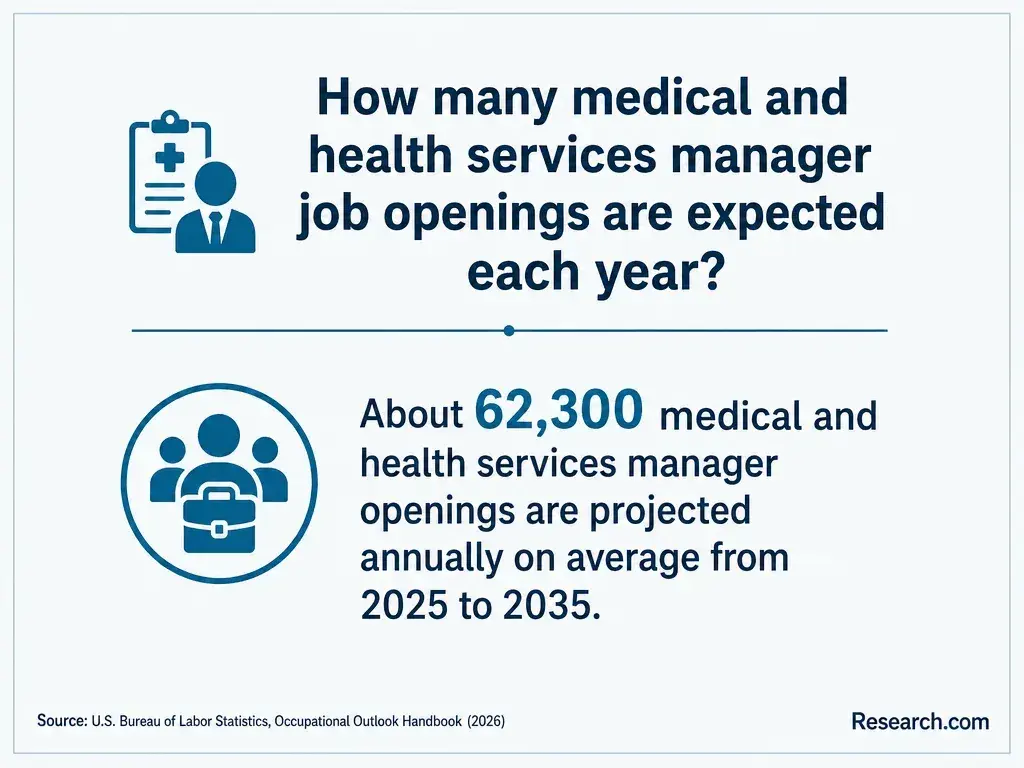
- Entry-level applicants should look for internships and applied projects: the Bureau of Labor Statistics' $126,520 May 2025 median for all management occupations is not a starting salary for this degree.
- Before enrolling, confirm that the minor fits the degree plan, the institution is accredited, and the program offers access to relevant healthcare or public-sector experience.
What Is a Healthcare Administration BS With a Public Policy Minor?
A Bachelor of Science (BS) in healthcare administration is an undergraduate degree focused on how healthcare organizations operate. A public policy minor is a smaller, separately defined set of courses examining how governments identify problems, evaluate options, allocate resources, and put decisions into practice. The exact title and requirements vary by school; some institutions offer healthcare management rather than healthcare administration.
The combination is especially relevant to students interested in hospitals, health systems, insurers, public health agencies, or organizations affected by government funding and regulation. It does not make a graduate a clinician or a licensed policy professional. Nor is it the same as an MBA, Master of Healthcare Administration (MHA), or doctorate. Those later degrees serve different career stages; students considering graduate study should first assess whether they need work experience, specialized training, or both. For example, it is possible to explore MHA options before gaining healthcare experience, but admission does not mean a graduate degree will replace that experience in hiring.
What Can You Do With a Healthcare Administration Degree and Public Policy Minor?
The most plausible first jobs are coordinator, assistant, analyst, and support roles - not department director positions. A healthcare administration major can help you understand organizational workflows; the policy minor can help you explain how a proposed rule or funding decision might affect those workflows. The table distinguishes starting points from paths that generally require further experience.
| Career direction | Possible early-career work | What advancement usually depends on |
| Healthcare operations | Scheduling, service coordination, quality support, or administrative projects | Experience improving processes and managing budgets or teams |
| Government or community programs | Program coordination, reporting, grant support, or constituent services | Knowledge of agency rules, procurement, evaluation, and public accountability |
| Health policy and advocacy | Research assistance, legislative tracking, stakeholder communications, or program support | Strong writing, data analysis, subject expertise, and often further experience or education |
A policy minor can distinguish your interests, but employers will still look for evidence that you can analyze information and work with people in a healthcare setting. Seek an internship, capstone, or part-time role that produces a concrete work sample, such as a program evaluation or workflow analysis. To compare longer-term occupations without mistaking them for entry-level outcomes, review healthcare administration roles and pay context.
How Much Does Healthcare Administration Pay?
There is no single salary for graduates of this major-and-minor combination. Pay depends on the job, employer, location, and experience. The U.S. Bureau of Labor Statistics reports a $126,520 median annual wage for all management occupations in May 2025, compared with $50,980 across all occupations. That management figure covers many industries and experienced workers; it should not be used as an expected salary for a new healthcare administration graduate or attributed to the public policy minor.
For a useful comparison, find pay information for the specific entry-level job title and location you are targeting, then weigh it against your likely borrowing and out-of-pocket costs. If you later consider graduate study, compare its cost with the responsibilities you are realistically positioned to take on - not an assumed management salary. A comparison of healthcare management MBA programs by tuition cost can inform that later decision, but an MBA is not required to begin most administrative support careers.
Course names differ across institutions. The BS commonly combines general education with healthcare-focused management courses, while the minor adds a smaller sequence in policy and government. Look at required courses - not just the program title - to see whether the combination matches your intended work.
| Part of the degree | Courses you may encounter | Why they matter |
| Healthcare administration major | Healthcare systems, accounting or finance, organizational management, health law, quality improvement, and health information | Builds the operational knowledge used to support healthcare services and decisions |
| Public policy minor | Policy analysis, American government, public budgeting, research methods, and policy implementation | Develops a framework for assessing decisions made by public institutions |
| Applied learning | Internship, practicum, or capstone, when offered or required | Can turn classroom work into relevant experience and a work sample |
Check whether courses can count toward both the major and minor; schools set their own overlap rules. Also ask whether the policy sequence includes health-focused electives or requires you to apply general policy methods to health topics on your own. If your eventual goal is management rather than undergraduate preparation, planning a fast-track healthcare management MBA involves a different curriculum and workload decision.
A full-time student commonly plans on about four academic years for a bachelor's degree. Transfer credit, course availability, internship scheduling, and the minor's prerequisites can shorten or extend that timeline. A minor that looks small on paper may delay graduation if its required courses are offered infrequently or cannot overlap with major requirements.
Ask an advisor for a term-by-term plan showing both sets of requirements and the earliest available internship. If speed is a priority, an accelerated healthcare administration program comparison can help you identify formats to investigate. Verify how many of your credits would actually apply before treating any advertised completion time as your own.
Choose the format that lets you complete the minor and obtain relevant experience, not simply the one with the most convenient label. Online study may reduce commuting, but it may still include scheduled meetings, group work, proctored assessments, or an in-person internship. Campus study may make local employer events and face-to-face collaboration easier, but commuting and fixed class times have costs of their own.
For either format, confirm that public policy minor courses are available in the same delivery mode as the major. Ask where students complete internships, whether career services support online students, and whether required classes conflict with work. A short graduate program is a separate choice: listings of 12-month healthcare administration graduate programs should not be confused with accelerated bachelor's completion.
First-year applicants generally submit a high school record and the materials required by the institution. Transfer applicants submit prior college transcripts; a school may also have a separate process for declaring the healthcare administration major or public policy minor. Test policies, minimum grades, and application deadlines vary, so the university's current admissions and catalog pages control.
Transfer students should request a written degree audit that shows which credits satisfy general education, major, and minor requirements. A credit may transfer to the university without fulfilling a specific requirement. Guidance on using prior college credits toward healthcare administration can help you frame that conversation before you commit.
Yes. First verify that the institution holds recognized accreditation; this matters for the standing of the degree and can affect transfer credit and federal student-aid eligibility. Then check whether the healthcare administration program holds any relevant programmatic accreditation, without assuming that every reputable undergraduate program must have the same specialized credential.
Do not confuse undergraduate program review with accreditation used to evaluate graduate healthcare management education. In particular, CAHME accreditation in online MHA program selection concerns a graduate-program decision, not a requirement that every healthcare administration BS must satisfy. Confirm each claim with the accreditor and the school's current program information.
Many healthcare administrative roles do not require an individual professional license. Requirements depend on the position and jurisdiction, however; certain facility leadership roles, including nursing home administration, have state-specific licensing rules. A healthcare administration BS and public policy minor do not, by themselves, confer such a license.
Optional professional certifications may become useful after you have relevant work experience, but check each credential's eligibility rules before paying for preparation. If a role calls for deeper healthcare management education rather than a license, budgeting for a master's in healthcare administration may be more relevant than collecting credentials without a defined career goal.
How Can You Choose a Reputable Healthcare Administration Program?
Start with a career target: healthcare operations, a government program, or health policy support. Then compare programs on the evidence most likely to affect your path: recognized institutional accreditation, a workable major-and-minor course plan, internship access, career support, and total cost. Published tuition alone may omit fees, materials, travel, and the cost of an extra term if courses are unavailable.
Before enrolling, ask for a sample degree plan, recent internship examples, online-course availability if relevant, and a personalized estimate of remaining credits and charges. Compare financial-aid offers by the amount you would need to repay, not only the total aid shown. If you are already considering advanced leadership or research roles, remember that cost-conscious doctoral education for healthcare administrators is a separate, later decision - not a reason to assume an undergraduate program needs an expensive graduate pathway to be worthwhile.
Other Things You Should Know About Healthcare Administration
No. Public policy generally examines government decisions and implementation across issues; public health focuses on population health. Compare each school's required courses, because health policy may appear in either minor.
Yes, it can provide useful context for health law, but law schools do not generally require this particular major or minor. Strong academic performance, writing, and careful attention to each law school's admissions rules matter more than the degree label.
That depends on the role. Some administrative jobs involve patient-facing coordination; others center on budgets, data, staffing, or programs. The degree does not train students to provide clinical care.
Usually a minor must be completed as part of an active undergraduate degree, but institutional policies differ. If you have graduated, ask the school whether additional coursework can be recorded and whether a certificate or individual courses would better meet your goal.
- Students & Recent Graduates | U.S. Office of Personnel Management https://www.opm.gov/policy-data-oversight/hiring-information/students-recent-graduates/
- School-Determined Requirements | 2024-2025 Federal Student Aid Handbook https://fsapartners.ed.gov/knowledge-center/fsa-handbook/2024-2025/vol1/ch1-school-determined-requirements
- Essential core competencies for health policy graduates - PMC https://pmc.ncbi.nlm.nih.gov/articles/PMC11443647/
- Types of Financial Aid: Grants, Work-Study, and Loans | studentaid.gov https://studentaid.gov/understand-aid/types
- Department Expectations: Curriculum | nysed.gov https://www.nysed.gov/college-university-evaluation/department-expectations-curriculum
- Public Policy (Minor) - NYU Bulletins - New York University https://bulletins.nyu.edu/undergraduate/arts-science/programs/public-policy-minor/
- Eligibility and Requirements | Undergraduate Minor | University of California, Berkeley https://gspp.berkeley.edu/programs/undergraduate-programs/undergraduate-minor/eligibility
- Policy 6-101: Undergraduate Study and Degrees | The University of Utah https://regulations.utah.edu/academics/6-101.php
- Minor Requirements and Declaring Your Minor | dartmouth.edu https://rockefeller.dartmouth.edu/public-policy/public-policy-minor/minor-requirements-and-declaring-your-minor
- Health Care Management | MSU Denver https://www.msudenver.edu/health-professions/hep-programs/health-care-management/