2027 From Childcare Center Administrator to Healthcare Administration

Co-Founder and Chief Data Scientist
Running a childcare center gives you experience with staffing, budgets, family communication, safety procedures, and regulated services. Healthcare organizations need many of those same management skills, but they also expect knowledge of healthcare operations and, for some jobs, direct experience in the sector.
This guide helps childcare center administrators identify realistic entry points, compare degrees - including an MBA and a Master of Healthcare Administration (MHA) - and decide whether more education is necessary before making the move.
Key Things You Should Know
- Start with adjacent operations roles. Your supervisory and compliance experience may transfer to clinic coordination or patient-services management, but it does not automatically qualify you to run a hospital department.
- Choose a degree for the gap you need to close. An MHA develops healthcare-specific management knowledge; an MBA offers broader business training. Neither replaces relevant healthcare experience.
- Use pay figures carefully. The U.S. median annual wage for management occupations was $126,520 in May 2025, but that figure covers managers across industries - not new healthcare administrators or career changers.
How can childcare center administrators transition into healthcare administration?
The most practical route is usually a sideways move into healthcare operations, followed by advancement within the sector. Healthcare administration means managing the people, finances, processes, and services that support care delivery; it is distinct from providing clinical care. A childcare director may already have relevant evidence of hiring, scheduling, budgeting, inspections, incident response, and communication with families. The missing piece is often familiarity with healthcare workflows, terminology, privacy obligations, and reimbursement.
Translate your experience into outcomes an employer can evaluate. For example, describe the size of the team you supervised, how you improved scheduling, or how you prepared for inspections. Then review local postings for clinic operations coordinator, patient access supervisor, or practice administrator roles. Compare their requirements with your record before paying for a degree.
If direct entry proves difficult, seek a healthcare-facing project, volunteer board assignment, or operations role with a health system or community health organization. A graduate program that accepts applicants from other industries can help you learn the sector, but MHA study pathways for students from other industries should be evaluated for their practical projects and employer connections - not just admission eligibility.
What degree do you need to become a healthcare administrator?
There is no single degree required for every healthcare administration job. Employers set requirements by position: some coordinator and supervisory roles accept a bachelor's degree plus relevant experience, while more senior or specialized management positions may prefer graduate education. Check actual job postings in your area rather than treating a master's degree as a universal entry requirement.
For a childcare administrator without a bachelor's degree, completing one is generally a more useful first step than planning for an MBA. If you have college credits, comparing associate-to-bachelor's health administration routes can help you assess how much prior coursework a school will accept.
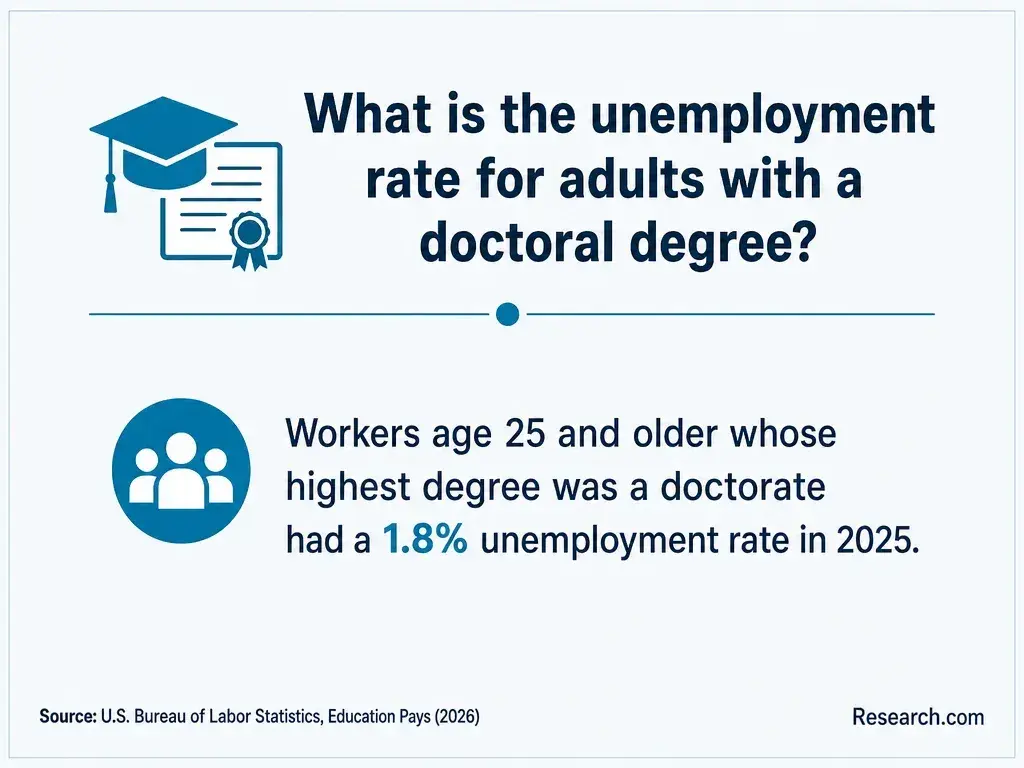
If you already hold a bachelor's degree, choose by career objective. An MHA focuses on healthcare organizations, policy, finance, and operations. An MBA teaches broader management subjects; a healthcare management concentration adds focused coursework only if the school actually offers it. A graduate certificate or targeted courses may be enough to address a narrower knowledge gap. A doctorate is not a routine prerequisite for entering healthcare administration.
How much do healthcare administration careers pay?
Pay depends on the job's scope, employer, location, and your healthcare experience. The U.S. Bureau of Labor Statistics reported a $126,520 median annual wage for all management occupations in May 2025. That is a broad benchmark, not the expected salary for a healthcare administrator - or for someone making a first move from childcare.
When weighing an offer or the cost of graduate school, compare local postings for the specific role and level you could plausibly enter. A patient-services supervisor and an experienced health-system executive have different responsibilities and compensation. Guides to healthcare administration jobs and career paths can help you identify titles to investigate, but higher-paying positions should be treated as potential later steps, not immediate outcomes of earning a degree.
Look first for roles where your existing management record is valuable and the clinical knowledge gap is manageable. The following comparison separates plausible entry targets from positions that typically demand more specialized experience.
| Role | Why your background may help | Likely gap to address |
| Clinic operations coordinator | Staff scheduling, service processes, and day-to-day problem-solving | Clinical workflows and healthcare terminology |
| Patient access supervisor | Front-desk leadership and communication with families | Registration, insurance, and patient privacy procedures |
| Community health program coordinator | Family services, partnerships, and program administration | Healthcare funding and population-specific services |
| Hospital department administrator | Budgeting and people management provide a foundation | Substantial healthcare operations experience may be expected |
If you are drawn to medical records, coding, or health data governance rather than managing services and teams, compare degree routes in healthcare administration and HIM before choosing a program. Health information management is a distinct functional path, and its job requirements may call for more specialized preparation.
Healthcare administration programs commonly address healthcare finance, organizational leadership, policy, quality improvement, operations, and ethics. An MHA usually applies these subjects directly to care organizations. An MBA typically begins with a broader core - such as accounting, finance, and strategy - then may offer healthcare electives or a formal concentration. Check the required courses: a healthcare elective alone does not make an MBA a healthcare management concentration.
An online degree can be a credible option, but verify the institution and the particular program separately. First, confirm that the institution holds recognized institutional accreditation. Then check whether a specialized accreditor reviews the degree you want: the Commission on Accreditation of Healthcare Management Education (CAHME) accredits eligible healthcare management graduate programs, while business-school accreditation may apply to an MBA. These are different forms of review; one should not be described as the other.
For an MHA, comparing accredited online MHA pathways can narrow the search. Verify each program's current accreditation status and online delivery directly with the school and accreditor. Also ask about live classes, campus visits, group projects, and access to career services. "Online" does not necessarily mean self-paced or free of scheduled obligations.
Time and cost vary with the credential, transfer credits, course load, tuition policy, and required activities. A certificate generally involves less study than a master's degree; part-time enrollment may make graduate study easier alongside full-time work but extends the calendar timeline. An accelerated schedule can reduce time enrolled without reducing the work required.
Compare the total amount you would pay, not just an advertised tuition rate: include required credits, mandatory fees, materials, travel for any residencies, and financing costs. Ask your employer whether tuition assistance applies to the specific program and whether you must remain employed afterward. If speed matters, examine healthcare management business degrees on a faster timetable alongside your actual work and caregiving schedule; a faster MBA is not necessarily the most affordable or practical option.
Requirements depend on the school and credential. Bachelor's programs may evaluate prior college work and transfer credits. Graduate programs generally require a bachelor's degree and may request a résumé, statement of purpose, recommendations, or prerequisite coursework. Professional-experience and test policies vary; a non-healthcare background does not automatically rule you out.
Before applying, ask admissions staff whether your childcare management experience meets any experience expectations, whether foundation courses are required, and whether online students have access to healthcare-focused projects. Request a written estimate of required credits and fees, then consider finding an affordable healthcare administration graduate program that still offers the preparation you need. Admission to a program and readiness for a particular healthcare job are separate questions.
Most healthcare administration roles do not have one universal administrator license. Requirements depend on the position and state. Nursing home administrators are a notable exception: state licensure applies, and requirements must be checked with the relevant state board. Administrative employment does not authorize clinical practice, which has separate professional licensing rules.
Voluntary certifications may be useful after you have the experience they recognize, but they should be judged against the jobs you want rather than collected in advance. Likewise, a doctorate is not a licensing substitute or a standard requirement for managing a clinic. If you are considering one for a later leadership goal, account for healthcare administration doctoral costs beyond advertised tuition before committing to education beyond what your target role requires.
How strong is the job outlook for healthcare administration careers?
The broader U.S. management labor market is projected to grow faster than the average for all occupations from 2025 to 2035, according to the Bureau of Labor Statistics. That outlook does not establish the same growth rate for every healthcare administration job, nor does it remove competition for entry-level management positions.
Use the outlook as a reason to investigate opportunities, not as a reason to enroll without a career plan. Track local openings, note which employers accept management experience from outside healthcare, and identify the recurring skills you lack. If those gaps call for graduate study but you need a shorter enrollment period, online healthcare management master's programs with faster schedules are worth comparing - provided their coursework and practical opportunities match the roles you seek.
Other Things You Should Know About Healthcare Administration
Usually, it is safer to search while employed. Your current role lets you keep building supervisory evidence and evaluate whether an available healthcare position justifies the change in pay and responsibilities.
It may help you communicate with families and manage child-focused services. You will still need to learn the setting's healthcare procedures, and clinical jobs require their own qualifications.
Yes, if it provides exposure you cannot get through your current work. Confirm that the schedule, pay, and duties make sense for an experienced manager; a project or part-time placement may be a better fit than a full-time internship.
Ask which responsibilities require prior healthcare experience, what training is provided, and how success is measured during the first months. The answers will show whether the role is a genuine entry point or expects you to arrive with sector expertise.
- Knowledge and Skills Needed for Future Health Administrators | nih.gov https://pmc.ncbi.nlm.nih.gov/articles/PMC11188648/
- Integrated Primary Care Delivery - NCBI - NIH https://www.ncbi.nlm.nih.gov/books/NBK571813/
- Accountable Care and Accountable Care Organizations | cms.gov https://www.cms.gov/priorities-innovation-key-concepts-accountable-care-accountable-care-organizations
- Clinical Operation Health Care Management | SMHS Health Sciences Programs https://healthsciencesprograms.gwu.edu/news/transform-your-career-trajectory-clinical-operations-health-care-management-strategies-leading
- Informational Interviews - UF Career Hub - University of Florida https://careerhub.ufl.edu/resources/informational-interviews/
- Healthcare Administration: Skills, Responsibilities, Certifications and More | Park University https://www.park.edu/blog/healthcare-administration-skills-responsibilities-certifications-and-more/
- Healthcare Administration Careers and Salaries | UW Online Collaboratives https://uwex.wisconsin.edu/stories-news/healthcare-administration-careers-and-salaries/
- What Does a Healthcare Administrator Do? | SMU Moody https://publicadministrationdegrees.smu.edu/articles/what-does-a-healthcare-administrator-do/
- Transferable Skills: How Past Jobs Boost Your Healthcare Career - Prism Career Institute https://prismcareerinstitute.edu/skills-from-your-old-job-that-will-help-you-in-healthcare/
- What Is a Health Care Administrator? | Purdue Global https://www.purdueglobal.edu/blog/health-sciences/what-can-you-do-with-degree-health-care-administration/