2027 CSWE Programs With School Social Work Endorsement Coursework

Co-Founder and Chief Data Scientist
Choosing a social work program is not enough if your goal is to work in K-12 schools: you must also meet your state's school social work credential rules. The U.S. Bureau of Labor Statistics projects 5% employment growth for child, family, and school social workers from 2023 to 2033. This guide helps prospective BSW and MSW students compare CSWE-accredited programs, endorsement coursework, field placements, online formats, costs, and career outcomes before applying.
Key Things You Should Know
- CSWE accreditation is the essential starting point for a social work degree, but it does not by itself grant a school social work endorsement, license, or educator credential.
- Most school social worker roles require an MSW, supervised school-based practicum or internship, and a state-specific pupil personnel, school service, or educator credential.
- The BLS projects 5% growth for child, family, and school social workers from 2023 to 2033, but salaries, vacancies, and credential rules vary substantially by state and school district.
What are CSWE-accredited social work programs with school social work endorsement coursework?
CSWE-accredited social work programs are bachelor's and master's programs reviewed by the Council on Social Work Education for compliance with educational standards. CSWE accreditation signals that a program provides a professional social work curriculum, qualified faculty, field education, and assessment processes aligned with the profession.
School social work endorsement coursework is an added academic and field-preparation component designed for students who intend to serve children and families in elementary, middle, or secondary schools. Depending on the state, the resulting credential may be called a school social work endorsement, school social worker license, school service personnel credential, pupil personnel services credential, or educational staff associate certificate.
A program can be CSWE-accredited without offering a school social work pathway. Likewise, a school-focused concentration may not meet every state's credential requirements. Applicants should confirm both facts separately before enrolling.
| Term | What it means | Why it matters |
| CSWE accreditation | Professional accreditation for a BSW or MSW social work program | Often required for social work licensure eligibility and preferred by employers |
| School social work track | Courses and field education focused on K-12 systems, students, and families | May help meet state education-agency credential standards |
| Endorsement or credential | State authorization to practice in school settings | Usually required for district-employed school social worker positions |
| Clinical social work license | State license for clinical practice, commonly the LCSW or equivalent | May expand duties and advancement options but is not always required for entry-level school roles |
How do school social work endorsement requirements vary by state and licensure level?
School social work requirements are set by states, not CSWE. A student who plans to work in a particular state should begin with that state education agency's credential rules, then compare program coursework and placement arrangements against those rules. This is especially important for online students who may attend a university located in another state.
Requirements commonly differ by degree level and by whether the job is a district school social worker, a community-based clinician serving schools, or a licensed clinical provider. The comparison below identifies broad patterns rather than replacing a state credential review.
| Requirement area | Common state approach | Planning implication |
| Minimum degree | Many states require an MSW for independent school social worker credentials; some allow a BSW for limited or supervised roles | Match the degree level to the role you want, not merely the fastest program available |
| State social work license | Some states require a social work license, while others use an education-agency credential instead | Ask whether both credentials are required and in what order they must be obtained |
| School-specific coursework | States may specify classes in special education, school law, child development, educational policy, or school social work practice | Save course descriptions and syllabi in case the state reviews your preparation |
| Field experience | Many states require supervised work in a school or school-related setting | Verify the site, supervisor qualifications, and required hours before accepting admission |
| Examinations and background checks | Some jurisdictions require educator tests, fingerprinting, or additional training | Budget time and fees beyond the degree program itself |
A common mistake is assuming that an MSW automatically transfers into school eligibility in every state. It may qualify you for social work licensure while still leaving you short of educator-specific coursework, a school practicum, or an application requirement.
What degree pathways lead to eligibility for school social worker roles?
The right degree pathway depends on your prior education, desired role, state rules, and timeline. For most students seeking a district school social worker position, an MSW with school-based preparation is the most broadly useful route. A BSW can be a practical first step, particularly when it leads to advanced standing MSW study later.
This comparison shows how the main routes align with common school social work goals.
| Pathway | Typical fit | Key limitation |
| BSW with school-focused electives | Students beginning undergraduate study or pursuing entry-level human services roles | May not meet state requirements for a school social worker credential |
| BSW followed by advanced standing MSW | Students seeking a potentially shorter graduate route after completing a CSWE-accredited BSW | Advanced standing admission is selective and does not remove state endorsement requirements |
| Traditional MSW with school social work concentration | Career changers and bachelor's graduates in any field | Usually requires more credits and field hours than advanced standing study |
| MSW plus post-master's school credential coursework | Licensed or degree-holding social workers relocating or changing specialties | May require separate applications, placements, and educator credential steps |
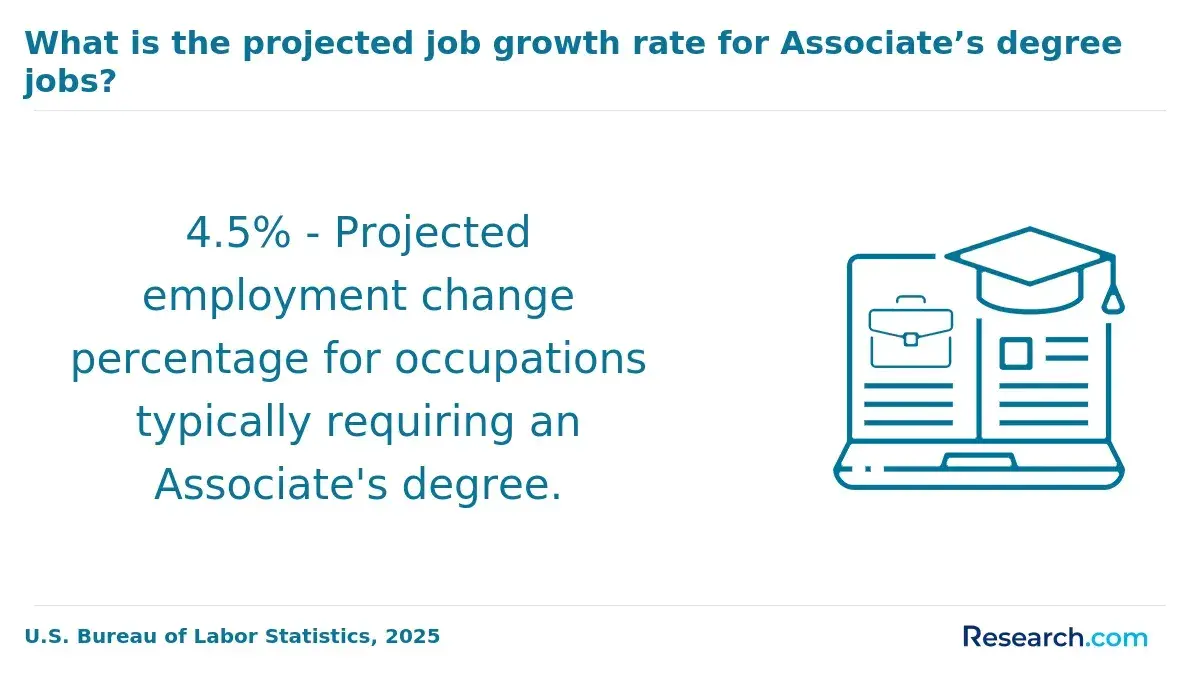
An associate degree online can support early exploration of human services, but it generally does not meet the degree threshold for school social worker credentials. Choose it only if you need an entry point and have a defined plan to continue into a BSW or MSW.
Students should consider a different path if they primarily want classroom teaching, school counseling, school psychology, or behavior analysis. Those professions have separate preparation and licensing systems, even though professionals often collaborate in student-support teams.
What coursework is typically required for a school social work endorsement?
School social work coursework connects social work practice with the educational environment. Programs organize these requirements differently, so course titles alone are not enough; applicants should ask whether each course fulfills a particular state's endorsement standard.
Students commonly encounter the following content areas because they prepare them to address attendance, mental health, family engagement, special education access, crisis response, and barriers to learning.
- School social work practice, consultation, and interdisciplinary collaboration
- Child and adolescent development, trauma-informed practice, and youth mental health
- Special education law, disability services, and individualized education program processes
- Education policy, school systems, ethics, and student privacy requirements
- Assessment, intervention planning, crisis response, and prevention programming
- Family engagement, community resource coordination, and culturally responsive practice
- Field education in a school, district office, or approved school-linked setting
Field education deserves special scrutiny. A school-based internship should provide exposure to the actual responsibilities of school social work, such as attendance interventions, individual and group support, family conferences, referral coordination, multidisciplinary meetings, and documentation. A placement that is merely near a school may not satisfy the state's definition of school experience.
How do online and campus CSWE programs differ for school social work preparation?
The format comparison below can help applicants decide whether flexibility or local placement control should carry more weight.
| Factor | Online or hybrid program | Campus-based program |
| Course scheduling | May offer asynchronous classes and reduced commuting | Often follows fixed meeting times and local academic calendars |
| Field placement | May arrange local sites, but student relocation and placement availability can complicate approvals | May have established relationships with nearby districts and agencies |
| Peer and faculty access | Requires proactive use of virtual office hours, advising, and cohort activities | Usually provides more spontaneous in-person networking opportunities |
| Out-of-state credential fit | Requires careful verification before enrolling | Often designed around the credential rules of the institution's home state |
| Best fit | Self-directed students with a confirmed local placement and clear state credential plan | Students who value local district connections or need hands-on placement support |
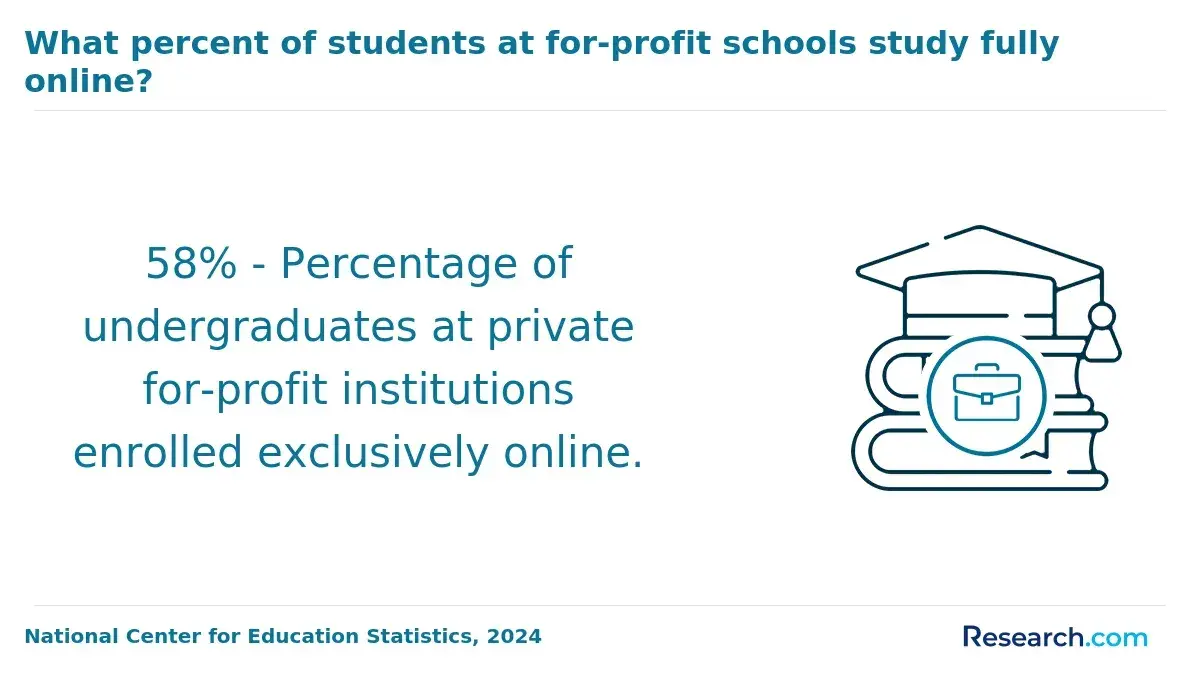
Do not assume "online" means faster or easier. Field hours can require daytime availability because K-12 schools operate during standard weekday hours. Before committing, obtain written confirmation of whether the university can place and supervise students in your state and whether its curriculum meets your intended credential requirements.
What admission requirements apply to CSWE programs offering school social work tracks?
Admission standards vary by institution and degree level, but CSWE programs typically assess academic readiness, communication skills, professional judgment, and fit with social work values. School-focused applicants may also be asked about their interest in children, families, education equity, or school-based practice.
Applicants should prepare the following materials early, especially because field placements and background checks can add lead time.
- Official transcripts showing the required undergraduate degree and prerequisite coursework, if applicable
- A personal statement explaining professional goals and interest in school social work
- Résumé documenting work, volunteer, internship, or community service experience
- Letters of recommendation from academic, employment, or human services references
- Criminal background disclosure or fingerprinting information when required for field placement
- Proof of immunizations, health clearances, or training required by a partner school district
Applicants with a non-social-work bachelor's degree are commonly eligible for traditional MSW programs. Applicants seeking advanced standing usually need a recent CSWE-accredited BSW and must meet additional grade, coursework, or field-performance expectations. Do not rely on a general graduate admission offer as proof that you qualify for advanced standing or a school endorsement track.
How long do these programs take, and what tuition and financial aid options exist?
Program duration and cost depend on degree level, enrollment pace, residency, transfer credit policies, and field-placement scheduling. A full-time traditional MSW commonly takes about two academic years, while advanced standing MSW programs may be shorter for eligible BSW graduates. Part-time enrollment can make tuition payments more manageable but may extend the timeline and delay credential eligibility.
Cost comparisons should include more than published tuition. The table identifies expenses that can materially affect the affordability of a school social work pathway.
| Cost factor | Why it matters | Question to ask |
| Per-credit tuition and mandatory fees | Total credits vary by traditional, advanced standing, and endorsement routes | What is the estimated total program cost at my enrollment pace? |
| Field placement employment impact | Daytime internships can reduce paid-work availability | Can placements be completed near my job, and are evening options realistic? |
| Transportation and technology | Students may travel to schools, agencies, trainings, or campus intensives | Are travel, software, residency, or placement fees required? |
| Credentialing expenses | Testing, fingerprints, license applications, and background checks may be separate | Which state application costs are not included in tuition? |
| Financial aid | Grants, scholarships, employer aid, and federal loans can change net cost | What aid is available specifically to social work or education-service students? |
What careers can graduates pursue with school social work endorsement training?
Graduates with school social work endorsement training can work where student well-being, family systems, education access, and community resources overlap. District hiring requirements vary, and some positions require a state school credential even when the job title sounds similar.
The roles below illustrate common directions for graduates and the differences in their work settings.
| Role | Typical employer | Primary focus |
| School social worker | Public, charter, or private school district | Student support, attendance, family outreach, crisis intervention, and service coordination |
| Student support services coordinator | School district or educational nonprofit | Multi-tiered supports, partnerships, case coordination, and program implementation |
| Family engagement specialist | Schools, districts, or community organizations | Connecting caregivers to educational and social services |
| Child and family social worker | Community agencies, hospitals, or child welfare organizations | Supporting children and families, including school collaboration when relevant |
| School-based mental health clinician | District contractor, clinic, or community mental health agency | Counseling and clinical services, often subject to clinical licensure rules |
For individuals who need an earlier earnings step before graduate school, quick certifications that pay well may support a separate short-term career plan, but they are not substitutes for school social work credentials.
What salary ranges and job outlook should school social work graduates expect?
School social work pay depends on geography, district salary schedules, collective bargaining agreements, degree level, licensure, and experience. The U.S. Bureau of Labor Statistics reported a median annual wage of $58,570 for child, family, and school social workers in May 2023. This category includes more than school-based positions, so it is a useful national benchmark rather than a guaranteed district salary.
The BLS projects 5% employment growth for child, family, and school social workers from 2023 to 2033. Demand is influenced by student mental health needs, attendance challenges, special education coordination, and local school funding, but openings can be uneven across districts.
| Career factor | Potential effect on earnings or opportunity | How to use it in your decision |
| State credential eligibility | May determine whether you can apply for district positions | Prioritize programs aligned with the state where you expect to work |
| MSW and advanced licensure | Can expand eligibility for leadership or clinical roles | Review whether the added time and supervised experience fit your goals |
| District pay structure | May set salaries through established education pay schedules | Review local salary schedules and contract terms, not only national medians |
| Rural versus high-cost metro areas | Pay and vacancy levels can differ widely | Compare compensation with local housing, commuting, and licensing costs |
Doctoral education can support research, university teaching, policy, and senior leadership goals, but it is not usually necessary for K-12 school social work practice. Professionals considering that later-stage option can explore shortest PhD programs while recognizing that program speed should not outweigh research fit, funding, dissertation support, and career purpose.
How can students evaluate and choose reputable CSWE programs with school endorsements?
A reputable program is one that aligns with your intended state credential, not simply one with an attractive tuition rate or online format. Begin by identifying where you want to work after graduation, then compare programs against that jurisdiction's education-agency and social work licensing rules.
Use these steps to evaluate programs before submitting an application.
- Confirm that the exact BSW or MSW program holds CSWE accreditation, not merely that the university offers another accredited social work degree.
- Request written confirmation of whether the school social work curriculum is designed to meet requirements in your intended state.
- Ask how school-based field placements are assigned, who approves them, and whether placements are available near your home.
- Compare total credits, expected field hours, fees, residency requirements, and realistic completion time at your planned enrollment pace.
- Review first-time licensure support, advising, career services, and relationships with local school districts.
- Ask whether prior coursework can transfer and whether transfer credits affect school endorsement eligibility.
- Compare net price after grants and scholarships rather than choosing solely by published tuition.
Major red flags include vague claims that a program "prepares students for licensure" without naming states, inability to explain field-placement support, pressure to enroll before credential questions are answered, and statements that all online students can complete school placements anywhere. Keep written records of advising responses, curriculum plans, and state guidance; they can be valuable when applying for a credential after graduation.
The best investment is usually a CSWE-accredited program that clearly supports the credential you need, offers a viable school-based placement, and fits your financial and scheduling realities. A lower-cost program that cannot meet your state requirements may cost more in time and additional coursework later.
Other Things You Should Know About Social Work
CSWE accreditation is commonly important because it supports eligibility for social work licensure and assures professional social work preparation. However, school social worker requirements are set by each state, and many states also require a separate education credential, school-specific coursework, or supervised school placement.
In some states, a BSW may qualify a person for limited, supervised, or support roles. Many district school social worker positions require an MSW and a state school credential. Check the rules in the state where you plan to work before selecting a degree level.
It can, provided the program is CSWE-accredited, its curriculum meets your state's requirements, and it can arrange an acceptable supervised school-based field placement. Online delivery alone does not establish eligibility for a state credential.
Not always. Some school social worker positions require a school-service or educator credential rather than independent clinical licensure. An LCSW or equivalent may be valuable for clinical responsibilities and career mobility, but requirements vary by state, district, and employer.
References
- Social Work Degrees: Find Your BSW, MSW or DSW Program https://www.socialworkdegrees.org/
- Find your social work program - by real data, not brochure copy. https://socialworku.com/schools/
- Accredited Master of Social Work (MSW) Programs (2026 Update) - MasterofSocialWork.com https://www.masterofsocialwork.com/
- How to Become a School Social Worker: Steps & Requirements https://www.counselingpsychology.org/social-work/careers/school-social-worker/